Basic geometry understanding Normal Preschool Math Worksheets
3 filtered results
-
From - To
Explore our engaging Basic Geometry Understanding Preschool Math Worksheets, designed to spark curiosity and enhance foundational skills in young learners. These worksheets offer a variety of activities focused on shapes, spatial awareness, and pattern recognition, making math fun and accessible. Each worksheet features vibrant illustrations and simple instructions, perfect for preschoolers to develop their understanding of geometric concepts. Teachers and parents can easily integrate these resources into daily lessons or homework, providing a well-rounded math experience. Foster a love for learning and support your child's academic growth with these thoughtfully crafted worksheets, ideal for early childhood education.
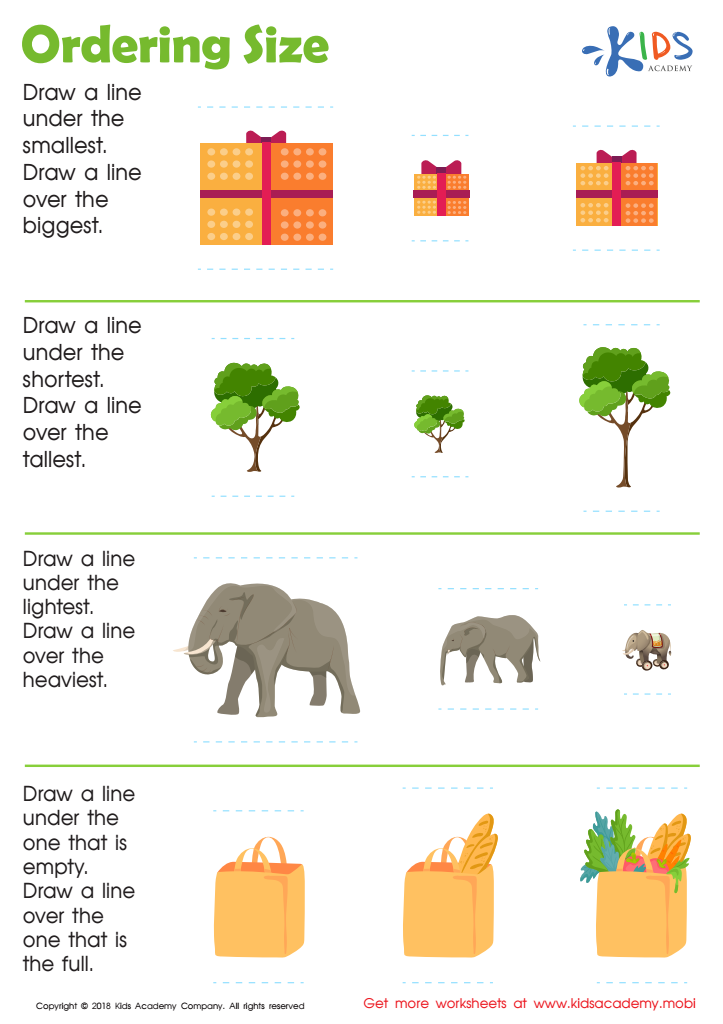
Ordering Size Worksheet
 Assign to My Students
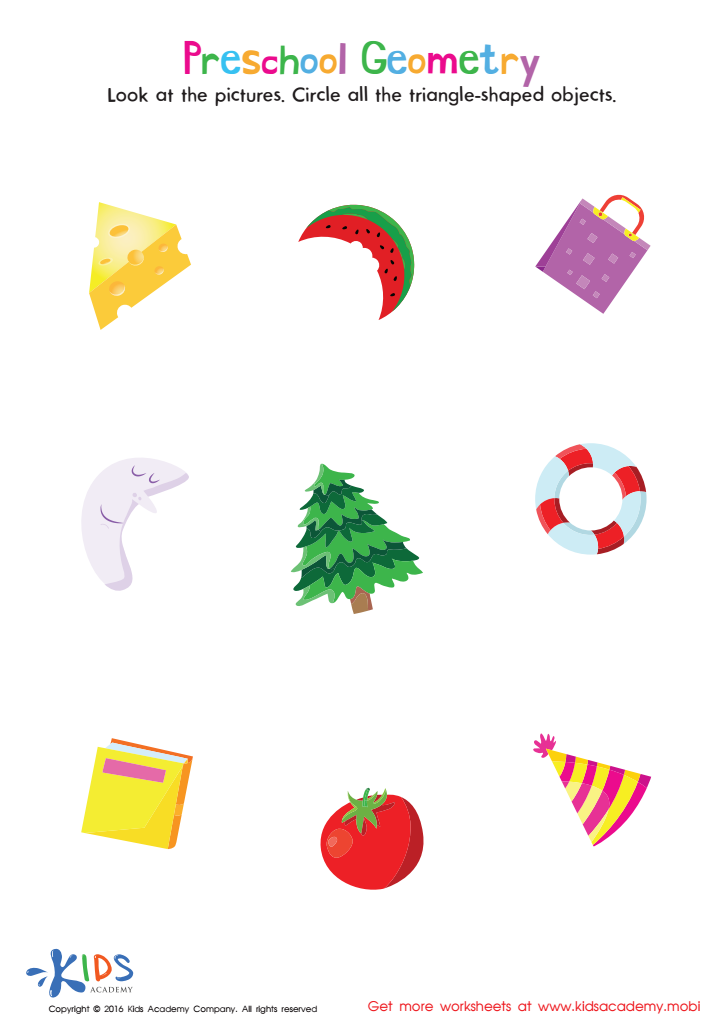
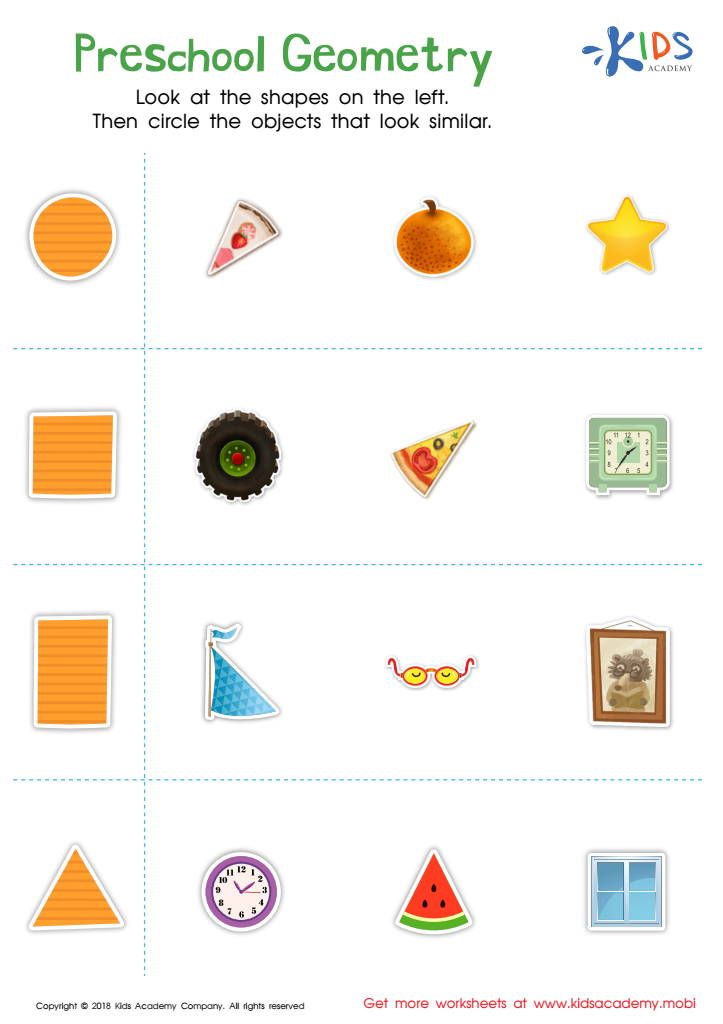
Preschool Geometry Worksheet






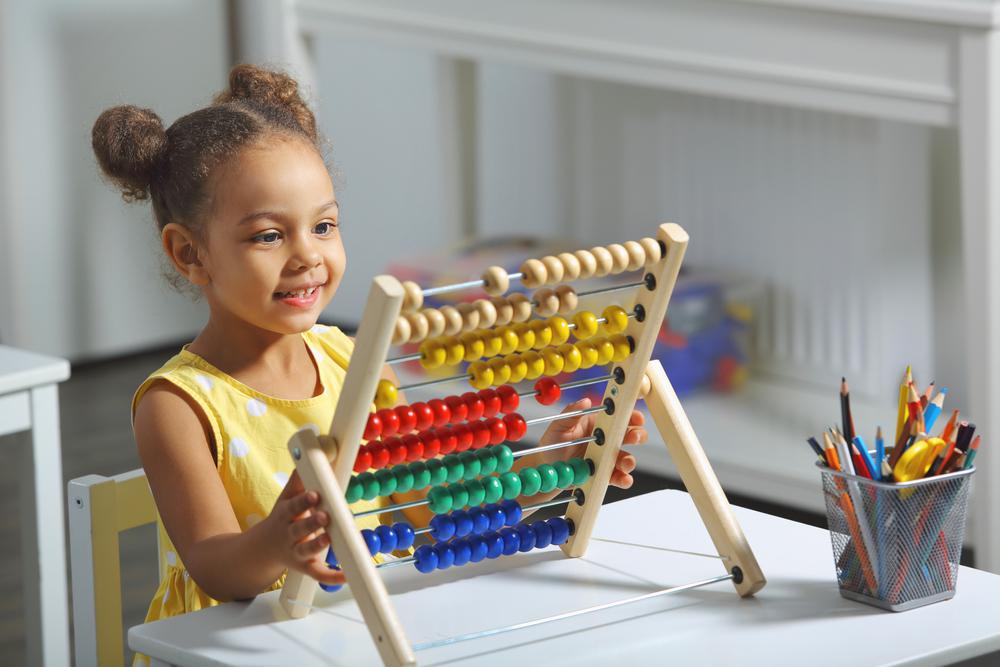

Understanding basic geometry is crucial for preschool-aged children, as it forms the foundation for their future mathematical skills. First, geometry encourages spatial awareness, helping children grasp concepts of shape, size, and space. This understanding is essential in navigating their physical world, from playing with toys to constructing in the real world.
Furthermore, geometry supports cognitive development. When young learners identify shapes, they sharpen their observation and critical thinking skills, which are vital in problem-solving across various subjects. Basic geometry also introduces children to vocabulary for shapes and spatial relationships, enhancing their language skills and overall communication.
In addition, early geometry concepts can boost creativity. Activities involving shapes can integrate art and play, making learning fun and engaging. This encourages children to express themselves while developing an interest in math.
For parents and teachers, fostering a strong foundation in geometry not only prepares children for more advanced math concepts in later grades but also promotes a lifelong appreciation for mathematics. By supporting this early learning, adults play a key role in helping kids build confidence and competence in math, benefiting their overall academic journey. Ultimately, investing in a child's geometric understanding leads to well-rounded development.