Story sequencing Normal Building Vocabulary Worksheets
4 filtered results
-
From - To
Enhance your child's reading comprehension and vocabulary with our "Story Sequencing Normal Building Vocabulary Worksheets." These engaging worksheets are designed to improve students' ability to arrange events in a logical order, reinforcing their understanding of story structure. By categorizing and sequencing stories, children will expand their language skills and learn to connect ideas effectively. Perfect for early-grade learners, these activities facilitate critical thinking and boost confidence in reading. Our printable resources are easy to use in classrooms or at home, making learning enjoyable and interactive. Help your child develop essential skills with our fun story sequencing worksheets today!
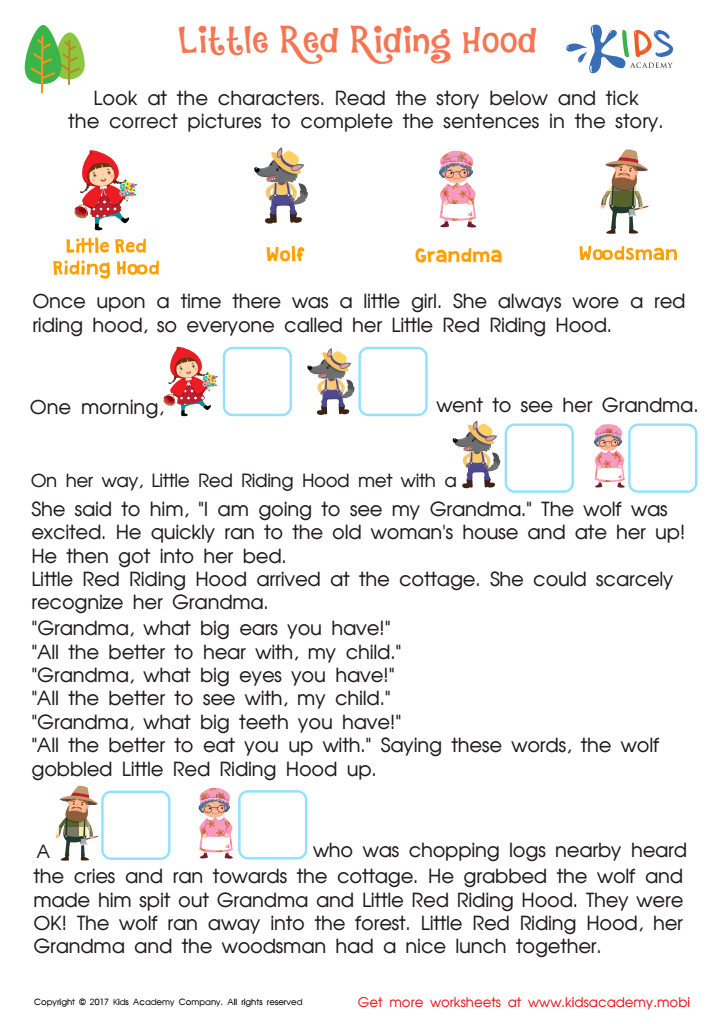
Little Red Riding Hood Printable
 Assign to My Students











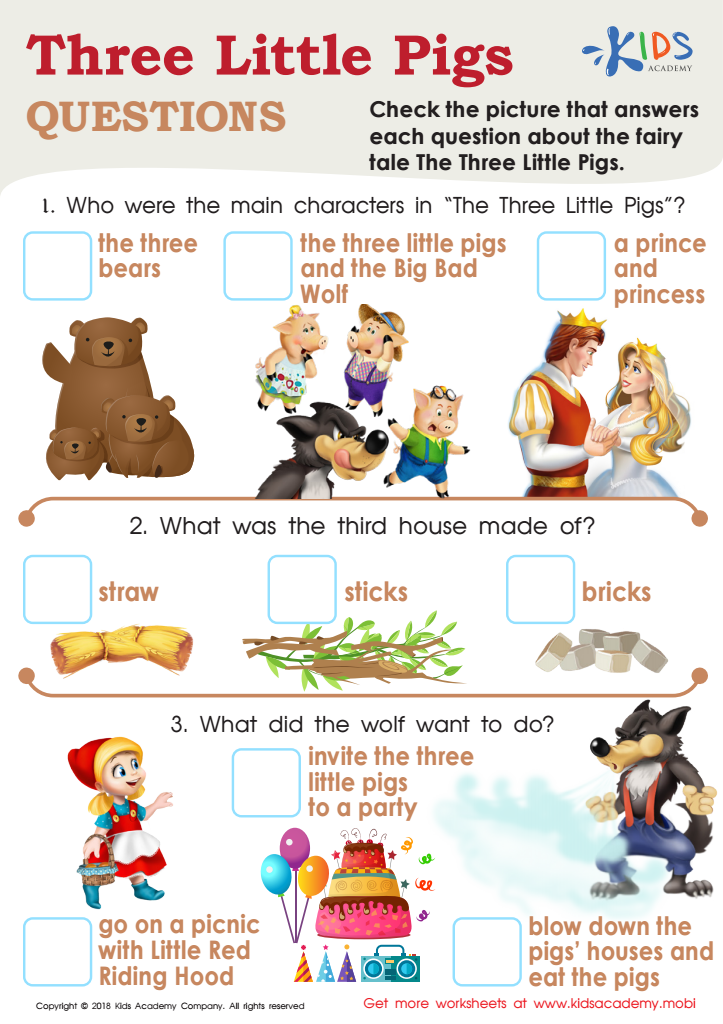
Three Little Pigs Questions Worksheet
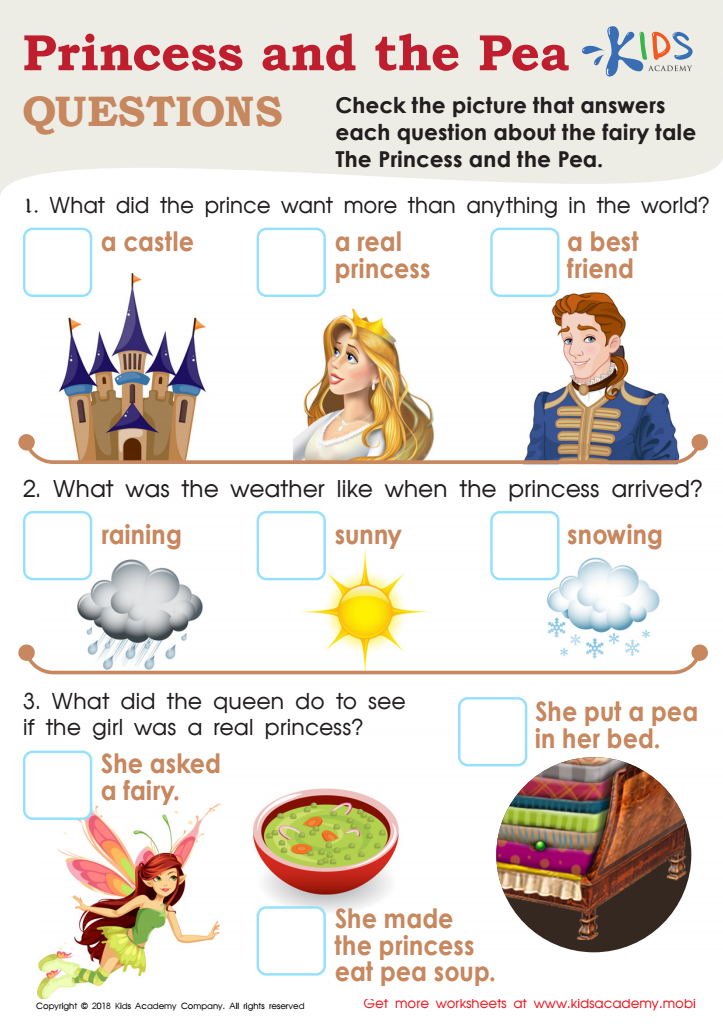
Princess and the Pea Questions Worksheet
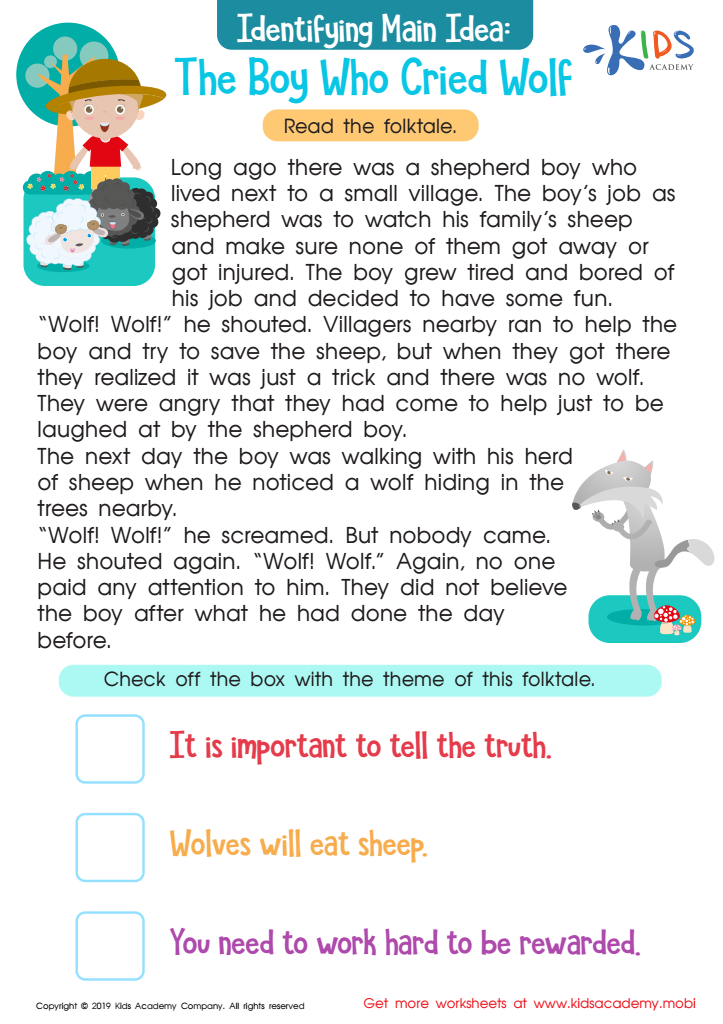
The Boy Who Cried Wolf Part 2 Worksheet








Story sequencing is a vital literacy skill that plays a crucial role in building vocabulary and comprehension for young learners. When children learn to sequence stories, they practice organizing thoughts in a logical order, which enhances their narrative understanding. This cognitive process helps them recognize key elements such as beginning, middle, and end, thus strengthening their ability to construct coherent narratives in their own writing.
For parents and teachers, emphasizing story sequencing in early education can significantly impact language development. As children engage with stories, they encounter new words in context, expanding their vocabulary through repetition and association. Each part of a story introduces specific language elements and variations, allowing children to grasp different usage and meanings.
Furthermore, mastering story sequencing boosts critical thinking and problem-solving skills. Children learn to predict outcomes, make connections, and discern cause-and-effect relationships within narratives. These foundational skills are transferable to various subjects and real-life situations, fostering overall academic growth.
In summary, focusing on story sequencing is essential not only for language skills but also for cultivating confident, organized thinkers ready to tackle more complex ideas as they progress in their education. Parents and teachers alike should prioritize these activities for a holistic developmental approach.








