Contextual understanding Normal Reading Worksheets
6 filtered results
-
From - To
Enhance your child's reading skills with our Contextual Understanding Normal Reading Worksheets! Designed for early learners, these engaging worksheets focus on improving comprehension by helping students identify context clues within sentences. By practicing with relatable scenarios and key vocabulary, kids will learn to infer meanings and develop critical thinking skills. Our interactive activities not only boost reading fluency but also promote a love for reading as students decode texts with confidence. Suitable for various learning levels, these worksheets are an excellent resource for educators and parents alike, fostering a supportive and stimulating environment for literacy development. Start your child's reading journey today!
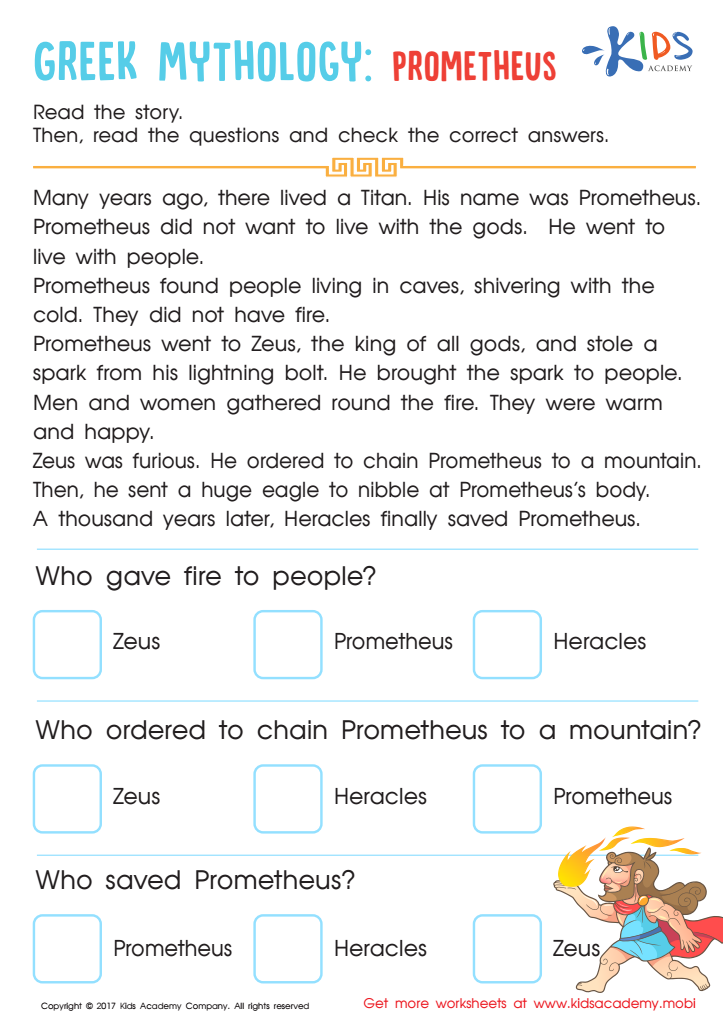
Prometheus Story Worksheet
 Assign to My Students
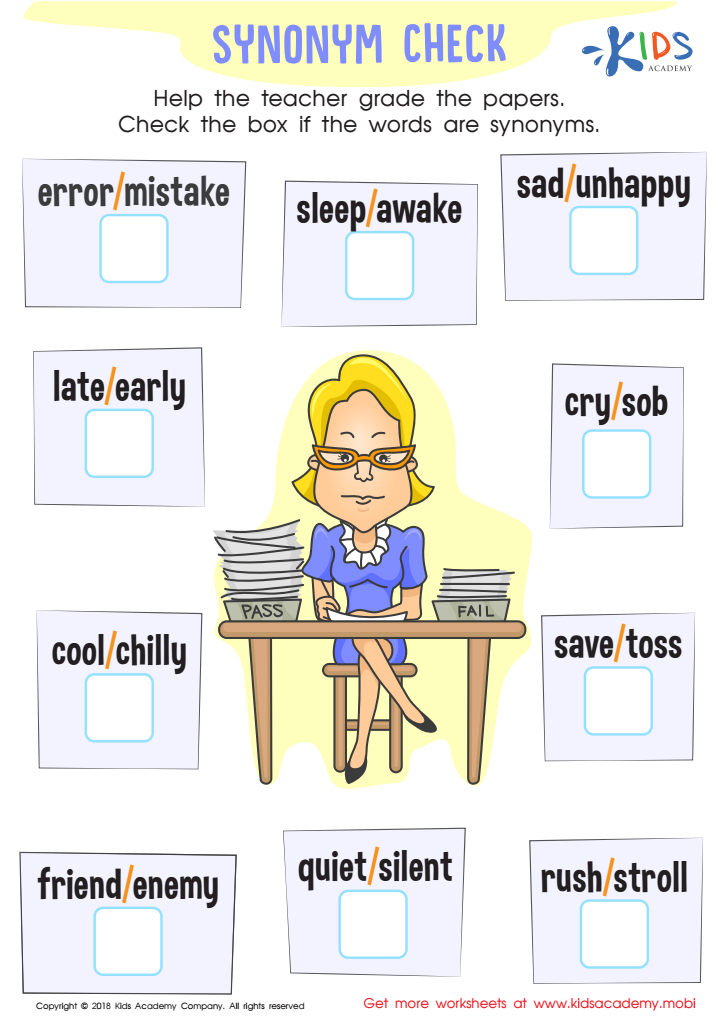
Synonym Check Worksheet
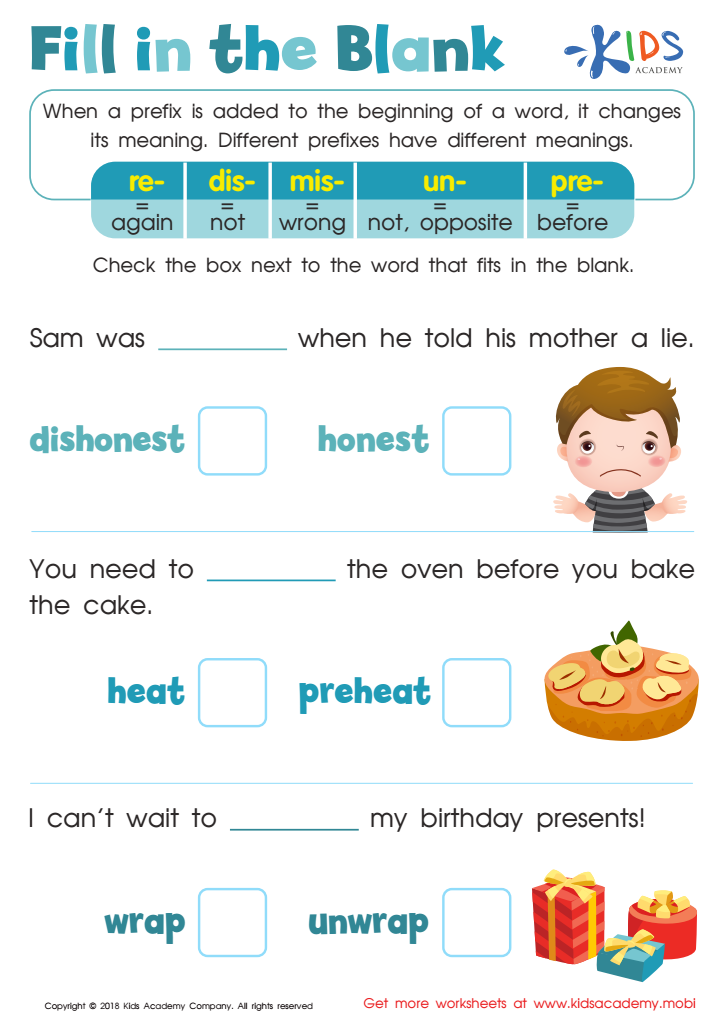
Reading: Fill in the Blank Worksheet
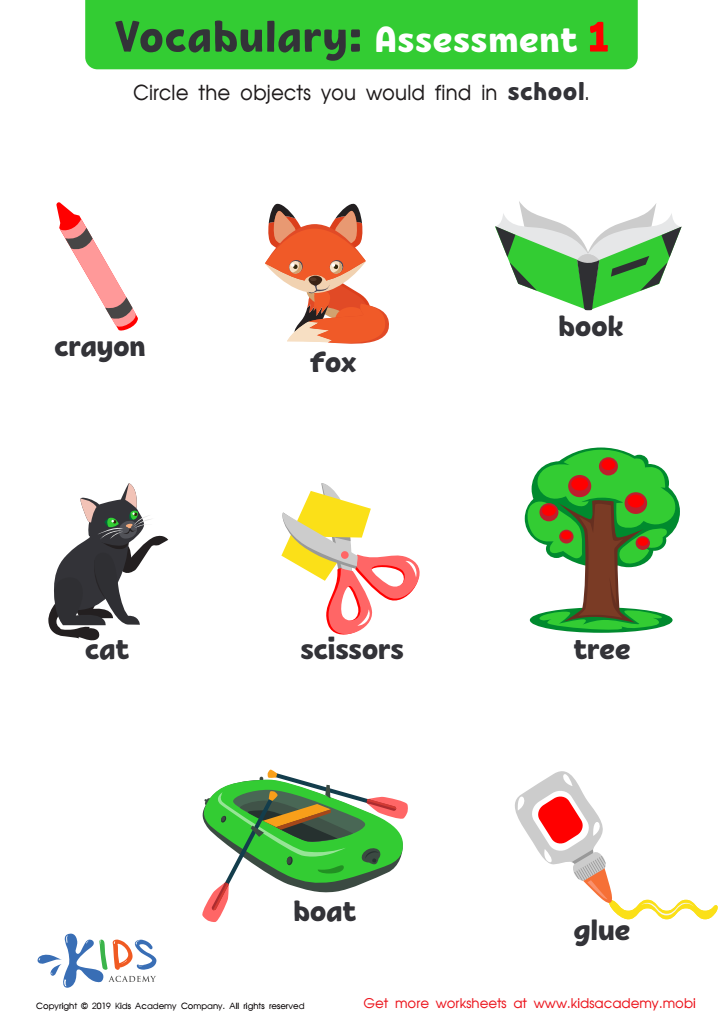
Vocabulary: Assessment 1 Worksheet
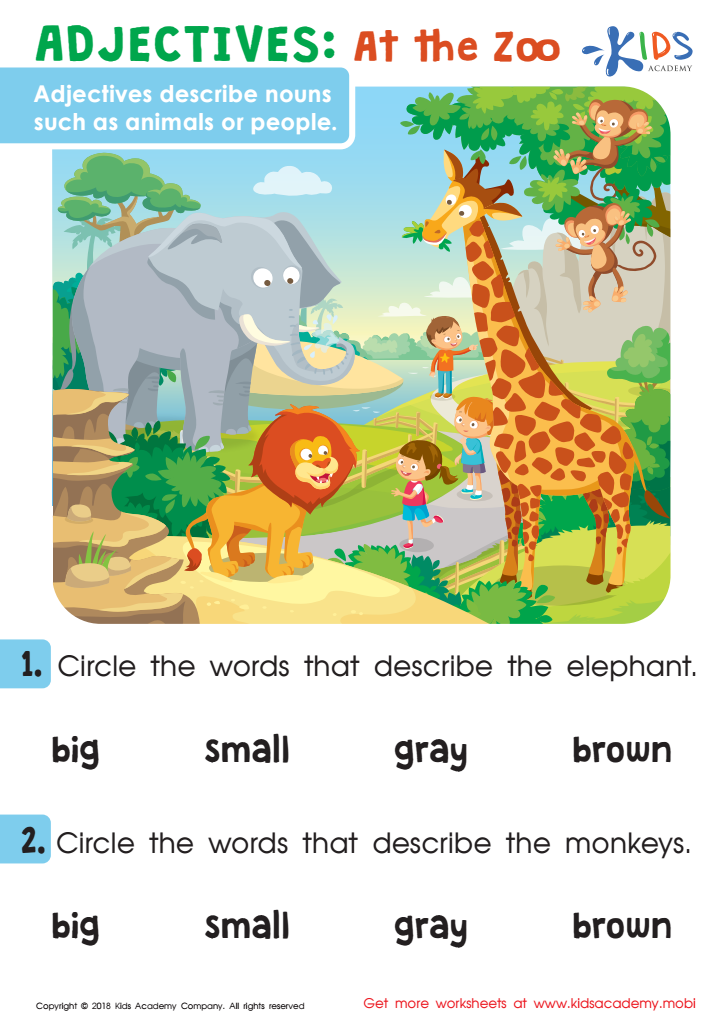
Adjectives: At The Zoo Worksheet
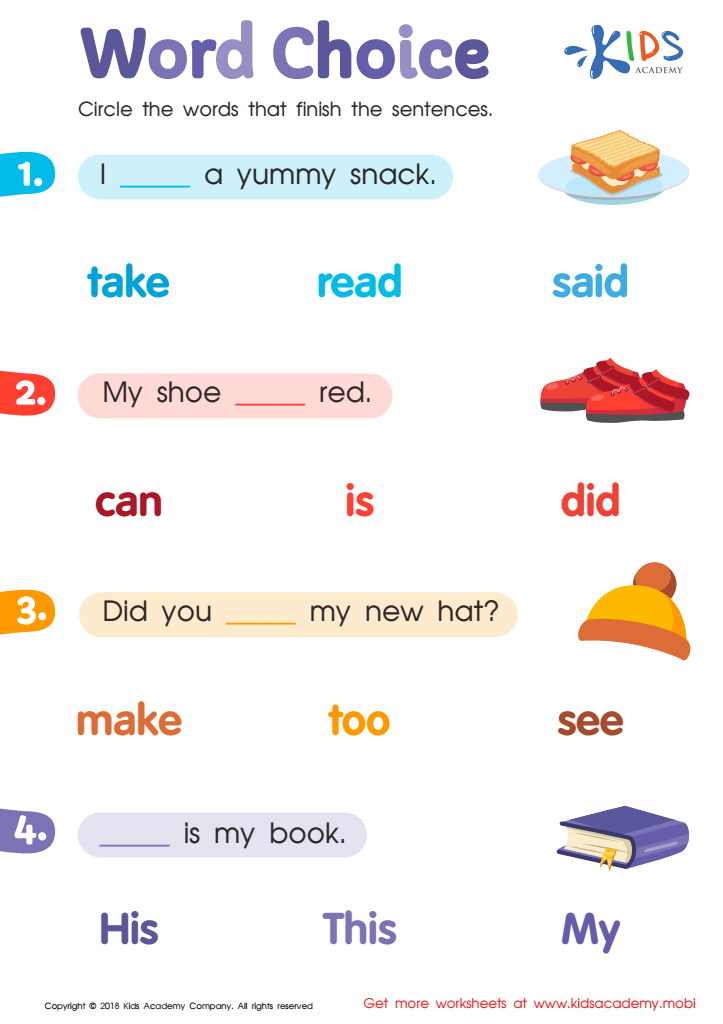
Word Choice Worksheet








Contextual understanding in normal reading is crucial for both parents and teachers, as it significantly impacts a child's overall literacy development. When children read, they don't just decode words; they also draw on contextual clues from the surrounding text, illustrations, and their own experiences to make meaning. This ability helps them to comprehend the material deeply, enhancing critical thinking and empathy.
For parents, fostering contextual understanding means creating a supportive reading environment at home. Engaging in discussions about stories helps children connect texts to their lives, building relevance. This interaction promotes a love for reading and provides parents insight into their child's interests and comprehension skills.
Teachers must prioritize contextual understanding as part of their curriculum. Incorporating diverse texts that reflect a range of cultures and experiences ensures that all students can relate to reading materials. This inclusivity encourages participation and helps students see the value in reading beyond the classroom.
Ultimately, contextual understanding equips children with the skills necessary for academic success and lifelong learning. By nurturing this vital aspect of literacy, parents and teachers empower children to become confident, capable readers who navigate both literature and real-world situations with ease.








