Moral understanding Normal Reading Worksheets
5 filtered results
-
From - To
Enhance your students' moral understanding with our Normal Reading Worksheets at Kids Academy. These worksheets are designed to help children grasp essential values and ethical concepts through engaging reading exercises. Each worksheet features relatable stories and thought-provoking questions that encourage kids to reflect on right and wrong, empathy, and responsibility. Carefully crafted to align with learning standards, our worksheets support the development of critical thinking and moral reasoning. Ideal for early grade teachers, these resources are perfect for integrating into your classroom activities to foster a deeper understanding of morals while improving reading skills. Explore now!
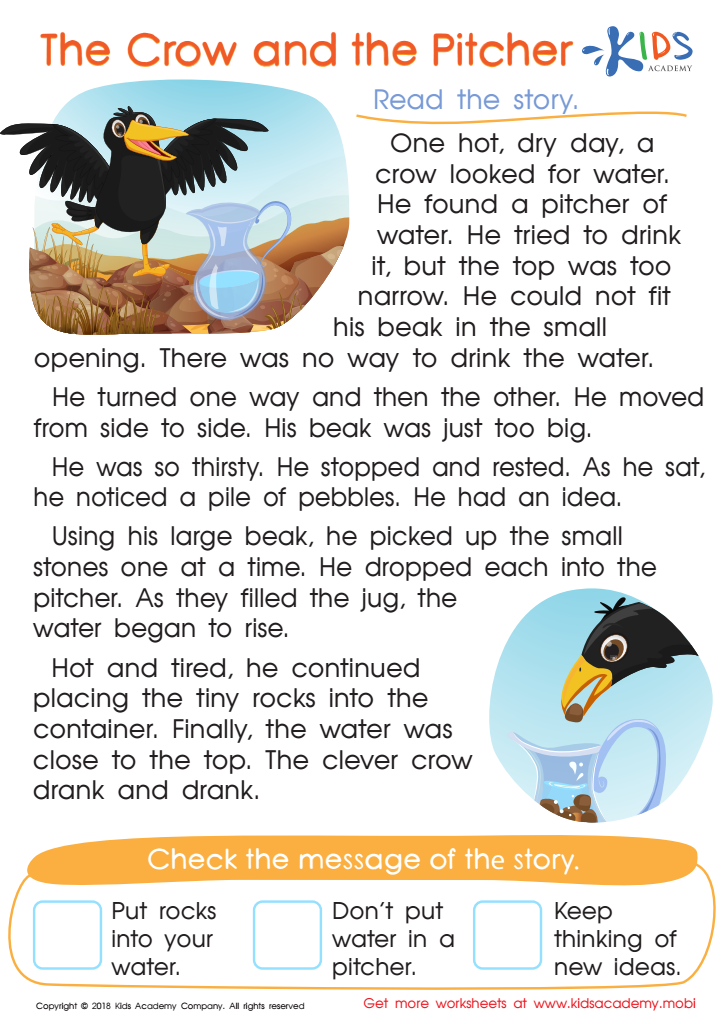
The Crow and the Pitcher Worksheet
 Assign to My Students
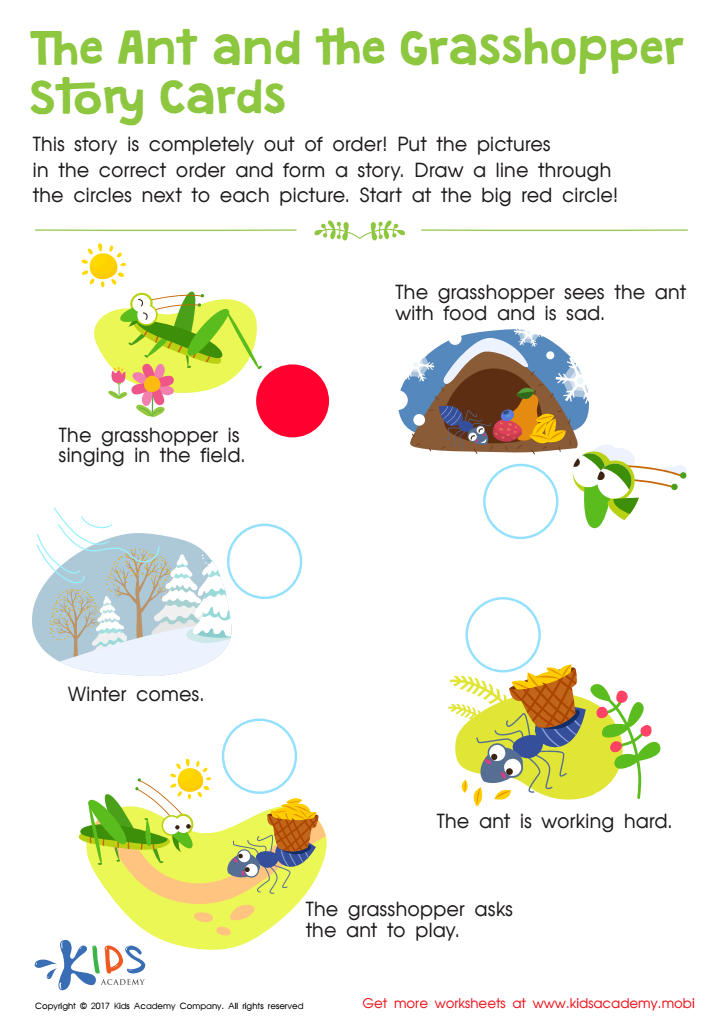
The Ant and The Grasshopper Worksheet
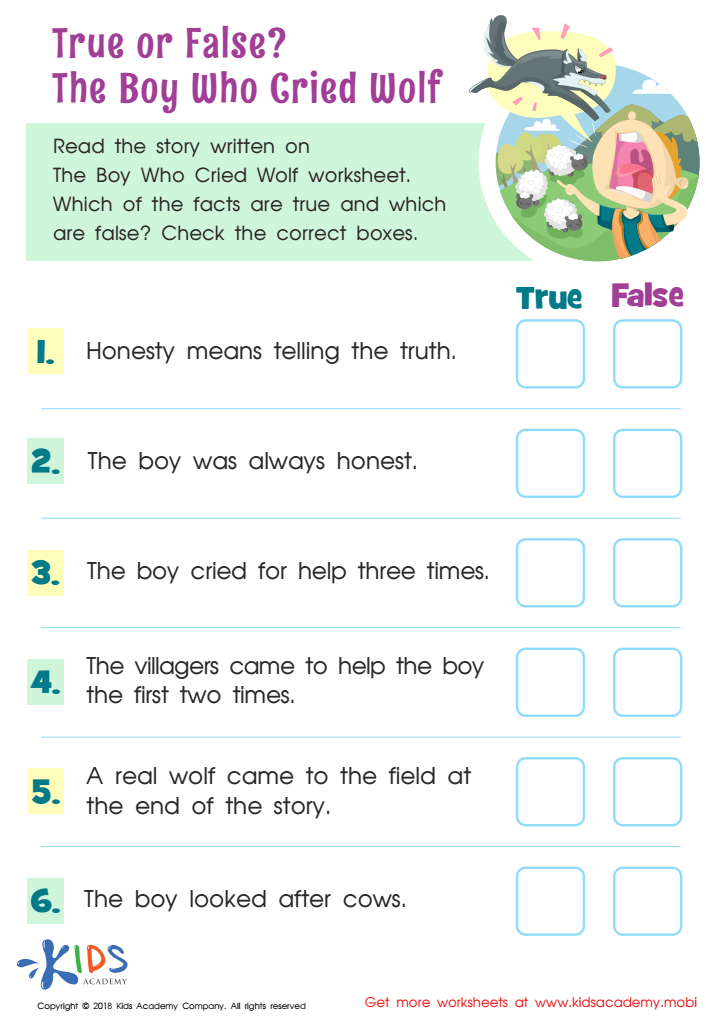
True or False? The Boy Who Cried Wolf Worksheet
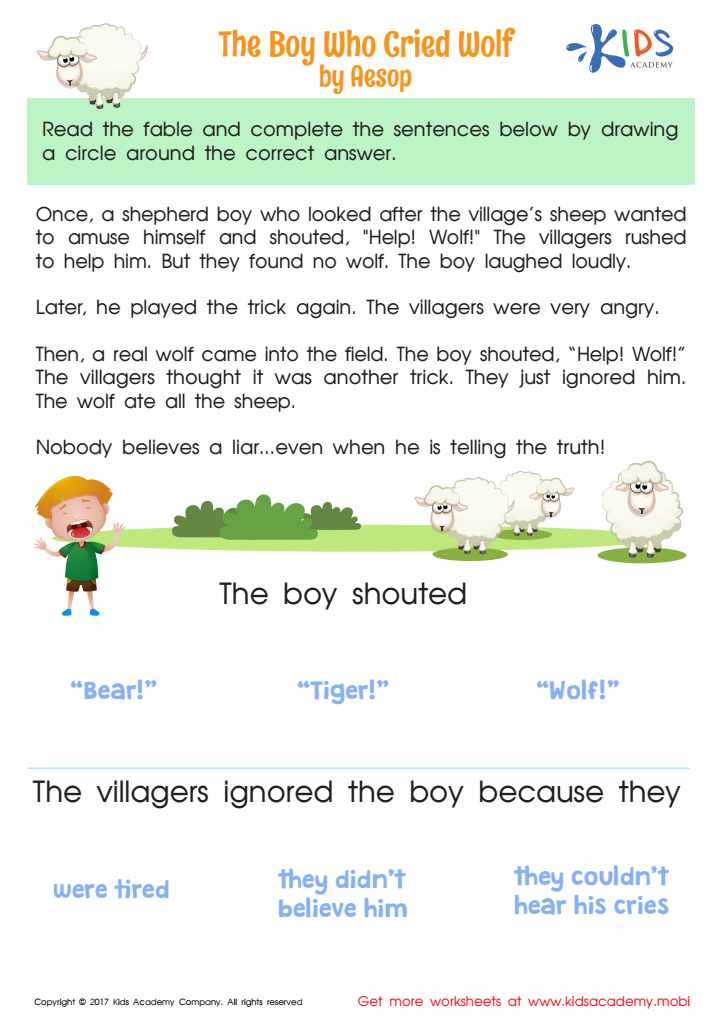
The Boy Who Cried Wolf Worksheet
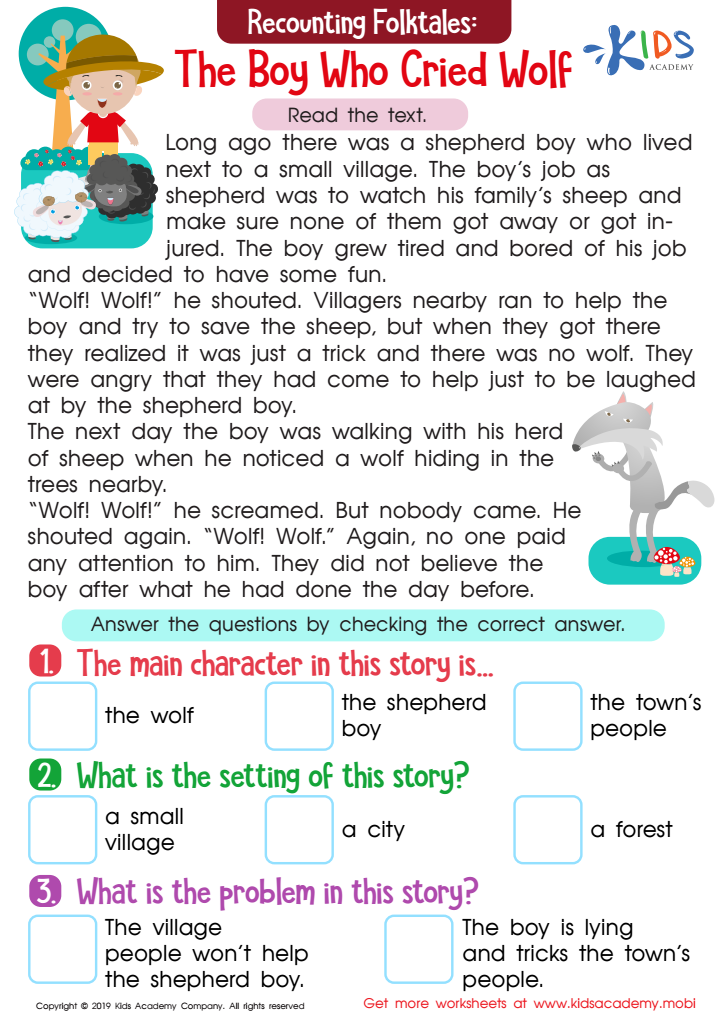
The Boy Who Cried Wolf Part 1 Worksheet







Moral understanding and reading proficiency are cornerstone skills in a child's development that parents and teachers should carefully nurture. Moral understanding helps children differentiate right from wrong, fostering empathy, fairness, and responsibility. This foundation is crucial as it guides their actions and decisions both inside and outside the classroom, helping them build positive relationships and effective social skills.
Simultaneously, proficiency in reading unlocks a child’s potential across all subjects and is fundamental to lifelong learning. Effective reading skills enable children to comprehend and engage with a wide array of texts, fostering critical thinking. It enhances their ability to extract information, analyze it, and draw meaningful conclusions, which are essential cognitive skills in academic and everyday life contexts.
When these two areas are nurtured together, they create a synergistic effect on overall development. For example, reading stories with strong moral lessons helps reinforce ethical concepts while simultaneously improving literacy skills. Stories often provide complex analogies and scenarios that children can reflect upon, fostering deeper moral reasoning and encouraging them to apply these lessons in real-life situations.
Ultimately, caring about moral understanding and normal reading helps build well-rounded individuals who are capable, ethical thinkers, poised for success both personally and academically. Ensuring both are developed sets children up for a balanced, knowledgeable, and principled adulthood.








