Shape Recognition Normal Reading Worksheets
3 filtered results
-
From - To
Enhance your child's learning with our engaging Shape Recognition Normal Reading Worksheets. Designed for early learners, these worksheets combine fun and education, helping kids develop their shape identification skills through interactive reading exercises. Each worksheet features colorful illustrations and simple text to ensure that young readers stay captivated while mastering essential concepts. Perfect for classrooms or at-home activities, these resources support reading fluency and reinforce geometry basics. Empower your child’s cognitive development and boost their confidence in recognizing shapes with our carefully curated materials, crafted to foster a love for learning while building vital foundational skills. Download and explore today!
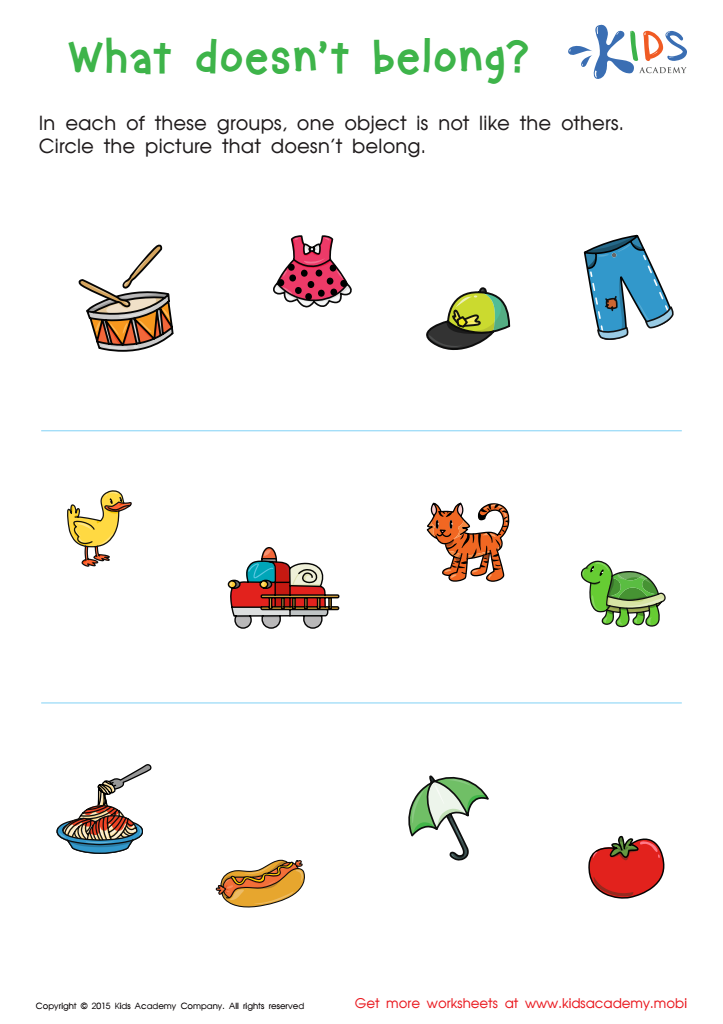
First Words: What Doesn't Belong Worksheet
 Assign to My Students
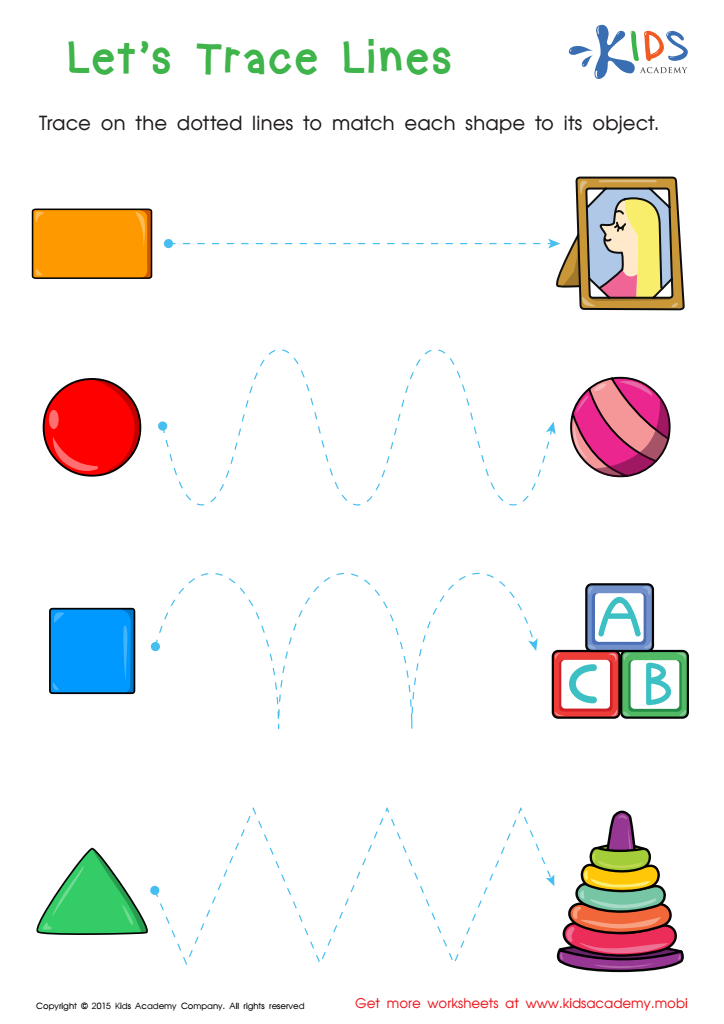
First Words: Let's Trace Lines Worksheet
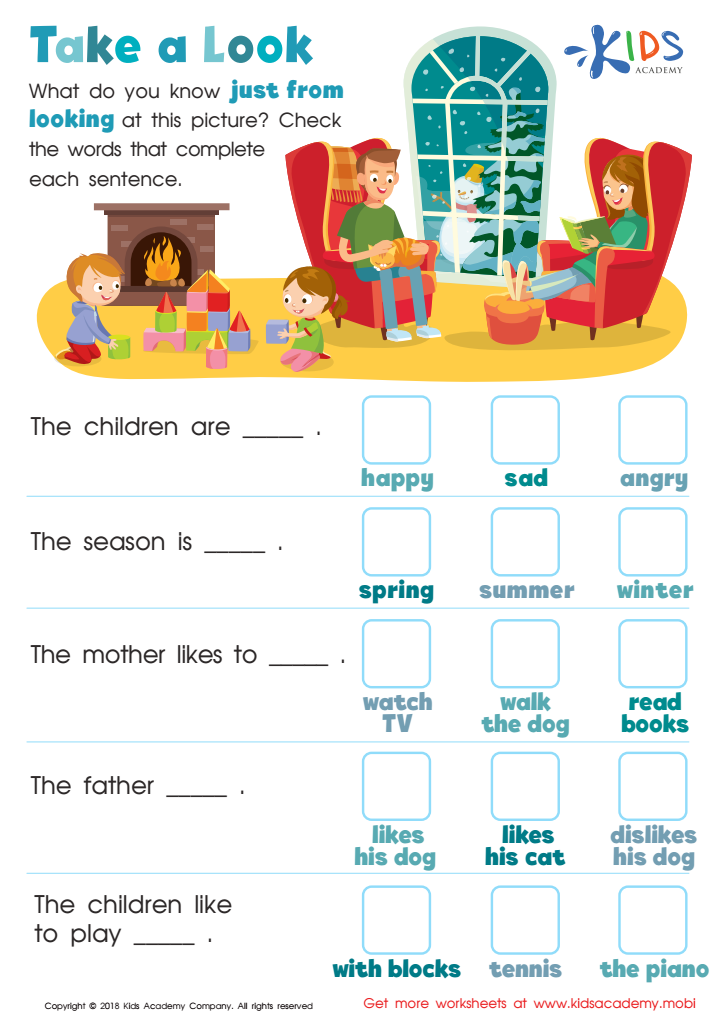
Take a Look - Part 1 Worksheet








Shape recognition is an essential cognitive skill that serves as a foundation for various aspects of early learning. For both parents and teachers, nurturing this skill in young children is vital for multiple reasons. First, shape recognition is closely tied to spatial awareness, which influences a child's ability to navigate their environment and understand important concepts in mathematics, such as geometry. Recognizing shapes aids children in visualizing and categorizing the world around them.
Second, shape recognition plays a significant role in literacy development. Familiarity with shapes can enhance phonemic awareness, helping children to decode letters and words more effectively as they develop reading skills. Moreover, shape recognition activities often involve hands-on learning and play, which engage children and make learning enjoyable.
For early educators and parents, fostering shape recognition can be integrated seamlessly into daily routines through games, puzzles, and interactive activities. This not only helps in cognitive development but also encourages bonding and communication between adults and children. Ultimately, when parents and teachers prioritize shape recognition, they invest in essential foundational skills that support children's overall academic success and lifelong learning.








