Historical Knowledge Normal Reading Comprehension Worksheets
5 filtered results
-
From - To
Discover our engaging "Historical Knowledge Normal Reading Comprehension Worksheets," designed to enhance students' reading skills while exploring significant historical events and figures. These thoughtfully constructed worksheets encourage critical thinking, helping young learners connect with the past through reading. Each worksheet includes interesting texts followed by questions that assess comprehension, promote discussion, and stimulate curiosity about history. Ideal for classroom use or at-home learning, these resources cater to diverse learning levels, ensuring every child thrives. Foster a love for reading and history simultaneously with our comprehensive and educational materials, making learning both fun and informative for early grade students.
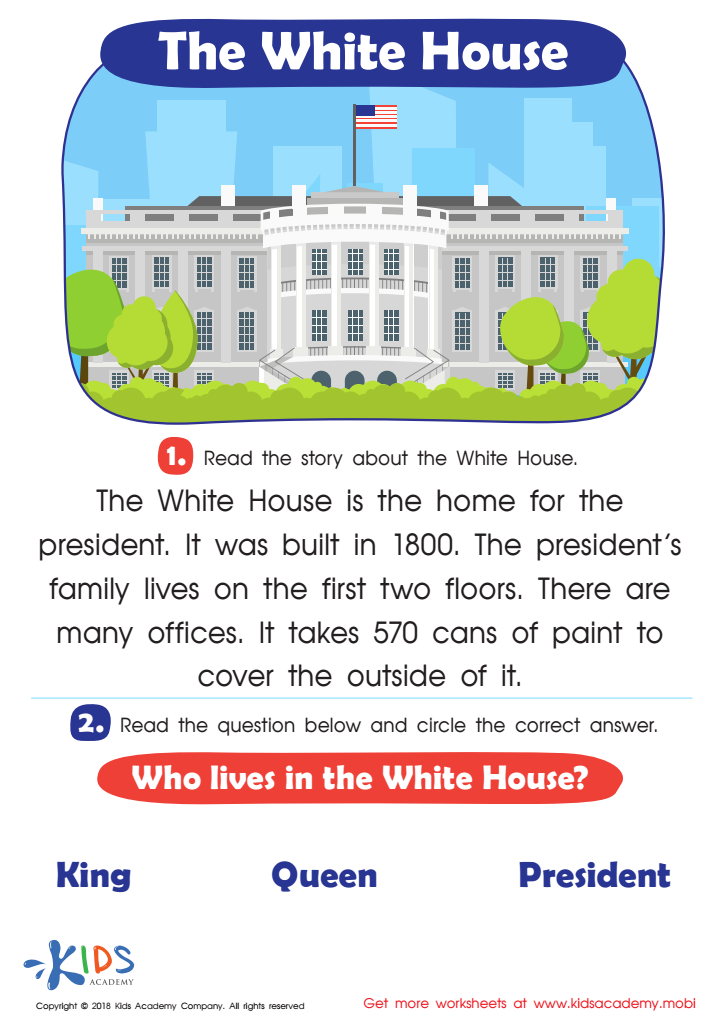
White House Worksheet
 Assign to My Students
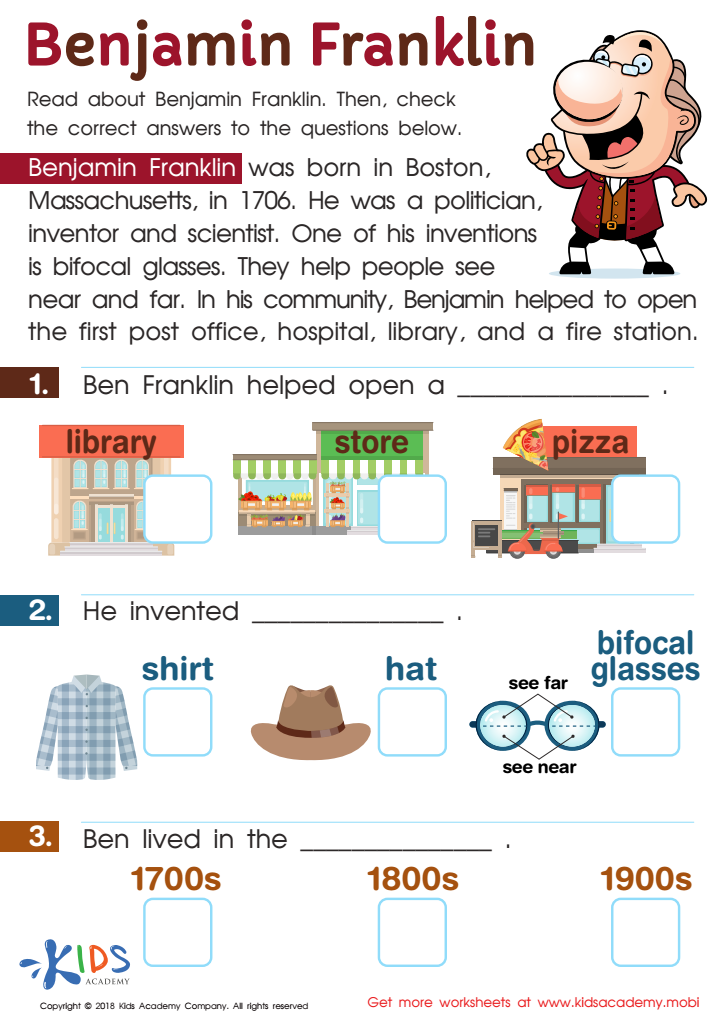
Benjamin Franklin Worksheet
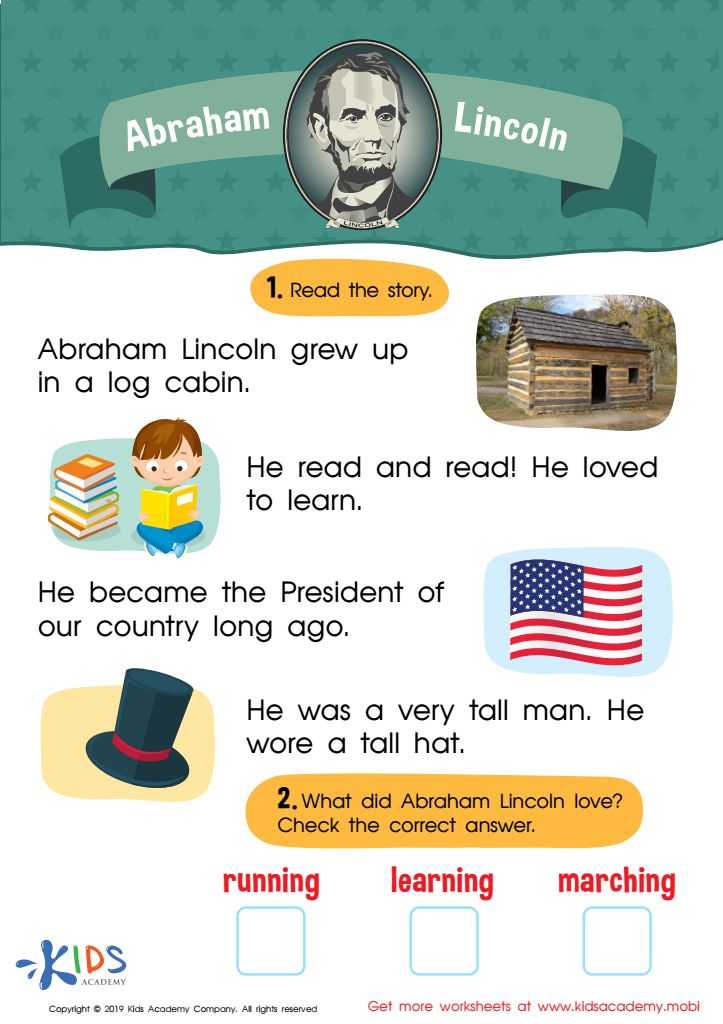
Abraham Lincoln Worksheet
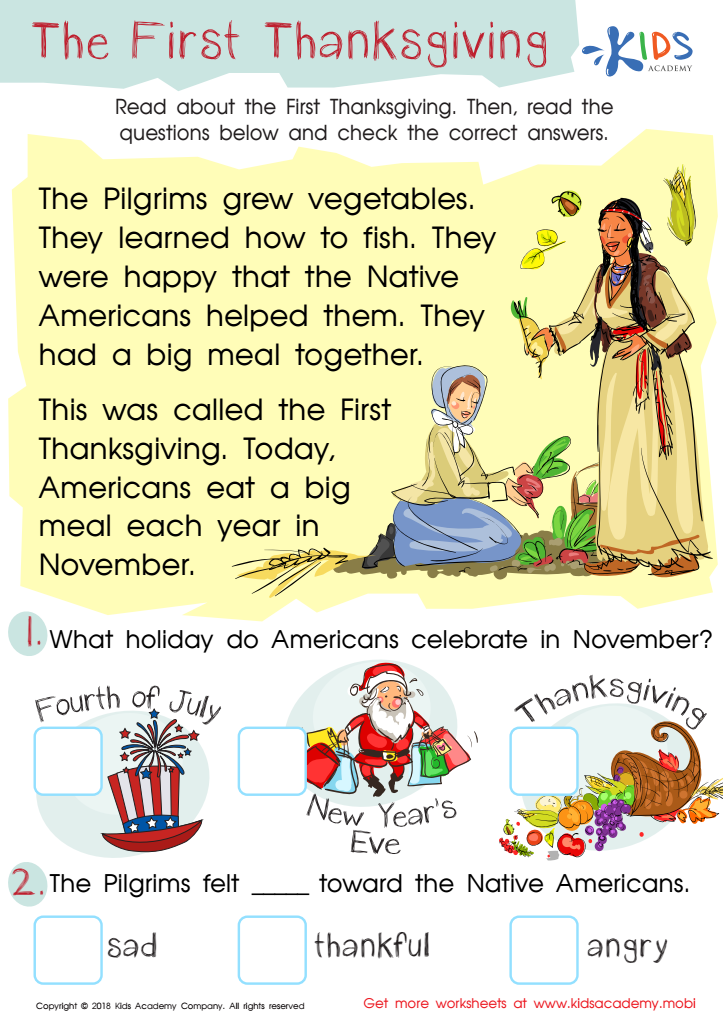
Assessment: First Thanksgiving Worksheet
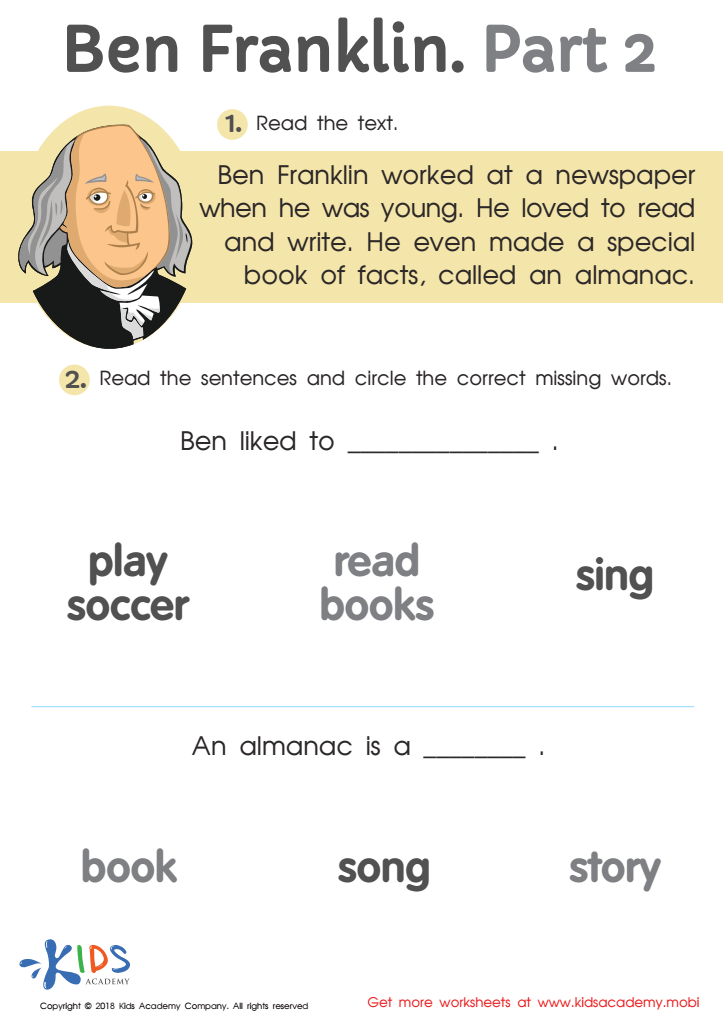
Ben Franklin Part 2 Worksheet






Parents and teachers should care about historical knowledge as it plays a crucial role in enhancing reading comprehension skills among children. Historical context enriches texts, allowing students to better understand characters, settings, and plots. When children are equipped with historical knowledge, they can connect the narrative to real-world events, fostering critical thinking and deeper analysis.
Furthermore, understanding history cultivates empathy. Through literature that reflects different times and cultures, children can recognize diverse perspectives, learn from past mistakes, and appreciate their own heritage. This awareness promotes engaged citizenship and social responsibility.
Moreover, integrating historical knowledge into reading programs can spark interest in subjects like history and literature. Engaging students with stories from the past can ignite curiosity, encouraging further exploration and learning. Parents and teachers can utilize historical references in texts as discussion points, enhancing vocabulary and comprehension skills.
Ultimately, weaving historical knowledge into reading comprehension not only improves students’ abilities to decode and understand texts but also helps to create well-rounded individuals who are informed, empathetic, and critical thinkers. Investing in this educational approach lays the foundation for lifelong learning and enriches students' understanding of their society and the world.








