Moral understanding Normal Reading Fiction Worksheets
5 filtered results
-
From - To
Enhance your child’s moral understanding with our engaging Normal Reading Fiction Worksheets. Designed for young learners, these worksheets promote critical thinking and empathy through captivating stories. Each worksheet encourages children to explore themes of kindness, fairness, and responsibility, enabling them to relate the characters' experiences to real-life situations. By analyzing dilemmas and decision-making scenarios, students will develop a stronger moral compass and improve their reading comprehension skills. Foster meaningful discussions with your child while they enjoy learning through fiction. Perfect for use at home or in the classroom, our worksheets make moral lessons approachable and enjoyable for every student. Start exploring today!
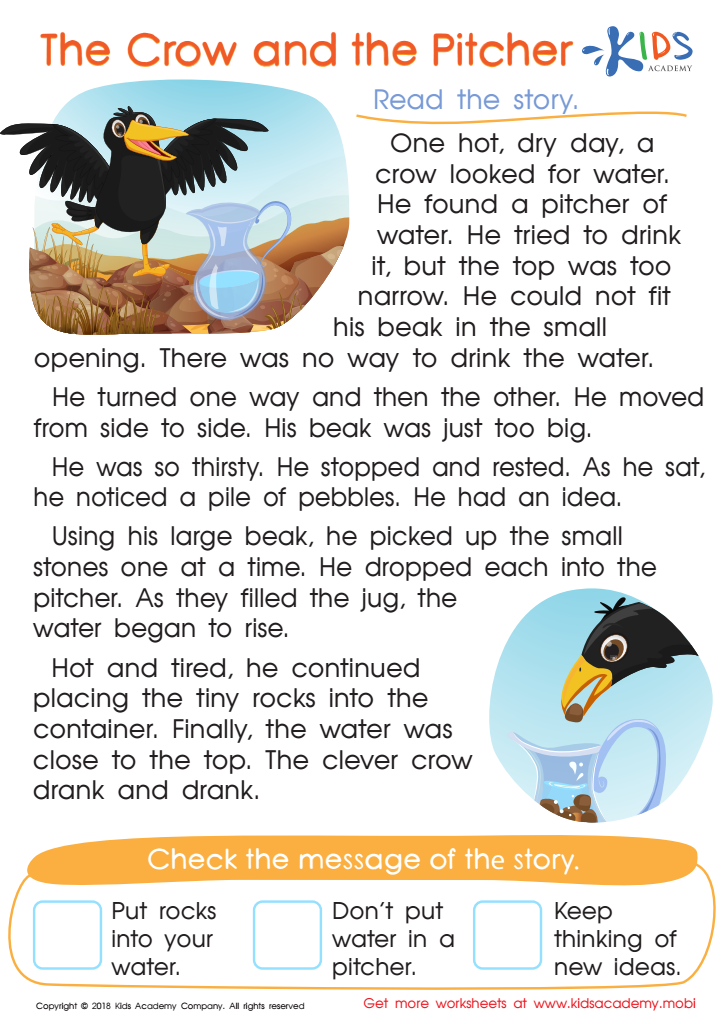
The Crow and the Pitcher Worksheet
 Assign to My Students
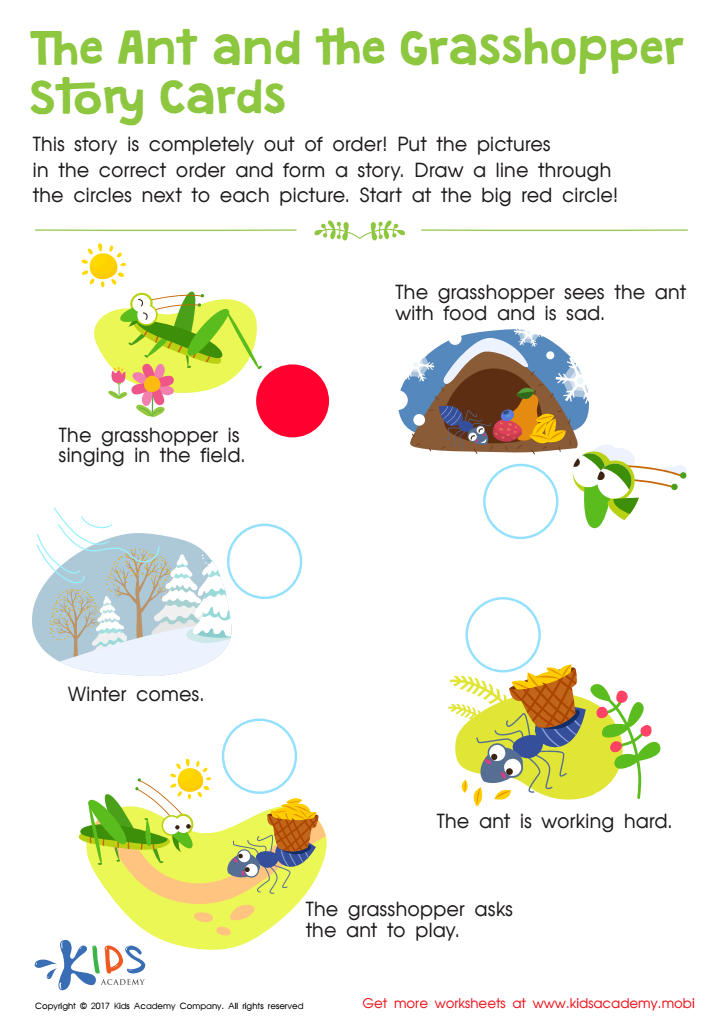
The Ant and The Grasshopper Worksheet
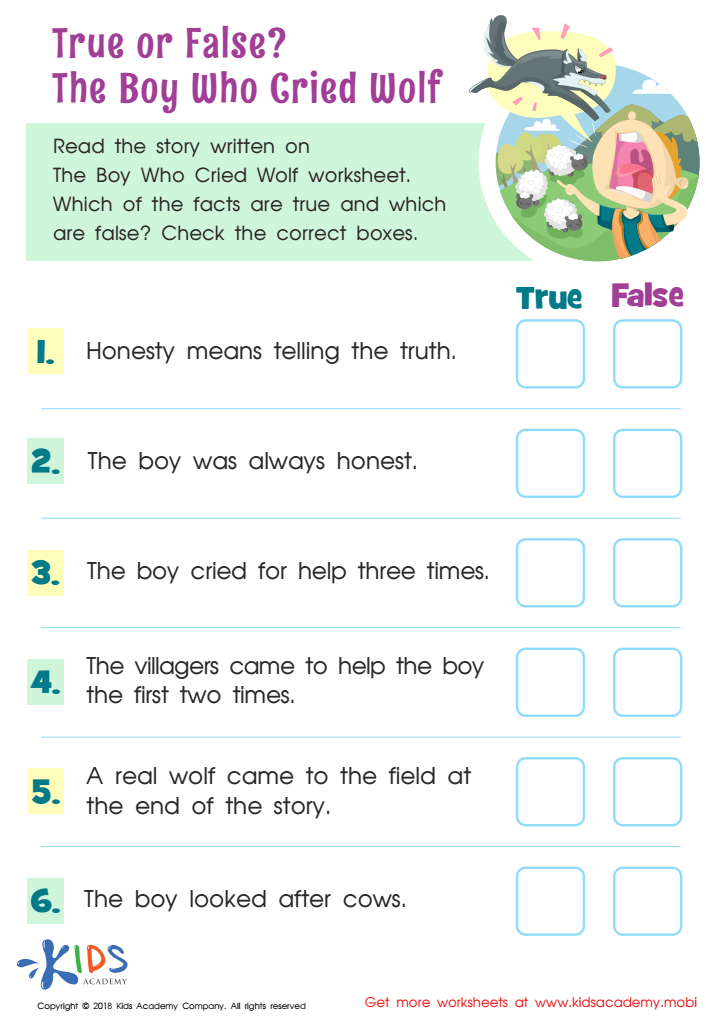
True or False? The Boy Who Cried Wolf Worksheet
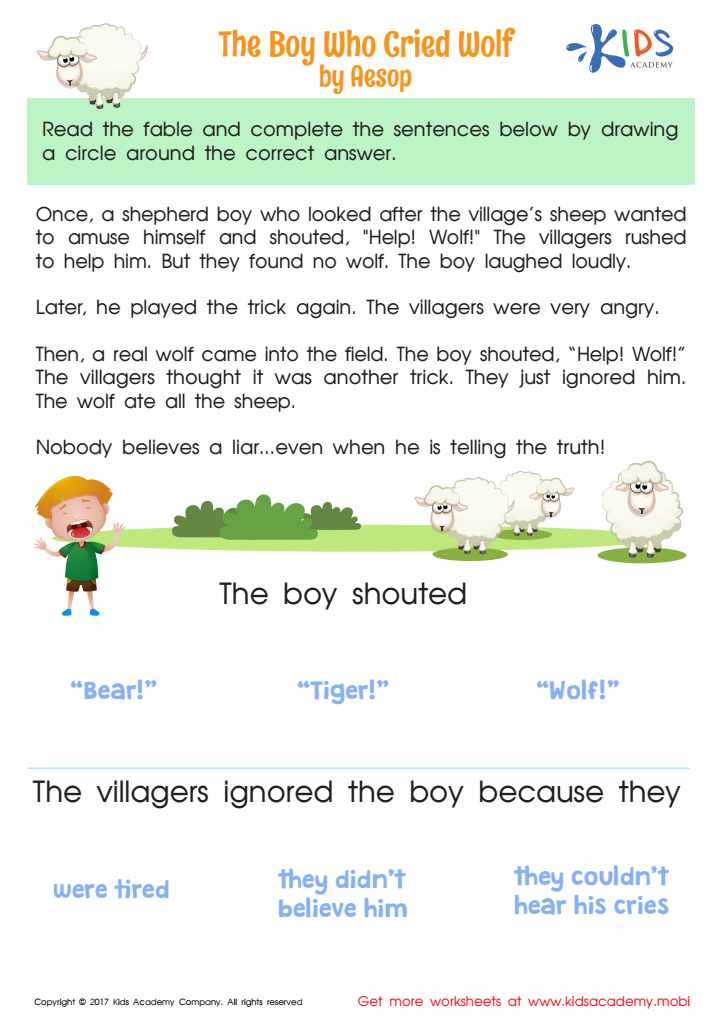
The Boy Who Cried Wolf Worksheet
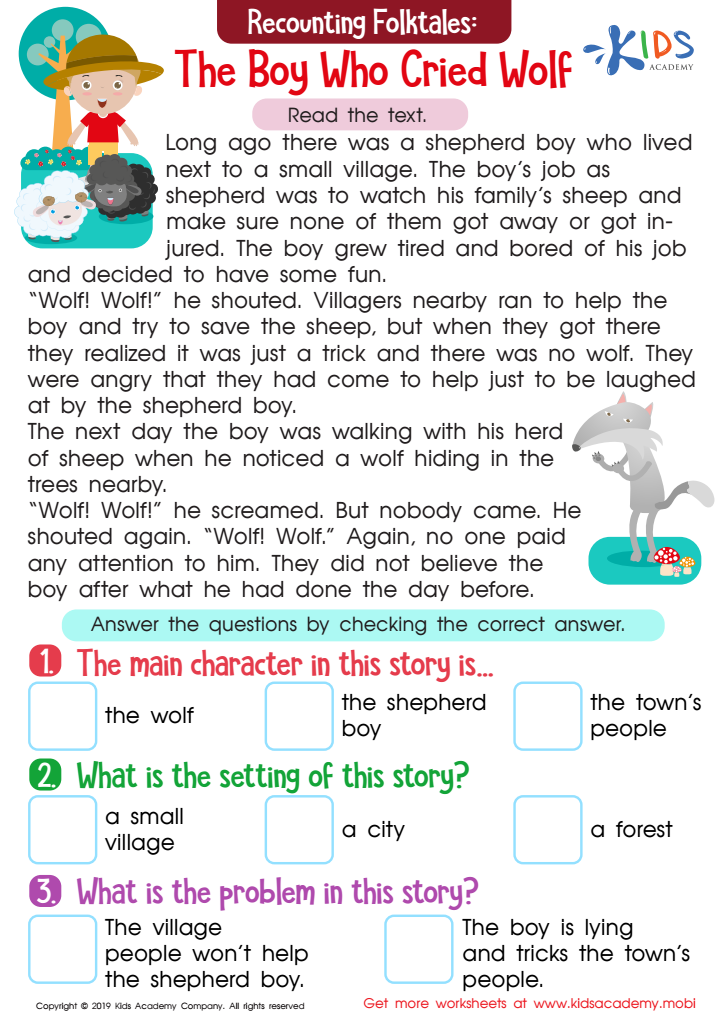
The Boy Who Cried Wolf Part 1 Worksheet




.jpg)



Moral understanding is an essential skill developed through engaging with normal reading fiction, which greatly benefits both children and their caregivers. Fiction provides young readers with diverse characters, dilemmas, and worlds that allow them to explore complex moral situations in a safe environment. Through storytelling, children learn empathy by seeing issues from different perspectives, ultimately fostering compassion and emotional intelligence.
For parents and teachers, promoting moral understanding through fiction can enhance discussions about values, ethics, and consequences. It encourages critical thinking, as children are prompted to evaluate decisions made by characters and reflect on corresponding real-life situations. Additionally, literature often embodies cultural norms and moral lessons, reinforcing ethical standards that shape character development beyond the classroom.
Moreover, when parents engage with children through reading, it strengthens family bonds and provides a platform for open dialogue about choices and feelings. For teachers, incorporating moral themes into literacy instruction creates a rich, supportive environment where students feel safe to express and discuss their views. In essence, nurturing moral understanding through fiction is critical for building a grounded, empathetic, and socially responsible generation, making it a pursuit worthy of both parents and educators.







