Story analysis Normal Reading Fiction Worksheets
4 filtered results
-
From - To
Discover the "Story Analysis Normal Reading Fiction Worksheets" to enhance your child's reading comprehension skills! These engaging worksheets are designed for young learners, focusing on key elements of fiction such as identifying the main idea, characters, settings, and plot. Through captivating stories and thought-provoking questions, children will develop critical thinking and analytical skills. Perfect for classroom use or at-home practice, these worksheets make learning fun and effective. Help your child excel in reading with our expertly crafted resources that foster a love for storytelling and an in-depth understanding of fictional narratives. Explore now on Kids Academy!
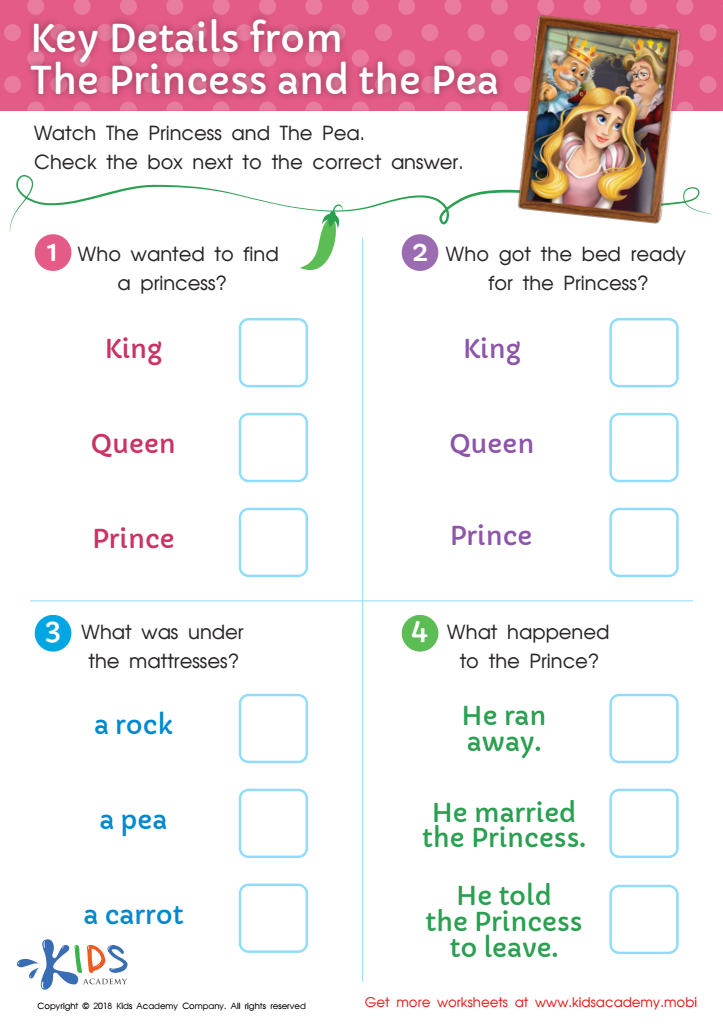
Key Details from the Princess and the Pea Worksheet
 Assign to My Students
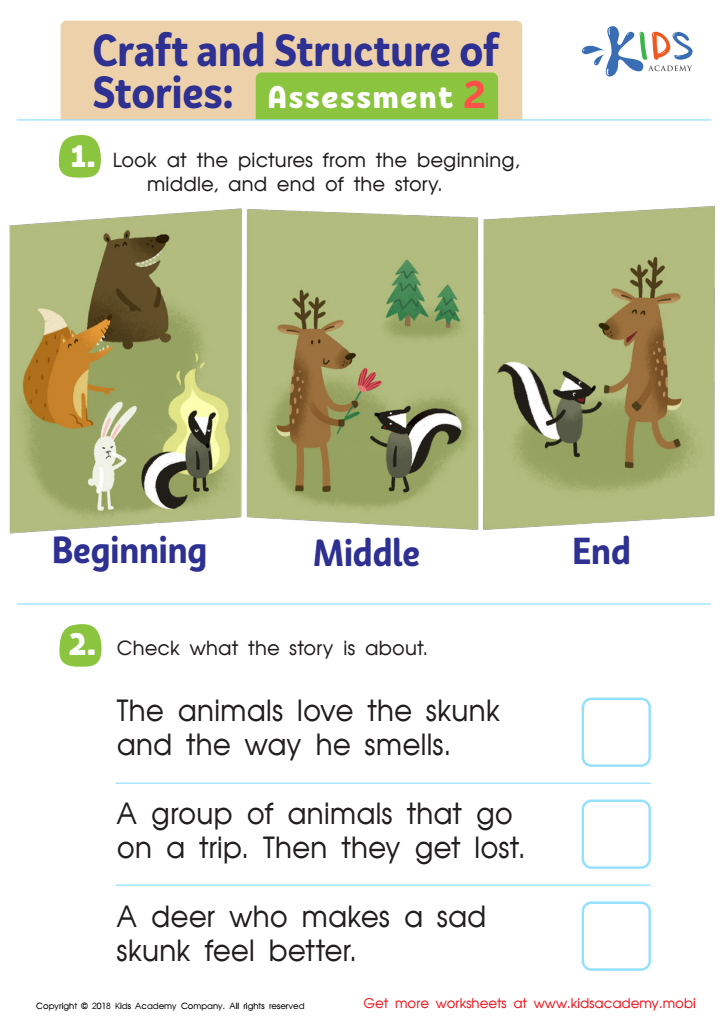
Craft and Structure of Stories: Assessment 2 Worksheet
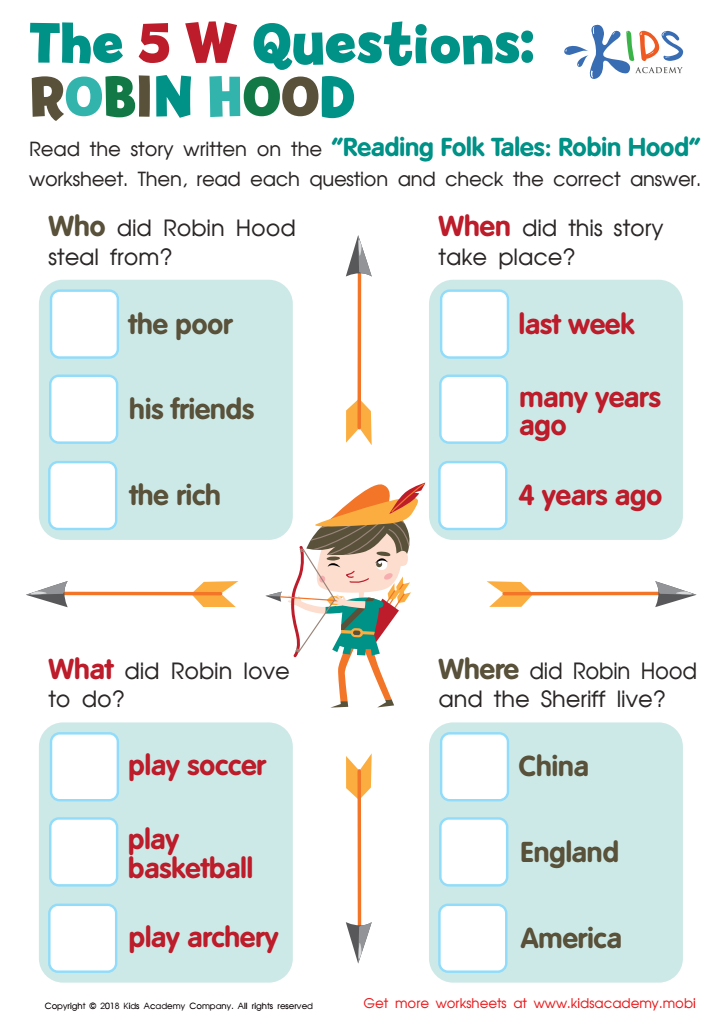
The 5 W Questions: Robin Hood Worksheet
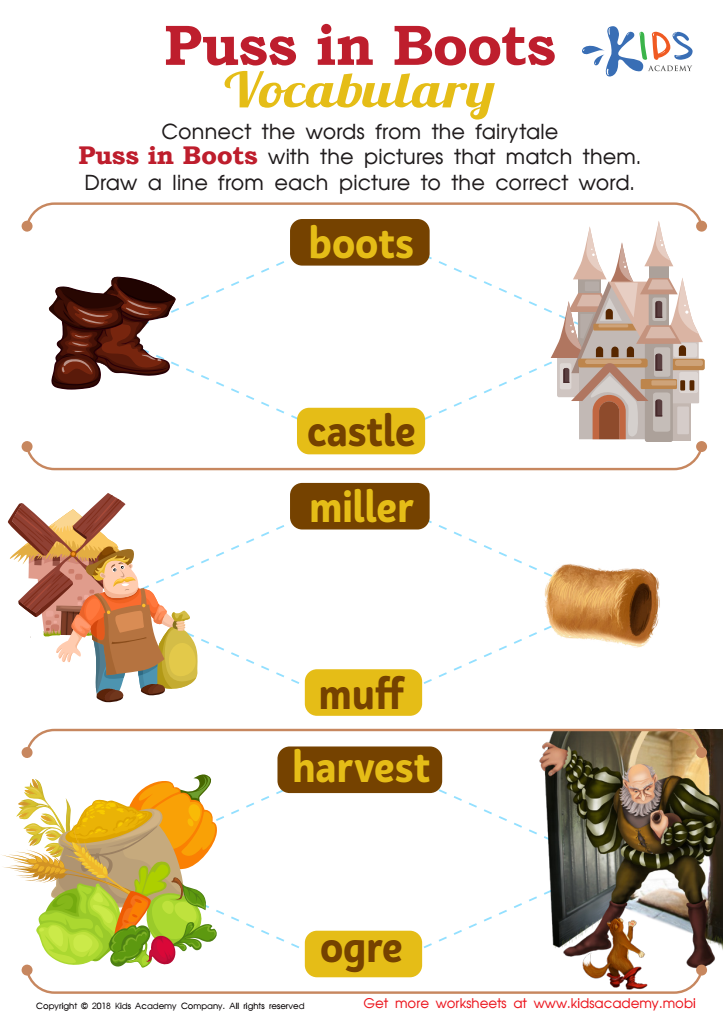
Puss in Boots Vocabulary Worksheet



.jpg)




Story analysis in normal reading fiction is essential for both parents and teachers as it fosters children’s intellectual and emotional development. Firstly, analyzing stories helps cultivate critical thinking skills. Children learn to identify themes, understand character motivations, and discern plot structures, enhancing their comprehension and analytical abilities. This cognitive engagement translates into better problem-solving skills in real-world situations.
Secondly, story analysis deepens empathy and emotional intelligence. By exploring different characters' perspectives, children recognize and appreciate diverse viewpoints, which fosters empathy and social understanding. Such emotional development is crucial for forming healthy interpersonal relationships and understanding societal dynamics.
Furthermore, parents and teachers who focus on story analysis can easily identify and address developmental needs. For example, if a child consistently struggles with understanding character motivations, it might be an indicator of broader comprehension difficulties, necessitating targeted support.
Finally, engaging in story analysis proves reading can be an enjoyable and enriching activity. Early positive reinforcement around books can inculcate a lifelong love for reading, vital for continuous learning and personal growth. Therefore, incorporating story analysis in normal fiction reading is more than an academic exercise; it’s a tool for holistic development, laying a firm foundation for a child’s future.







