Rhyming skills development Normal Rhyming Words Worksheets
3 filtered results
-
From - To
Enhance your child's linguistic abilities with our "Rhyming Skills Development Normal Rhyming Words Worksheets." Designed to foster early literacy, these engaging resources help children recognize and create rhyming words with ease. Each worksheet features fun, interactive activities that promote phonemic awareness, crucial for reading proficiency. Kids will delight in matching and identifying words that sound alike, building their vocabulary and oral language skills. Perfect for both classroom and home use, these worksheets cater to various learning styles, ensuring every child progresses confidently. Explore our selection to support your child's journey toward mastering rhyming words joyfully and effectively.
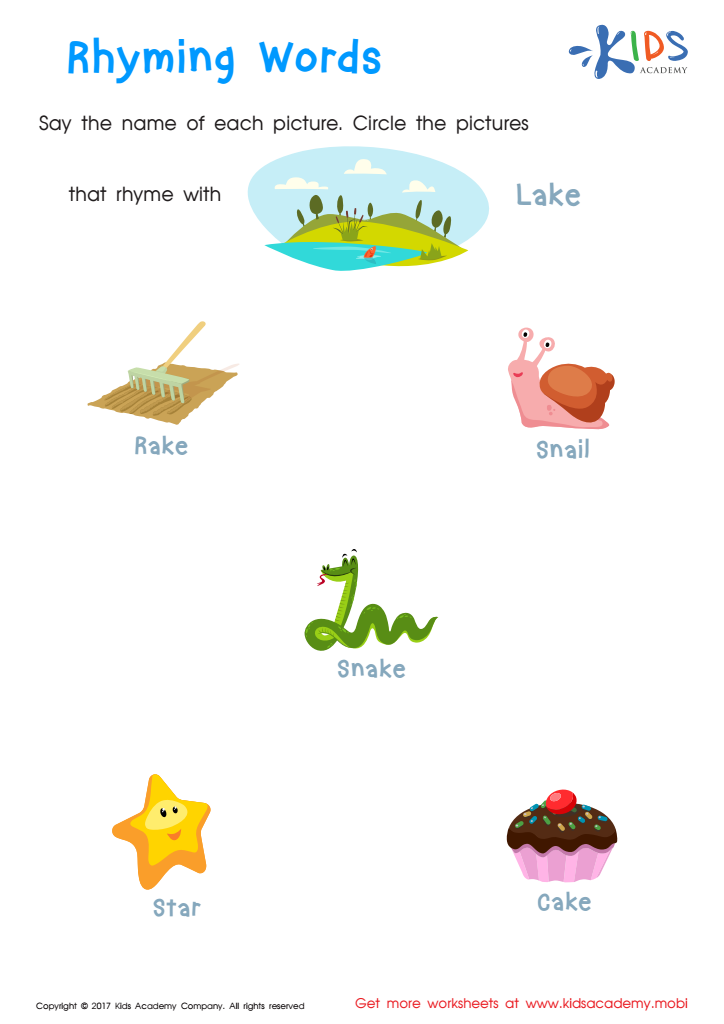
Rhyming Words Rhyming Worksheet
 Assign to My Students
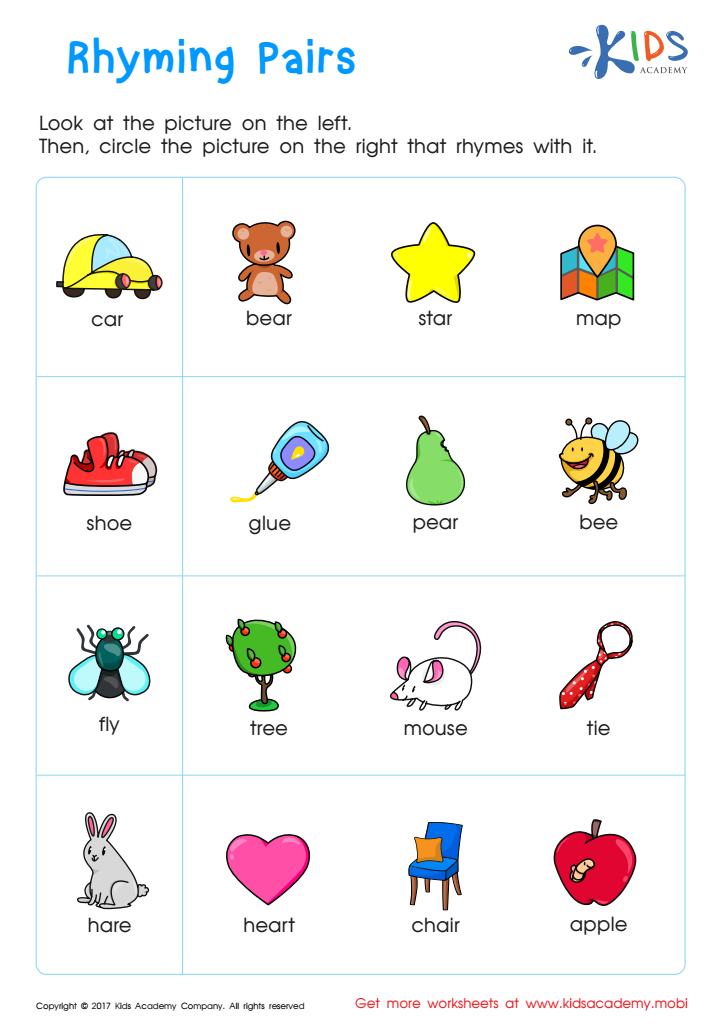
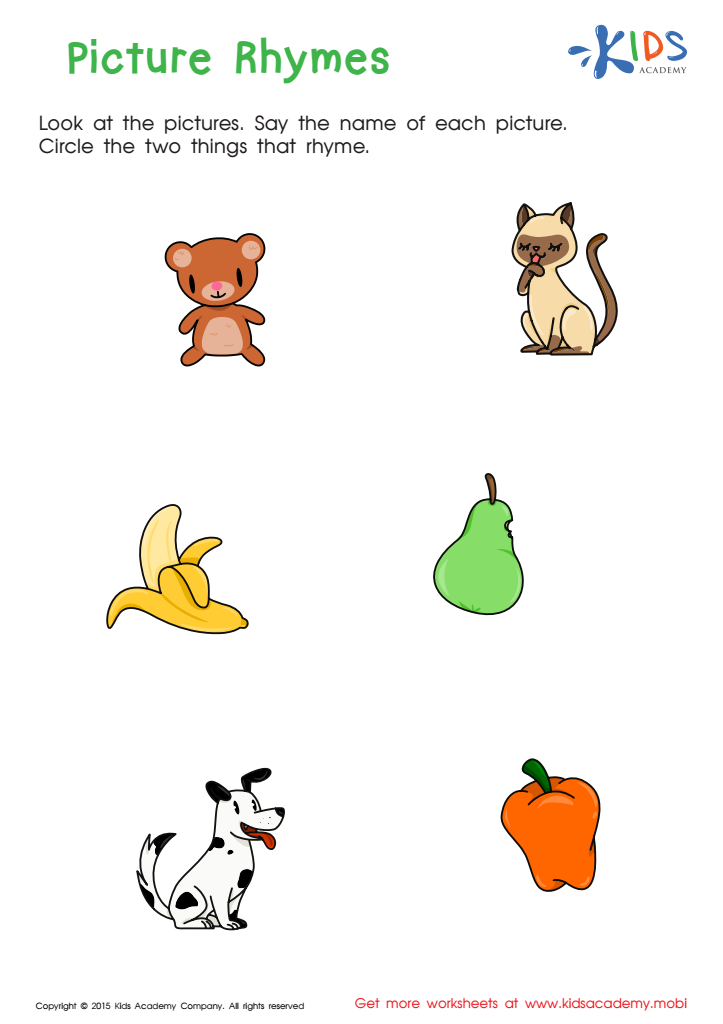
First Words: Picture Rhymes Worksheet








Rhyming skills are essential in early childhood development and hold a pivotal place in language acquisition and literacy. Rhyming helps young learners notice the sounds within words, which is critical for phonemic awareness—an important predictor of reading success. When children distinguish and predict rhyming words, they develop better auditory discrimination, helping them recognize patterns and sound structures.
For teachers and parents, nurturing rhyming skills also promotes vocabulary expansion and memory retention. Rhyming often involves playful repetition and predictable patterns, making it easier for children to remember new words and concepts. This enriched vocabulary can foster better communication skills and encourage creative thinking.
Moreover, rhyming is fun and engaging. Children usually find rhyming activities, like nursery rhymes and songs, entertaining, which can make learning seem like play rather than work. This positive association with learning can instill a lifelong love for reading and education.
By focusing on rhyming skills, parents and teachers provide foundational tools that support overall academic success. Building these skills early ensures children are prepared for future learning tasks, fostering a strong literacy base that will benefit them throughout their educational journey.








