Vocabulary enhancement Normal Sight Words Worksheets
4 filtered results
-
From - To
Enhance your child's vocabulary with our expertly crafted Normal Sight Words Worksheets designed to build essential early reading skills. These engaging, printable activities successfully combine fun with learning, making mastering sight words enjoyable and effective. Our worksheets are perfect for young learners, helping them recognize, read, and use common words in a variety of sentences and contexts. These resources boost their confidence, broaden their vocabulary, and lay a strong foundation for future reading proficiency. Ideal for at-home practice or classroom use, our sight word worksheets are an indispensable tool for fostering your child's lifelong love for reading. Try them today!
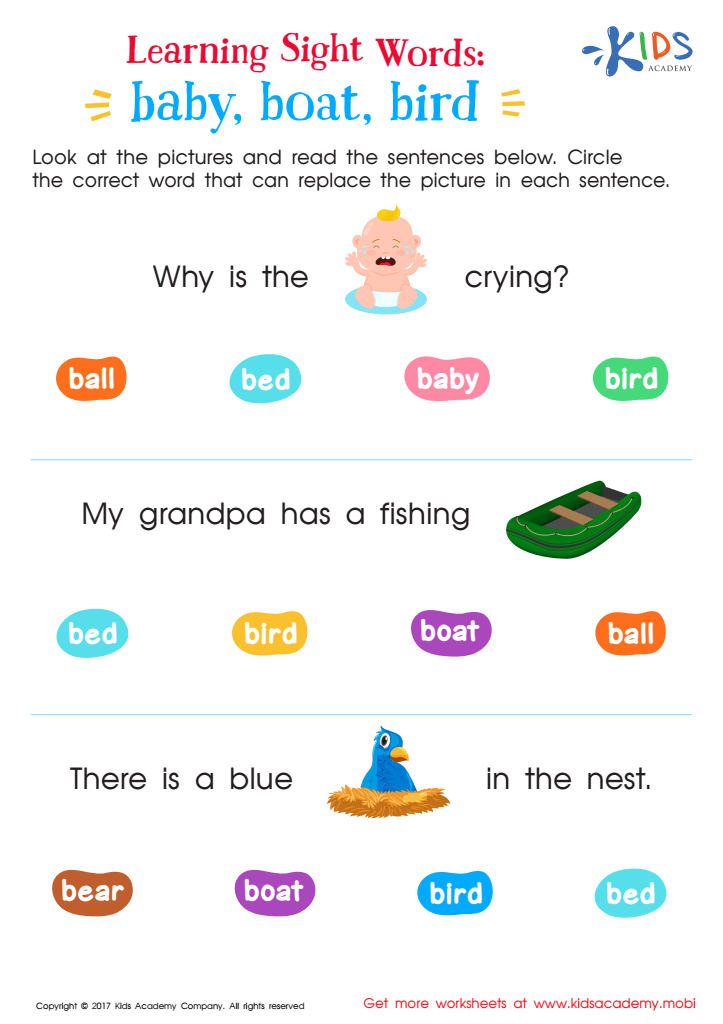
Baby, Boat, Bird Worksheet Sight Words Worksheet
 Assign to My Students







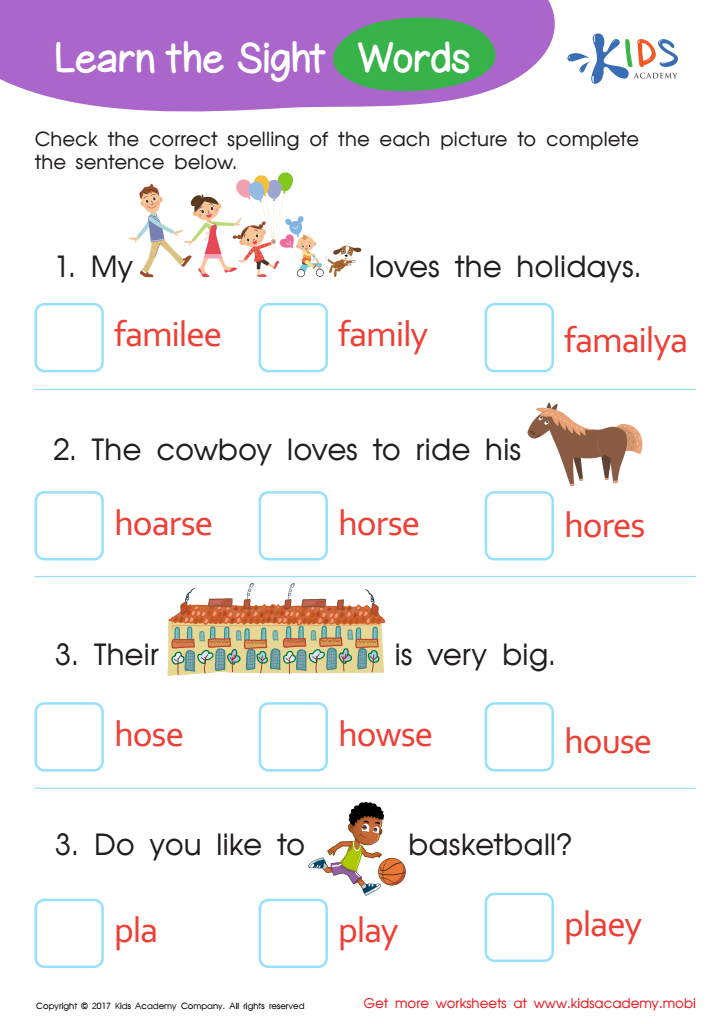
Family, Horse, House, Play Sight Words Worksheet
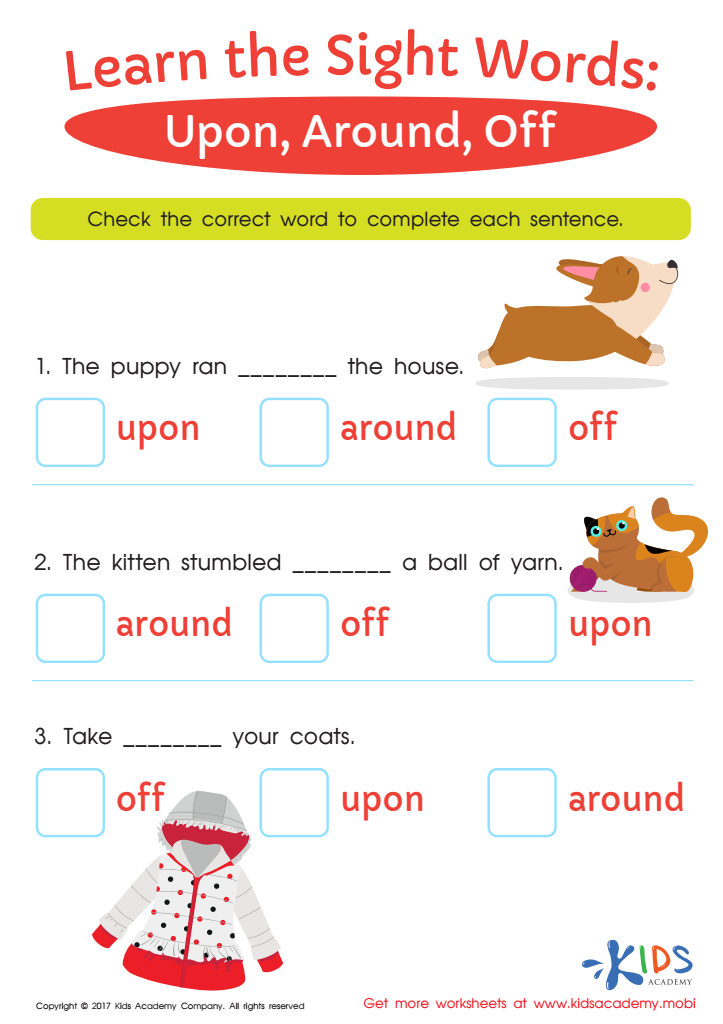
Upon, Around, Off Sight Words Worksheet
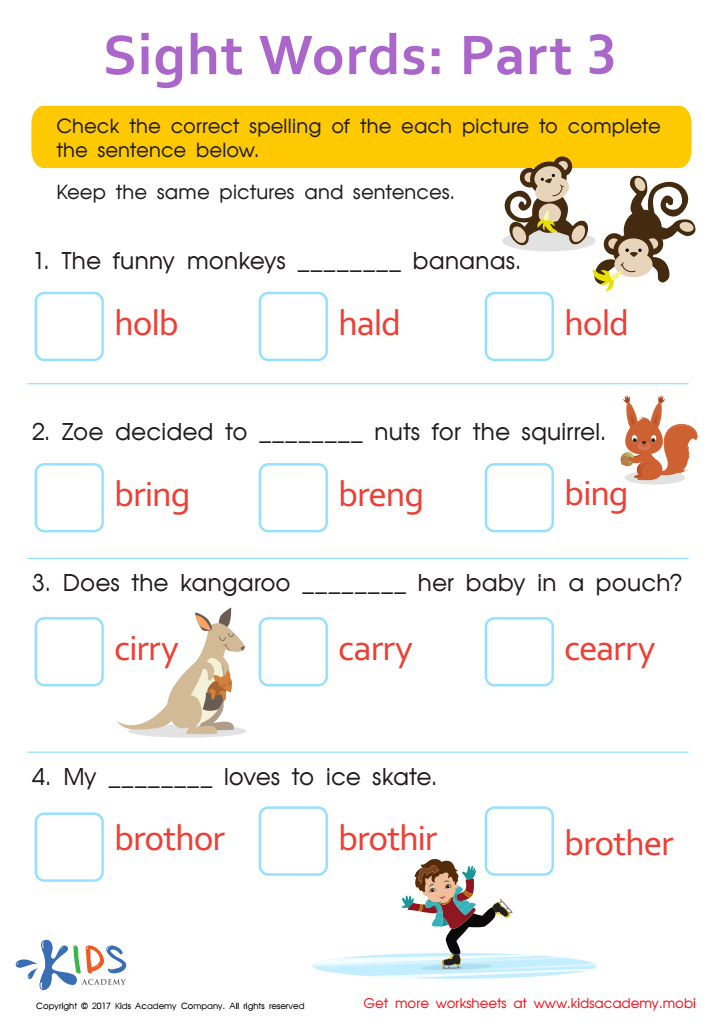
Hold, Bring, Carry, Brother Sight Words Worksheet


.jpg)





Vocabulary enhancement, particularly of normal sight words, plays a crucial role in a child's early education and overall literacy development. Sight words are common words that children are encouraged to recognize without having to use any decoding strategies. They are often foundational to reading fluency because they include many high-frequency words that appear in everyday reading materials.
When a child can quickly and accurately identify sight words, their reading becomes more fluid and less laborious. This fluency helps children focus on comprehension rather than constantly working out individual words. Enhanced vocabulary also boosts confidence, enabling children to read more challenging texts, participate actively in discussions, and follow written instructions accurately.
For parents and teachers, investing time in enhancing a child’s vocabulary sets the stage for academic success in all subjects. Strong language skills are linked to better performance in areas such as comprehension, writing, and critical thinking. Moreover, children who possess a rich vocabulary are often better at expressing themselves, which can improve social interactions and emotional well-being.
Thus, emphasizing vocabulary enhancement and sight word recognition helps in fostering competent, confident, and enthusiastic readers, making it a priority for parents and teachers who aim to support comprehensive child development.