Understanding ecosystems Normal Animals Worksheets
3 filtered results
-
From - To
Explore the fascinating world of ecosystems with our "Understanding Ecosystems Normal Animals Worksheets." Designed for early learners, these engaging worksheets offer comprehensive activities that help children grasp the interconnectedness of living organisms and their environments. From identifying various habitats to analyzing how different animals adapt to their surroundings, our resources promote critical thinking and environmental awareness. These worksheets encourage interactive learning through fun exercises, illustrations, and real-life examples, fostering a deeper appreciation for nature. Perfect for classroom or home use, our materials aim to inspire a lifelong passion for science and ecology in young minds. Dive into the adventure of learning today!
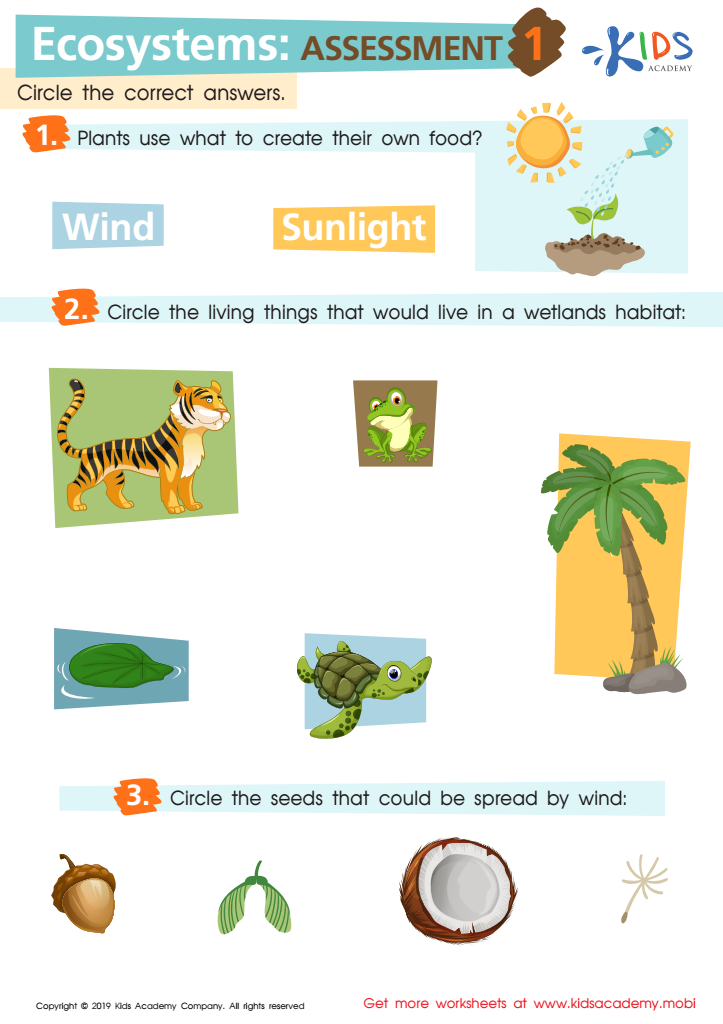
Ecosystems: Assessment 1 Worksheet
 Assign to My Students
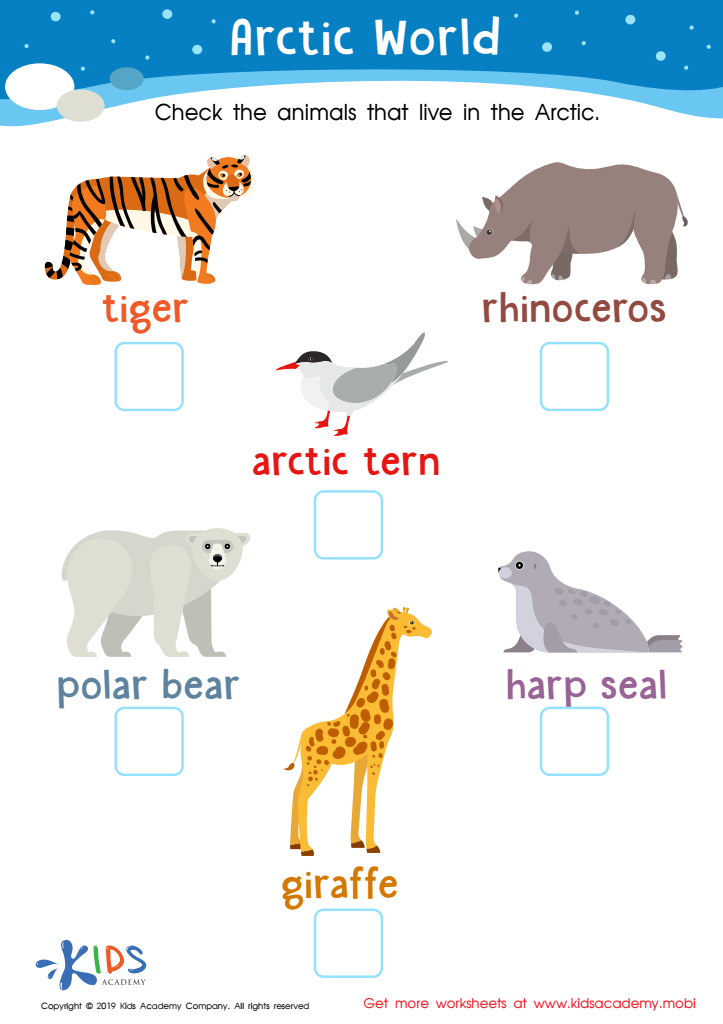
Arctic World Worksheet
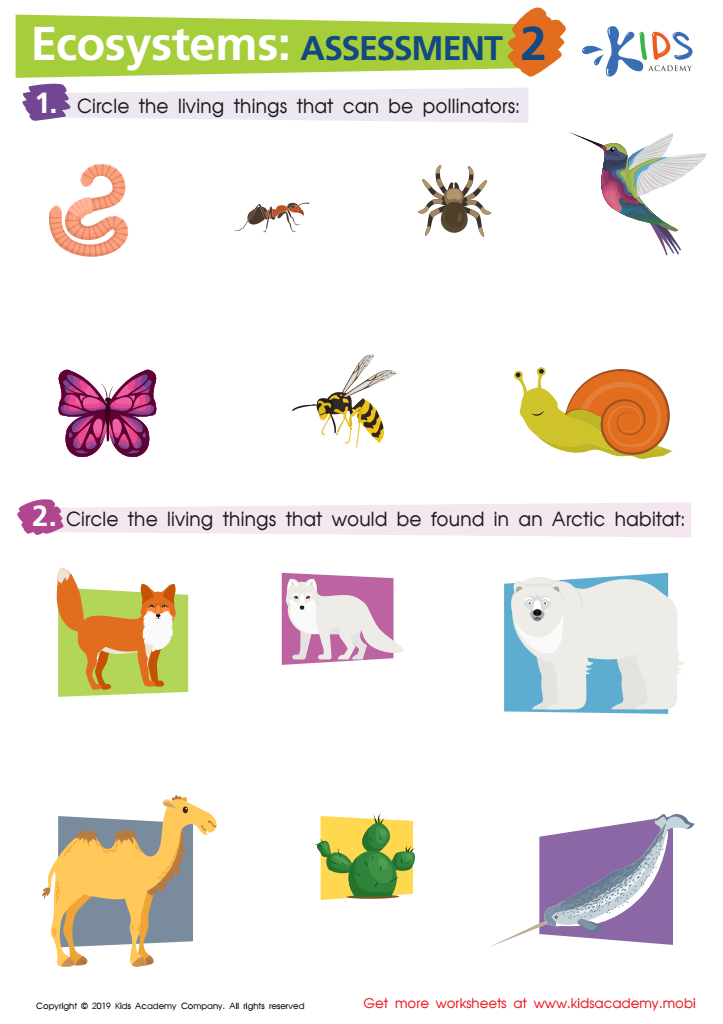
Ecosystems: Assessment 2 Worksheet







Understanding ecosystems and normal animals is crucial for both parents and teachers, as it lays the foundation for children's environmental awareness and appreciation of biodiversity. Firstly, education about ecosystems fosters a sense of responsibility towards the environment. When children learn how different organisms interact and rely on each other, they become more conscious of the impact their actions have on the planet. This knowledge encourages sustainable behaviors, such as recycling, conserving water, and protecting wildlife.
Moreover, teaching children about normal animals and their roles in ecosystems equips them with essential knowledge about life cycles, habitats, and food chains. This understanding promotes empathy and respect for all living beings, encouraging a compassionate relationship with nature.
In addition, exploring ecosystems can spark children's curiosity and interest in science, inspiring future generations of scientists and conservationists. Interactive lessons about local ecosystems can also foster teamwork and critical thinking skills as students engage in hands-on activities like field trips or gardening.
Lastly, with the growing threats to biodiversity and climate change, instilling knowledge about ecosystems and animal interdependence helps prepare children to face complex environmental challenges, making it an essential focus for parents and teachers alike.








