Plant identification Normal Plants Worksheets
4 filtered results
Difficulty Level
Grade
Age
-
From - To
Subject
Activity
Standards
Our "Plant Identification Normal Plants Worksheets" are designed to help young learners grasp the basics of botany through engaging activities. Perfect for early grade students, these printable worksheets provide hands-on learning experiences, making plant science both fun and educational. Through visually appealing exercises, children will learn to identify various plants, understand their characteristics, and grasp foundational botanical concepts. Whether you're a teacher or a parent, our worksheets are an excellent resource for fostering a love for nature and science in kids. Make learning about plants an exciting adventure with our expert-crafted materials!
Favorites
With answer key
Interactive
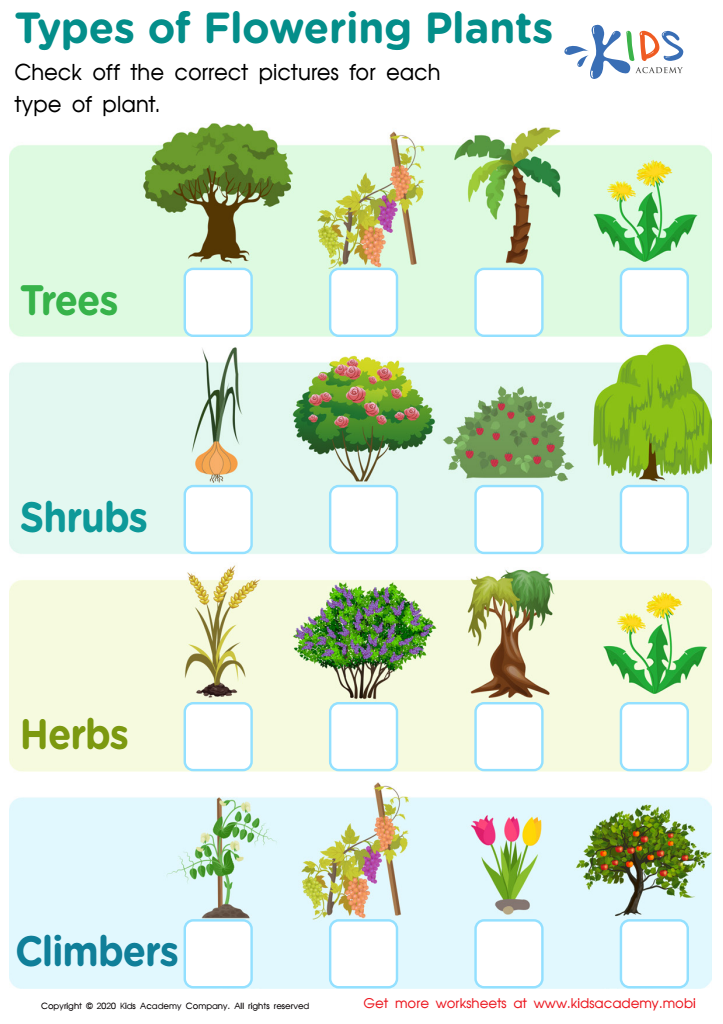
Types of Flowering Plants Worksheet
Help kids explore the variety of plants around them! Have them discover trees, shrubs, herbs, and vines with this fun science worksheet. Print it and let them match the plant pictures to their correct names. It's an exciting learning experience that'll let them check off the right images and explore the botanical world.
 Assign to My Students
Types of Flowering Plants Worksheet
Worksheet


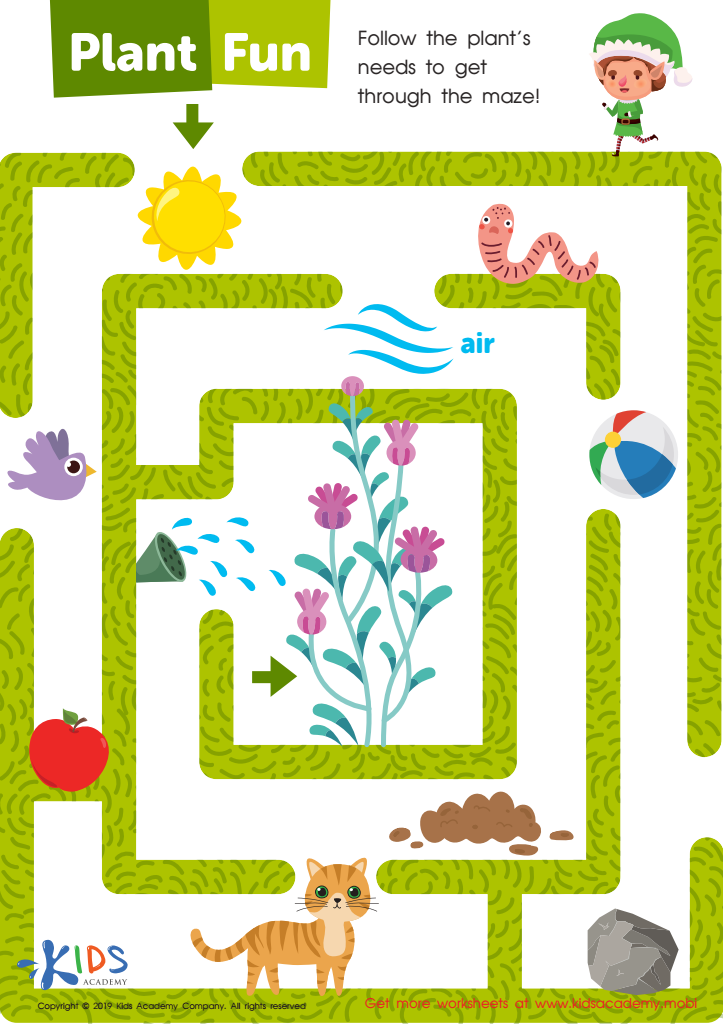
Plant Fun Worksheet
Engage your kid's mind by playing a learning maze! Ask them what plants do for us and what we need to do for the plants to help them grow. Then, help them find their way out of the maze while following the things that plants need.
Plant Fun Worksheet
Worksheet
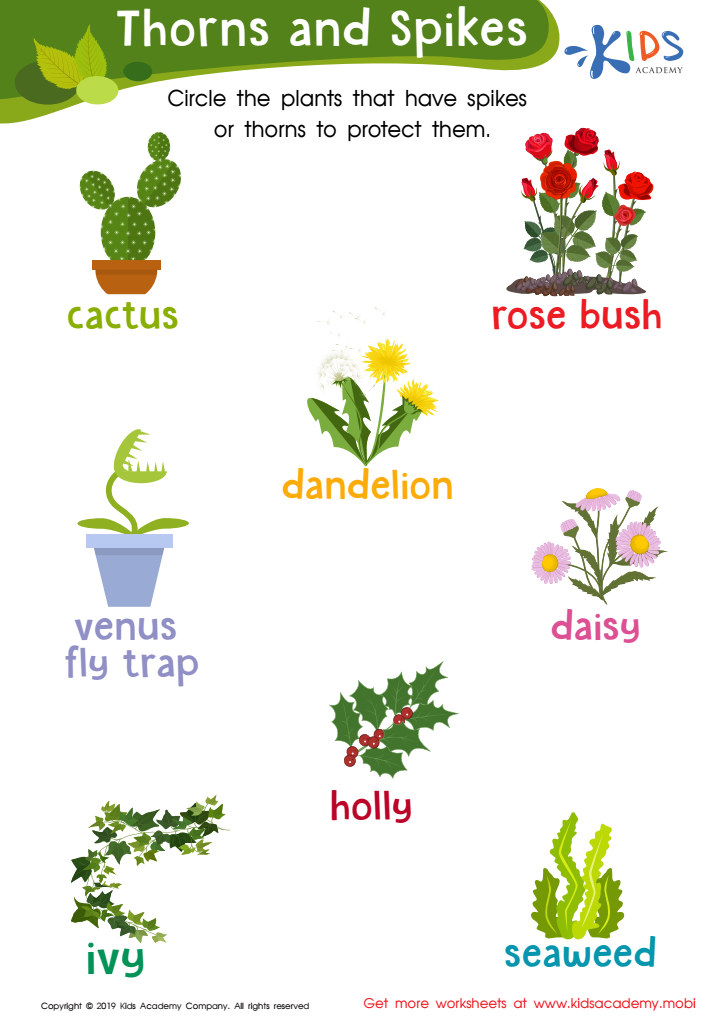
Thorns and Spikes Worksheet
Can your students name and identify the plants and flowers in this worksheet? Ask them to read out the names and circle the ones with spikes or thorns. Help them appreciate nature's beauty and understand how plants protect themselves.
Thorns and Spikes Worksheet
Worksheet
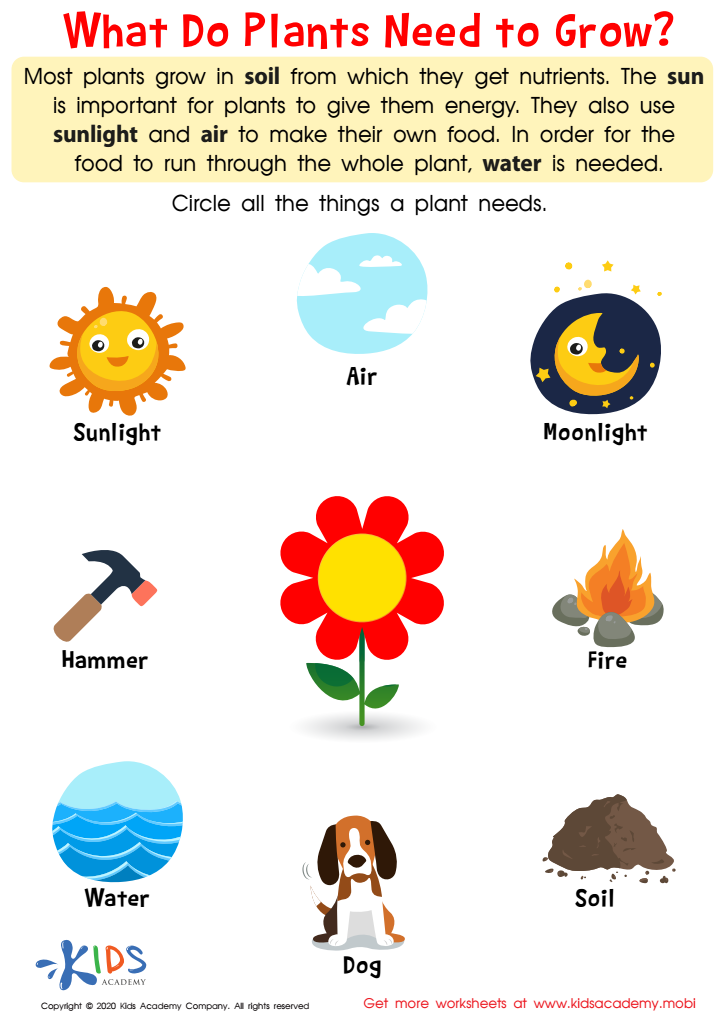
What Do Plants Need to Grow Worksheet
Help your child explore and discover the world of plants with this fun how do plants grow worksheet! They'll gain knowledge, sharpen problem solving skills, and build science foundations as they identify what plants need to grow. Afterward, plant a seed together and watch it sprout right before their eyes!
What Do Plants Need to Grow Worksheet
Worksheet
Join Kids Academy for Free
Who is primarily going to use this learning content?








Parents and teachers should care about plant identification, including common or "normal" plants, for several significant reasons. Firstly, understanding local flora enhances environmental awareness which fosters a deeper connection to nature among children. When kids can identify plants, they develop an appreciation for biodiversity and the intricate ecosystems around them, laying the foundation for future environmental stewardship.
Secondly, plant identification is an educational tool that intersects science, geography, and even history, making learning a multidimensional experience. It encourages observational skills, critical thinking, and curiosity. For example, learning the role of certain plants in a local ecosystem can teach about food chains and interdependence in nature.
Health and safety are also important. Recognizing plants means identifying potentially hazardous species like poison ivy or nettles, and even edible plants which can be useful knowledge in outdoor settings. This awareness is a proactive measure in preventing accidents or allergic reactions.
Lastly, gardening and outdoor exploration have been shown to improve mental and physical well-being. Learning about plants encourages outdoor activity, which can help reduce stress, promote physical health, and boost overall mood and mental acuity in children and adults alike.
By caring about plant identification, parents and teachers are not just imparting knowledge, but nurturing healthier, more engaged, and environmentally conscious individuals.