Alphabetical order understanding Normal Grade 2 Letter Recognition Worksheets
3 filtered results
Difficulty Level
Grade
Age
-
From - To
Subject
Activity
Standards
Welcome to our Alphabetical Order Understanding worksheets for 2nd graders! These engaging and interactive letter recognition worksheets are designed to enhance children’s understanding of alphabetical order while building essential literacy skills. Students will enjoy various activities that involve sorting and organizing letters and words, promoting not only recognition but also critical thinking. Our worksheets align with educational standards and provide a fun way for children to practice their reading and writing skills. Perfect for classroom use or at home, these resources will help pave the way for your child's language development. Explore our collection and make learning enjoyable today!
Favorites
With answer key
Interactive
Letter G Tracing Page
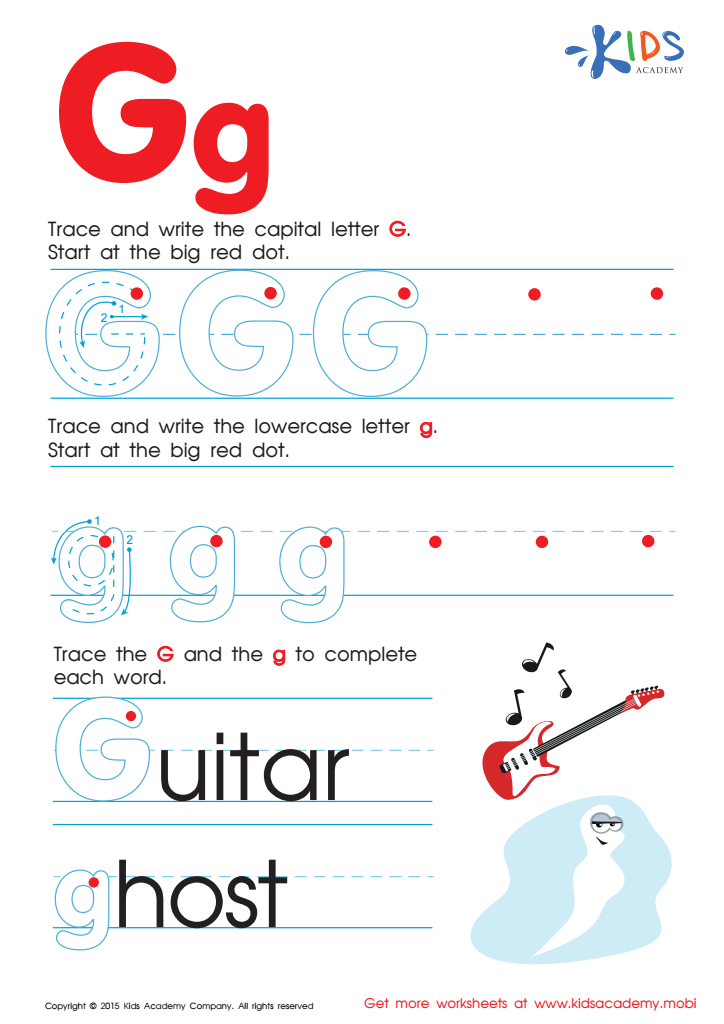
Get ready to trace the letter "G" – with a big red spot as the starting point, trace the lines and watch the letter appear. Uppercase and lowercase letters are both easy and fun to write. Give it a go and finish the word "go". Play the guitar and say "hello" to a funny ghost!
Letter G Tracing Page
Worksheet
Letter J Coloring Sheet
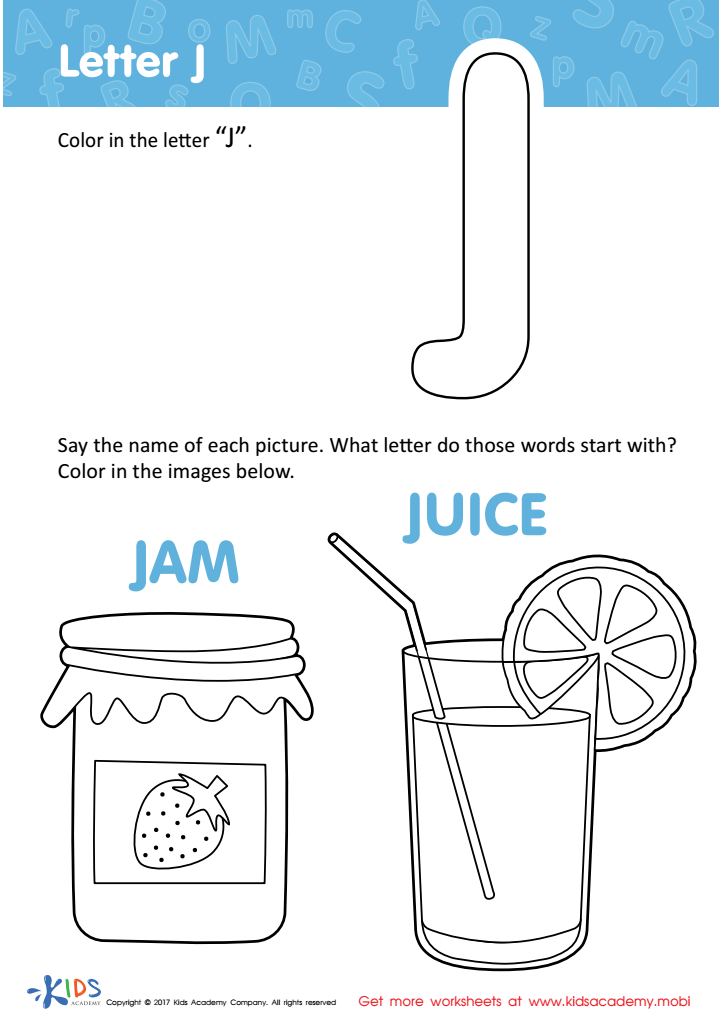
Practice the letter 'J' with your little one with this fun coloring page! Pictures of jar, juice, jam and jelly make it an enjoyable experience for kids. Learning the letter and coloring is fun for even the youngest learners.
Download (PDF)
 Assign to My Students
Assign to My Students
Letter J Coloring Sheet
Worksheet
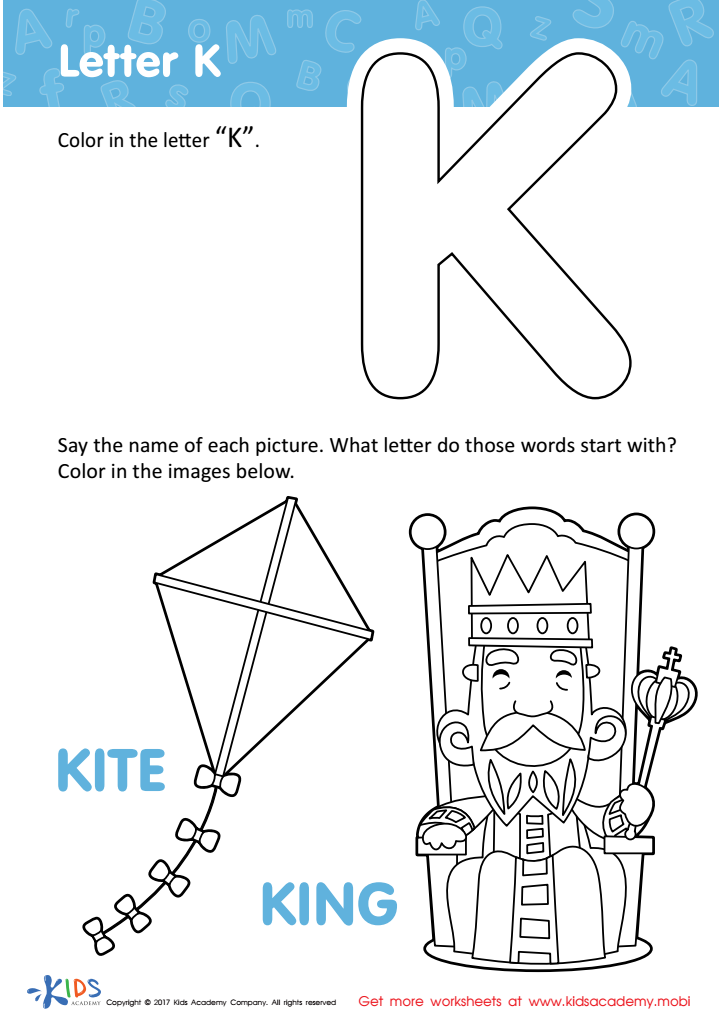
Letter K Coloring Sheet
This letter K coloring page captivates your child's creativity while learning the letter! Showcasing a king and kite, common words for their age group, it's sure to spark their imagination.
Download (PDF)
Assign to My Students
Assign to My Students
Letter K Coloring Sheet
Worksheet
Join Kids Academy for Free
Who is primarily going to use this learning content?




Understanding alphabetical order is crucial for Grade 2 students as it lays the foundation for various literacy skills. First, recognizing the sequence of letters helps children with letter recognition, which is essential for reading and writing. In Grade 2, students are expected to read more complex texts, and knowledge of alphabetical order aids in utilizing dictionaries, encyclopedias, and other reference materials effectively.
Additionally, mastering alphabetical order enhances students' phonemic awareness, allowing them to better understand sounds and letter relationships, which are critical for spelling and pronunciation. Familiarity with letter sequences also fosters organizational skills, enabling students to categorize words and ideas more efficiently.
Moreover, a strong grasp of alphabetical order aids in social skills; children learn the importance of following rules and sequences, which can translate to better classroom behavior and collaboration. For parents and teachers, focusing on alphabetical order can boost confidence and motivation, making learning engaging and interactive through songs, games, and activities.
In conclusion, understanding alphabetical order not only supports reading and writing development in Grade 2 but also cultivates essential cognitive and social skills, making it a vital aspect of early education that must be prioritized.