Sound recognition Normal Grade 2 Phonics Worksheets
4 filtered results
-
From - To
Our "Sound Recognition Normal Grade 2 Phonics Worksheets" are designed to enhance your child's phonics skills and auditory discrimination in a fun, interactive way. These worksheets provide engaging exercises aimed at helping second graders identify various sounds, blend them to form words, and strengthen their reading and spelling skills. Featuring colorful visuals and age-appropriate activities, these worksheets make learning enjoyable while promoting literacy growth. Perfect for classroom or at-home practice, our phonics worksheets support your child's educational journey, ensuring a solid foundation in sound recognition and phonemic awareness. Download now and watch your child's confidence soar!
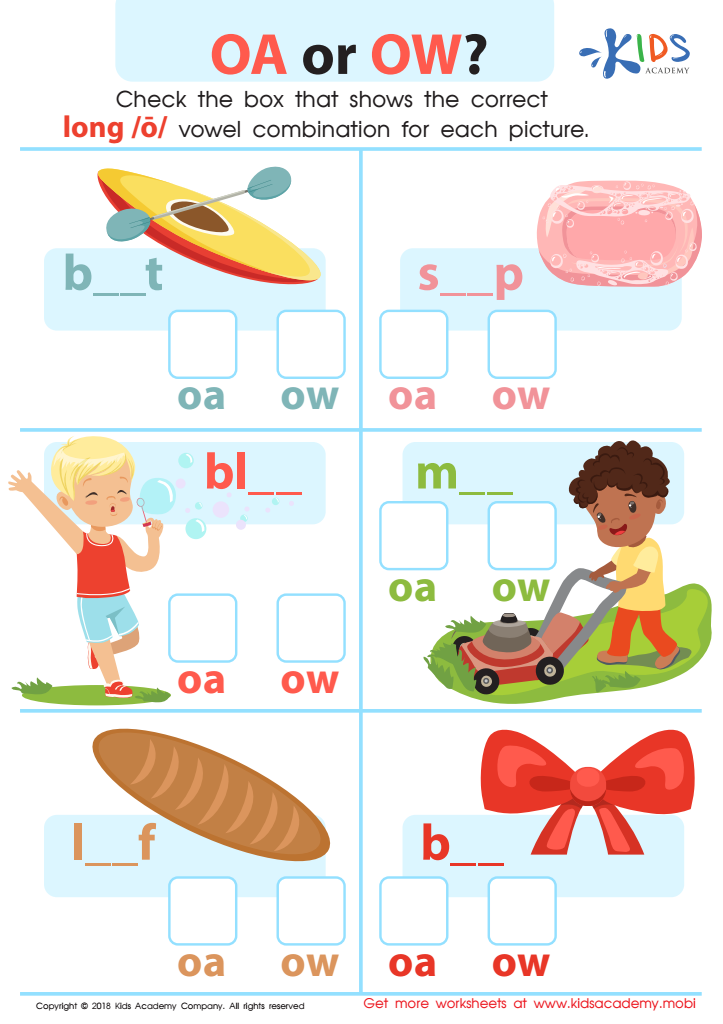
Reading: OA or OW Worksheet

Rhyming Words Rhyming Worksheet
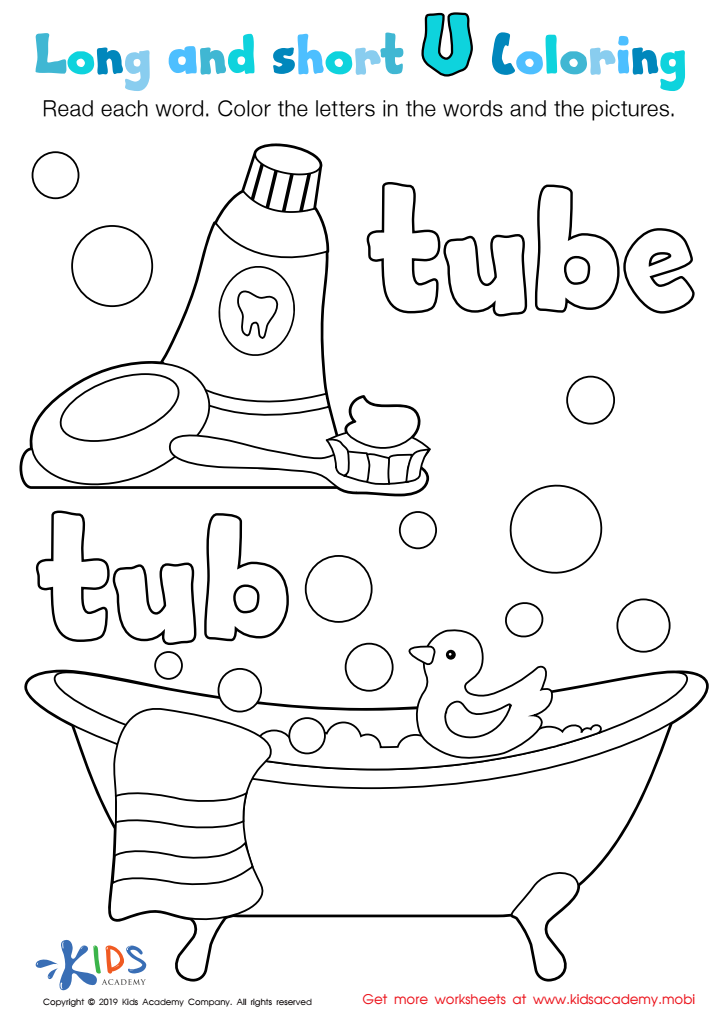
Long and Short U Worksheet
 Assign to My Students
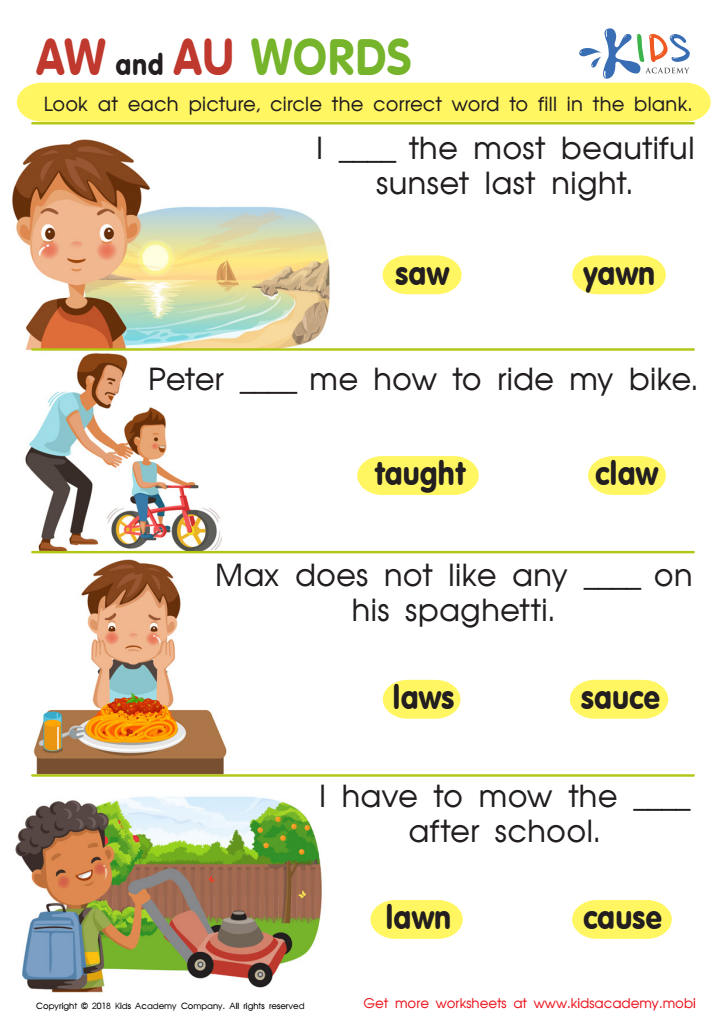
Reading: AW and AU Words Worksheet



Sound recognition and normal Grade 2 phonics are critical building blocks in a child's educational journey. Parents and teachers should prioritize them because they form the foundation for effective reading and writing skills.
In Grade 2, children typically transition from learning to read to reading to learn. Proper sound recognition enables students to decode new words by understanding sound patterns, which is essential for developing fluency in reading. Phonics instruction systematically teaches this relationship between sounds and spelling, which helps children spell words accurately and recognize familiar words quickly, fostering reading confidence and independence.
Phonics proficiency directly correlates with comprehension. When children can sound out words efficiently, they focus more energy on understanding the text rather than decoding individual words. This comprehension is key to success in all academic areas, as reading is a foundational skill for subjects like math, science, and social studies.
Additionally, strong phonics skills promote a love for reading, which has long-term academic and personal benefits. Reading for pleasure enhances vocabulary, general knowledge, and empathy.
Parents and teachers play a crucial role in developing these skills by providing systematic, explicit phonics instruction and reinforcing these concepts through engaging, age-appropriate activities. This support sets children on a path to lifelong learning and academic success.