Filters

13 filtered results

Clear all filters
Favorites
With answer key
Interactive

13 filtered results

Difficulty Level

Grade


Enhance your child's fine motor skills with our engaging Grade 2 tracing letters worksheets. These printable resources are designed specifically for second graders to practice the letters of the alphabet while developing their hand-eye coordination and writing abilities. Each worksheet features clear, easy-to-follow letter outlines that encourage kids to trace, helping them build confidence in their handwriting. Perfect for classroom activities or at-home learning, these tracing sheets not only reinforce letter recognition but also promote fine motor development essential for everyday tasks. Unlock your child's potential and foster a love for writing with our comprehensive collection of tracing letter worksheets!

Check out this FREE Grade 2 Trial Lesson on Tracing Letters!

Suffixes

Favorites
With answer key
Interactive
  • Grade 2
  • Fine Motor Skills
  • Tracing Letters
  • Normal
Letter O worksheets
Letter O worksheets

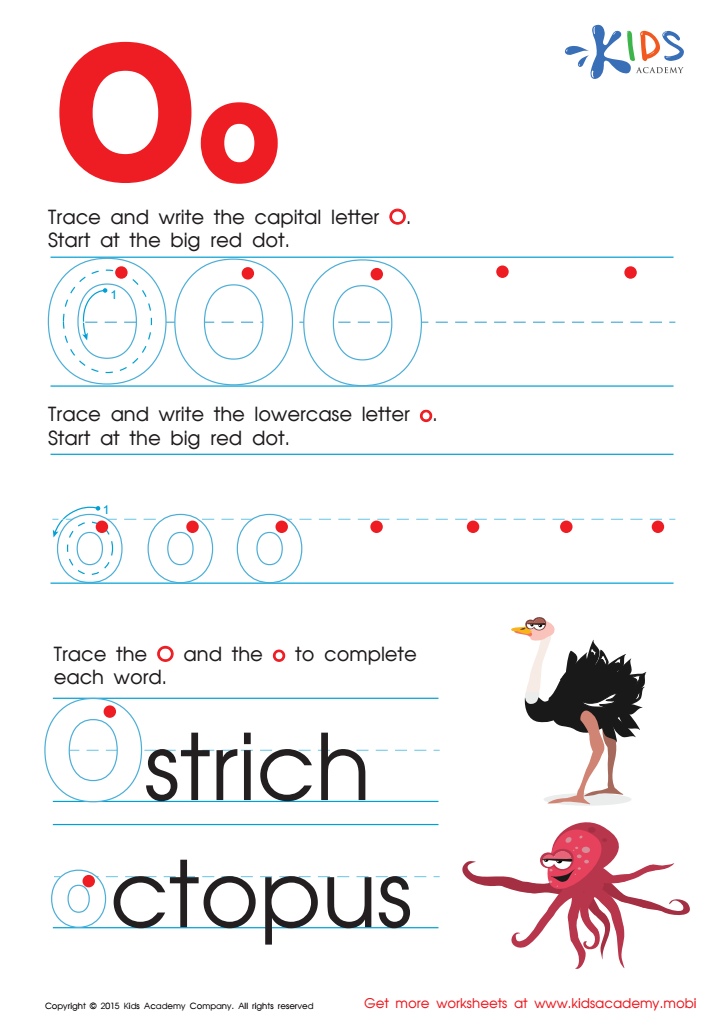
Letter O Tracing Page

Practice writing the letter "O" with our new worksheet. Trace and write the letter several times, starting at the red dot. First do the uppercase letter, then the lowercase. Use the pictures to complete the words "Ostrich" and "octopus". Kids Academy offers more fun alphabet worksheets.
Letter O Tracing Page
Worksheet
Letter P worksheets
Letter P worksheets

Letter P Tracing Page

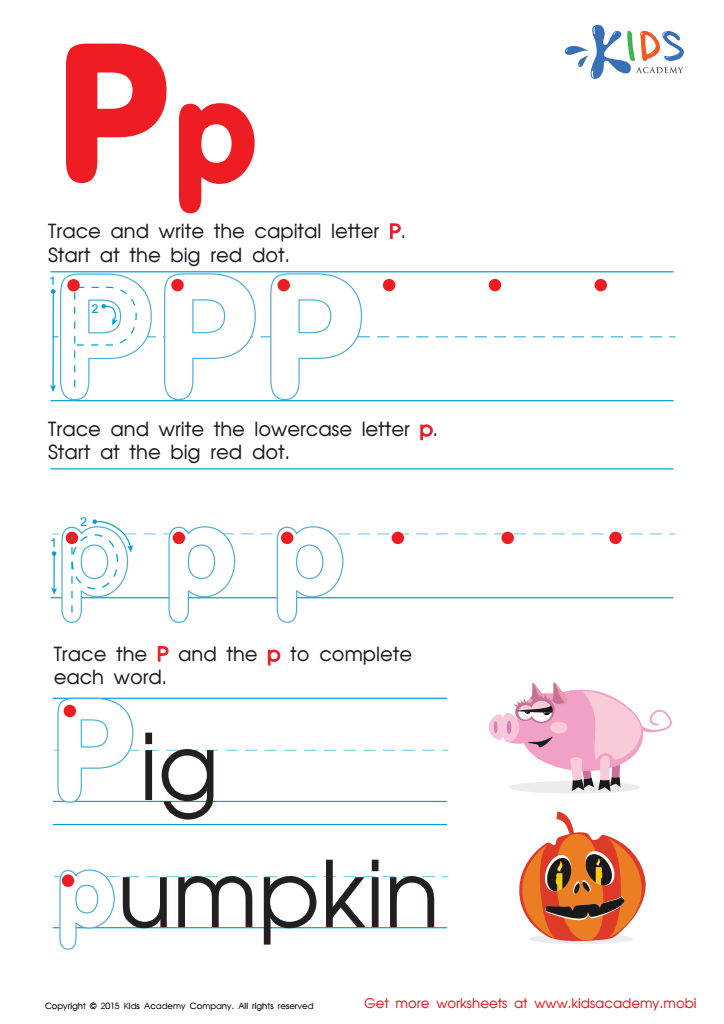
Trace the lines from the red dot to learn to write "P"! Then practice this letter with the fun activities: complete the word "Pig" and "Pumpkin". Check out Kids Academy to get more free ABC worksheets.
Letter P Tracing Page
Worksheet
Letter I worksheets
Letter I worksheets

Letter I Tracing Page

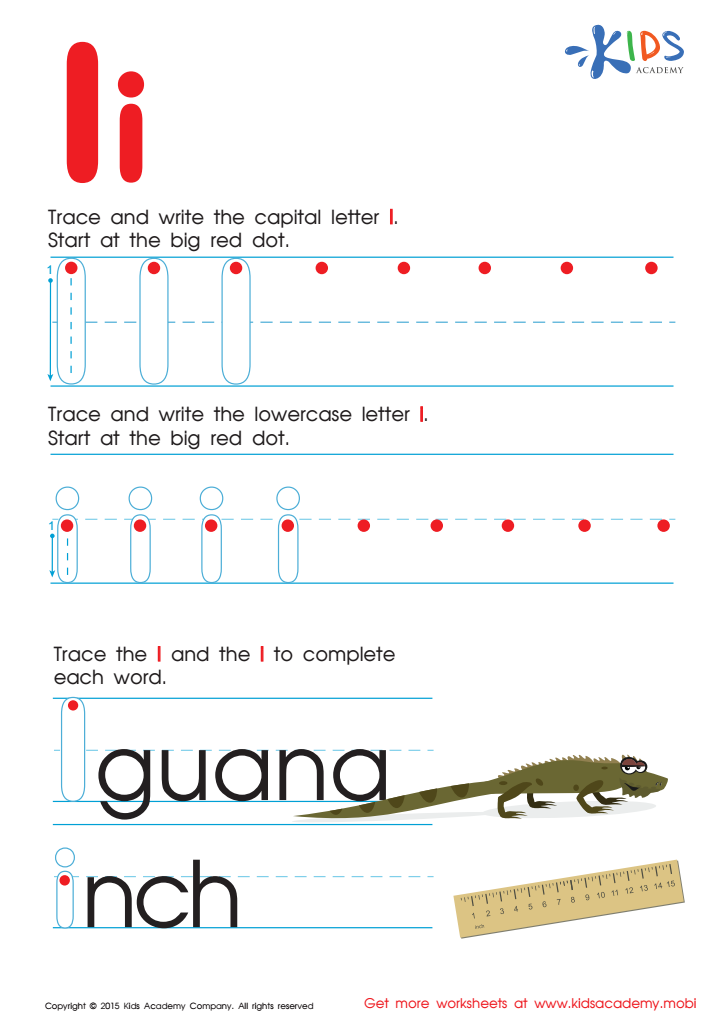
Trace and write "I" uppercase and lowercase. An iguana's tail looks like the uppercase "I" and the lowercase "i" is as small as an inch. Make learning fun with Kids Academy worksheets.
Letter I Tracing Page
Worksheet
Letter Q worksheets
Letter Q worksheets

Letter Q Tracing Page

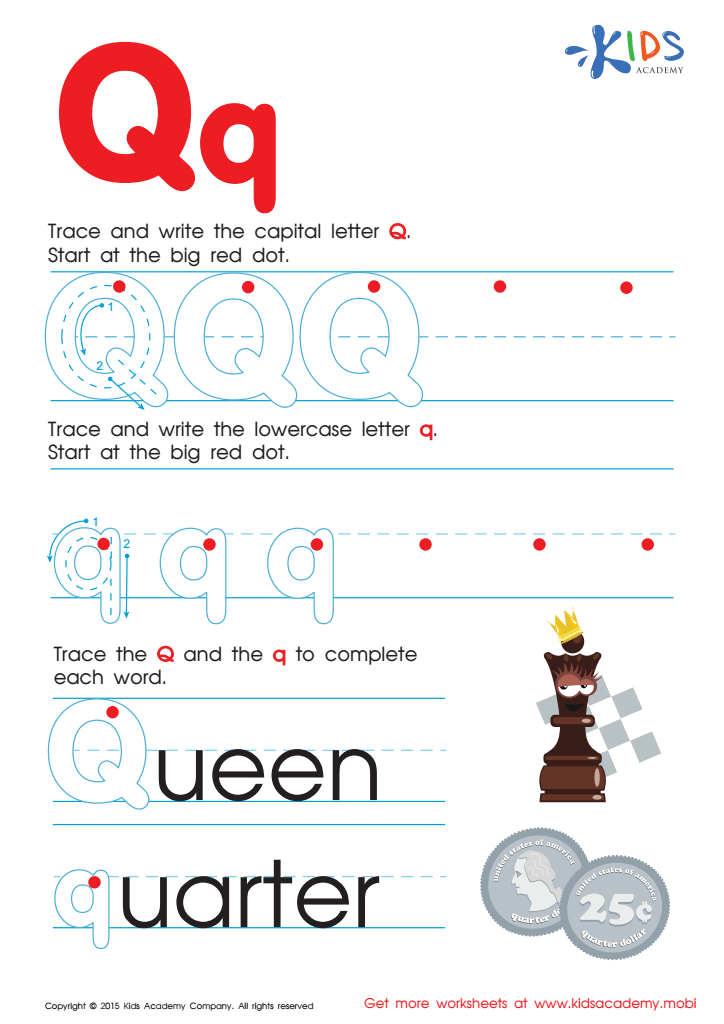
Learn the letter "Q"! Trace and write it a few times in upper and lowercase. Then help the Queen by writing her initial letter. Finally, write "quarters" and practice with more alphabet worksheets.
Letter Q Tracing Page
Worksheet
letter C worksheets
letter C worksheets

Letter C Tracing Page

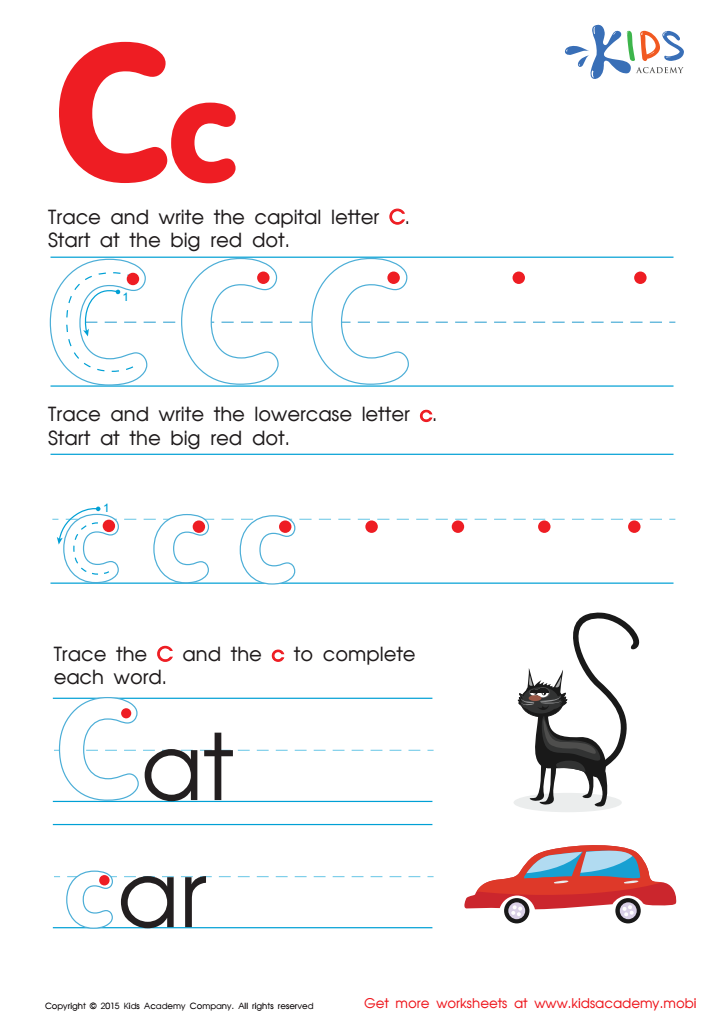
Trace and write the letter 'C'! Put the pencil at the red dot then follow the lines – the capital letter first then the lowercase one. Cats love it and so will you! Get more free printables to practice tracing and writing.
Letter C Tracing Page
Worksheet
Letter М worksheets
Letter М worksheets

Letter M Tracing Page

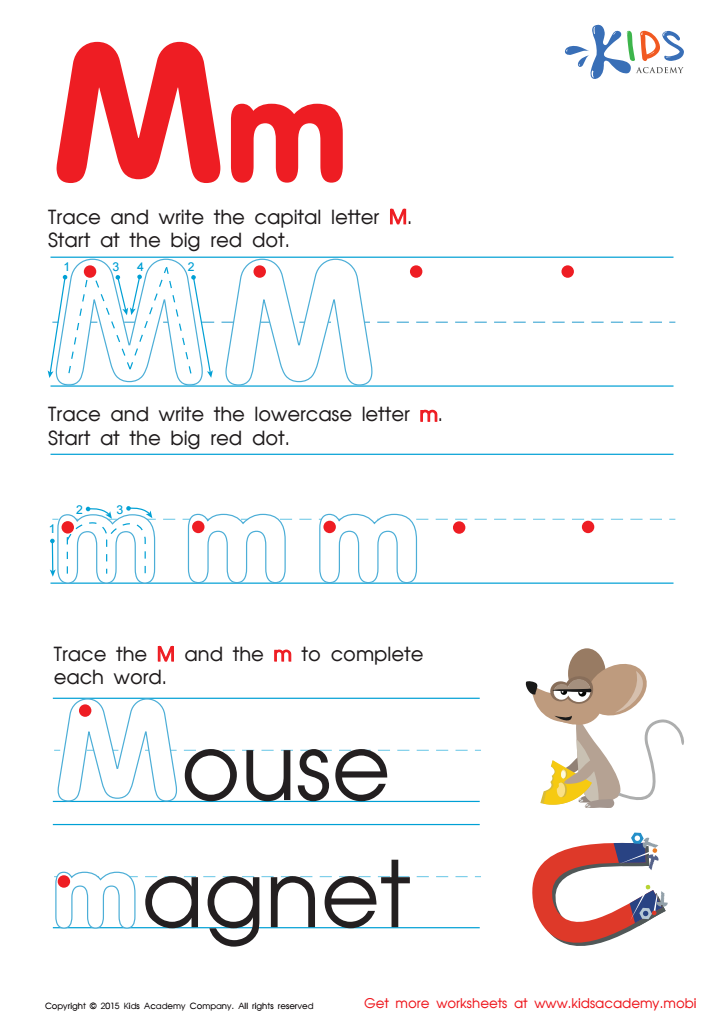
Trace and write the letter "M" to help kids learn the alphabet. Start at the red dot and practice several times. Trace the capital letter first, then move on to the lowercase. Complete words like "mouse" and "magnet" in the further exercise. Get more free printables here.
Letter M Tracing Page
Worksheet
letter G worksheets
letter G worksheets

Letter G Tracing Page

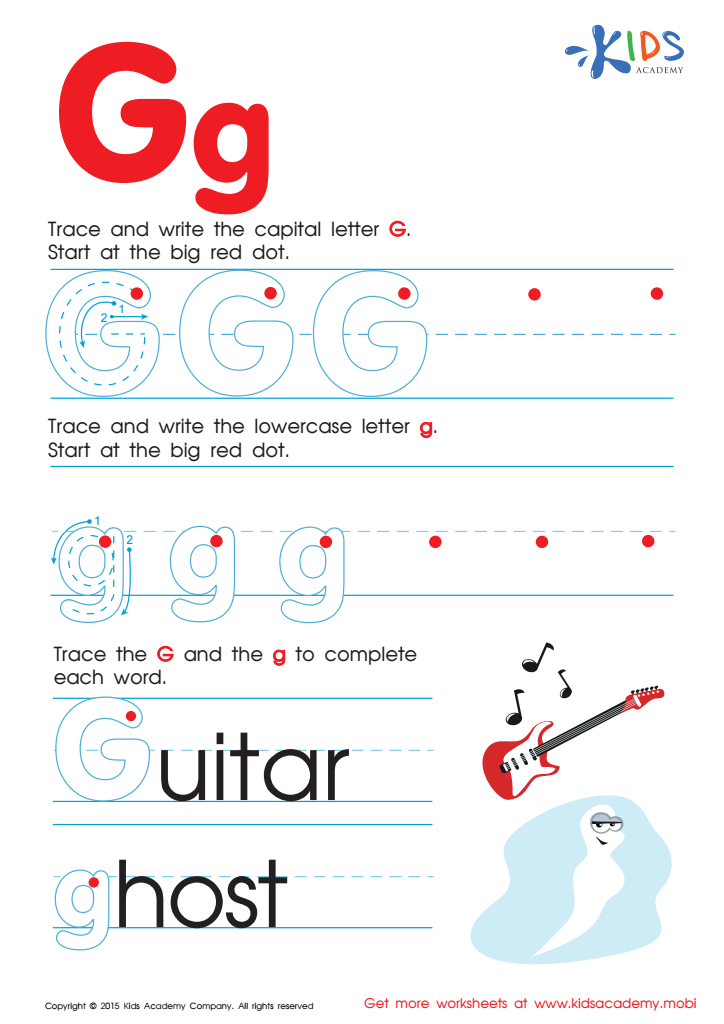
Get ready to trace the letter "G" – with a big red spot as the starting point, trace the lines and watch the letter appear. Uppercase and lowercase letters are both easy and fun to write. Give it a go and finish the word "go". Play the guitar and say "hello" to a funny ghost!
Letter G Tracing Page
Worksheet
Letter E Tracing Worksheet Preview

Letter E Tracing Worksheet

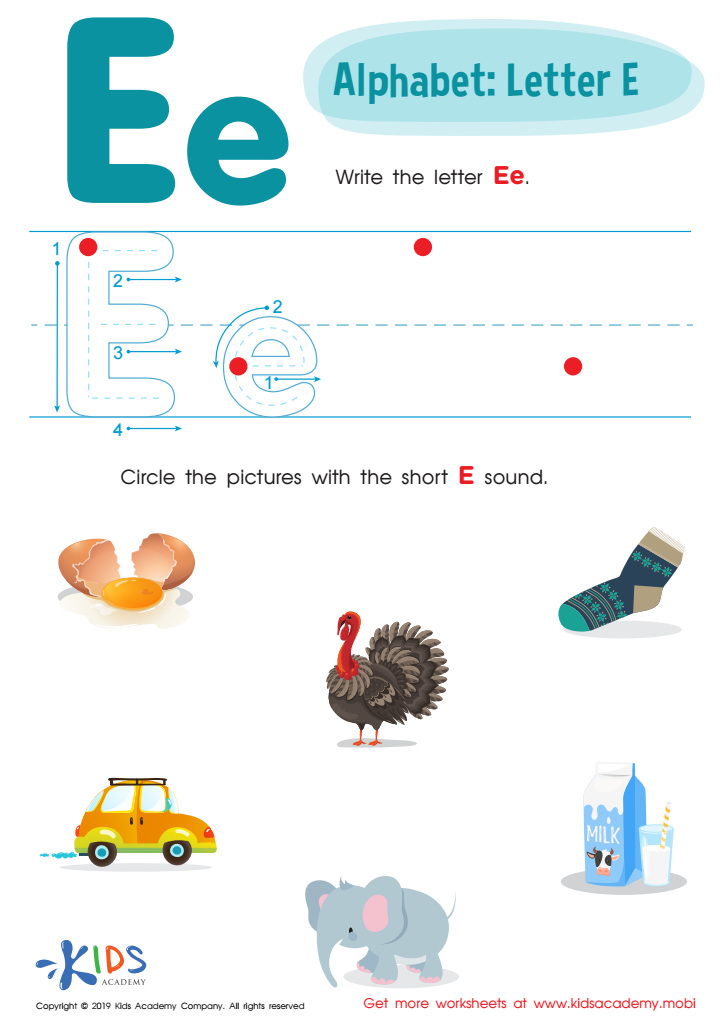
Students trace and write uppercase and lowercase letter E. They sound out "E" words, choosing those with short "E" sounds. Preschoolers identify the difference between the 'E' sounds in words like "egg" and "turkey." A tracing sheet helps them to understand.
Letter E Tracing Worksheet
Worksheet
Letter N worksheets
Letter N worksheets

Letter N Tracing Page

Trace and write capital "N" and lowercase "n" several times. Then try forming words like "needle" and "nest". Master letter writing with Kids Academy's collection of ABC worksheets for kindergarten.
Letter N Tracing Page
Worksheet
letter e worksheets
letter e worksheets

Letter E Tracing Page

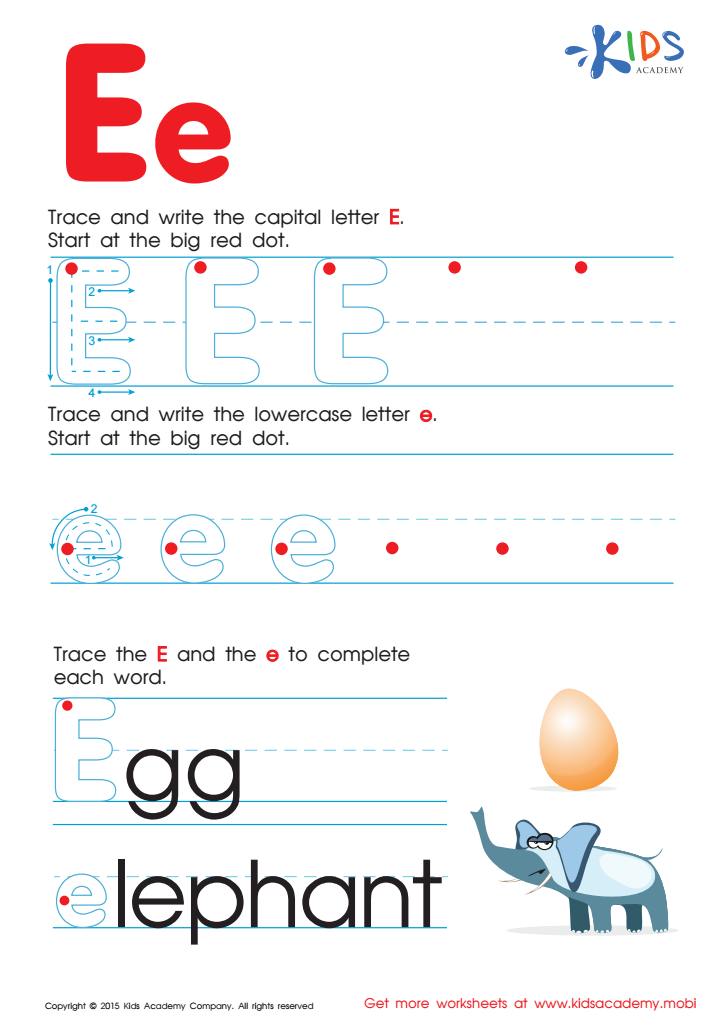
Trace and write the uppercase and lowercase "E" starting at the big red dot. Complete words to perfect letter writing. Egg and Elephant must be written carefully. More alphabet worksheets for kindergarten are available for download to spend more time with your children learning.
Letter E Tracing Page
Worksheet
Letter A Tracing Worksheet Preview

Letter A Tracing Worksheet

Learning the letter "A" is essential. This worksheet helps kids trace and write it, boosting their skill. They also circle pictures with the "A" sound, with both the word and picture provided. This helps them learn how to pronounce words like "apple" correctly.
Letter A Tracing Worksheet
Worksheet
letter F worksheets
letter F worksheets

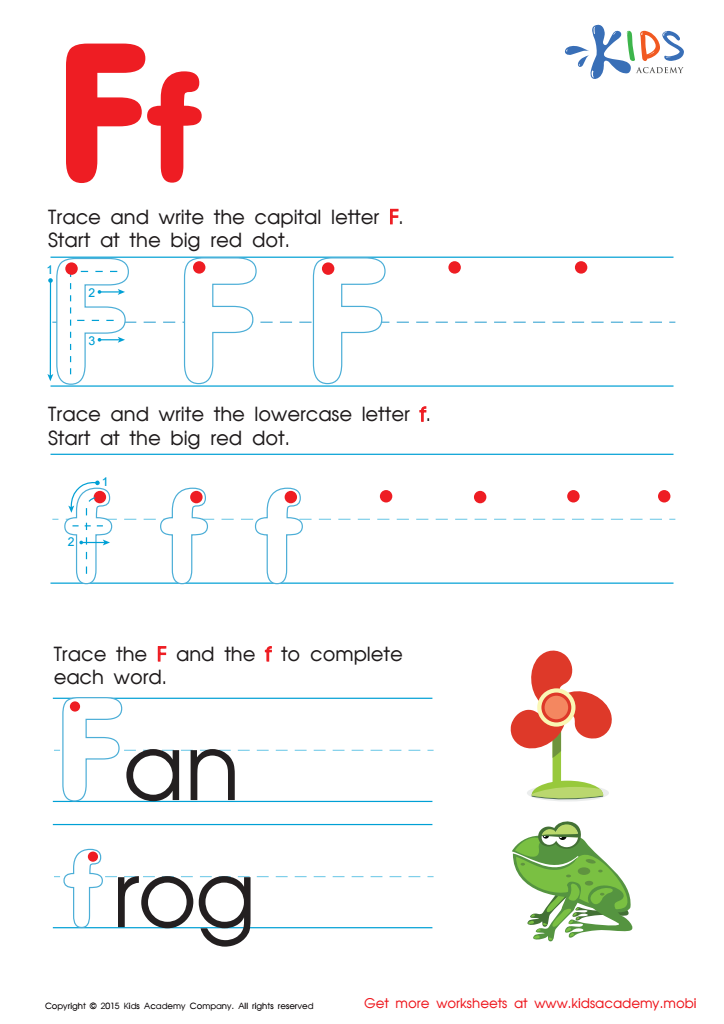
Letter F Tracing Page

Trace "F" with your pencil! Start at the red dot and draw lines — it's fun! Check it out — it looks great! Keep practicing to make it even better. Then, try completing words. Help out the broken fan and funny frog! Get free alphabet worksheets and activities for your kids. Come see our new tracing pages!
Letter F Tracing Page
Worksheet
letter d worksheets
letter d worksheets

Letter D Tracing Page

Trace and write capital and lowercase letter "D" with our free printable alphabet worksheet! Be careful not to mix up "b" and "d" - just look at the ducks and write their first letter. The dolphin wants to join the fun too - do you like dolphins? Get more fun worksheets and activities at Kids Academy!
Letter D Tracing Page
Worksheet


Fine motor skills are crucial for children's overall development, particularly in Grade 2, where they play a significant role in writing and daily tasks. Tracing letters helps children develop precision and control over their hand movements, promoting coordination between their hands and eyes. This skill is foundational for writing, as it forms the basis for letter formation, which is vital for effective communication.

Teachers and parents should prioritize fine motor skill development because it can enhance children's academic outcomes. Improved fine motor skills enable students to write legibly, take notes efficiently, and complete tasks independently. Moreover, these skills are not limited to written work; they also help children engage in various activities like tying shoelaces, buttoning shirts, and using scissors, all of which contribute to their confidence and self-reliance.

Additionally, fine motor skills are linked to cognitive development. Activities such as tracing can stimulate brain activity in areas related to learning and problem-solving. By investing time in tracing and other fine motor skill exercises, parents and teachers support children's future academic success, foster independence, and lay a solid foundation for lifelong learning.