Animal identification Normal Grade 2 Worksheets
3 filtered results
Difficulty Level
Grade
Age
-
From - To
Subject
Activity
Standards
Discover our comprehensive "Animal Identification Normal Grade 2 Worksheets" designed specifically for curious second graders! Our engaging worksheets foster a love for learning by helping students explore various animals, from common pets to exotic species. Each worksheet combines fun activities, such as matching games, quizzes, and coloring pages, with essential educational content to improve kids' observation and recognition skills. These worksheets are perfect for classroom use or additional practice at home. Let your students embark on an exciting learning adventure and introduce them to the fascinating world of animals with our expertly crafted resources.
Favorites
With answer key
Interactive
Rainforest Animals Worksheet
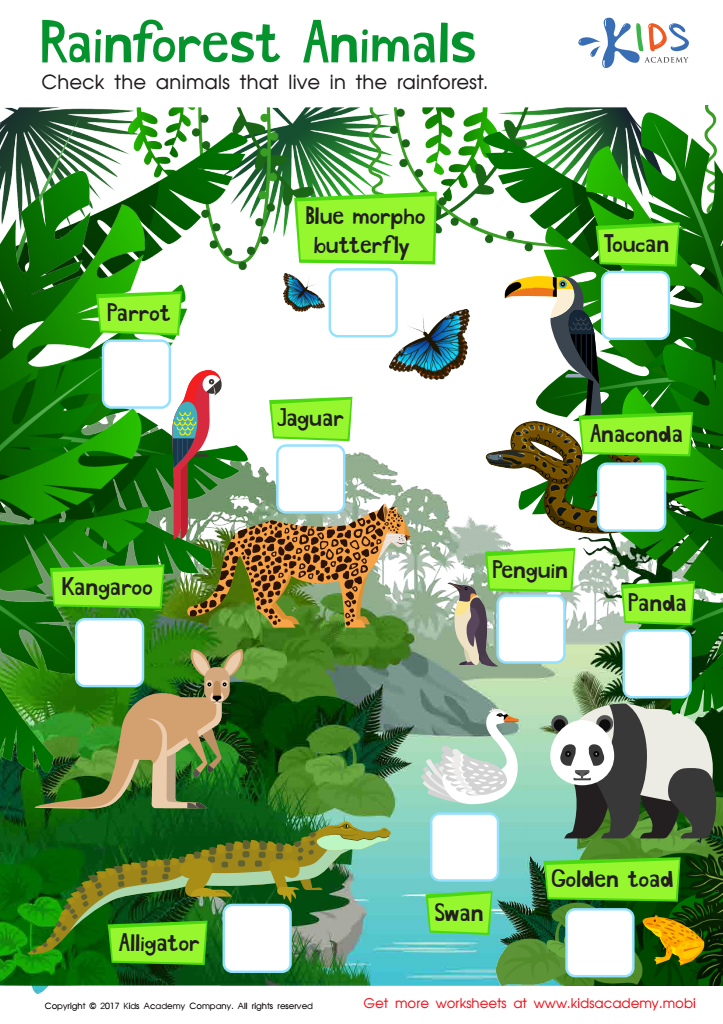
Kids love the bright, vivid pics of rainforest animals in this worksheet. It fuels their interest in life science and brings joy to their learning. It encourages them to study these animals in detail.
Rainforest Animals Worksheet
Worksheet
Great Hornbill Worksheet
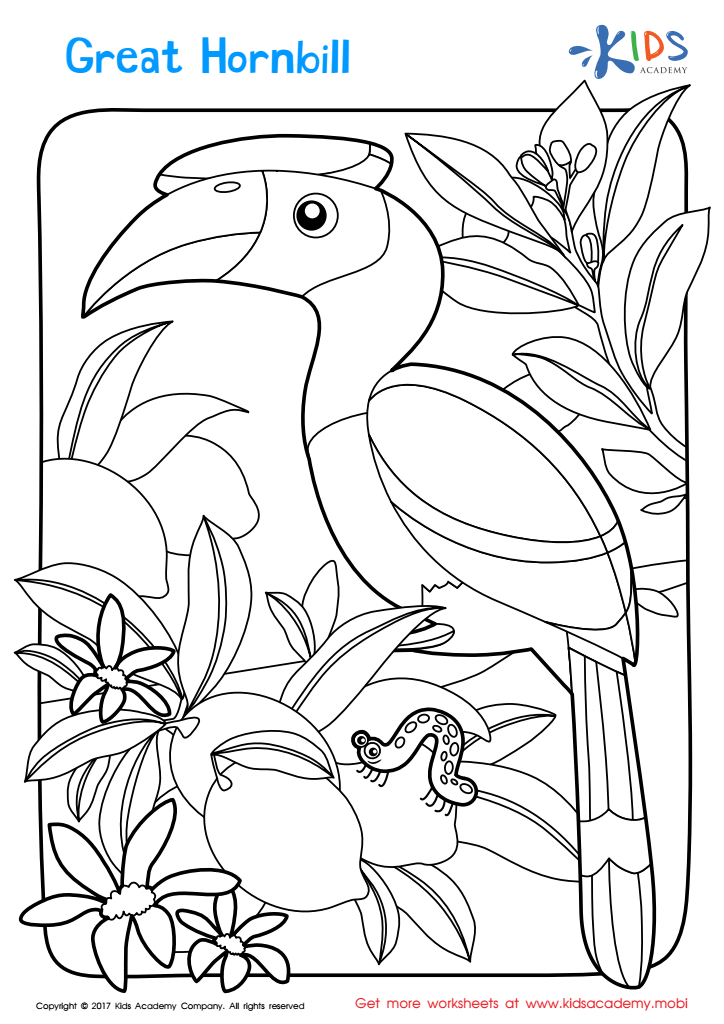
Expand your child's knowledge with our exotic animal printable: the great hornbill coloring page. It’s a fun and easy way to explore this beautiful bird's stunning array of colors without leaving home. Look up pics online to get a better understanding of this incredible creature.
Download (PDF)
 Assign to My Students
Assign to My Students
Great Hornbill Worksheet
Worksheet
Animal Sanctuary Worksheet
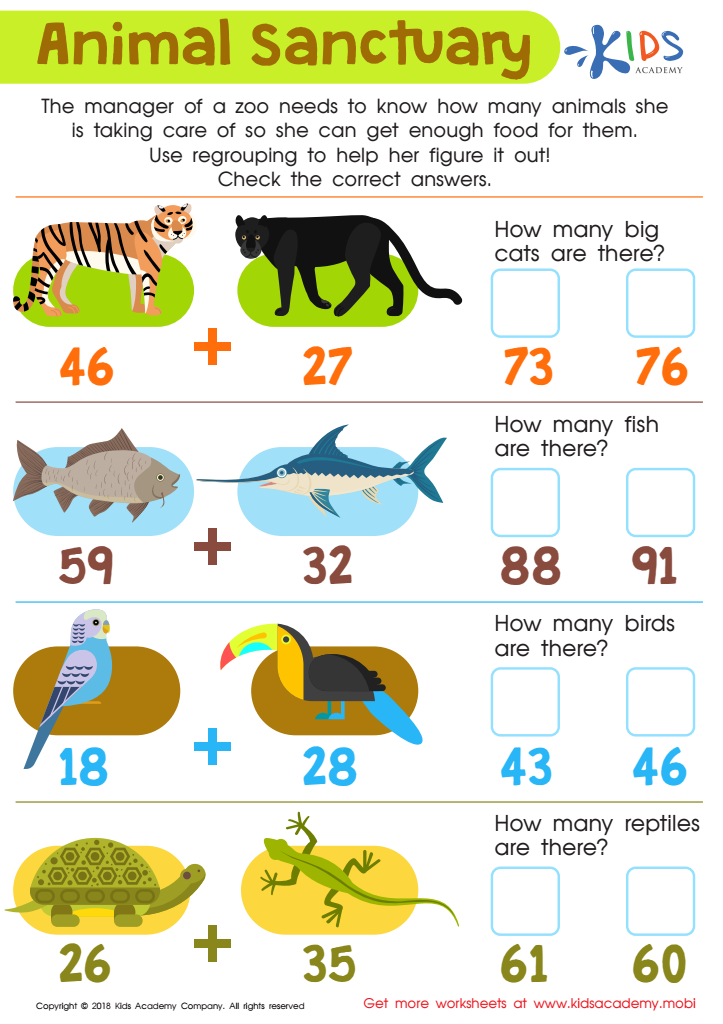
Do your kids love visiting the zoo? Ask which animals they remember & which ones they liked the most. The manager needs help to get enough food for all the animals. Help your child use regrouping to figure out how many animals there are. And ask them to check the answers.
Animal Sanctuary Worksheet
Worksheet
Join Kids Academy for Free
Who is primarily going to use this learning content?







Caring about animal identification for second graders is crucial for several reasons. At this developmental stage, children are naturally curious and eager to learn about the world around them. Learning to identify animals boosts cognitive development by improving their memory, pattern recognition, and categorization skills. Additionally, it enhances language development as children acquire new vocabulary related to animals and their habitats.
Understanding animals and their roles in ecosystems fosters a sense of environmental stewardship. Early exposure to concepts of biodiversity and conservation can inspire a lifelong appreciation for nature and a commitment to protecting it. This knowledge can also instill empathy and compassion as children learn that animals, like humans, need care and respect.
From a social perspective, discussing animals provides a common interest that can enhance peer interactions and communication skills within the classroom. Lessons about animals often integrate various subjects like science, geography, and art, providing a well-rounded educational experience.
For parents and teachers, supporting animal identification activities means actively engaging in a child's holistic development. Fun, interactive experiences such as field trips to zoos or nature walks can strengthen bonds while encouraging a love for learning. Thus, animal identification is not merely academic; it's a gateway to broader intellectual and emotional growth.