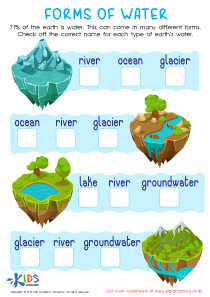
Prefix understanding Normal Grade 2 Worksheets
3 filtered results
-
From - To
Boost your child's language skills with our engaging Prefix Understanding worksheets designed for 2nd graders. These expertly crafted exercises help young learners grasp the concept of prefixes, enhancing their vocabulary and reading proficiency. Through fun activities and colorful illustrations, kids practice adding prefixes to root words, enabling them to uncover new meanings, stay ahead in their reading journey, and build strong foundational linguistic skills. Ideal for both classroom use and home study, our worksheets are perfectly aligned with 2nd grade learning objectives. Start today and give your child a head start in mastering prefix understanding effortlessly! Visit Kids Academy for more.
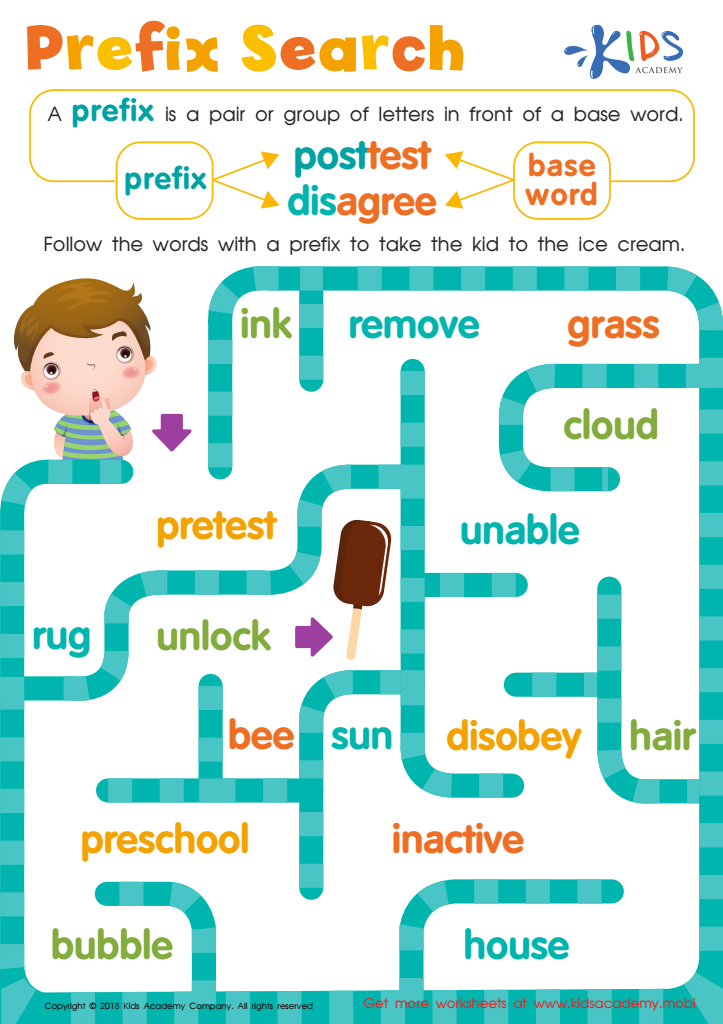
Reading: Prefix Search Worksheet
 Assign to My Students
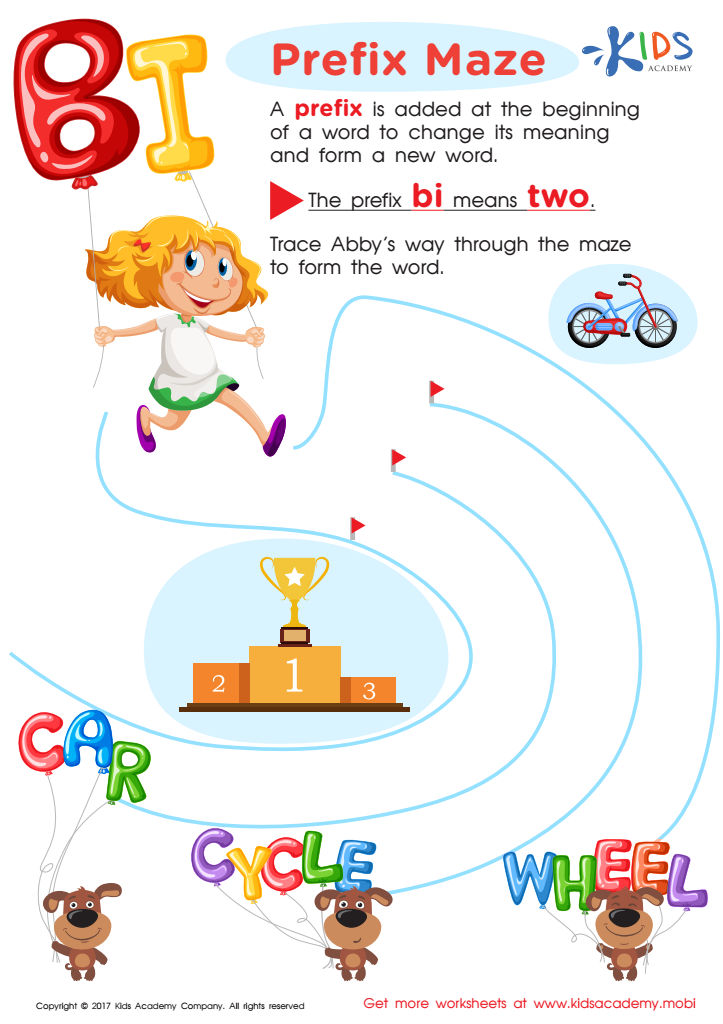
Prefix Bi Words Worksheet
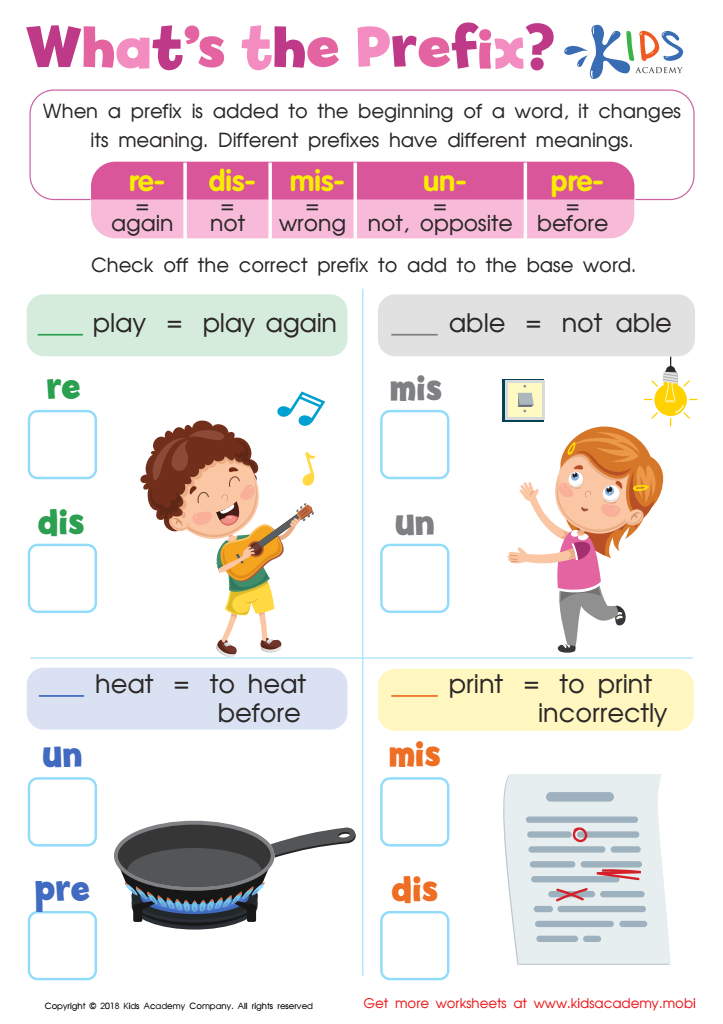
Reading: What Is the Prefix Worksheet







Understanding prefixes is crucial for Grade 2 students because it significantly enhances their language and reading skills. A prefix is a beginning part of a word that changes its meaning. Grasping this concept helps children expand their vocabulary rapidly. For instance, if they know the word "happy" and understand the prefix "un-", they can figure out that "unhappy" means not happy. This skill allows for more efficient decoding of unfamiliar words, improving reading comprehension.
From an educational perspective, understanding prefixes aligns with common core standards, promoting vocabulary development, reading proficiency, and linguistic awareness in young learners. Recognizing and using prefixes help children to decode new words they encounter, fostering better reading skills and overall academic performance. It also lays a foundation for learning more complex language structures in later grades.
Moreover, mastering prefixes boosts children’s confidence in their reading abilities. When kids feel confident, they are more likely to enjoy and engage in reading activities, fostering a lifelong love of learning. As students encounter more complex texts, their early awareness of prefixes arms them with tools to tackle challenging material more independently. Therefore, aiding young students in grasping this important element of language supports their overall educational growth and self-assurance.