Subtraction skills Normal Grade 2 Worksheets
3 filtered results
-
From - To
Enhance your Grade 2 students' understanding of subtraction with our engaging and comprehensive worksheets! Designed specifically for young learners, these subtraction skill worksheets cover essential math concepts while making learning fun. Each activity promotes critical thinking and problem-solving abilities, helping children master their subtraction skills. With a variety of exercises, including visual aids and interactive challenges, your students will gain confidence in their math abilities. Perfect for homework or classroom practice, our worksheets are aligned with educational standards, ensuring a meaningful learning experience. Start your journey towards subtraction mastery today and watch your students thrive in their math skills!
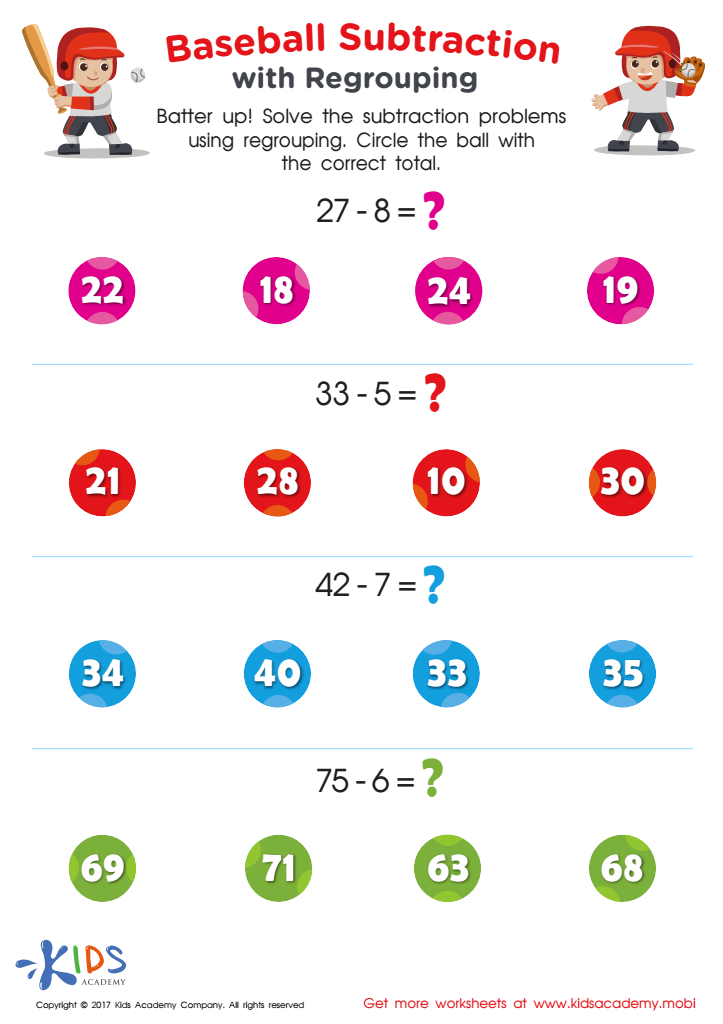
Subtraction With Regrouping for 2nd Grade Worksheet
 Assign to My Students
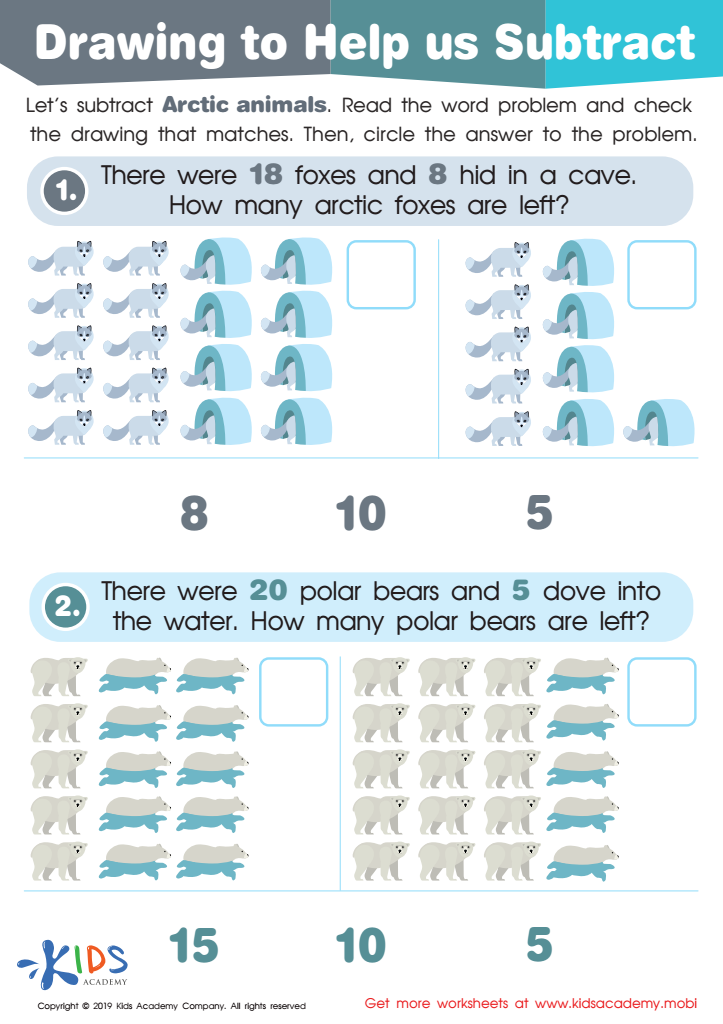
Drawing to Help Us Subtract Worksheet
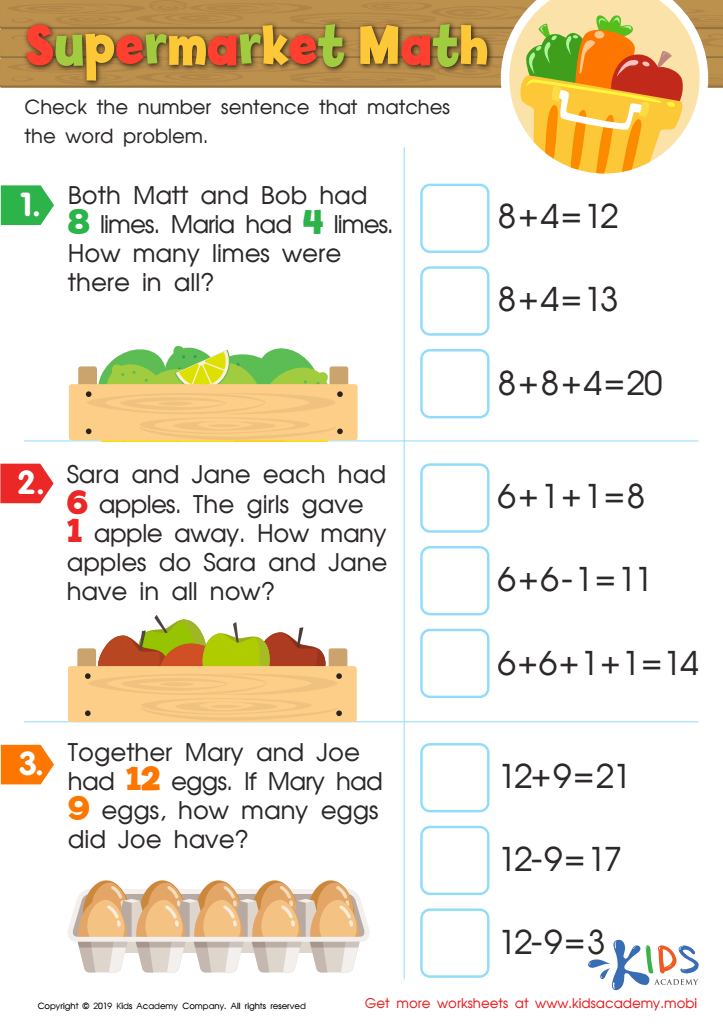
Supermarket Math Worksheet







Subtraction is a foundational math skill that plays a crucial role in a child’s cognitive development, especially at the Grade 2 level, where students begin to build on basic arithmetic concepts. Mastering subtraction not only enhances a child's ability to solve mathematical problems but also fosters critical thinking and problem-solving abilities that are essential in everyday life.
Understanding subtraction helps children develop a number sense, enabling them to grasp larger mathematical concepts in the future, such as addition, multiplication, and division. For parents and teachers, nurturing subtraction skills can lead to increased confidence in students, reducing anxiety around math that often develops if foundational skills are weak.
Moreover, subtraction is often applied in real-life situations, such as managing money, measuring items, or counting down – skills their growing independence requires. Early support in this area also enables educators and parents to identify learning gaps and address them proactively. Engaging children through games, hands-on activities, and practical examples encourages a positive attitude toward math, influencing their overall academic journey. Hence, fostering subtraction skills in Grade 2 can significantly impact a child’s future academic success and everyday decision-making capabilities.