Logical thinking development Normal Grade 2 Addition & Subtraction Worksheets
3 filtered results
-
From - To
Enhance your Grade 2 student's logical thinking with our engaging addition and subtraction worksheets! Designed to develop critical thinking and problem-solving skills, these worksheets challenge young learners through fun puzzles and interactive activities. Each task is crafted to strengthen their grasp of basic math concepts while encouraging them to analyze, question, and find solutions systematically. With clear instructions and colorful visuals, these resources keep students motivated and excited about learning. Perfect for classroom activities or at-home practice, our normal Grade 2 worksheets make mathematical reasoning an enjoyable journey. Boost your child's confidence and academic success with our thoughtfully designed materials today!
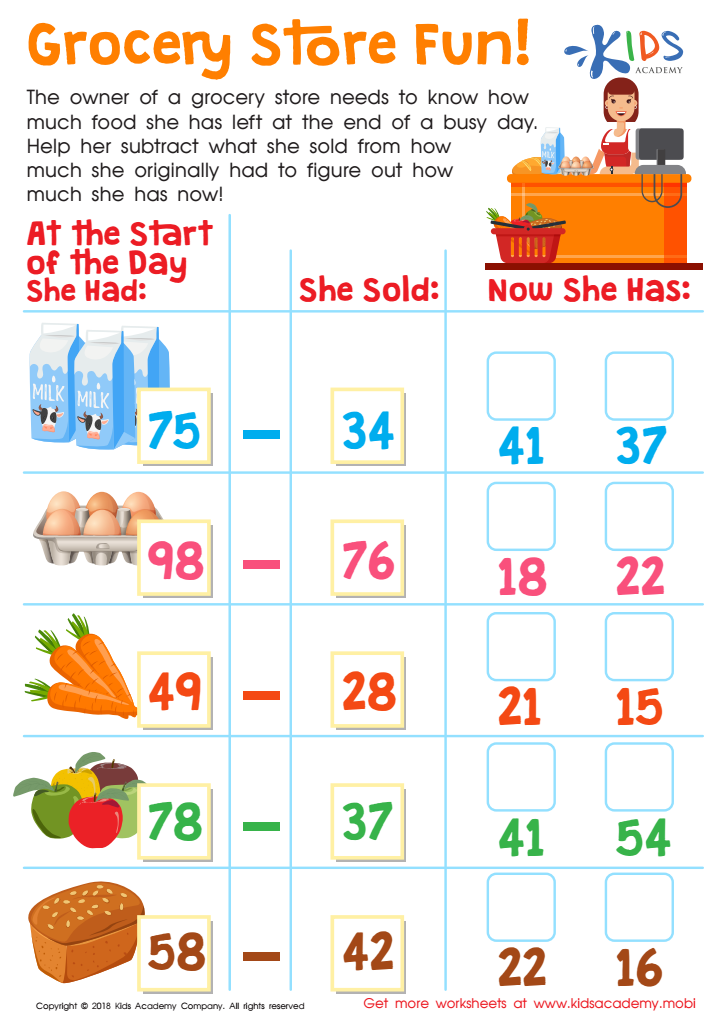
Grocery Store Fun! Worksheet
 Assign to My Students
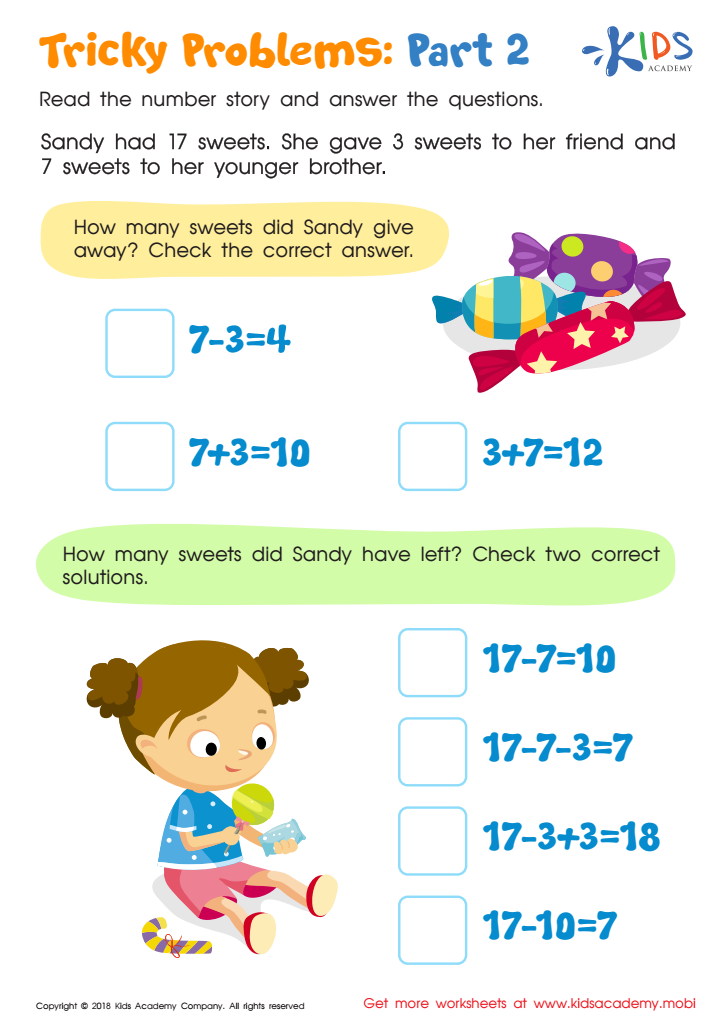
Tricky Problems Worksheet: Part 2
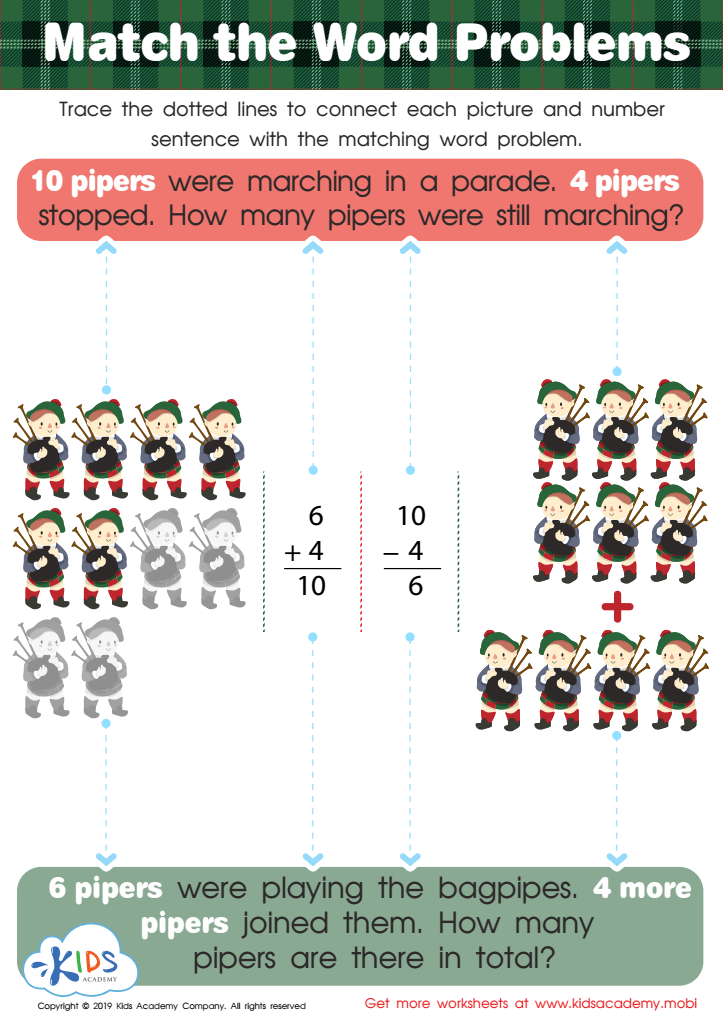
Match the Word Problems Worksheet








Logical thinking is a crucial cognitive skill that forms the foundation for problem-solving, critical analysis, and academic success. For Grade 2 learners, the development of logical thinking through addition and subtraction is particularly significant. At this stage, children are transitioning from concrete to more abstract mathematical concepts. Engaging with addition and subtraction not only enhances their numerical proficiency but also encourages them to identify patterns, relationships, and strategies.
When parents and teachers focus on nurturing logical thinking in math, they equip students with essential skills for reasoning and decision-making. These skills are not only important in math but also translate into other subjects, such as science and reading comprehension, where analytical skills are required.
Moreover, fostering logical thinking helps children develop confidence and independence in their learning. As they learn to approach problems methodically and reason through solutions, they understand the importance of persistence and resilience, key attributes for lifelong learning.
Ultimately, prioritizing logical thinking in Grade 2 through addition and subtraction prepares children for future academic challenges, supports cognitive development, and sets the groundwork for informed, critical thinkers ready to tackle a rapidly changing world. This makes it imperative for educators and caregivers to prioritize this aspect of early math education.