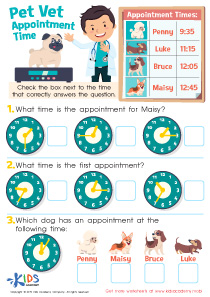
Understanding measurements Normal Grade 2 Math Worksheets
6 filtered results
-
From - To
Unlock the world of measurements with our "Understanding Measurements Normal Grade 2 Math Worksheets"! Designed specifically for second graders, these engaging worksheets provide fun and interactive activities that facilitate the learning of key measurement concepts. Students will explore topics such as length, weight, and volume through various exercises that encourage critical thinking and problem-solving skills. Each worksheet promotes hands-on learning by incorporating real-world scenarios, making math more relatable and enjoyable. Perfect for at-home practice or classroom use, these resources help young learners build a strong foundation in measurement, fostering both confidence and a love for math. Start measuring up today!
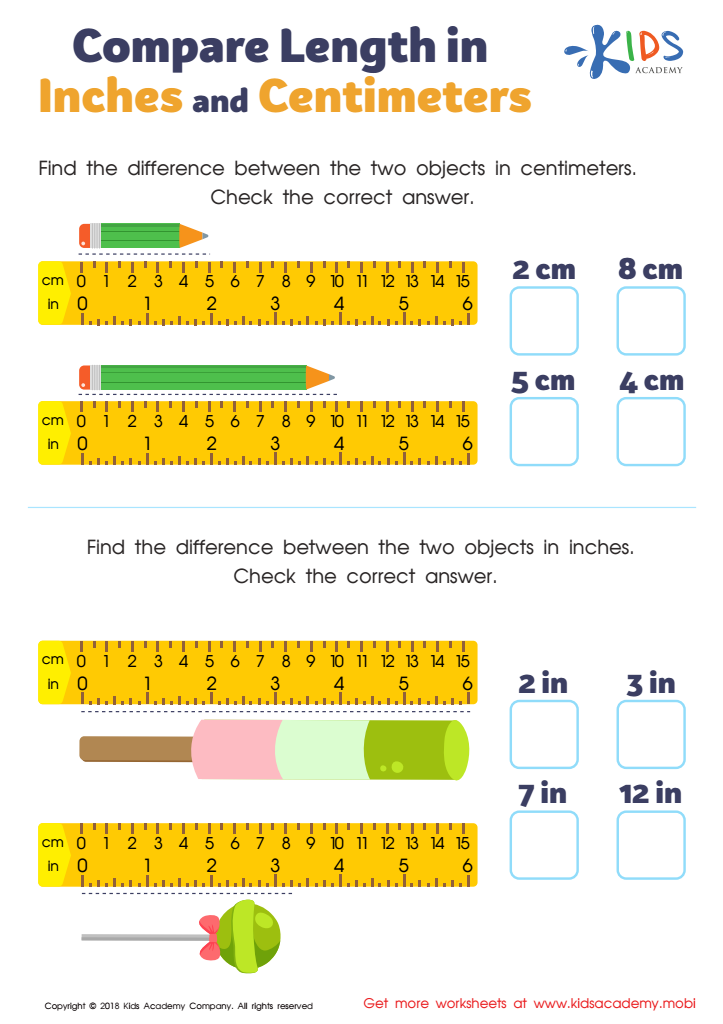
Compare Length in Inches and Centimeters Worksheet
 Assign to My Students
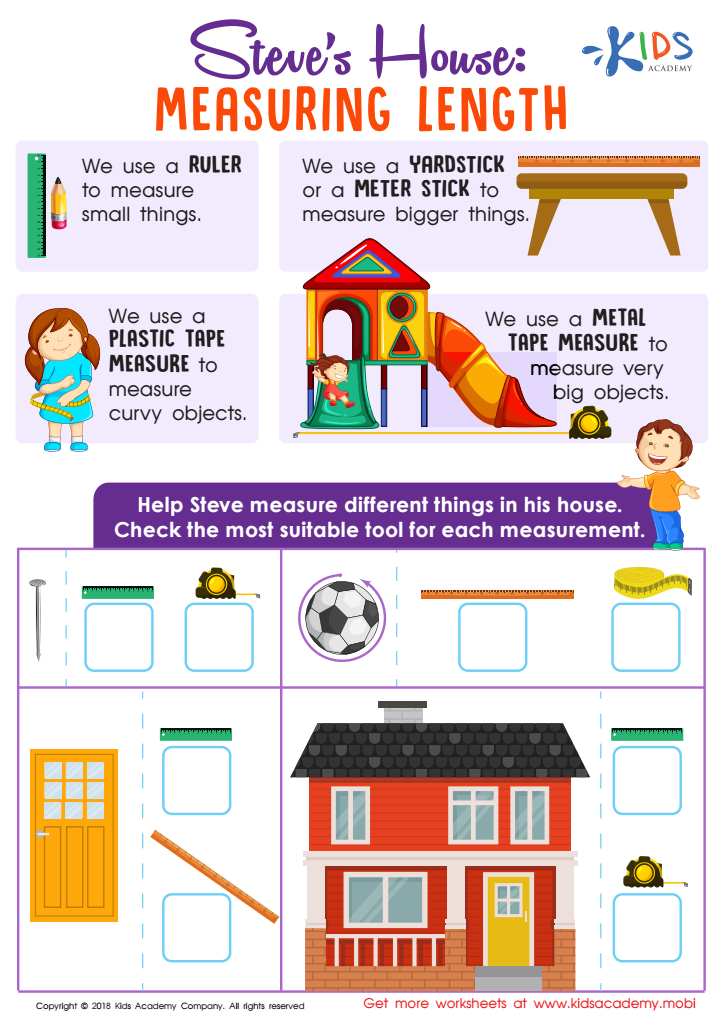
Steve's House: Measuring Length Worksheet
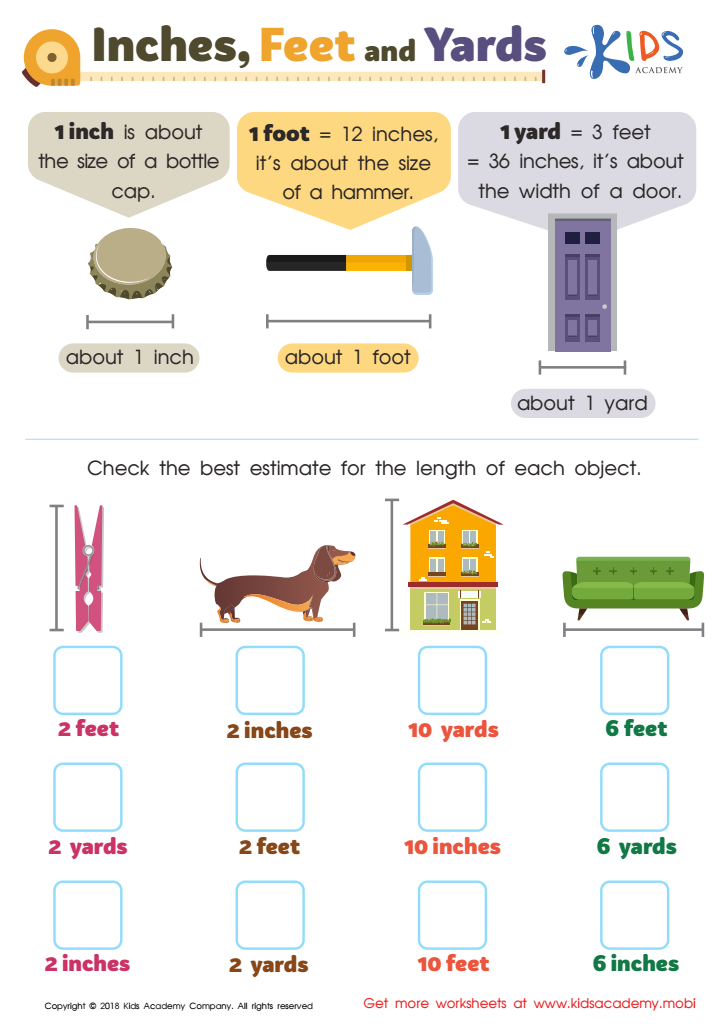
Inches, Feet and Yards Worksheet
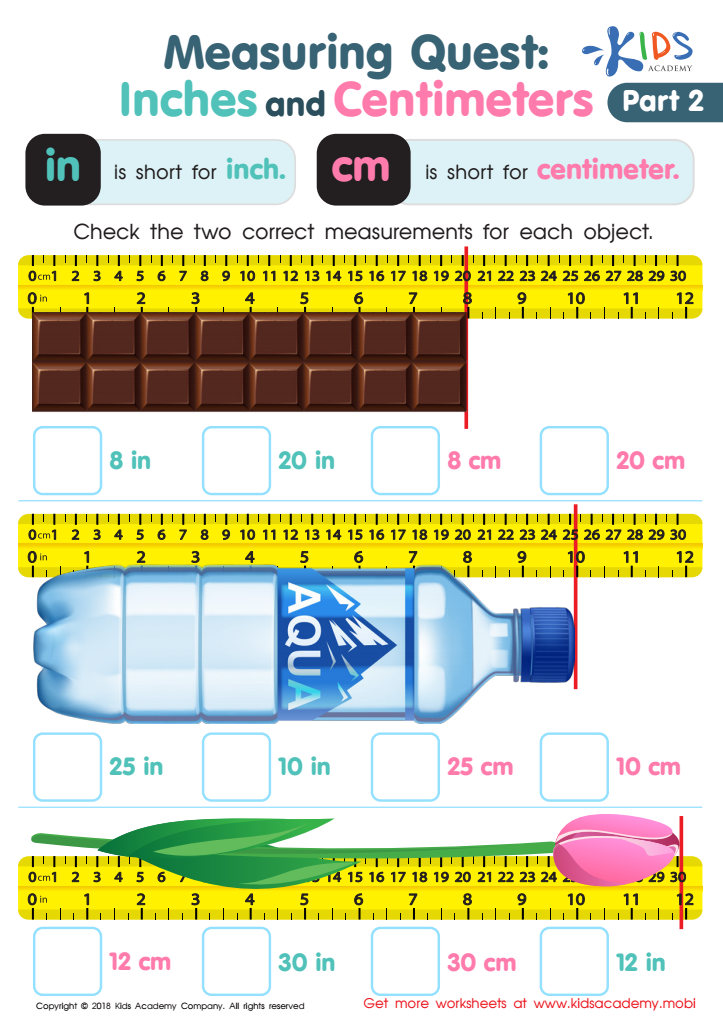
Measuring Quest: Inches and Centimeters - Part 2 Worksheet
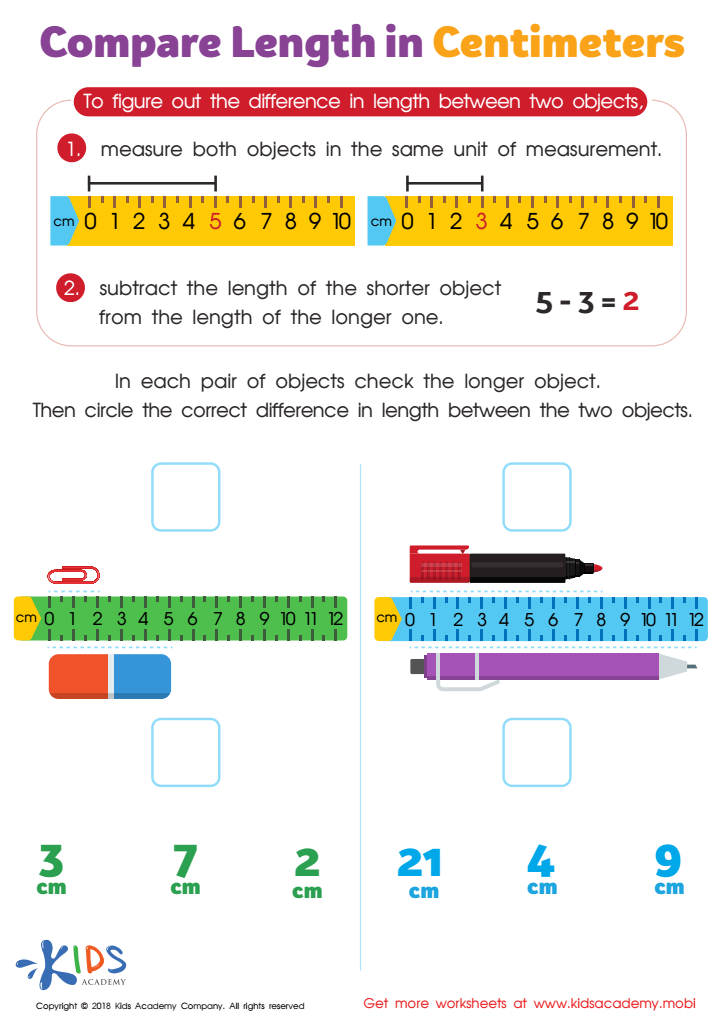
Compare Length in Centimeters Worksheet
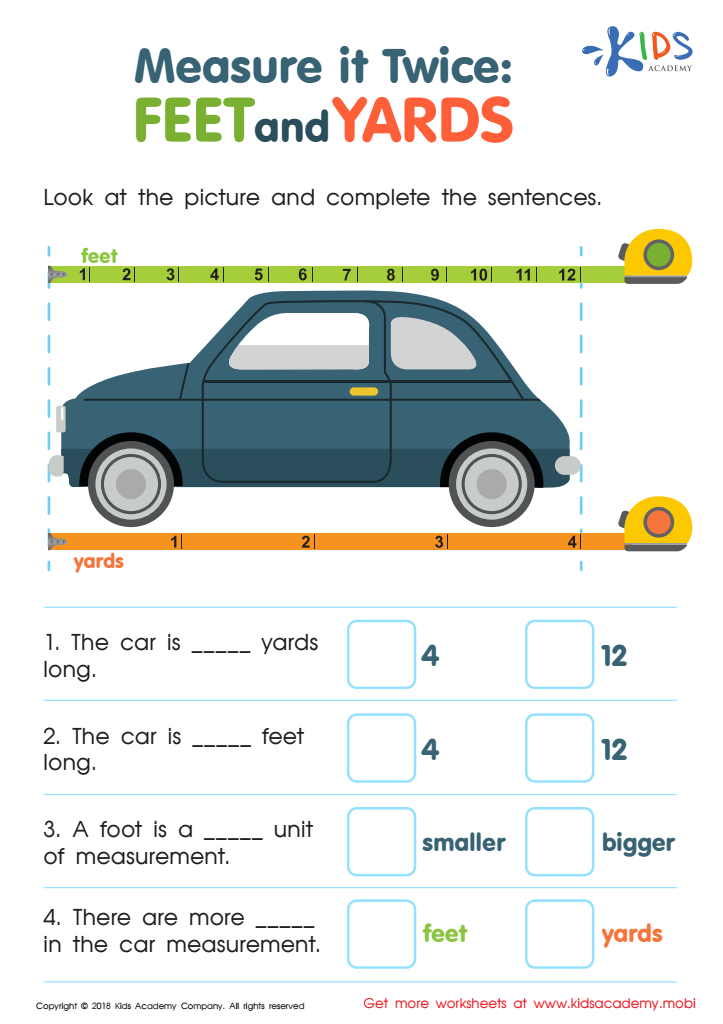
Measure It Twice: Feet and Yards Worksheet






Understanding measurements is a foundational element of Grade 2 math that holds significance for both parents and teachers. At this age, students are curious about the world around them, and measurements provide a practical way to explore and make sense of that world. Learning measurements helps children develop critical thinking skills as they compare lengths, weights, and volumes, thus enhancing their problem-solving abilities.
For parents, engaging with their children in measurement activities can strengthen their bond and promote a positive attitude towards math. Simple tasks such as cooking, gardening, or organizing can provide real-life contexts where measurements apply, making math more relatable and enjoyable.
Teachers, on the other hand, play a vital role in introducing measurement concepts through hands-on experiences. Incorporating measuring tools such as rulers, scales, and cups in the curriculum allows students to grasp these concepts tangibly. By fostering an understanding of measurements, teachers equip students with skills necessary for their future academic success as they progress into more advanced math concepts.
Ultimately, understanding measurements cultivates curiosity, enhances everyday problem-solving, and lays a solid foundation for mathematical competency, making it essential for the holistic development of young learners.