Reading Improvement Normal Grade 2 Building Vocabulary Worksheets
4 filtered results
Difficulty Level
Grade
Age
-
From - To
Subject
Activity
Standards
Discover our engaging Building Vocabulary Worksheets designed for Grade 2 students to enhance their reading skills! Each worksheet focuses on expanding vocabulary through fun and interactive activities. Tailored specifically for normal grade levels, these resources promote comprehension and word recognition in a supportive manner. Students will explore new words, learn their meanings, and practice using them in sentences, making reading a more enjoyable experience. With a variety of exercises, your little learners will build confidence and fluency. Equip your classroom with essential tools for reading improvement and watch your second graders thrive as they develop essential language skills!
Favorites
With answer key
Interactive
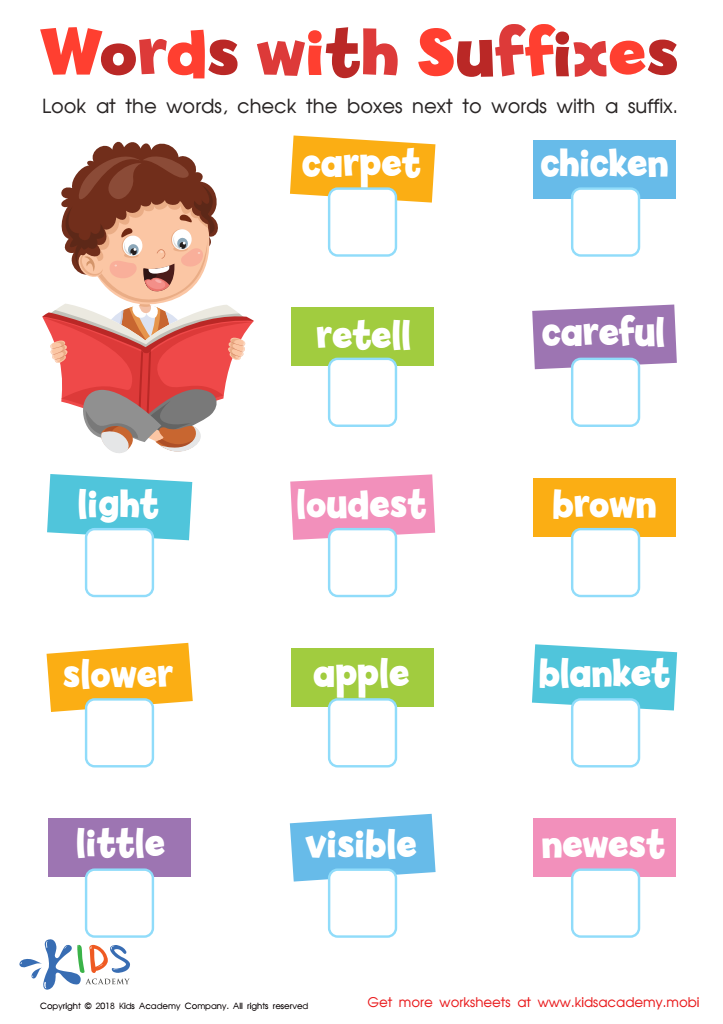
Reading: Words With Suffixes Worksheet
Help your students understand suffixes and build reading fluency with this worksheet. Have them read each word, then choose the ones with a suffix. Practicing this will lead to better comprehension and more confident reading. Save it for future use in language and reading classes.
 Assign to My Students
Reading: Words With Suffixes Worksheet
Worksheet
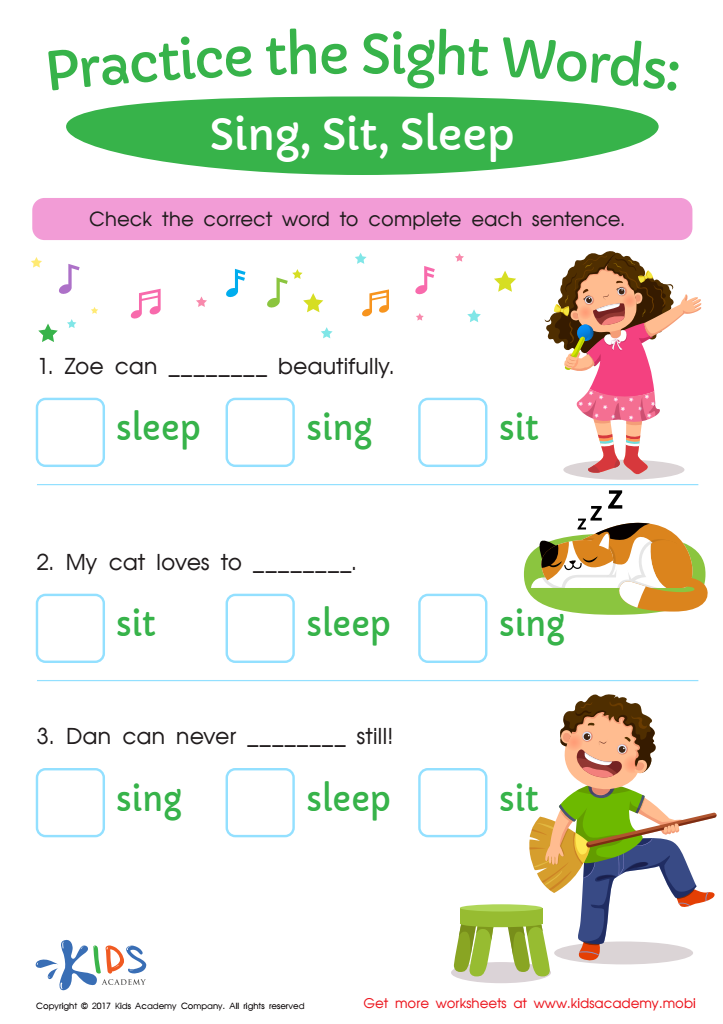
Sing, Sit, Sleep Sight Words Worksheet
Practice sight words with this printable worksheet featuring sing, sit, sleep! Confusing at first, these words can be mastered with the help of simple sentences and fun illustrations.
Sing, Sit, Sleep Sight Words Worksheet
Worksheet
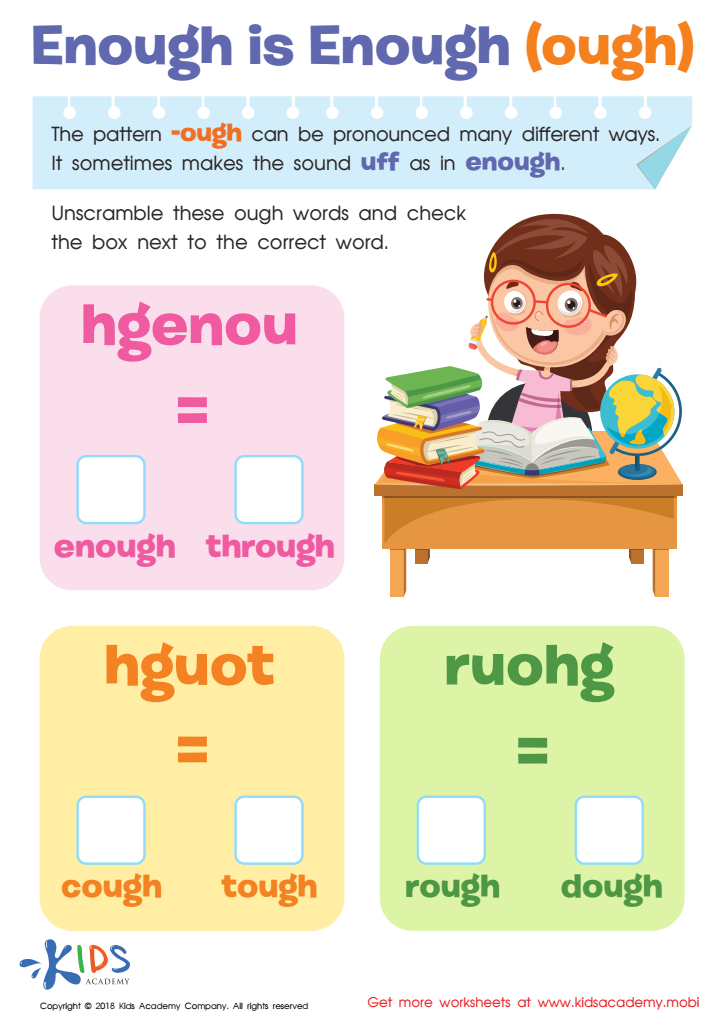
Enough Is Enough (ough) Worksheet
As your students learn more about reading and pronouncing words, they can explore how some word patterns can be said differently. The 'ough' pattern, for instance, can be pronounced several ways. 'Enough' has the 'uff' sound. Provide your students with examples of words pronounced similarly and help them unscramble 'ough' words on this worksheet, ticking the box for the correct word.
Enough Is Enough (ough) Worksheet
Worksheet
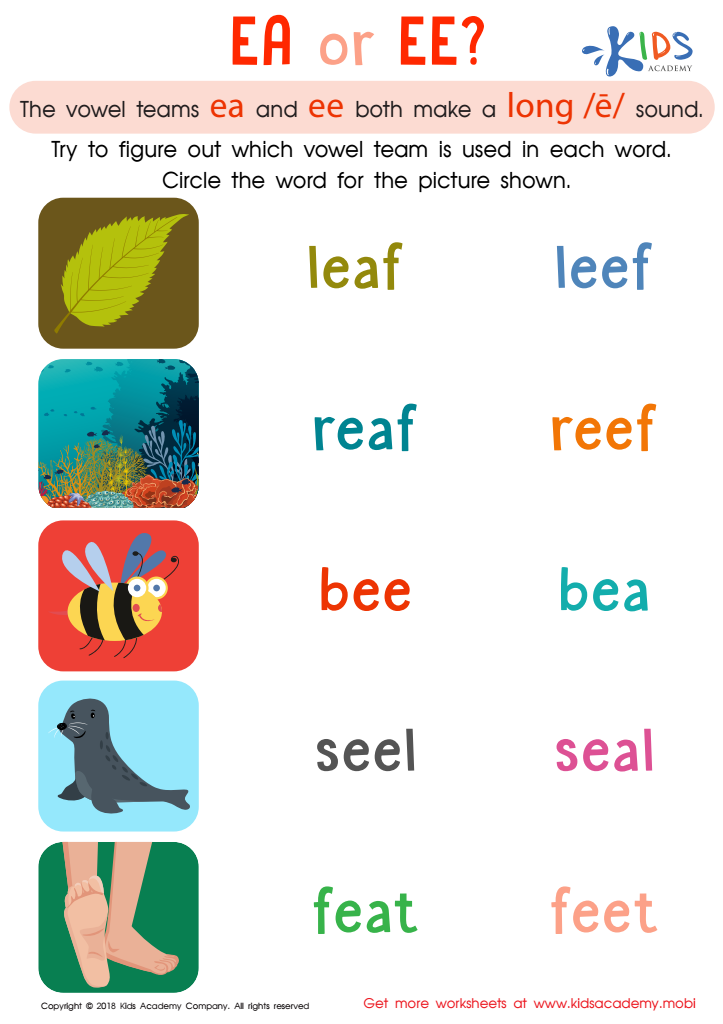
Reading: EA and EE Worksheet
Confused by the long E sound's varying spellings? Give students practice with this printable. It will improve their reading and spelling skills by helping them identify the correct spellings for words with the /ee/ and /ea/ vowel teams. Clear up the confusion and sharpen their skills.
Reading: EA and EE Worksheet
Worksheet
Join Kids Academy for Free
Who is primarily going to use this learning content?








Reading improvement in Grade 2 is crucial for several reasons, especially in vocabulary building. At this developmental stage, children are transitioning from learning to read to reading to learn. A strong vocabulary forms the foundation for comprehension and critical thinking, enabling them to engage with more complex texts as they progress through their education.
For parents and teachers, fostering vocabulary enhancement contributes to better academic performance across all subjects. A rich vocabulary empowers children to express their thoughts clearly, improving their writing and verbal communication skills. It also equips them to understand diverse concepts, facilitating deeper exploration of science, math, and social studies.
Additionally, building vocabulary at this age promotes confidence in children. A strong command of language helps them participate in discussions and enhances their overall enjoyment of reading, creating lifelong learners. Furthermore, vocabulary development is linked to improved social interactions, as well-versed children are better able to articulate their ideas and feelings.
Ultimately, focused reading improvement and vocabulary building in Grade 2 lays the groundwork for future successes. Just as important as academic abilities are the social and emotional skills cultivated through strong communication, emphasizing the vital role of parents and teachers in this developmental phase.