Enhancing observational skills Normal Grade 2 Science Worksheets
4 filtered results
-
From - To
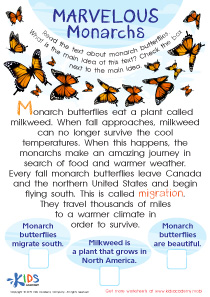
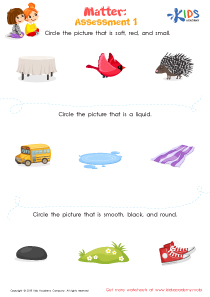
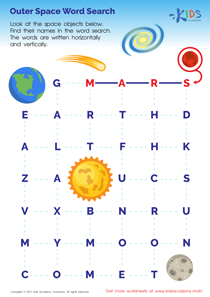
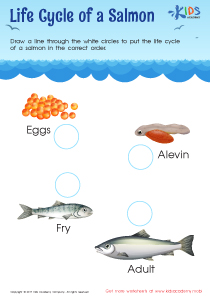
Enhance your Grade 2 students' observational skills with our tailored science worksheets! Designed to engage young learners, these interactive activities encourage curiosity and observation in their environment. Our worksheets focus on enhancing critical thinking and reasoning by challenging students to notice details, compare objects, and conduct simple experiments. Each worksheet is aligned with educational standards, providing a fun and effective way to develop scientific skills. Perfect for classroom or home use, these resources foster a love for discovery and inquiry in budding scientists. Explore our collection to empower your students with essential observational skills that lay the foundation for future learning!
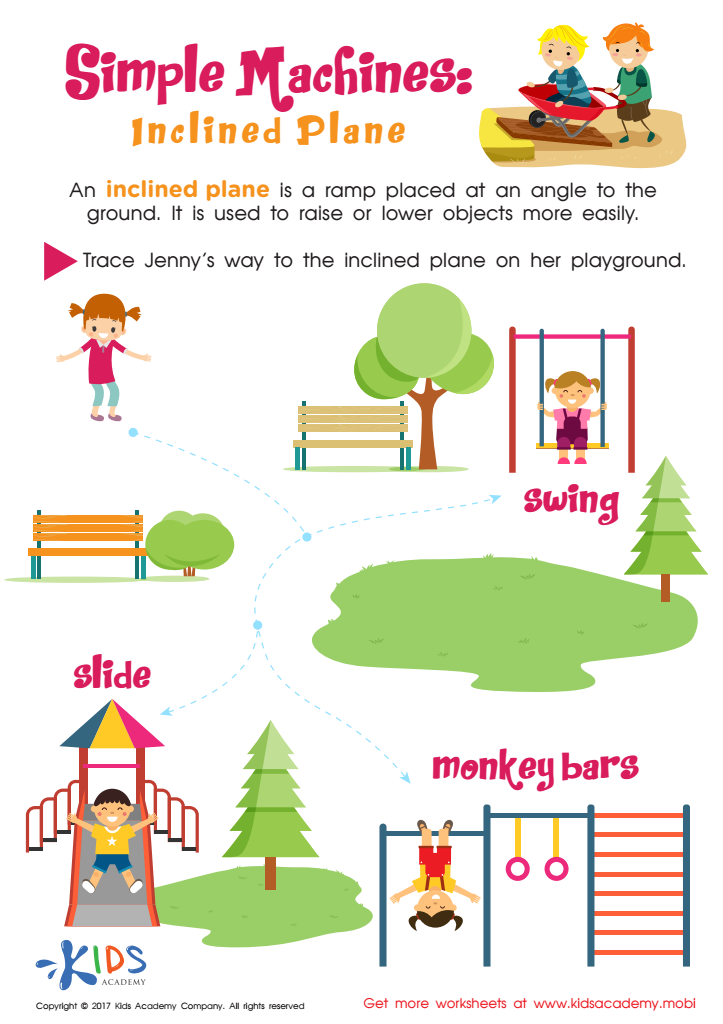
Simple Machines Inclined Plane Worksheet
 Assign to My Students
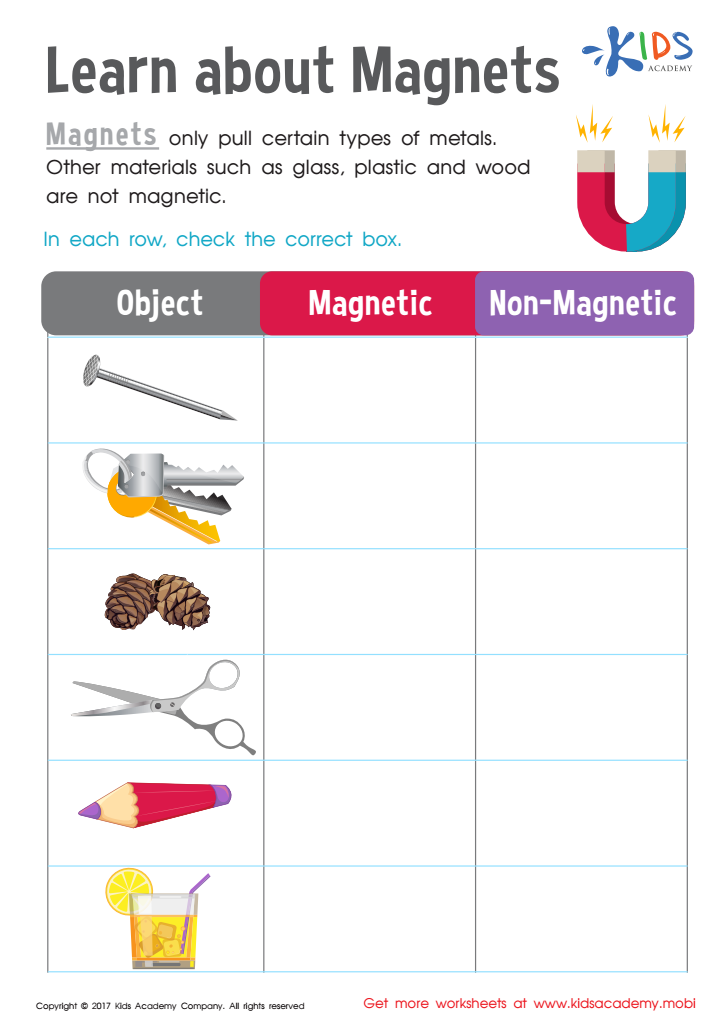
Magnetic Or Not Worksheet
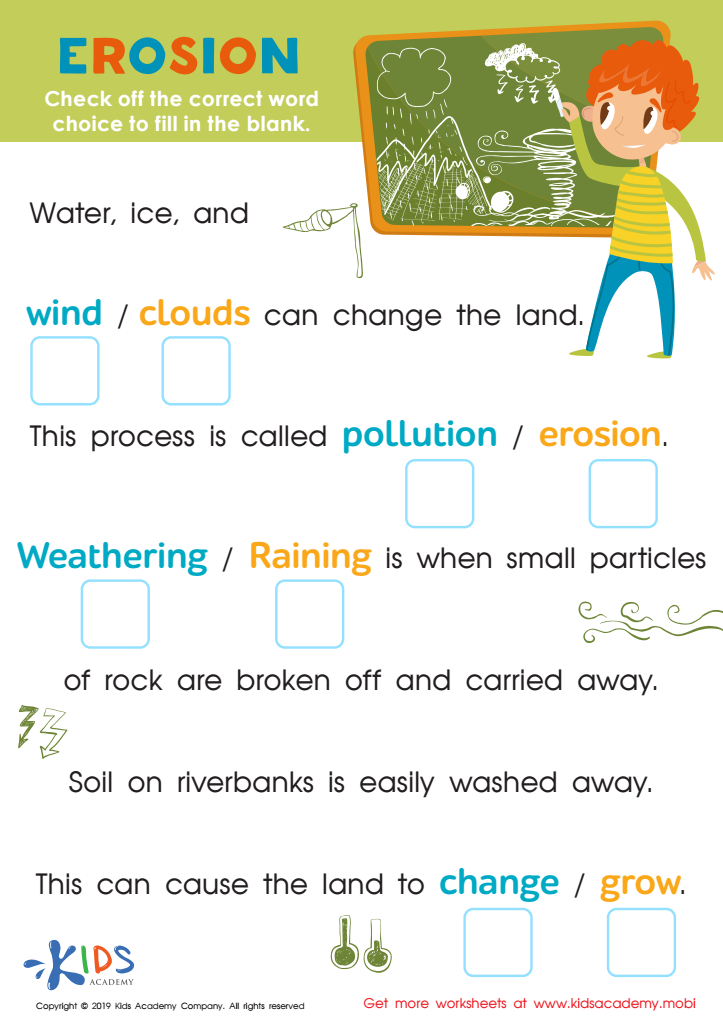
Erosion Worksheet
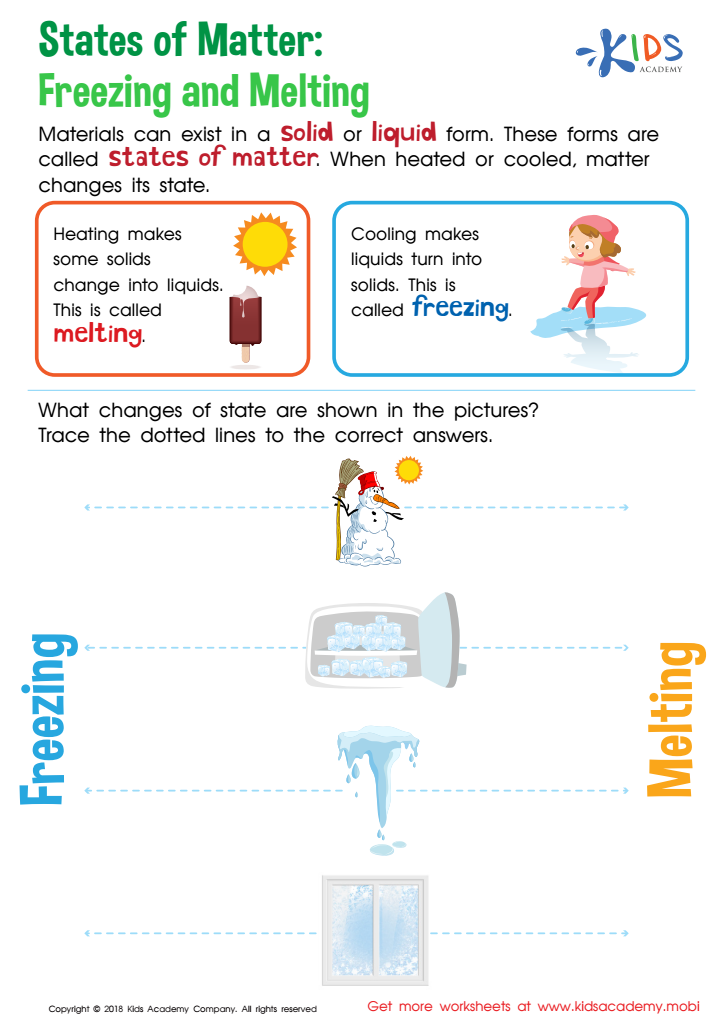
States of Matter: Freezing and Melting Worksheet







Enhancing observational skills in Grade 2 science is crucial for both parents and teachers for several reasons. First, observational skills lay the foundation for critical thinking and scientific inquiry. At this age, children are naturally curious about their environment, and fostering their ability to observe details helps them ask questions, make hypotheses, and draw conclusions about the world around them.
Moreover, strong observational skills contribute to more effective problem-solving. When students can accurately identify patterns and relationships in data, they become equipped to tackle scientific challenges, setting the stage for a deeper understanding of complex concepts in later grades. Additionally, these skills promote engagement and enthusiasm for learning, as children who can see, interact, and explore their surroundings are more likely to develop a lifelong interest in science.
From a parental and educational perspective, supporting these skills also encourages collaboration and communication. Children learn to share their observations, fostering teamwork and discussion among peers, which enhances social learning. In sum, investing in the development of observational skills at this formative stage equips children academically and personally, laying the groundwork for future exploration, retention, and success in science.