Geography knowledge Normal Community Worksheets
3 filtered results
-
From - To
Enhance your child's geography skills with our Geography Knowledge Normal Community Worksheets. Designed for young learners, these engaging worksheets focus on fundamental geographical concepts, from understanding maps and directions to identifying landmarks and natural features within communities. Carefully crafted to be both educational and fun, they help build essential knowledge while fostering a love for discovery. Ideal for classroom use or at-home learning, our worksheets support continuous development in social studies. Encourage curiosity and boost geographical awareness with our expertly created resources, available for easy download on Kids Academy. Start exploring the world around you today!
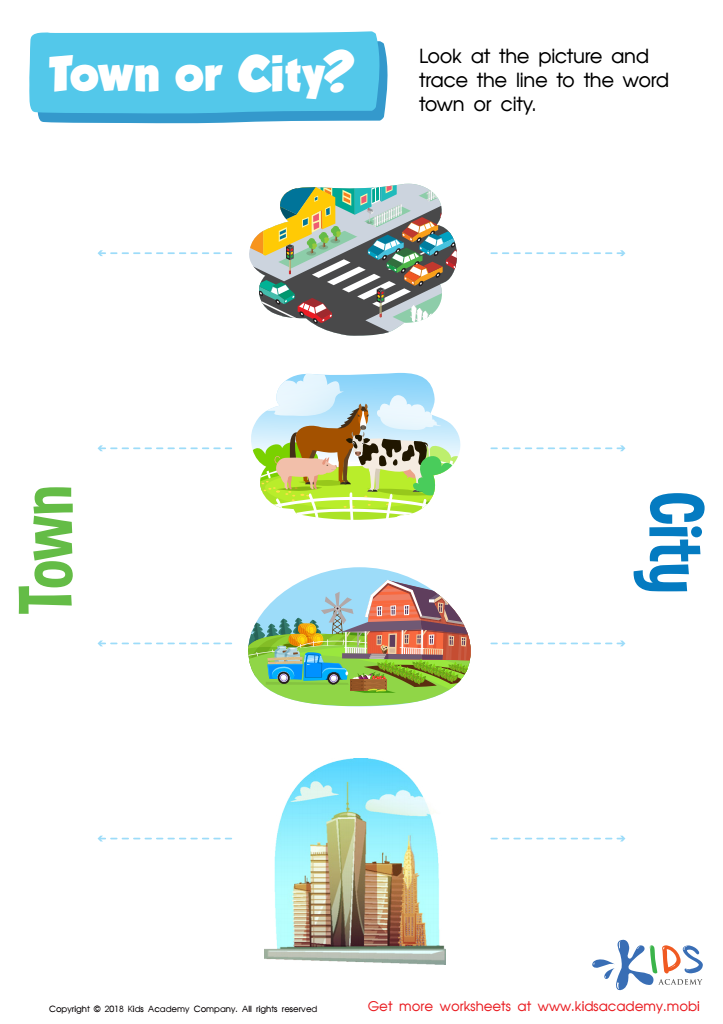
Town or City? Worksheet
 Assign to My Students
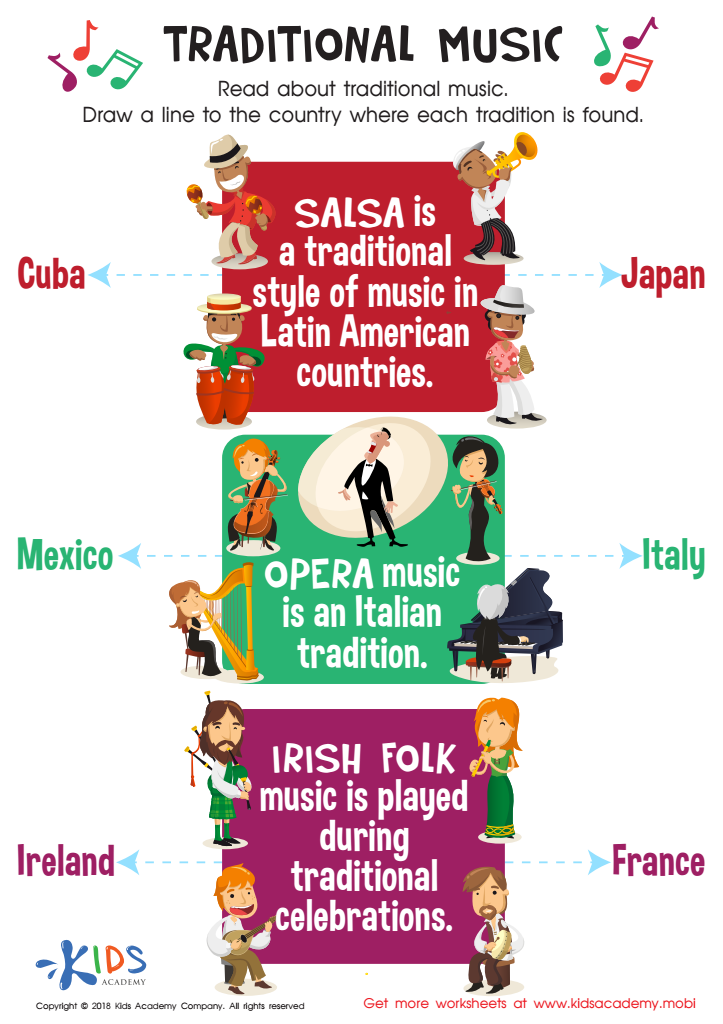
Traditional Music Worksheet

Towns Worksheet








Geography is an essential aspect of a well-rounded education, and both parents and teachers should prioritize this subject for several reasons. First, understanding geography helps students build a global perspective. It enables them to learn about different cultures, ecosystems, and political systems, fostering greater empathy and open-mindedness. By knowing how various places are interconnected, students can appreciate the complexities of global interdependence, helping them become more informed and responsible global citizens.
Second, a strong grasp of geography enhances critical thinking skills. It teaches students to interpret maps, analyze spatial information, and understand the relationships between physical environments and human activities. These skills are not only valuable in academic settings but are also crucial in navigating real-world challenges like climate change, urban planning, and disaster management.
Moreover, geography's practical applications are numerous. From reading directions to understanding geopolitical news, geographic knowledge is useful in everyday life. In the modern economy, many professions—from logistics to environmental science—require a geographic skill set, making it a foundation for numerous career opportunities.
Lastly, instilling a sense of place connects students to their local communities. It fosters appreciation and responsibility for one’s immediate environment, promoting civic pride and engagement. Therefore, prioritizing geography education enriches students' academic growth and equips them with skills vital for personal and professional success.