Enhance your third grader's vocabulary with our engaging Vocabulary Enhancement Normal Grade 3 Phonics Worksheets! These thoughtfully designed worksheets help students expand their word knowledge while reinforcing vital phonics skills. Each activity encourages children to explore new vocabulary through fun exercises such as matching words, filling in the blanks, and context-based reading. Our worksheets cater to various learning styles, ensuring that every child can thrive. Ideal for at-home practice or supplementary classroom activities, these resources promote confidence and fluency in reading. Transform phonics learning into an exciting adventure and watch your child's vocabulary flourish! Discover the joy of learning today!

Check out this FREE Grade 3 Trial Lesson on Phonics!

Correctly use Frequently used Homophones and Antonyms

Favorites
With answer key
Interactive
  • Grade 3
  • Vocabulary enhancement
  • Phonics
  • Normal
Sight Word Archery Worksheet

Sight Word Archery Worksheet

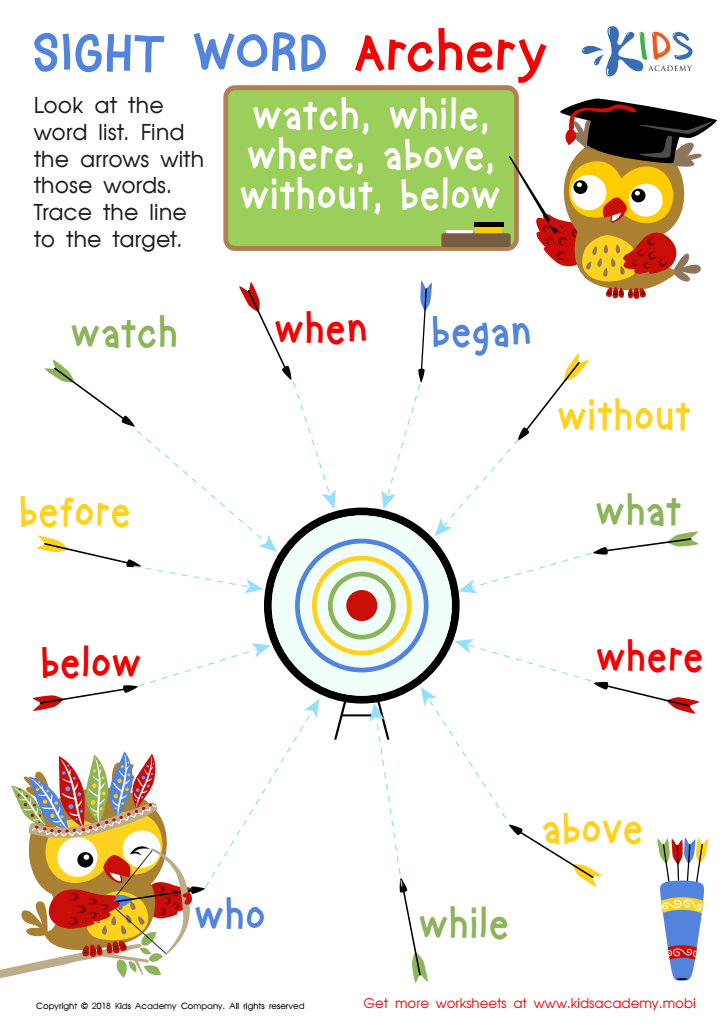
Read the words list with your kids, pointing at each one. Ask them to do the same. Help them find the arrows with those words and trace the line to the target in the centre.
Sight Word Archery Worksheet
Worksheet
Open Syllables Worksheet

Open Syllables Worksheet

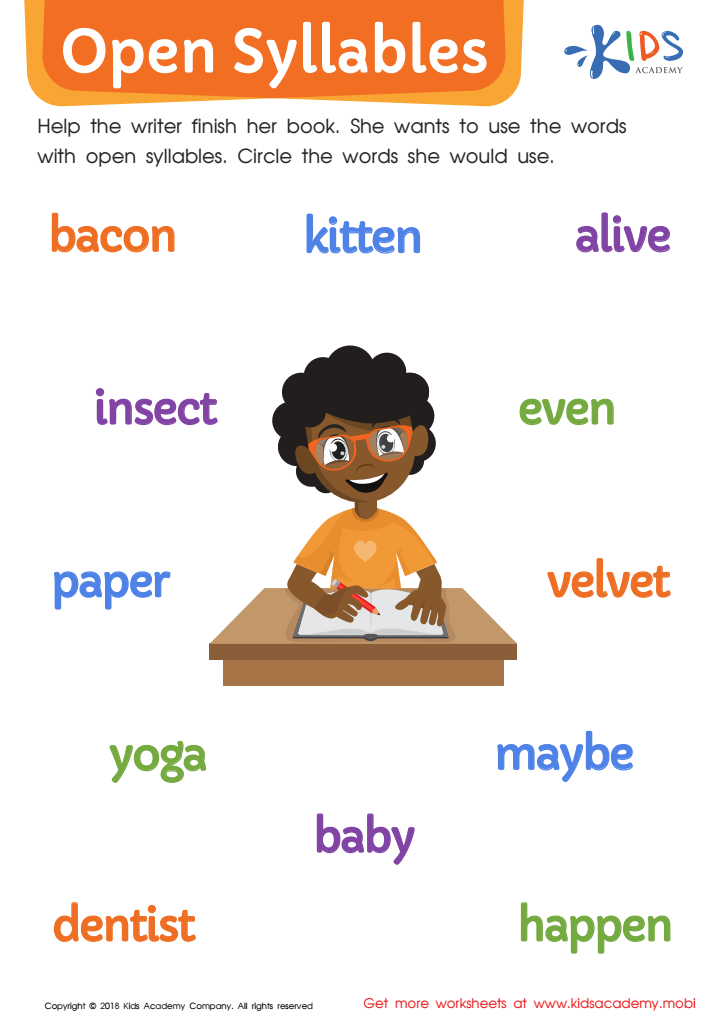
Before beginning this worksheet, make sure your child knows what open syllables are. If not, take time to teach them with examples. Then, help the writer finish her book by circling words with open syllables. She needs your child's help!
Open Syllables Worksheet
Worksheet
There, Their, They're Worksheet

There, Their, They're Worksheet

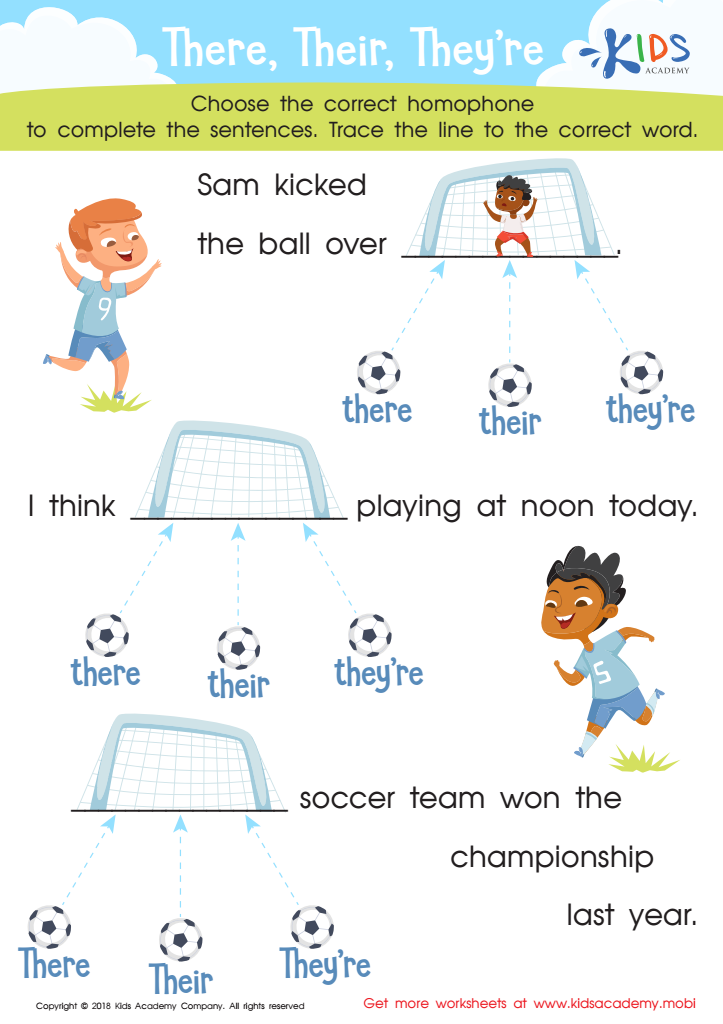
Explain to your kids the difference between 'there', 'their' and 'they're'. These three words are homophones - spelt similarly but with different meanings. Help them choose the correct homophones when completing sentences, and trace the line to the right word.
There, Their, They're Worksheet
Worksheet
Poem: What Is Pink? Worksheet

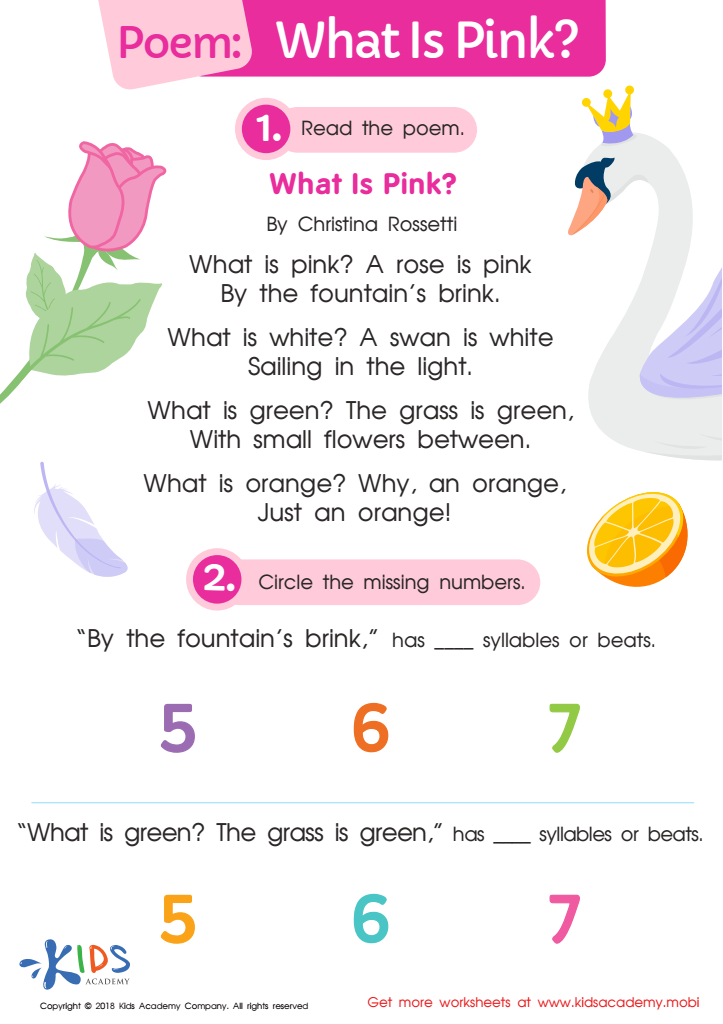
Poem: What Is Pink? Worksheet

Help your kids learn with short, fun, interesting poems! Read it aloud to them and point out the rhyme patterns. Have them circle the missing numbers to answer two questions. Show examples of objects with the colors in the poem. This will help them learn to read, and also understand colors better.
Poem: What Is Pink? Worksheet
Worksheet
Homophones: Crayons Worksheet

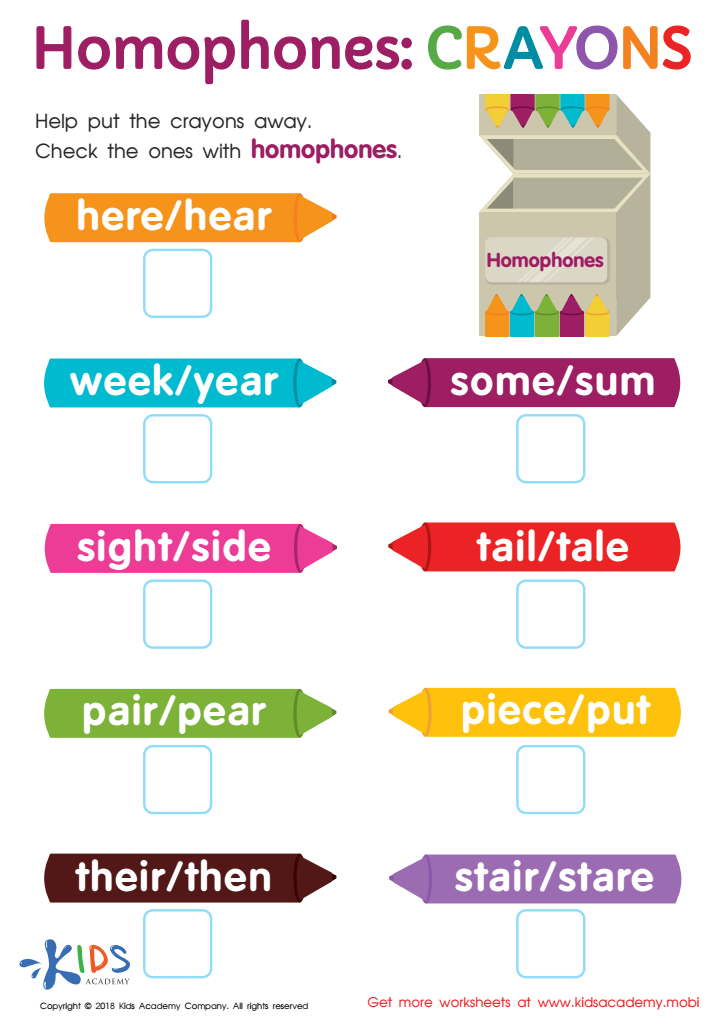
Homophones: Crayons Worksheet

Ask your kids: "What are homophones?" Explain that homophones are words that sound alike but have different meanings, like 'dare' and 'deer'. Ask them to identify homophones by putting the crayons in this printout away according to the words.
Homophones: Crayons Worksheet
Worksheet
Tennis Ball Syllables Worksheet

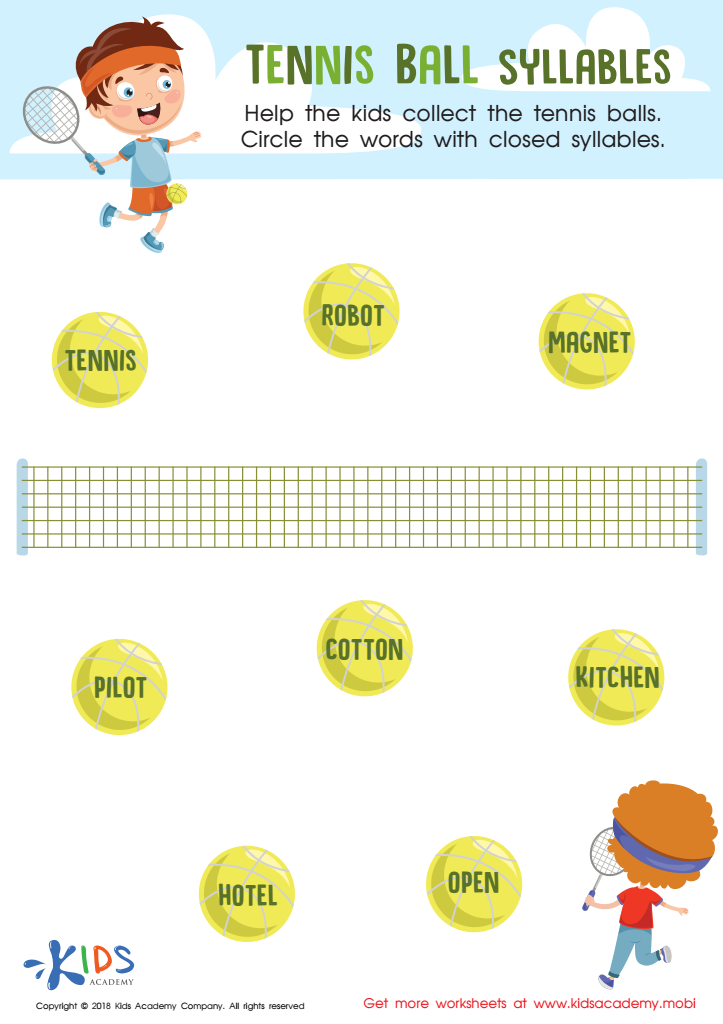
Tennis Ball Syllables Worksheet

To help your kids become fluent speakers, they need to learn syllables. A word can have one to seven syllables, with longer words having more. For this level, they will be working with one or two syllables. Assist them as they circle the words with closed syllables in this worksheet.
Tennis Ball Syllables Worksheet
Worksheet
Poem: Cats and Dogs Worksheet


Poem: Cats and Dogs Worksheet

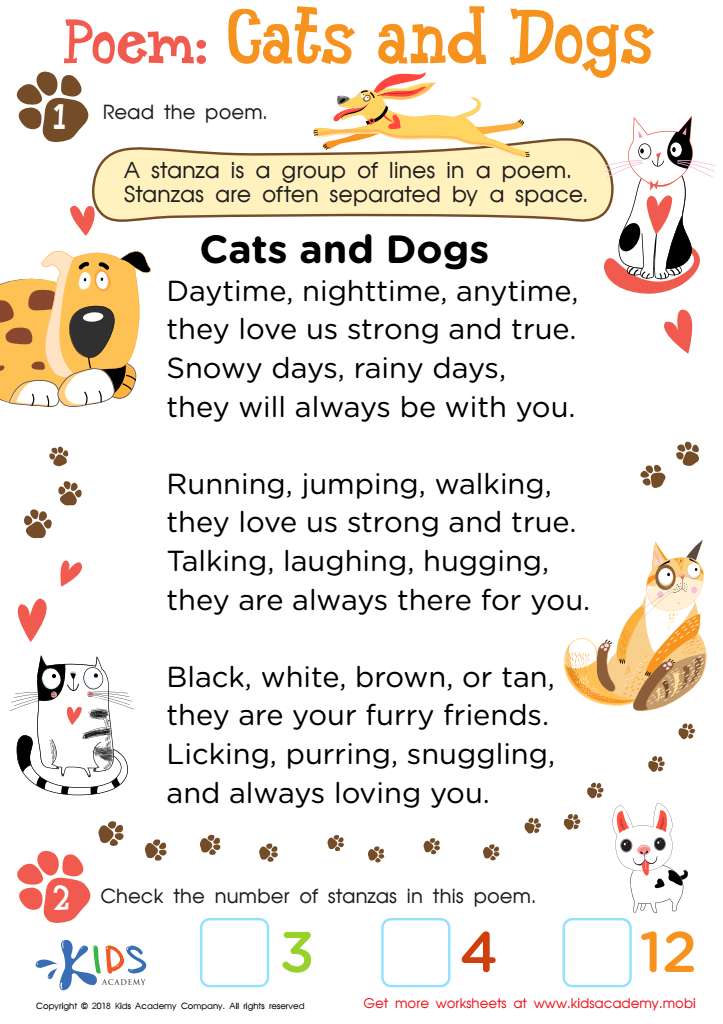
Read the poem to your child and point out where each stanza ends. Ask if they know what a stanza is (if not, explain it's a group of lines in a poem). Help them answer the question at the bottom of the printout. This simple, sweet poem about cats is easy for your child to relate to.
Poem: Cats and Dogs Worksheet
Worksheet


Parents and teachers should prioritize vocabulary enhancement through normal Grade 3 phonics since it serves as a foundation for successful reading and communication. At this age, children are refining their language skills, making it crucial to expand their vocabulary to develop comprehension and expressive abilities. Phonics instruction helps children decode words, linking sounds to letters, which is vital for reading proficiency.

Enhanced vocabulary contributes to improved academic performance across subjects. When students understand words, they can follow instructions in math, engage with science concepts, and participate in historical discussions, fostering a lifelong love for learning. Furthermore, a richer vocabulary boosts children’s confidence in speaking and writing, enabling them to articulate their thoughts more clearly.

Moreover, vocabulary skills are linked to social interactions. Children with a well-developed vocabulary engage better with peers, forming more meaningful relationships. Encouraging phonics and vocabulary enhancement also cultivates curiosity, as students are more inclined to explore new ideas and concepts.

By investing time in vocabulary activities and phonics, parents and teachers lay a solid groundwork for a child's educational journey. Emphasizing these skills nurtures independent, articulate learners ready to tackle the challenges of higher education and life beyond the classroom.