Shape Recognition Normal Grade 3 Worksheets
6 filtered results
Difficulty Level
Grade
Age
-
From - To
Subject
Activity
Standards
Enhance your third graders' understanding of shapes with our Shape Recognition Normal Grade 3 Worksheets! Designed to introduce students to various geometric shapes, these interactive worksheets engage young learners through fun activities that promote area, perimeter, and spatial awareness. Students will differentiate between 2D and 3D shapes, identify properties, and apply shape concepts in real-world scenarios. Perfect for classroom use or homework, these worksheets are an effective resource for reinforcing shape recognition skills in a playful, enjoyable way. Help your students build a strong mathematical foundation while nurturing their creativity. Download and inspire your child’s learning journey today!
Favorites
With answer key
Interactive
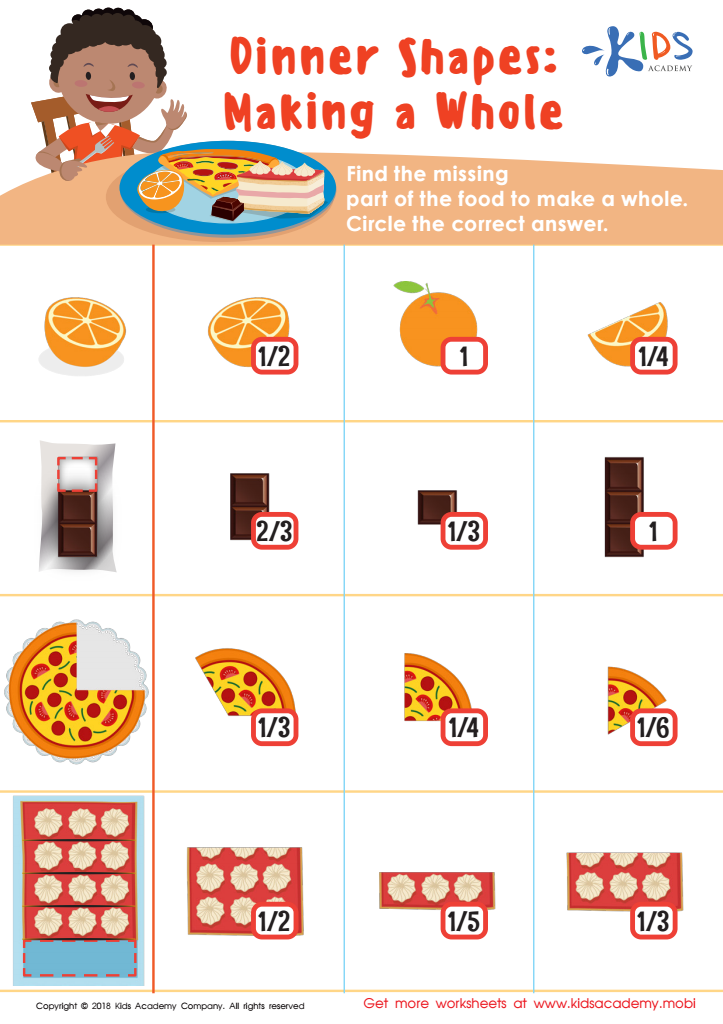
Dinner Shapes: Making a Whole Worksheet
Using food and snacks to stimulate learning and interest in topics is a great strategy. Fractions can prove tricky, but this worksheet can help your child become an expert. Have them look for the missing parts of the food to make a whole, then circle the answer.
 Assign to My Students
Dinner Shapes: Making a Whole Worksheet
Worksheet
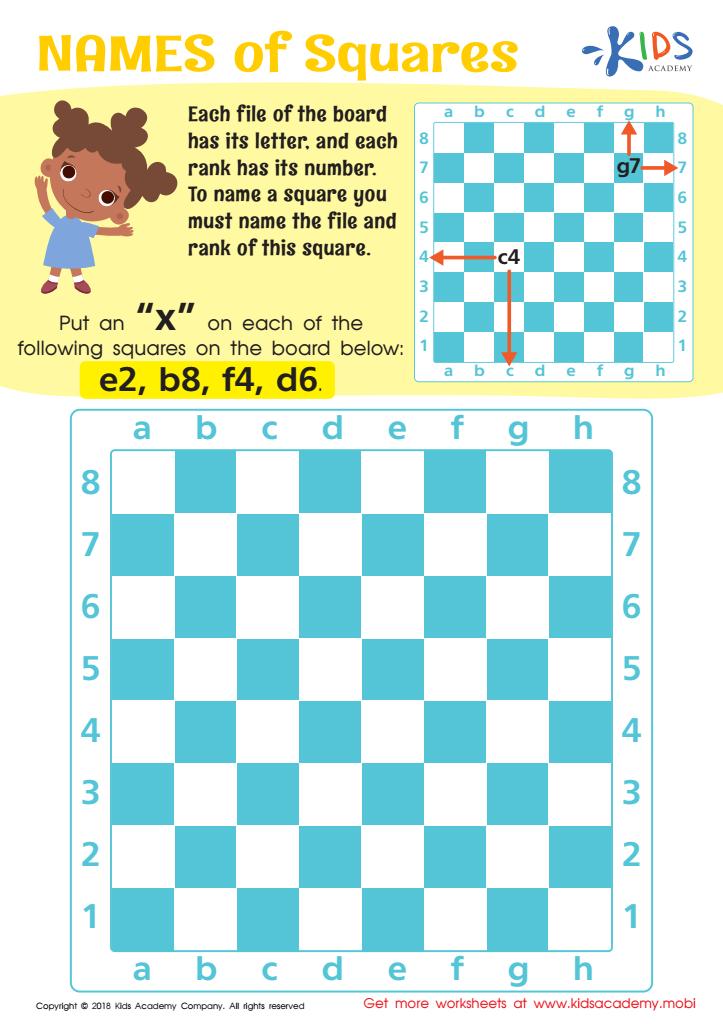
Names of Squares Worksheet
Ask your students to put an X on the appropriate squares. This worksheet is part of learning chess basics. Each file is marked with a letter and rank with a number. This allows moves and squares to be easily named and noted. e.g. The square marked "e5" is the fifth rank of the e-file.
Names of Squares Worksheet
Worksheet
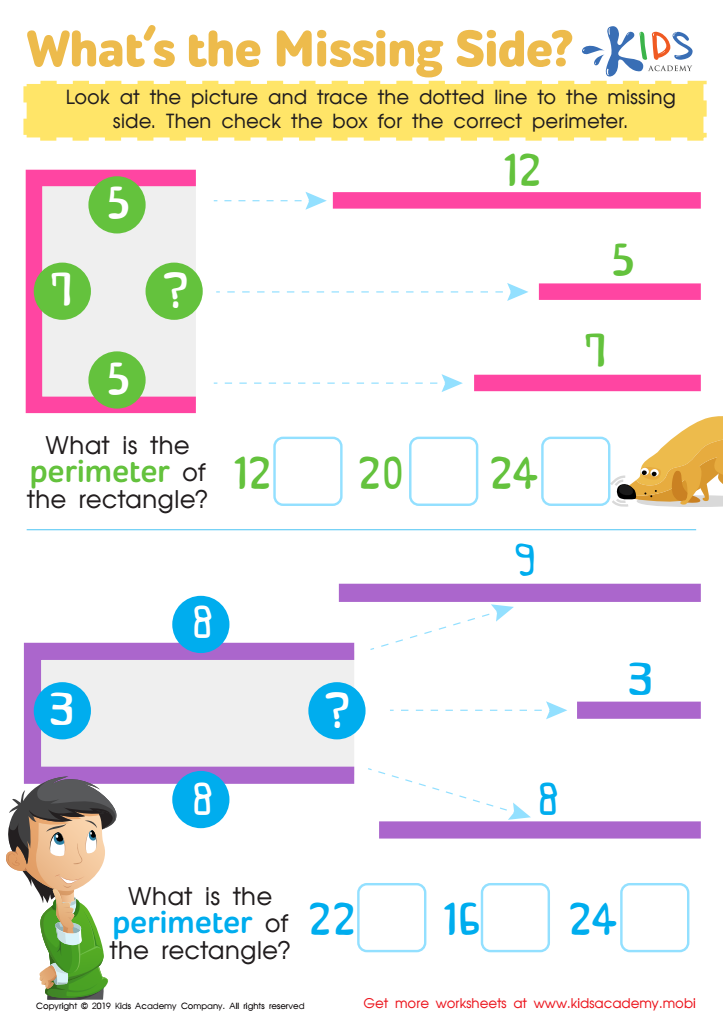
What's the Missing Side Worksheet
Assist your pupils in improving math skills with fun exercises like the tracing sheet. Show them the picture and guide them to trace the missing side. Ask them to check the box of the right perimeter afterwards. Doing this regularly can help them to enjoy and appreciate the subject more.
What's the Missing Side Worksheet
Worksheet
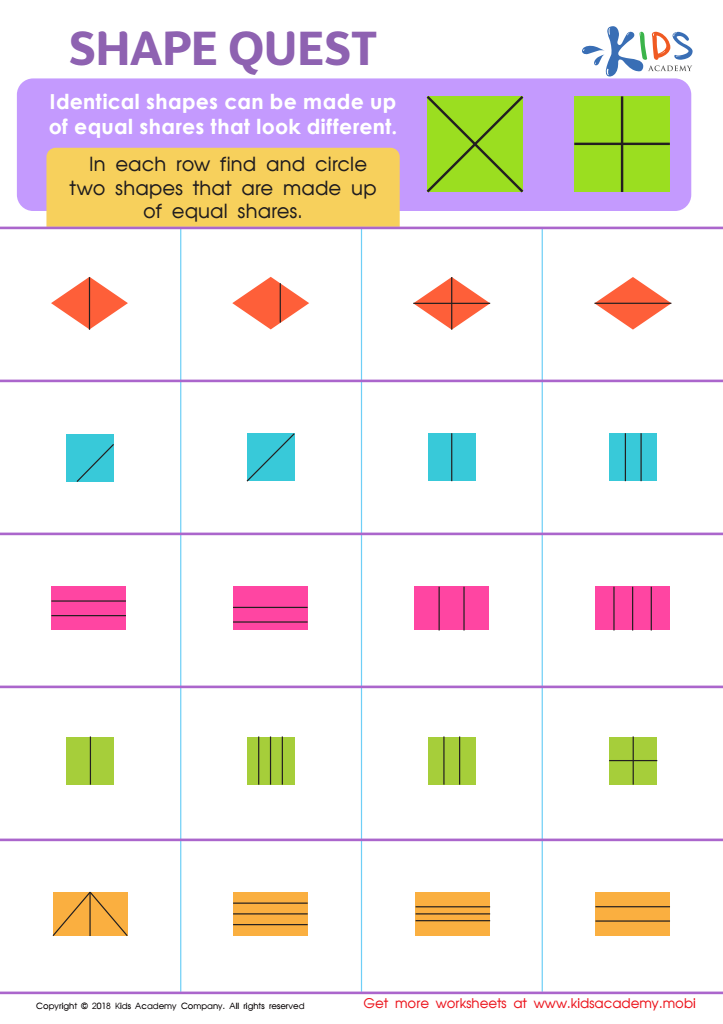
Shape Quest Worksheet
Help your child identify shapes by having them find shapes made up of equal parts. This colorful worksheet challenges them to look through each row and circle two matching shapes. It's a great way to teach them the unique features of each shape, while also helping them understand that identical shapes can look different.
Shape Quest Worksheet
Worksheet
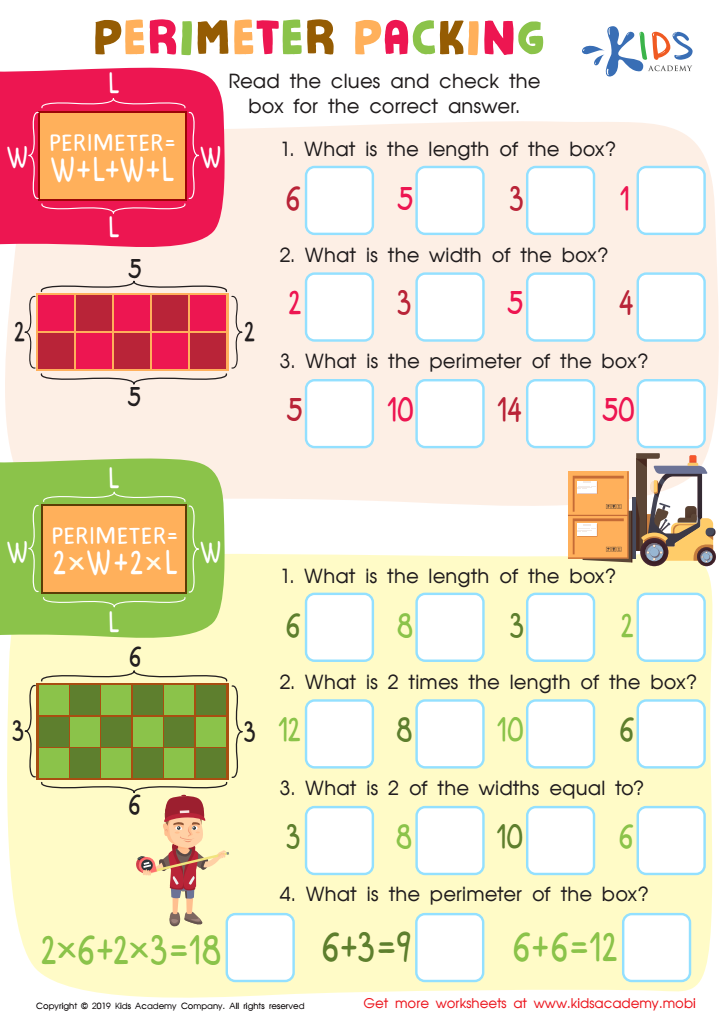
Perimeter Parking Worksheet
Geometry can be daunting for kids, but you can make it easy with simple exercises and familiar objects. Check out this worksheet with two sections of questions. Guide your kids to read clues and check the correct answer box. Help them become better at solving geometry problems.
Perimeter Parking Worksheet
Worksheet
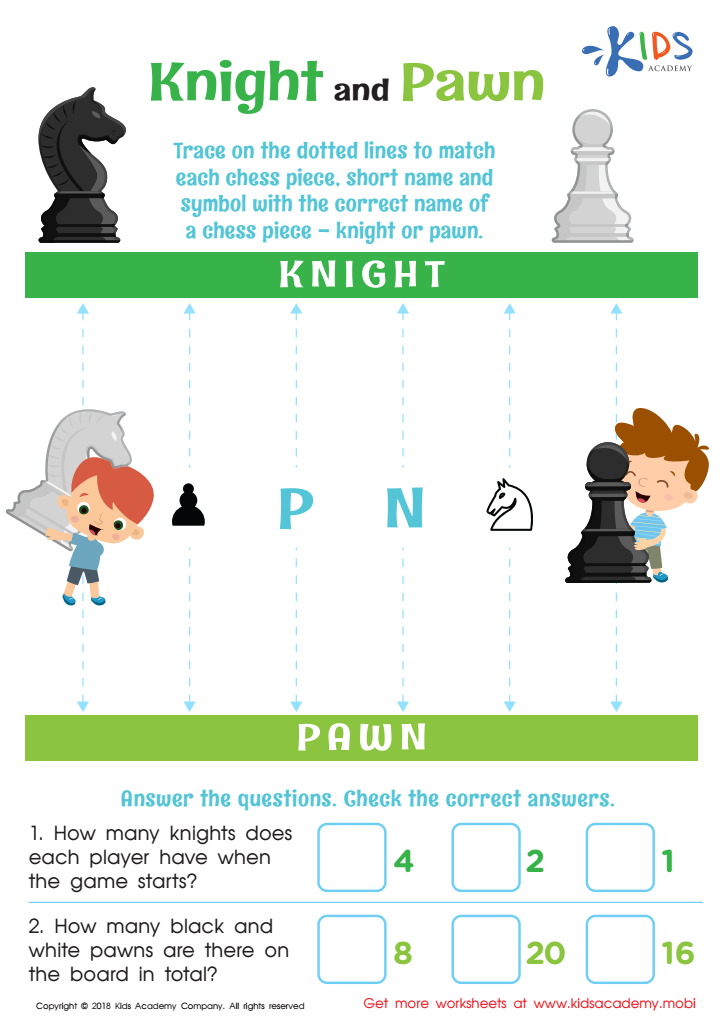
Knight and Pawn Worksheet
This tracing worksheet teaches kids about chess. They trace the dotted lines to match pieces, names and symbols to the correct chess piece. Questions at the bottom test their understanding. It's a simple exercise for a fun way to learn.
Knight and Pawn Worksheet
Worksheet
Join Kids Academy for Free
Who is primarily going to use this learning content?







Shape recognition is a crucial aspect of early childhood education, particularly in Grade 3, as it forms a foundational skill for various areas of learning. Understanding shapes enhances students' spatial awareness, which is vital not just in mathematics but also in everyday life and future problem-solving skills. When children can recognize and classify different shapes, they develop their ability to observe and analyze their surroundings, leading to improved critical thinking and reasoning skills.
Moreover, shape recognition supports the development of geometric concepts, which are integral in more advanced math topics, like geometry and measurement, encountered later in their education. It also has crossover benefits in subjects such as art and science, where understanding shapes plays a role in design and structural analysis.
Parents and educators should prioritize shape recognition activities to create engaging learning environments, encouraging hands-on experiences that promote exploration and creativity. By investing time into helping students identify and work with various shapes, caregivers foster a sense of confidence and competence in mathematical concepts while laying the groundwork for future academic success. Encouraging these skills in young learners not only supports their cognitive development but also fosters a love of learning and discovery that can last a lifetime.