Critical Thinking Normal Grade 3 Addition & Subtraction Worksheets
4 filtered results
Difficulty Level
Grade
Age
-
From - To
Subject
Activity
Standards
Enhance your third grader's math skills with our engaging Critical Thinking Normal Grade 3 Addition & Subtraction Worksheets. Designed to challenge young minds, these worksheets promote deeper understanding through problem-solving strategies and real-world applications. Students will explore various addition and subtraction scenarios, strengthening their critical thinking abilities while having fun. Our comprehensive materials encourage creativity, analytical reasoning, and perseverance as they tackle diverse math problems. Perfect for both classroom and home learning, these worksheets aim to cultivate confident mathematicians ready for future challenges. Download and discover new ways to inspire a love for math while developing essential critical thinking skills!
Favorites
With answer key
Interactive
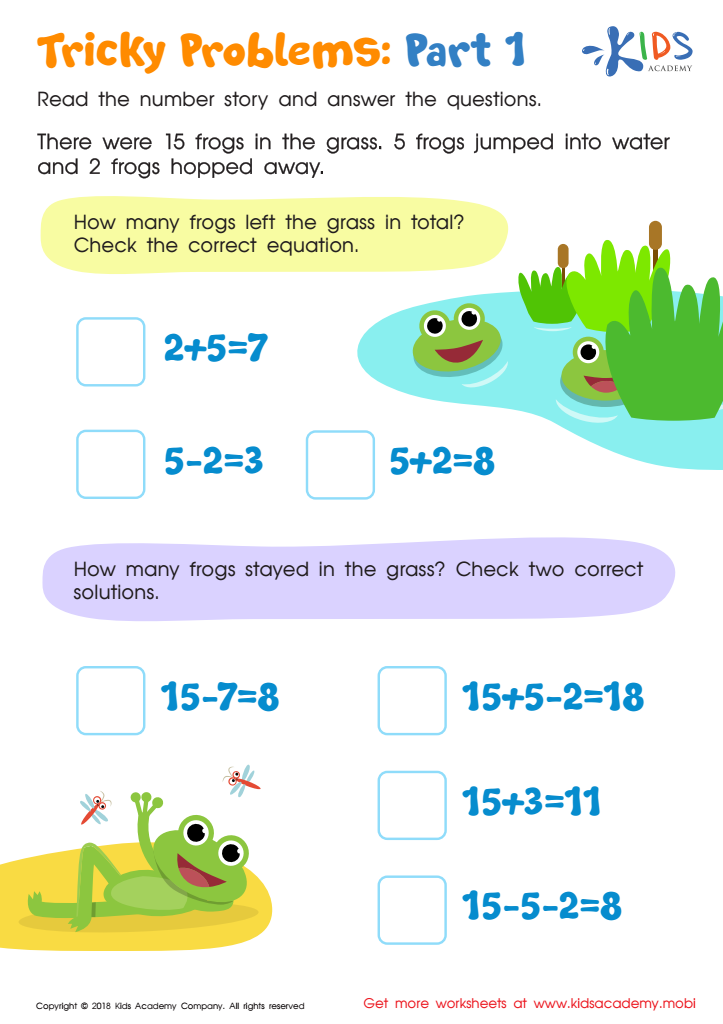
Tricky Problems Worksheet: Part 1
Visualizing word problems can help students solve them. This fun PDF worksheet encourages students to create mental images using math facts, then check boxes to match the equations for basic addition problems. It's a great way to build confidence in solving math.
 Assign to My Students
Tricky Problems Worksheet: Part 1
Worksheet
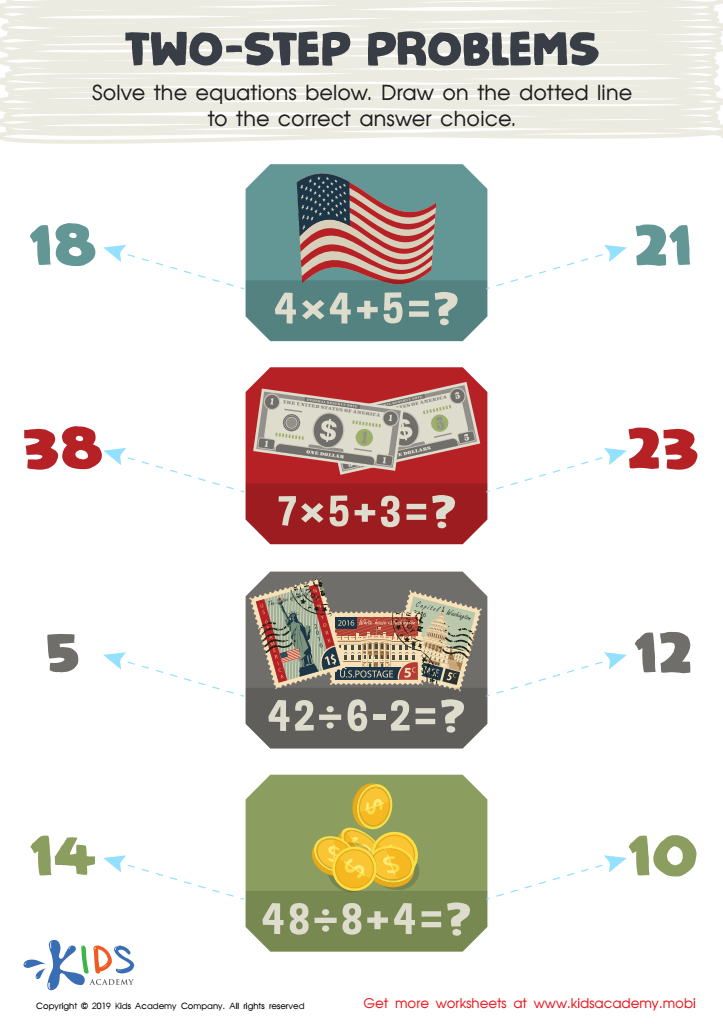
Two-Step Problems Worksheet
Help your child practice their math problem-solving skills with this worksheet. It covers the basics of subtractions, additions, multiplications, and divisions. With four simple equations, your kids can solve them and draw the correct answer on the dotted line. Reduce their strain and give them the help they need.
Two-Step Problems Worksheet
Worksheet
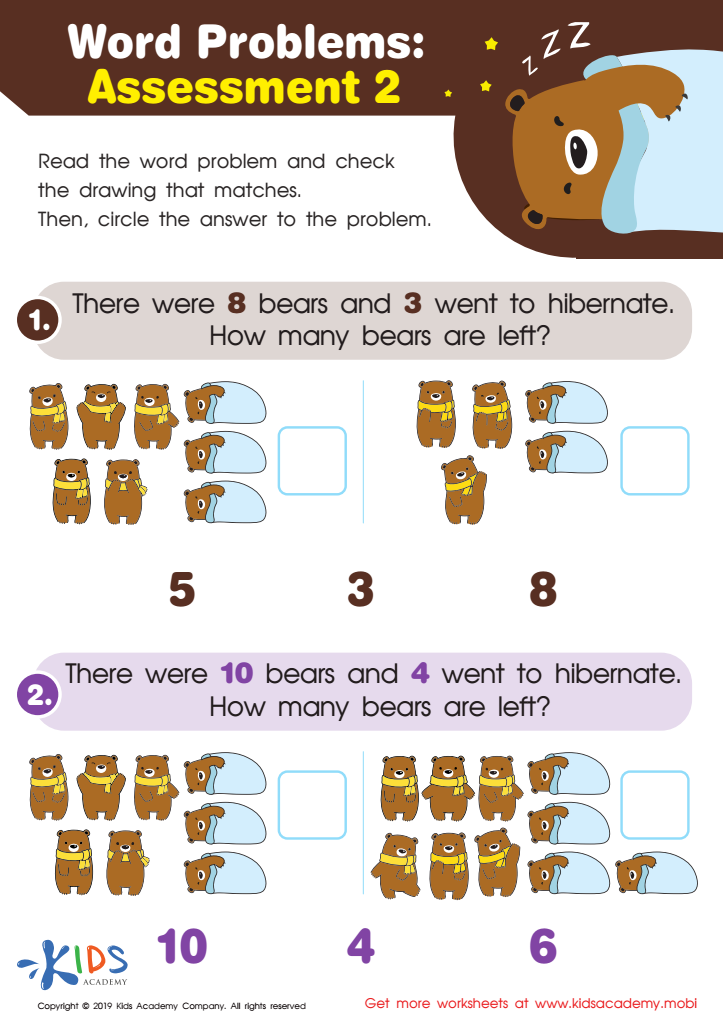
Word Problems: Assessment 2 Worksheet
This bear-themed worksheet is a great way to test subtraction skills. Have your child read the word problems and match the correct drawing with the answer. It's a fun way to quiz them without them even knowing. Enjoy counting cute snoozing bears! (80 words)
Word Problems: Assessment 2 Worksheet
Worksheet
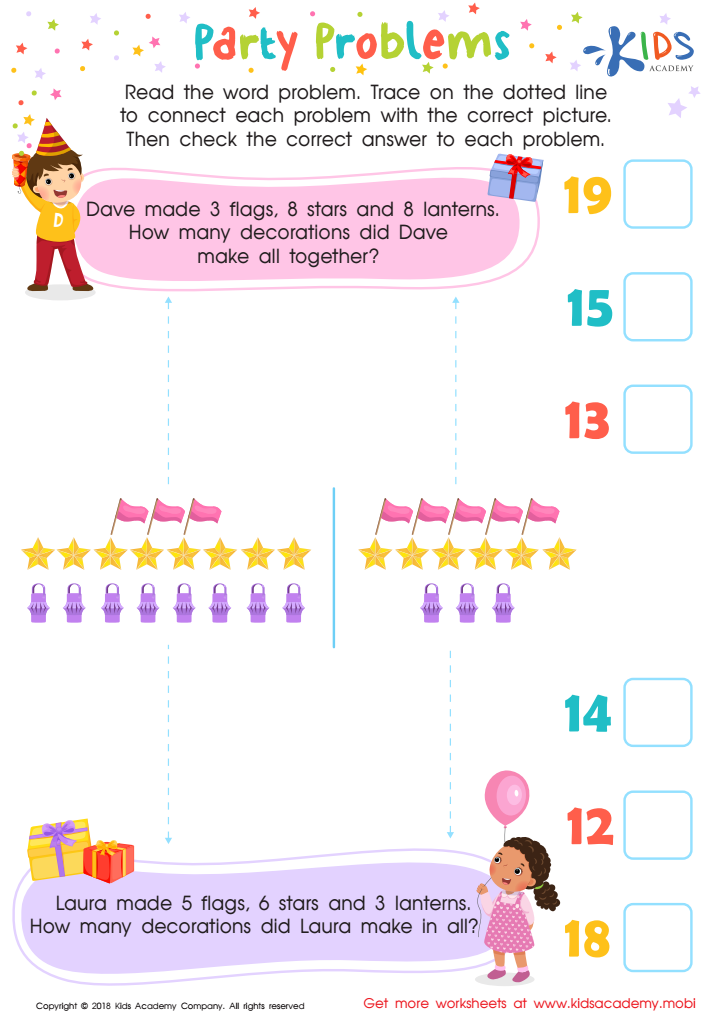
Party Problems Worksheet
Problems at parties? No problem! With this engaging PDF worksheet, your student can connect word problems to pictures, check correct answers, and find the sum of 3 addend problems. They'll be a party-saving hero in no time!
Party Problems Worksheet
Worksheet
Join Kids Academy for Free
Who is primarily going to use this learning content?








Parents and teachers should care about critical thinking in the context of normal Grade 3 addition and subtraction for several important reasons. At this foundational stage, children not only learn basic arithmetic operations but also develop essential thinking skills that shape their future learning. Encouraging critical thinking helps students understand the "why" behind mathematical processes, rather than just memorizing procedures.
When children analyze, evaluate, and apply strategies for addition and subtraction, they become more adept problem solvers. This approach fosters a deeper understanding of numbers and their relationships, enabling them to tackle more complex problems later in their education. Additionally, critical thinking nurtures curiosity, prompting students to ask questions and seek solutions independently, which enhances their engagement and confidence in mathematics.
Moreover, teaching critical thinking skills prepares children for real-world applications, where they must use mathematical reasoning to make informed decisions. Parents and teachers also play a vital role in modeling these skills, guiding discussions that require reasoning and justification of answers, and promoting a growth mindset that values effort and persistence. Overall, nurturing critical thinking in math lays the groundwork for academic success and empowers children to navigate an increasingly complex world.