Division practice Normal Grade 3 Division Worksheets
8 filtered results
-
From - To
Help your third graders master division with our comprehensive Division Practice Normal Grade 3 Division Worksheets! Designed to reinforce foundational math skills, these worksheets provide a variety of exercises to ensure students build confidence and proficiency in dividing numbers. Featuring engaging activities, step-by-step problems, and innovative methods, our worksheets cater to different learning styles, making division fun and accessible. Ideal for classroom use or extra practice at home, each worksheet aligns with educational standards and targets core division skills to enhance your child's mathematical understanding. Download now and watch your students thrive in their division journey!
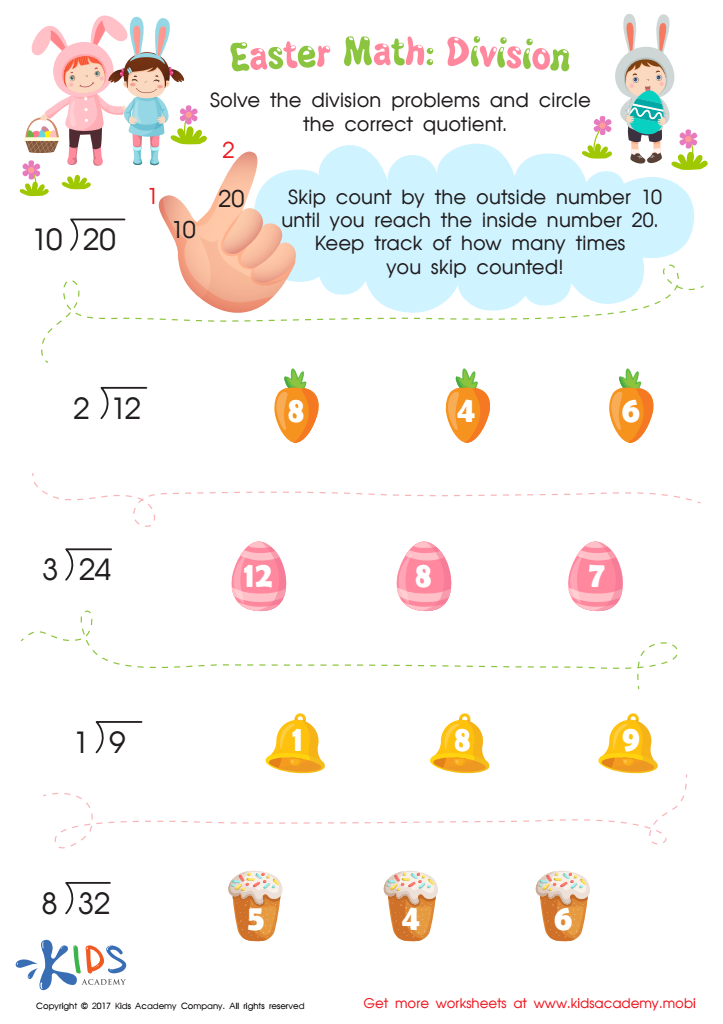
Division Worksheet
 Assign to My Students
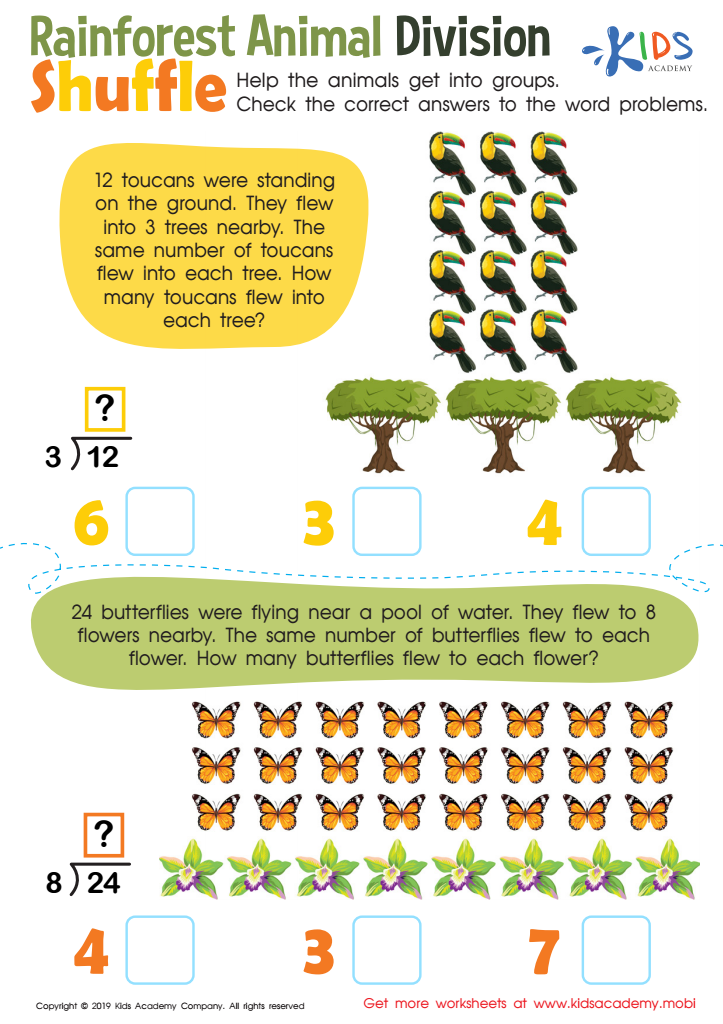
Rainforest Animal Division Worksheet
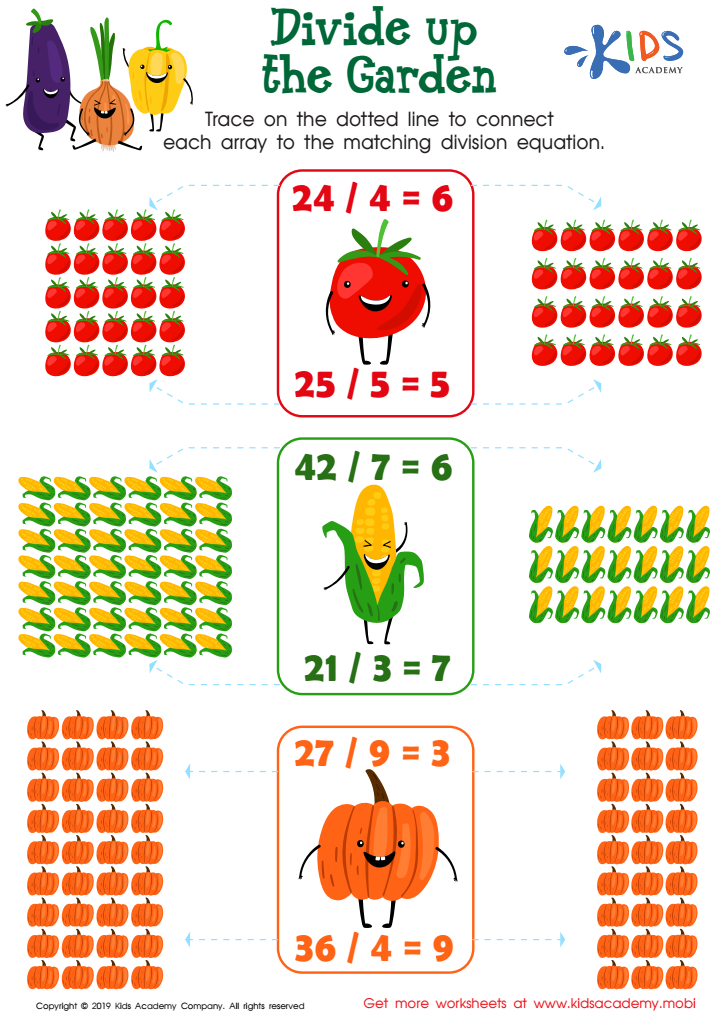
Divide up the Garden Worksheet
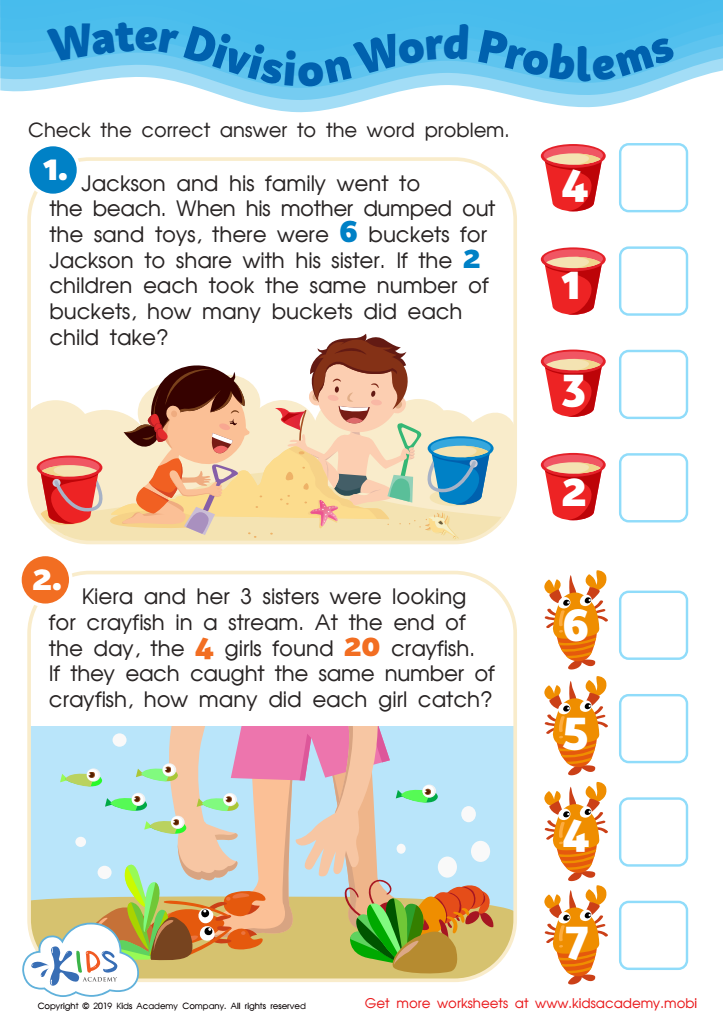
Water Division Word Problems Worksheet
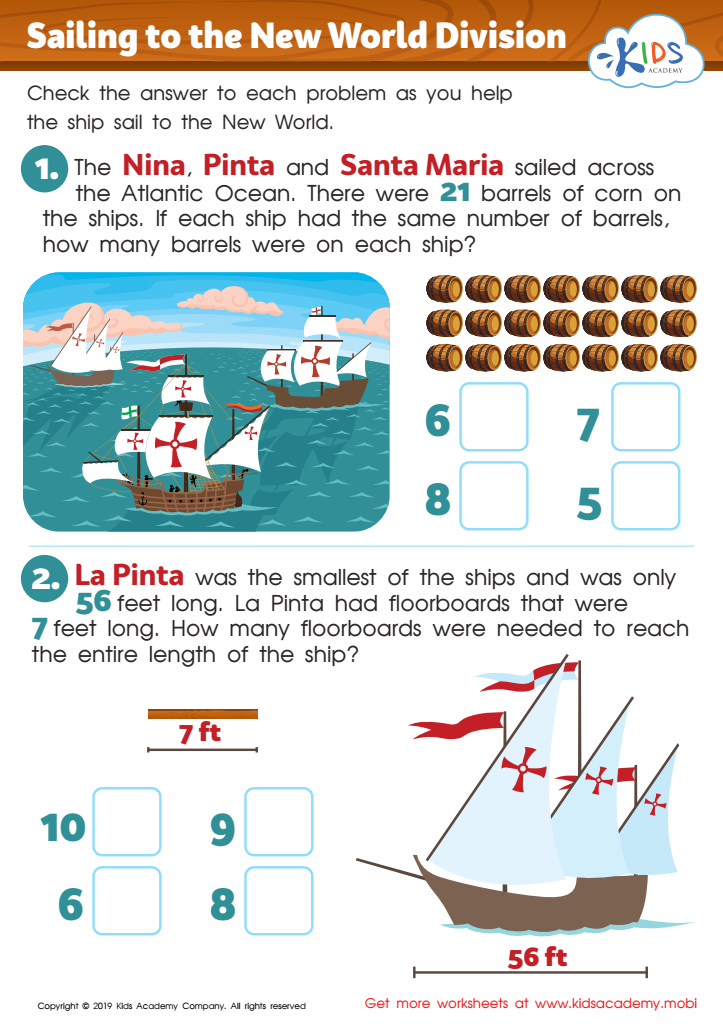
Sailing to the New World Division Worksheet
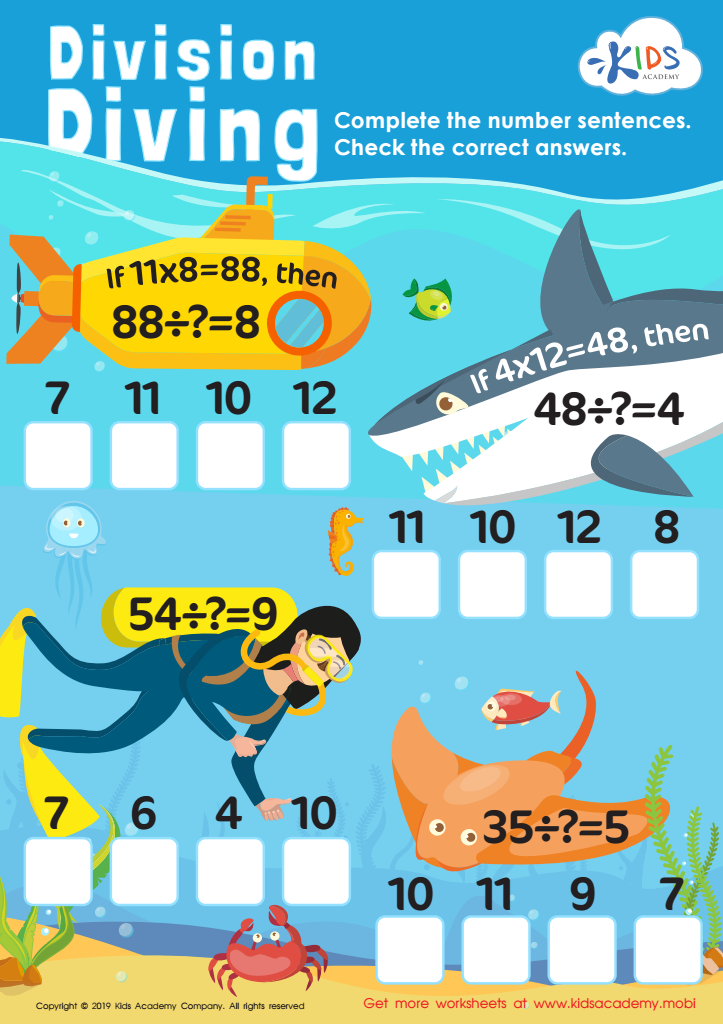
Division Diving Worksheet
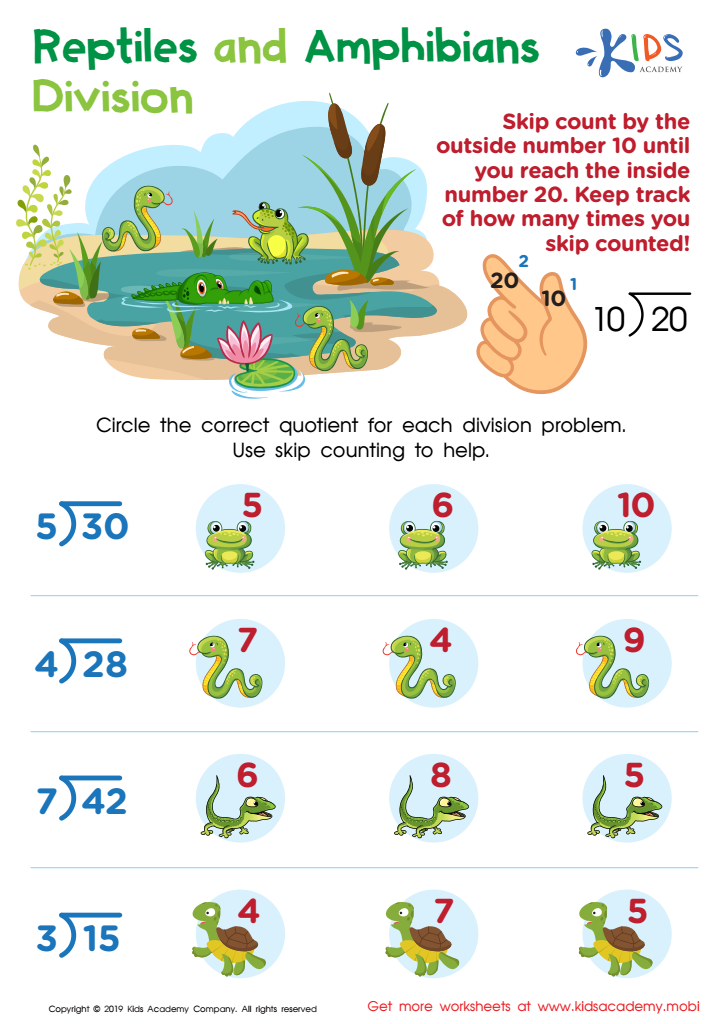
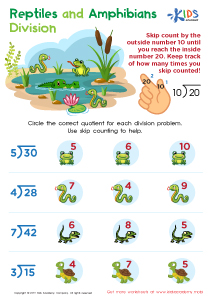
Reptile and Amphibians Division Worksheet
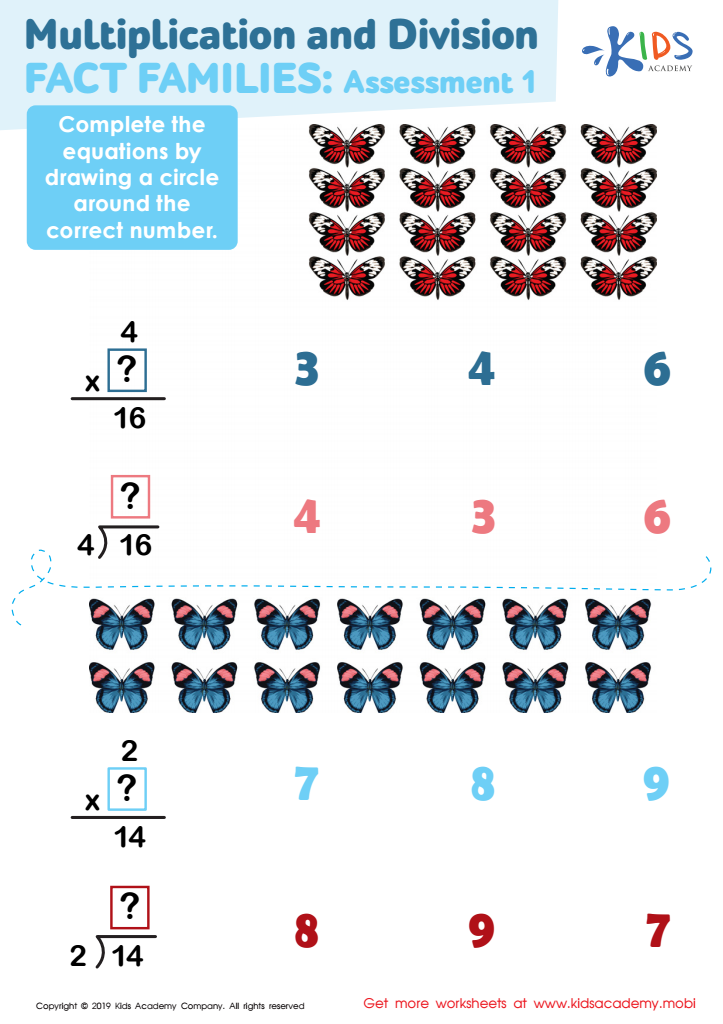
Multiplication and Division Fact Families Assessment 1 Worksheet







Division practice in Grade 3 is crucial for students' mathematical development, and both parents and teachers play an essential role in supporting this learning phase. At this stage, students are transitioning from basic arithmetic to more complex problem-solving skills. Division, a fundamental building block of mathematics, entails understanding how numbers separate into equal groups, which is vital for advanced math concepts such as fractions, ratios, and algebra.
By mastering division, children enhance their numeracy skills, allowing them to solve a wider variety of mathematical problems efficiently. This not only boosts their confidence in math but also promotes logical thinking and problem-solving abilities. Early practice helps solidify these skills, making future learning smoother and more coherent.
For parents and teachers, fostering a productive, engaging environment for division practice can positively impact a child's academic journey. Utilizing diverse methods like visual aids, real-life examples, and interactive tools makes learning division enjoyable and relatable. Consistent practice maintains and reinforces skills, helping children retain and apply their knowledge effectively.
Ultimately, Grade 3 division practice lays the groundwork for lifelong mathematical competence. Attention and encouragement from parents and teachers empower students to approach math with enthusiasm and resilience, setting the stage for continued academic success.