Historical Knowledge Normal Grade 3 Social Studies Worksheets
14 filtered results
Difficulty Level
Grade
Age
-
From - To
Subject
Activity
Standards
Discover engaging and educational Historical Knowledge worksheets tailored for Grade 3 students. Our carefully designed resources cover key topics in social studies, helping young learners explore important historical events, figures, and concepts. These worksheets encourage critical thinking, improve comprehension, and promote a deeper understanding of our past. With vibrant illustrations and interactive activities, students will enjoy delving into history while reinforcing their knowledge in a fun and accessible way. Perfect for classroom use or home practice, these worksheets support educators and parents in fostering a love for social studies. Enhance your child's learning journey with our comprehensive collection today!
Favorites
With answer key
Interactive
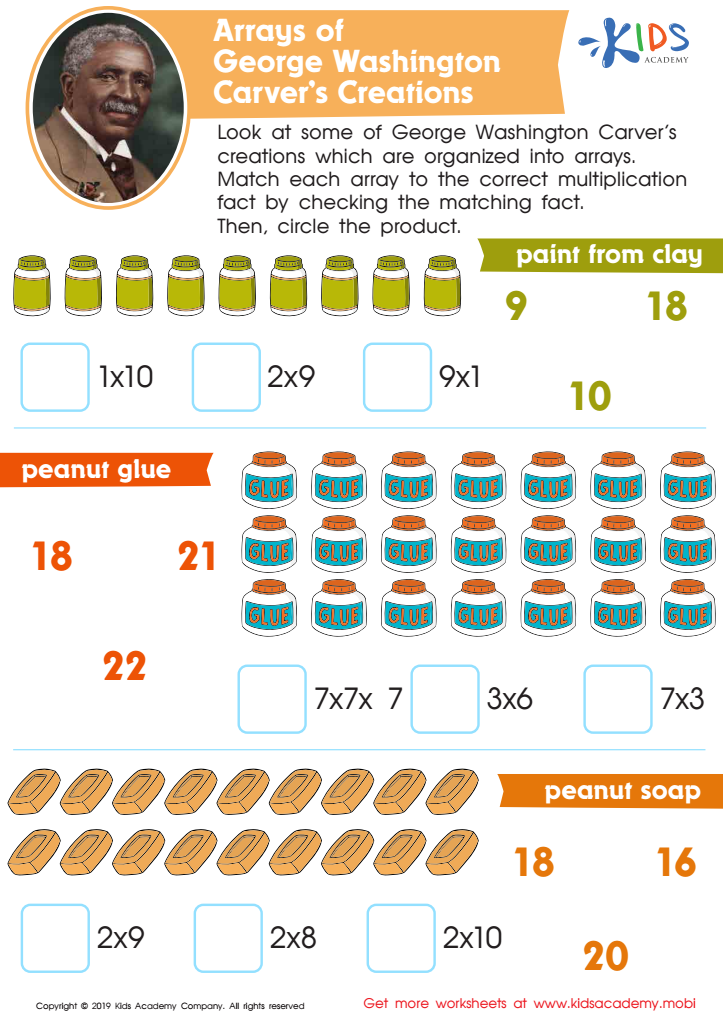
Arrays of George Washington Carver’s Creations Worksheet
Remind your child of what George Washington Carver created. Can they tell you? This worksheet has arrays with his creations. Match the array to the multiplication fact and help your child to circle the product.
 Assign to My Students
Arrays of George Washington Carver’s Creations Worksheet
Worksheet
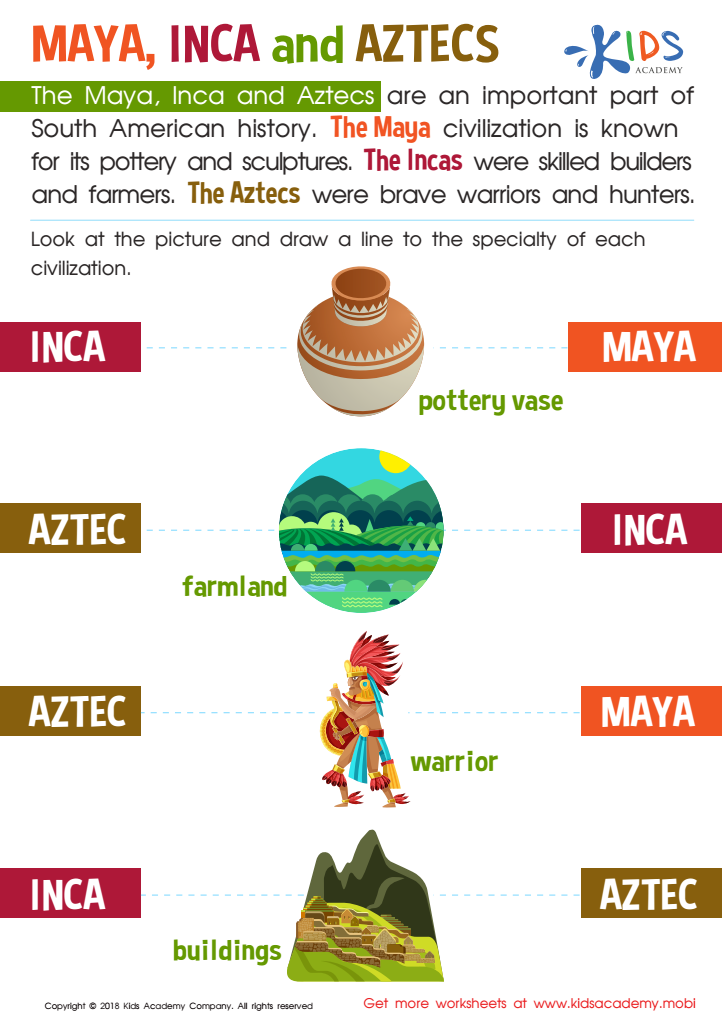
Maya, Inca and Aztecs Worksheet
This worksheet introduces your child to the thrilling histories of the Mayan, Incan and Aztec cultures, teaching them about their warriors, sculptors and farmers. With traceable lines and colorful imagery, they'll connect each culture with its correct associated picture - great for cementing concepts!
Maya, Inca and Aztecs Worksheet
Worksheet
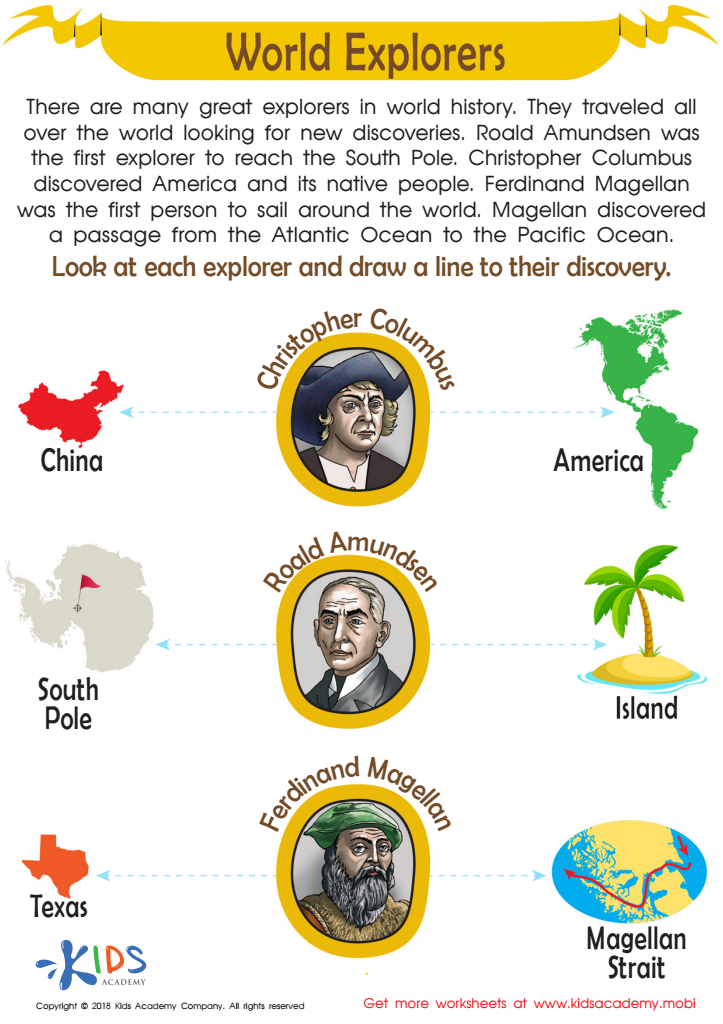
World Explorers Worksheet
Kids are citizens of the world, so it's important to teach them about different cultures and famous explorers. This social studies worksheet helps children learn about the great explorers of history and trace their travels. They'll link Ferdinand Magellan, Christopher Columbus and Roald Amundsen to the places they explored.
World Explorers Worksheet
Worksheet
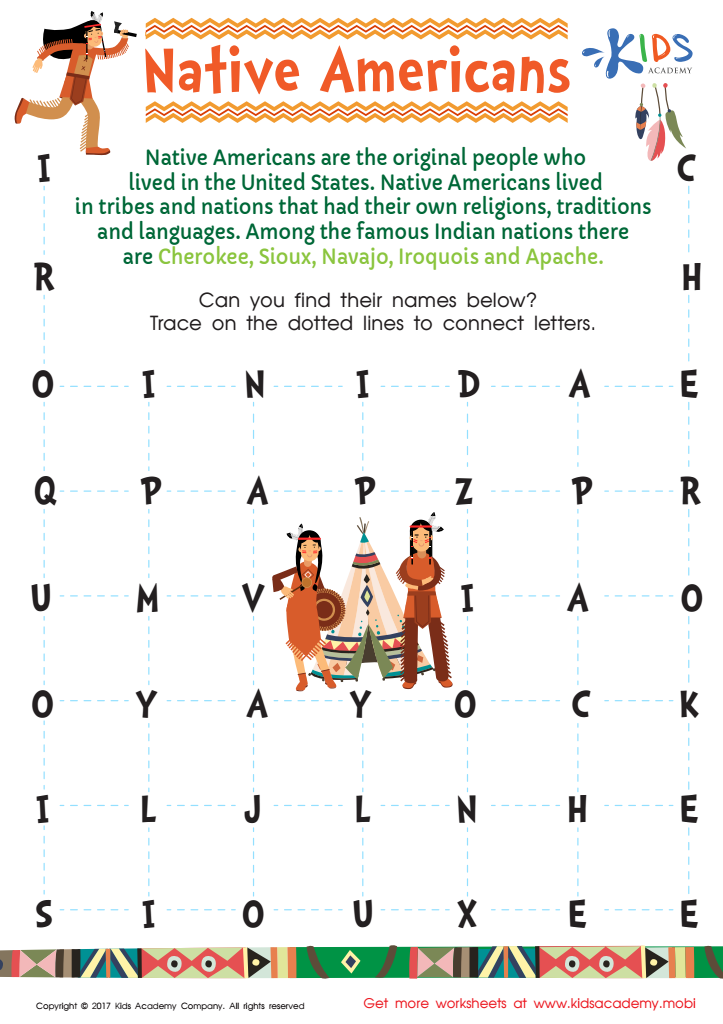
Native American Word Search Printable
This Native American word search PDF helps kids review important vocabulary and concepts about this important part of our county's history. It includes the names of famous and prominent Native American tribes. Solving the puzzle is fun and educative!
Native American Word Search Printable
Worksheet
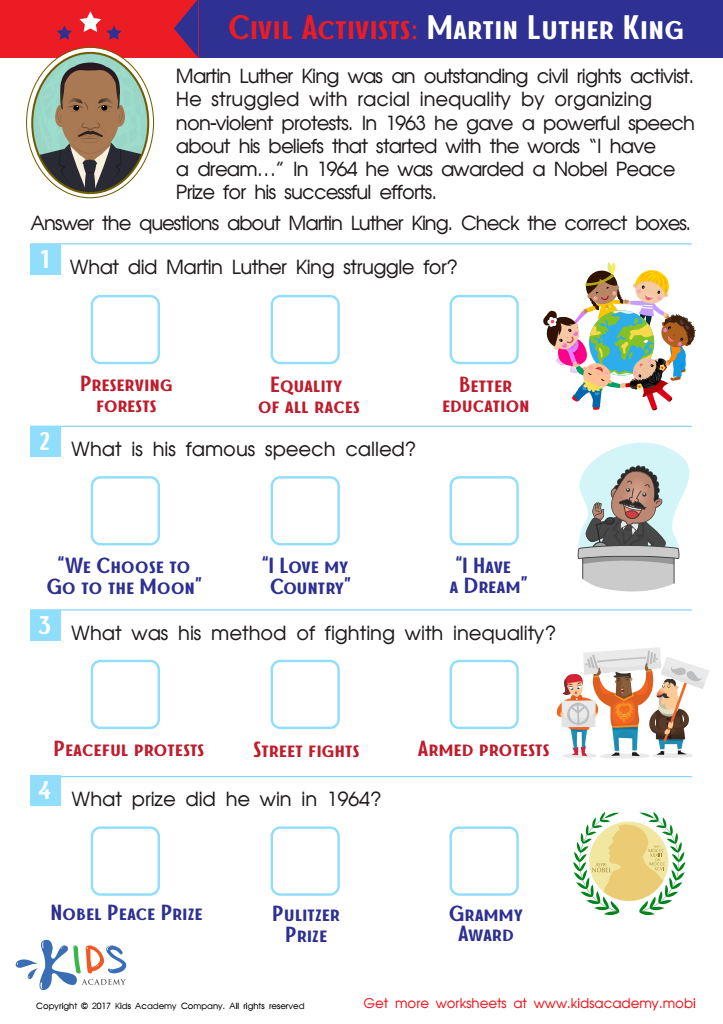
Martin Luther King Worksheet
Introduce your 3rd grader to Martin Luther King Jr.! This worksheet will open their eyes to his impact on US history. Let them discover his life, learnings, and legacy with this informative activity.
Martin Luther King Worksheet
Worksheet
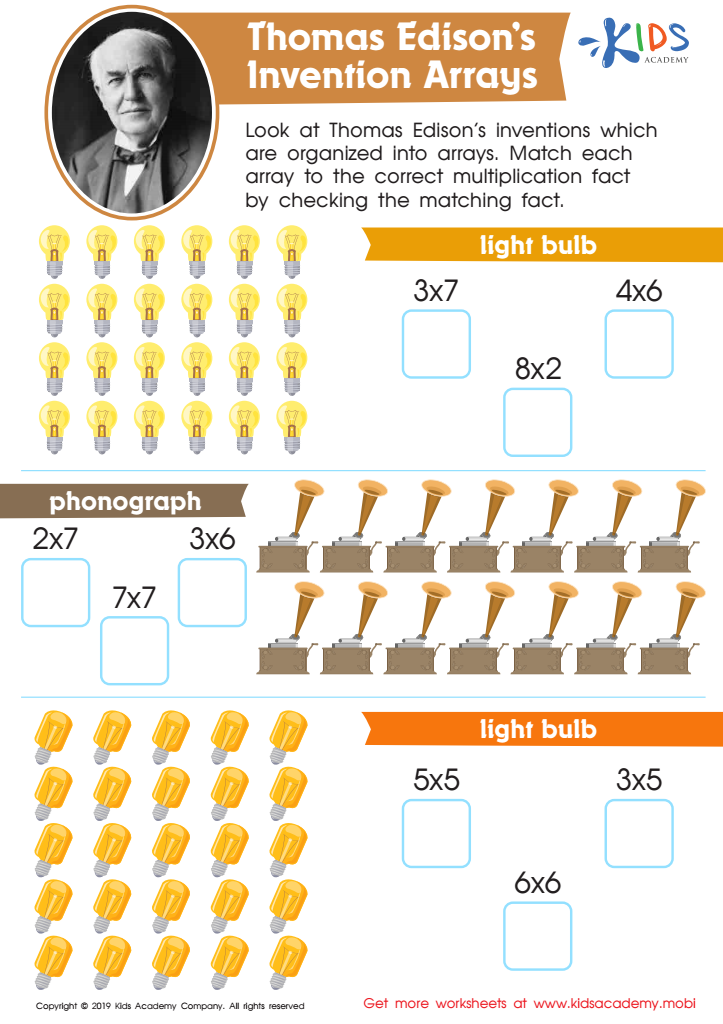
Thomas Edison’s Invention Arrays Worksheet
Test your students' knowledge on history by asking them what Thomas Edison invented. If they get the right answer, provide more information on other inventors. Check out this printout of Edison's light bulb inventions laid out in arrays. Get them to match each array to the correct multiplication fact.
Thomas Edison’s Invention Arrays Worksheet
Worksheet
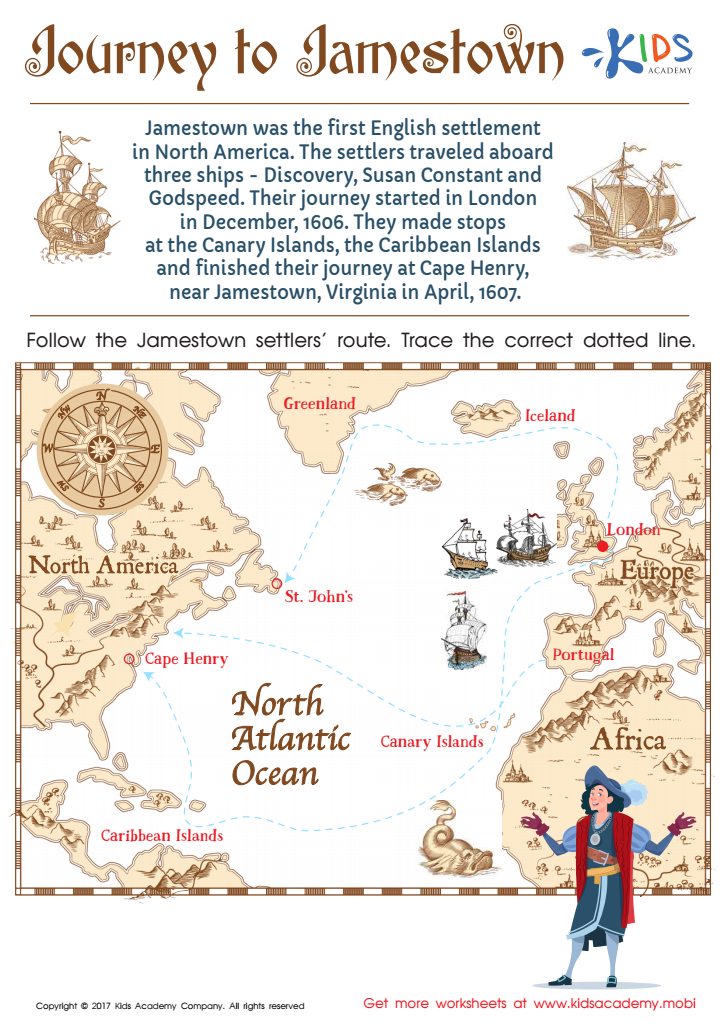
Journey to Jamestown Worksheet
Hit the high seas with this Journey to Jamestown worksheet and uncover the route the first pilgrims took to America! Kids explore a map and learn about stops the pilgrims made during their historic voyage.
Journey to Jamestown Worksheet
Worksheet
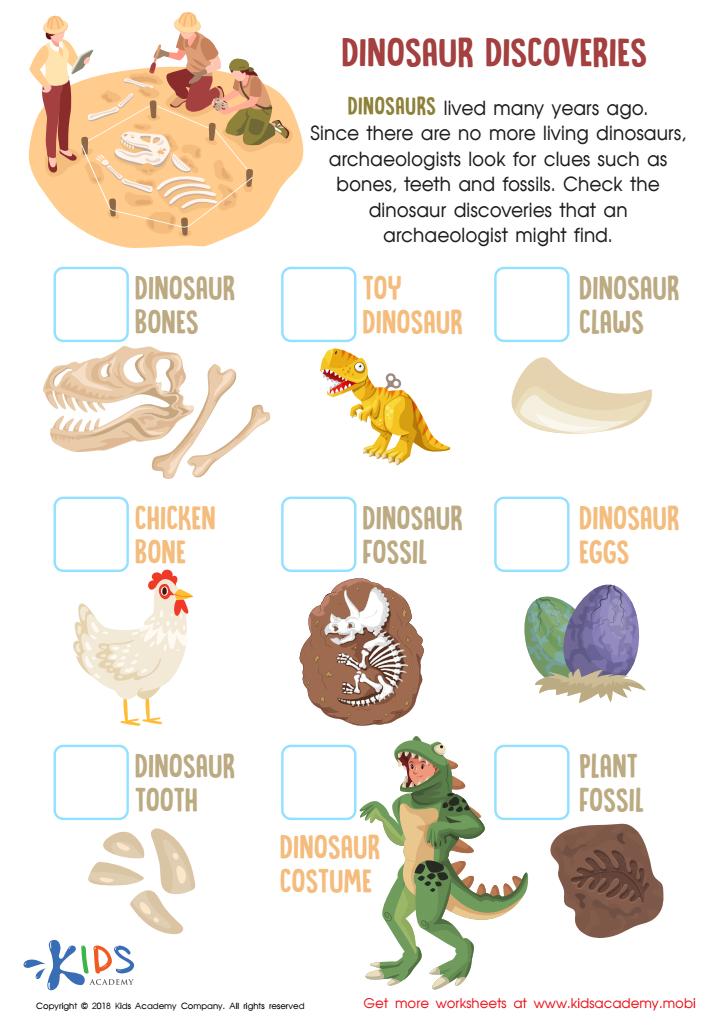
Dinosaur Discoveries Worksheet
Kids love the fascinating world of dinosaurs! This free worksheet educates them on how archeologists discover clues from their fossils, teeth, and bones. They'll identify items that are fossils with the help of pictures and choices provided. Learning has never been this fun!
Dinosaur Discoveries Worksheet
Worksheet
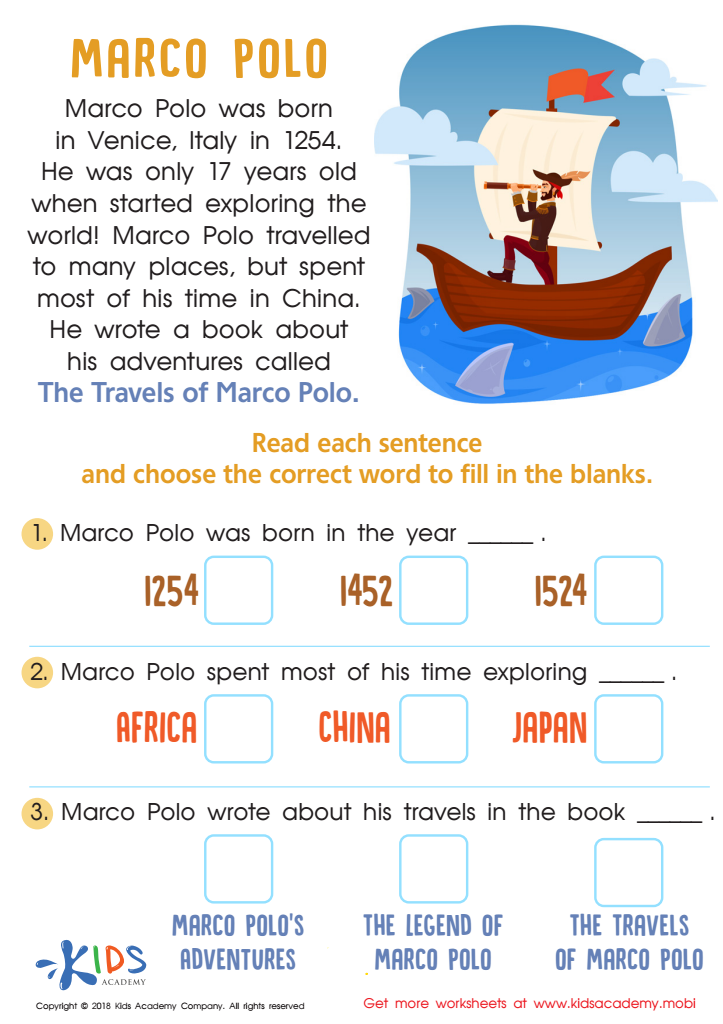
Marco Polo Worksheet
This free worksheet teaches kids about Marco Polo, the world explorer from Venice. They'll read about his journeys and the book he wrote and answer comprehension questions with multiple-choice boxes. He was just 17-years old when he started his travels!
Marco Polo Worksheet
Worksheet
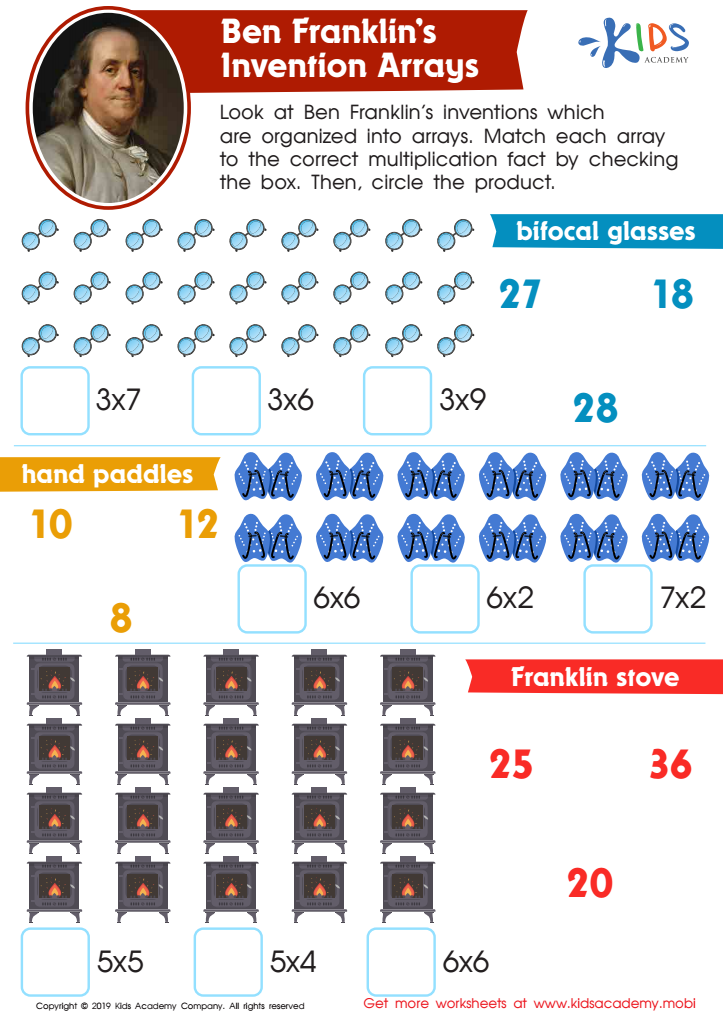
Ben Franklin’s Invention Arrays Worksheet
Have your child guess some of the inventors of the popular items we use today. For instance, the light bulb was invented by Thomas Edison. Look at Ben Franklin's inventions and help your kids match the arrays to the correct multiplication fact. Check the box and circle the product.
Ben Franklin’s Invention Arrays Worksheet
Worksheet
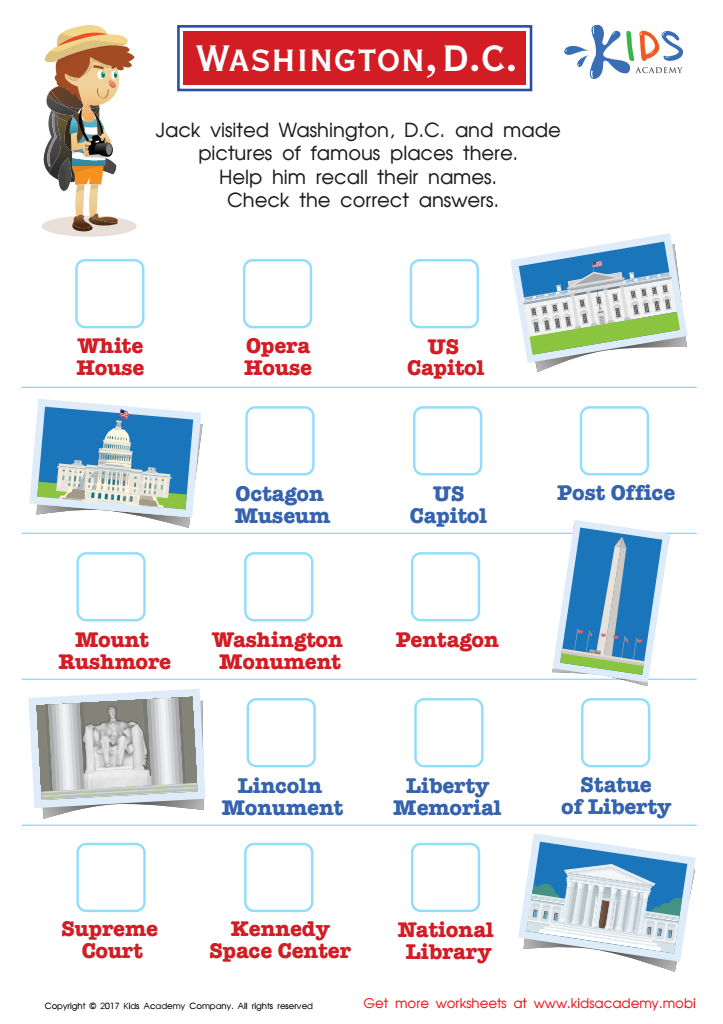
Washington D.C. Printable Worksheet
Join Jack on an adventure to explore the iconic attractions of Washington, D.C.! This printable worksheet helps kids learn about and recognize buildings and monuments that form part of the nation's history. It's a fun way to introduce children to the importance of these landmarks.
Washington D.C. Printable Worksheet
Worksheet
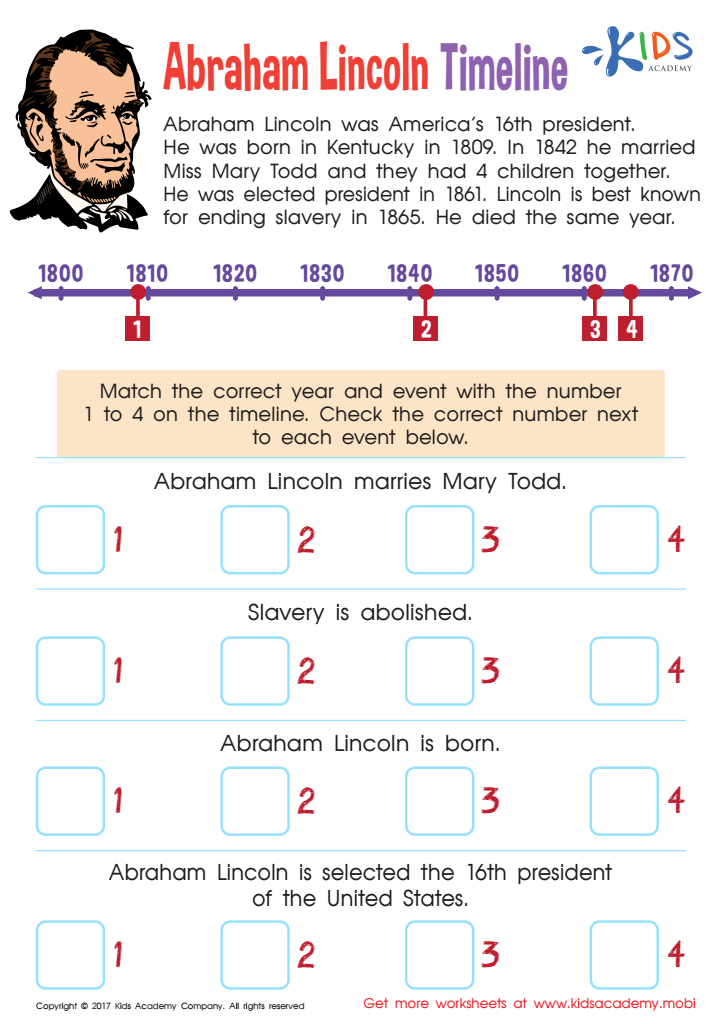
Abraham Lincoln Timeline Worksheet
Revised (76 words): Let's review America's most important president with this Abraham Lincoln timeline worksheet! Kids will read the paragraph and answer the questions using the timeline to increase their reading comprehension skills.
Abraham Lincoln Timeline Worksheet
Worksheet
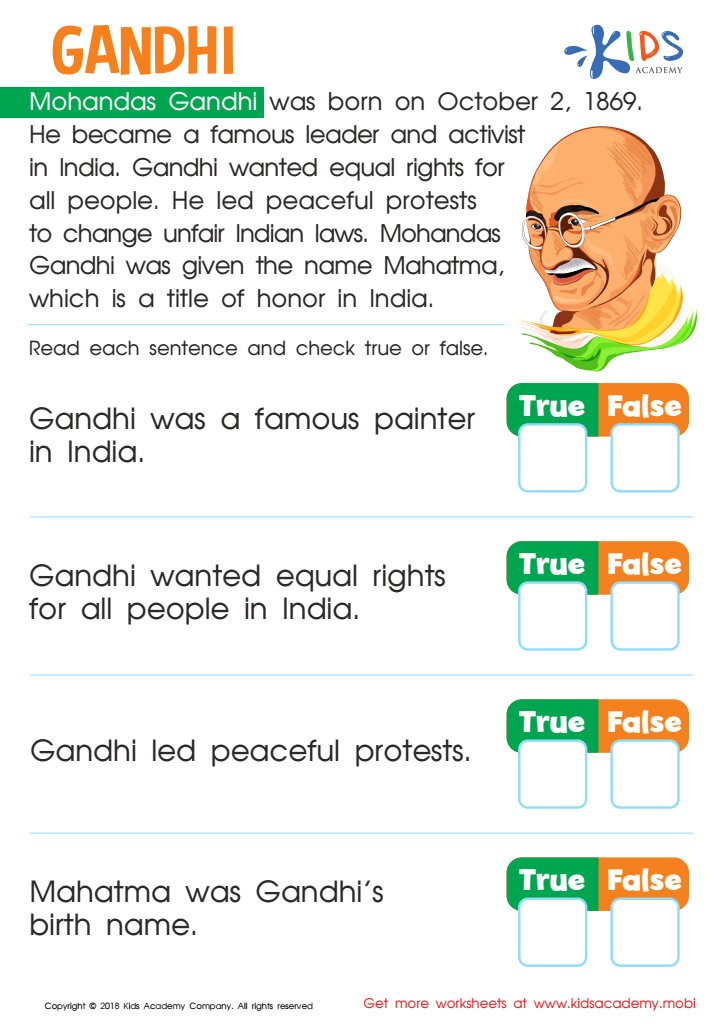
Gandhi Worksheet
This worksheet will teach your children about Mohandas Gandhi and his humanitarian works. They'll read statements and identify them as true or false using answer boxes. It's a great way to teach kids about Indian history and the incredible legacy of Gandhi.
Gandhi Worksheet
Worksheet
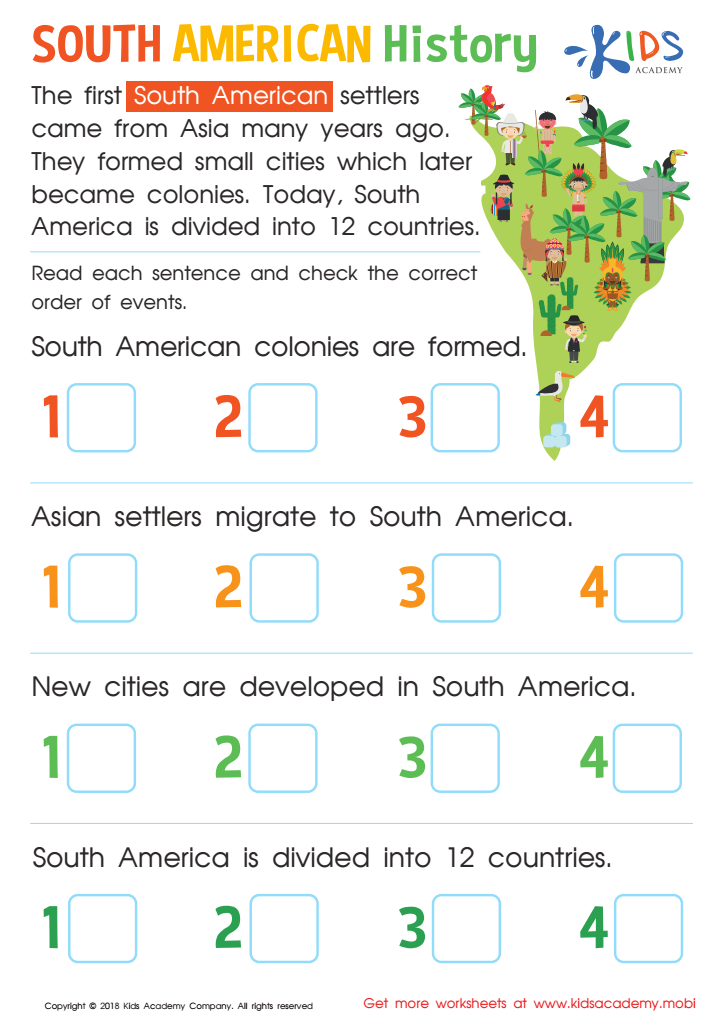
South American History Worksheet
Kids can brush up on South American history with this free worksheet! They'll discover how the first inhabitants arrived from Asia and how this led to the growth of cities and colonies. Comprehension questions will help them sequence and understand the events of South American history.
South American History Worksheet
Worksheet
Join Kids Academy for Free
Who is primarily going to use this learning content?






Parents and teachers should prioritize historical knowledge in Grade 3 Social Studies because it lays the foundation for critical thinking, civic awareness, and cultural understanding. At this age, children begin to develop a sense of identity and place within their communities and the world. Learning about history helps them connect with their heritage and understand how past events shape present realities.
Historical knowledge fosters critical thinking skills as students learn to analyze sources, differentiate perspectives, and understand cause-and-effect relationships. This empowers them to engage thoughtfully with current events and societal issues, encouraging informed citizenship. Moreover, history introduces students to diverse cultures, traditions, and narratives, promoting empathy and respect for differences.
Additionally, understanding history helps children appreciate achievements and learn from past mistakes, contributing to a sense of responsibility toward their community and the world. By integrating historical knowledge, parents and teachers provide students with the tools necessary to navigate an increasingly complex world. Furthermore, engaging in discussions about history can strengthen the family bond, as parents share stories and experiences, making learning more relatable and enjoyable. Ultimately, prioritizing historical knowledge enriches students’ education and helps mold them into informed, compassionate individuals.