Syllable identification Normal Grammar Worksheets
5 filtered results
-
From - To
Boost your child's grammar skills with our engaging Syllable Identification Normal Grammar Worksheets. Designed for early grade students, these worksheets make learning about syllables fun and accessible. Through a variety of exercises, children will practice identifying and counting syllables, enhancing their pronunciation and reading abilities. Perfect for classroom use or at-home practice, each worksheet is meticulously crafted to align with educational standards. Equip your little learners with these effective tools to improve their phonological awareness and overall literacy. Visit the link and download your free worksheets today to give your child a head start in mastering grammar!
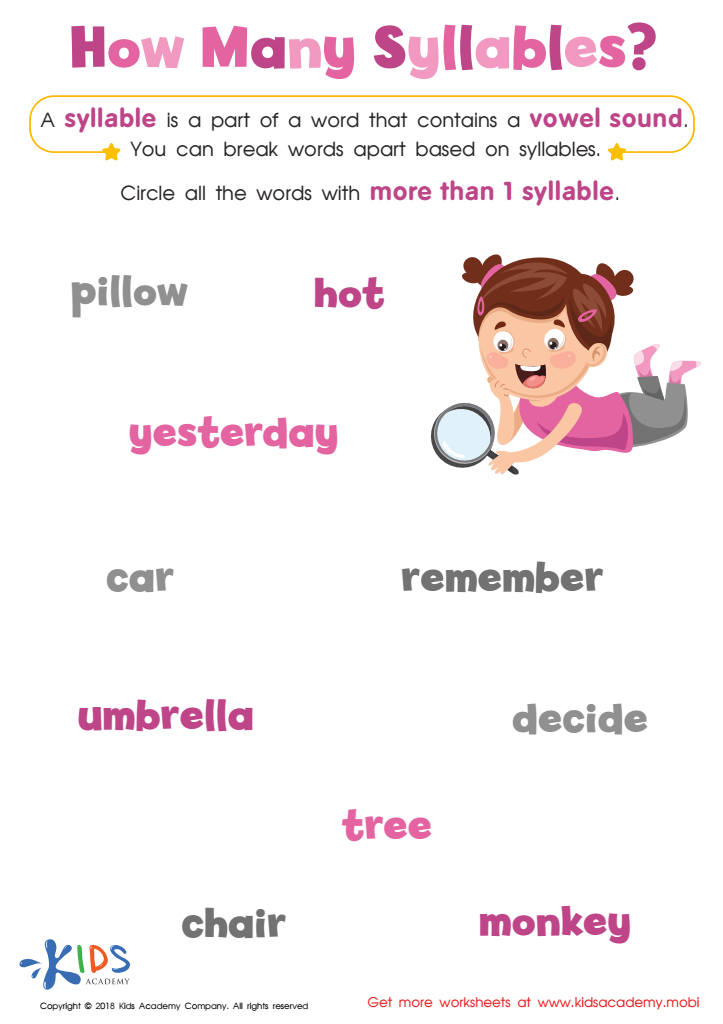
Reading: How Many Syllables Worksheet
 Assign to My Students
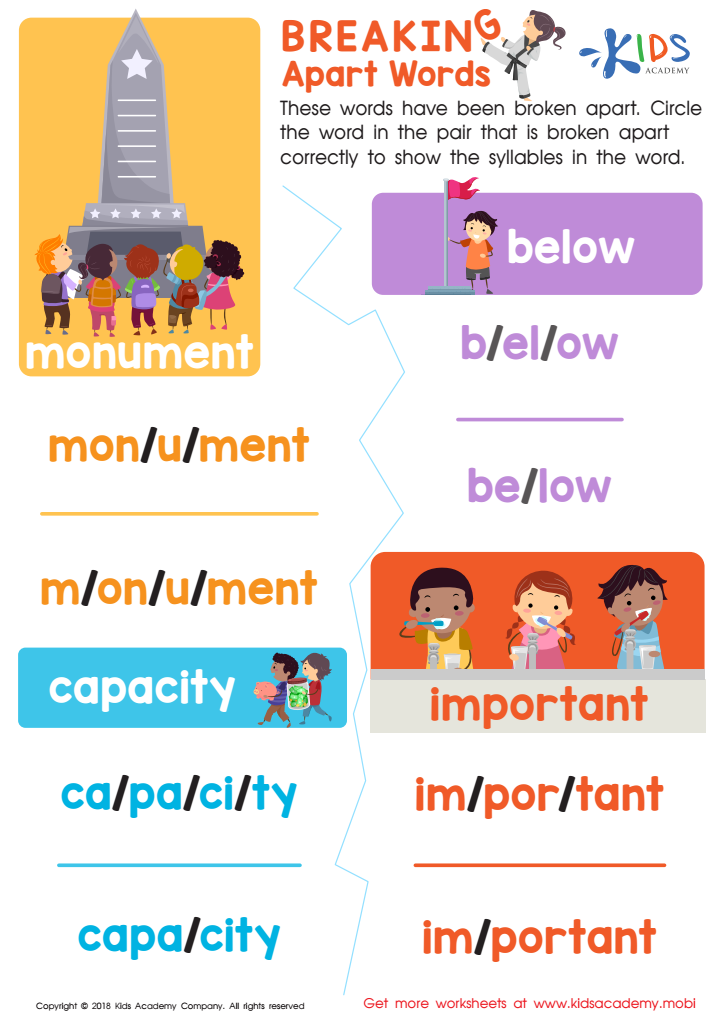
Breaking Apart Words Worksheet
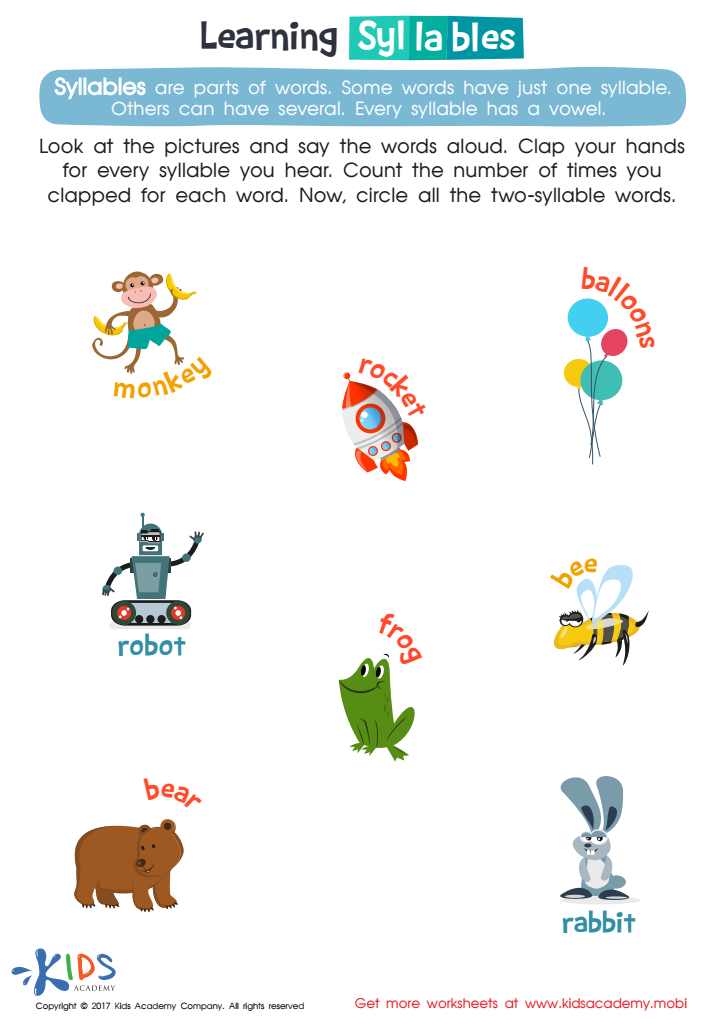
Learning Syllables Word Structure Worksheet
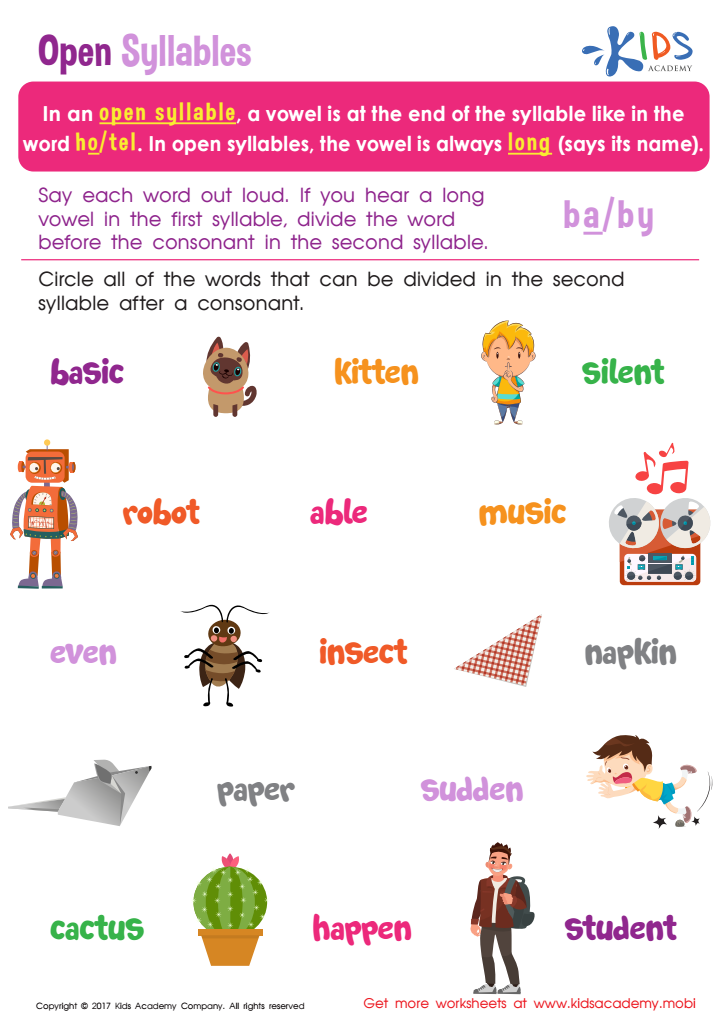
Open Syllable Printable Worksheet
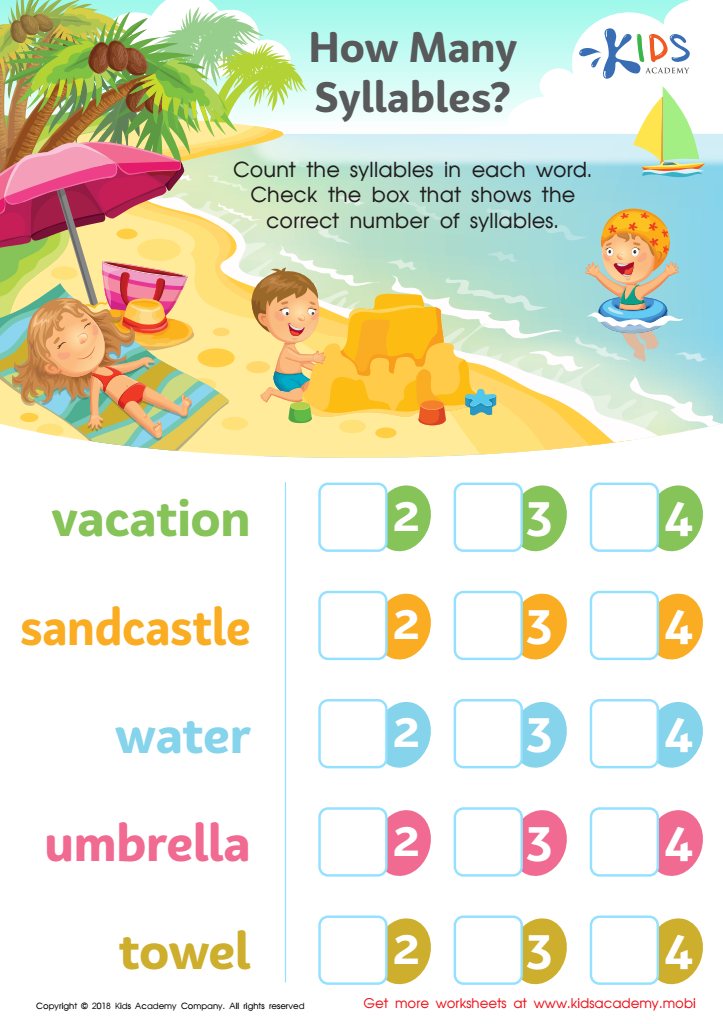
How Many Syllables Worksheet





.jpg)
Understanding syllable identification is crucial for young learners, and both parents and teachers play a pivotal role in developing this skill. Syllables are the building blocks of words, and being able to identify them helps children improve their reading and pronunciation.
For parents, encouraging syllable identification at an early age enhances their child’s phonemic awareness, an essential component of reading readiness. When children learn to break words into syllables, they find it easier to decode new words, boosting their confidence and fostering a love for reading.
Teachers, on the other hand, use syllable identification to support curriculum goals in literacy. Recognizing and manipulating syllables can help in spelling, as it enables students to divide words into manageable parts. This skill also assists in understanding long and complex words, making reading less intimidating and more approachable.
Moreover, normal grammar usage depends heavily on a solid foundation of reading skills, which begins with phonemic awareness and syllable recognition. Proper syllable identification supports correct pronunciation and pacing in oral reading, contributing to better overall communication skills. By investing time in teaching and reinforcing this skill, both parents and teachers set the stage for a child's academic success and lifelong love of language.