Understanding adjectives Normal Grammar Worksheets
3 filtered results
-
From - To
Discover our "Understanding Adjectives" Normal Grammar Worksheets, designed to enhance young learners' grasp of descriptive language. These engaging worksheets offer a variety of exercises that help students identify, use, and apply adjectives effectively in sentences. Perfect for early grade classrooms, our resources cater to different learning styles, making grammar fun and accessible. By incorporating colorful illustrations and interactive activities, children will develop their vocabulary and comprehension skills while enjoying the process. Empower your students to express themselves more vividly with our structured, easy-to-follow worksheets that promote independent learning and foster a love for language. Start exploring adjectives with us today!
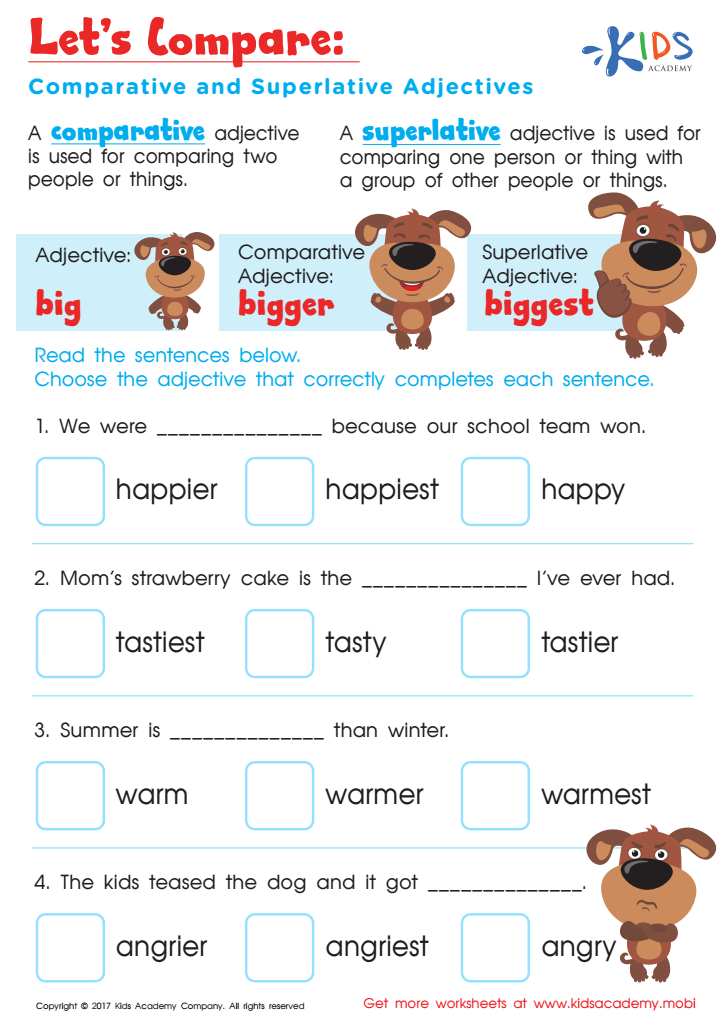
Comparative and Superlative Worksheet
 Assign to My Students
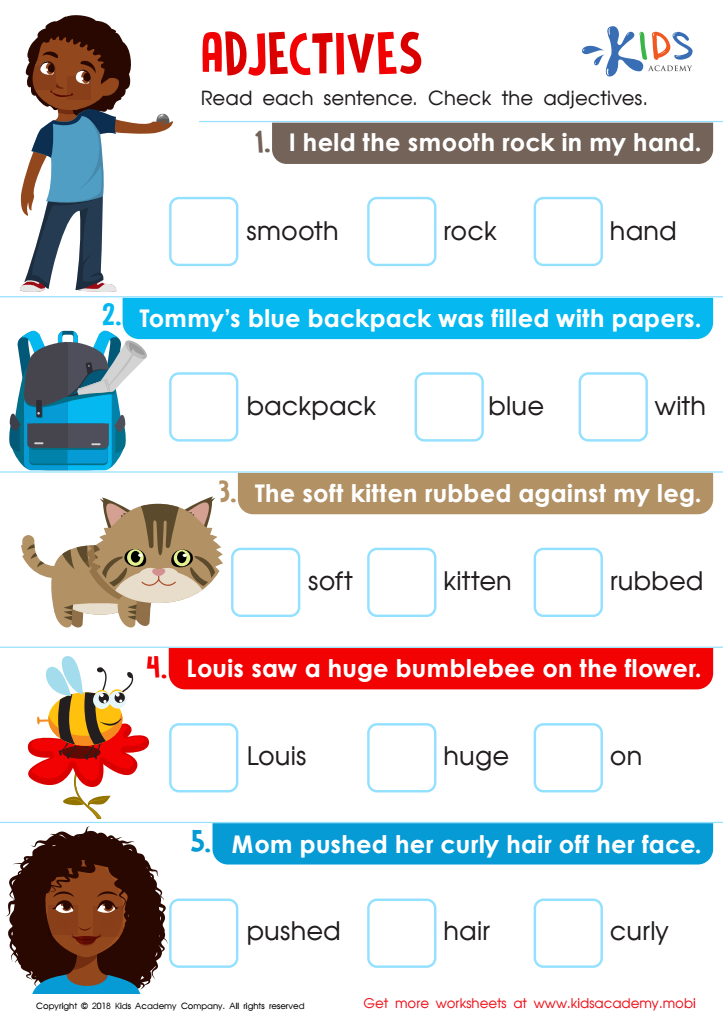
Adjectives Worksheet
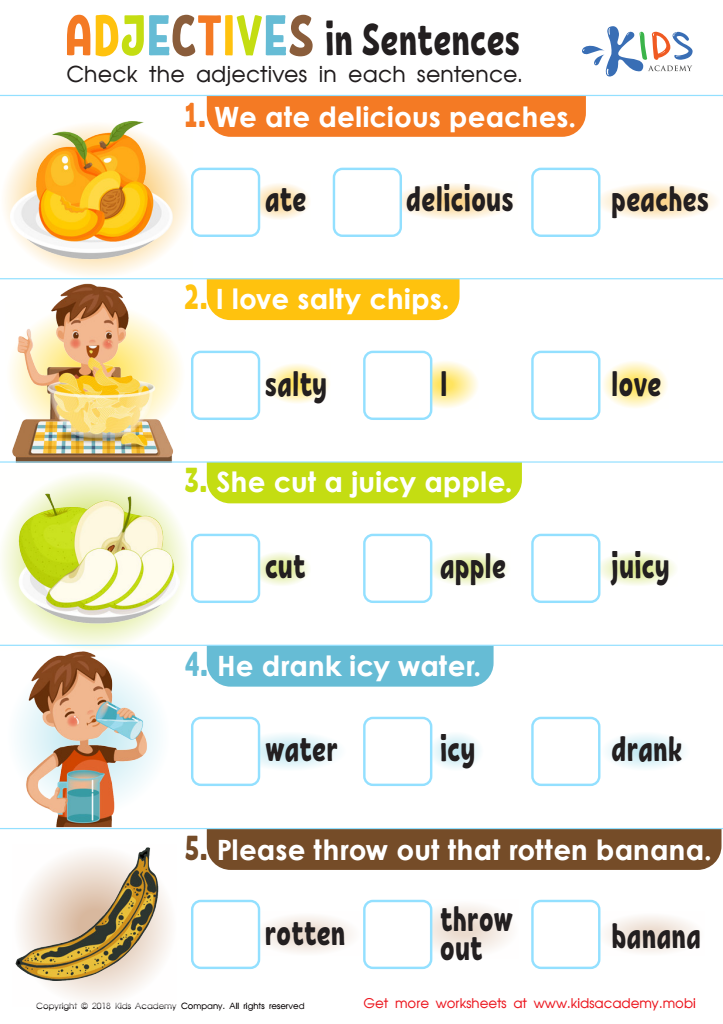
Adjectives in Sentences Worksheet






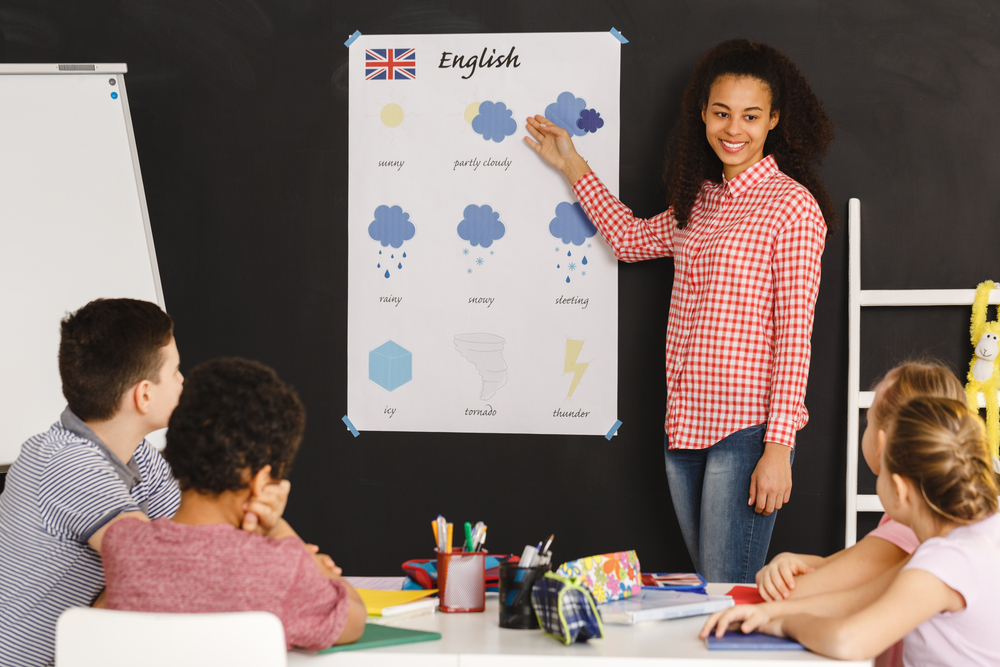
Parents and teachers should prioritize understanding adjectives in normal grammar because these vital components of language significantly enhance communication and comprehension skills. Adjectives help to describe nouns, providing specific details that enrich a sentence. For example, instead of saying "the dog," one might say "the energetic dog," which paints a clearer picture for the listener or reader.
Understanding adjectives allows children to express themselves more vividly and accurately, fostering their ability to share experiences and ideas. This enhances their writing, making it more engaging and effective. In reading, a firm grasp of adjectives aids in comprehension, helping children identify key characteristics and emotions related to characters, settings, and events in stories.
Moreover, language skills are foundational for academic success across subjects. As children develop their vocabulary and mastery of grammar, they become better equipped for all areas of learning, including mathematics and science, where precision in language is essential.
In summary, fostering an understanding of adjectives encourages creativity, enhances communication, and builds a strong linguistic foundation for children, ultimately supporting their educational journey and personal expression. Parents and teachers play a critical role in nurturing these skills, making it essential to care about proper grammar and usage.