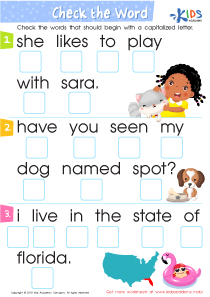
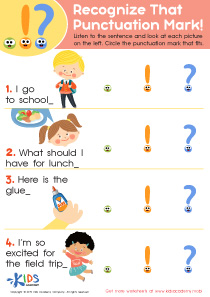
Word identification Normal Grammar Worksheets
5 filtered results
-
From - To
Our "Word Identification Normal Grammar Worksheets" are designed to support early learners in mastering fundamental language skills. These engaging and visually appealing worksheets help children recognize and identify words, enhancing their reading and writing abilities. Ideal for youngsters in primary grades, each worksheet focuses on key aspects such as phonics, sight word recognition, and word usage in context. With easy-to-follow instructions and fun activities, our resources make learning grammar enjoyable and effective. Visit us at Kids Academy and boost your child's confidence in word identification today! Let's embark on an exciting educational journey together.
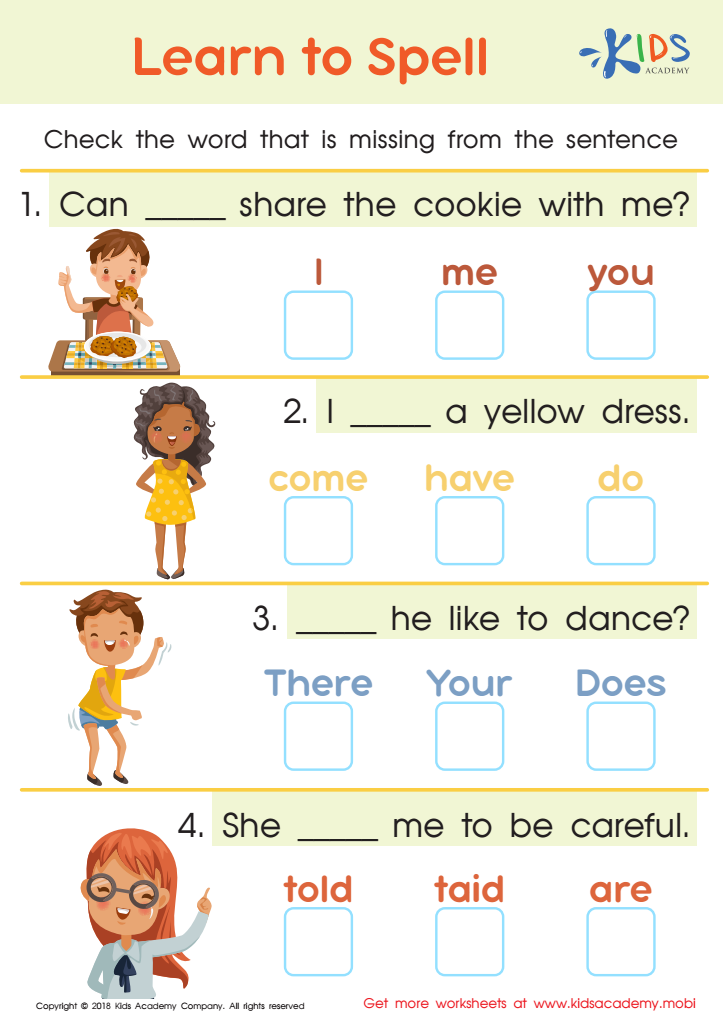
Learn to Spell Worksheet
 Assign to My Students
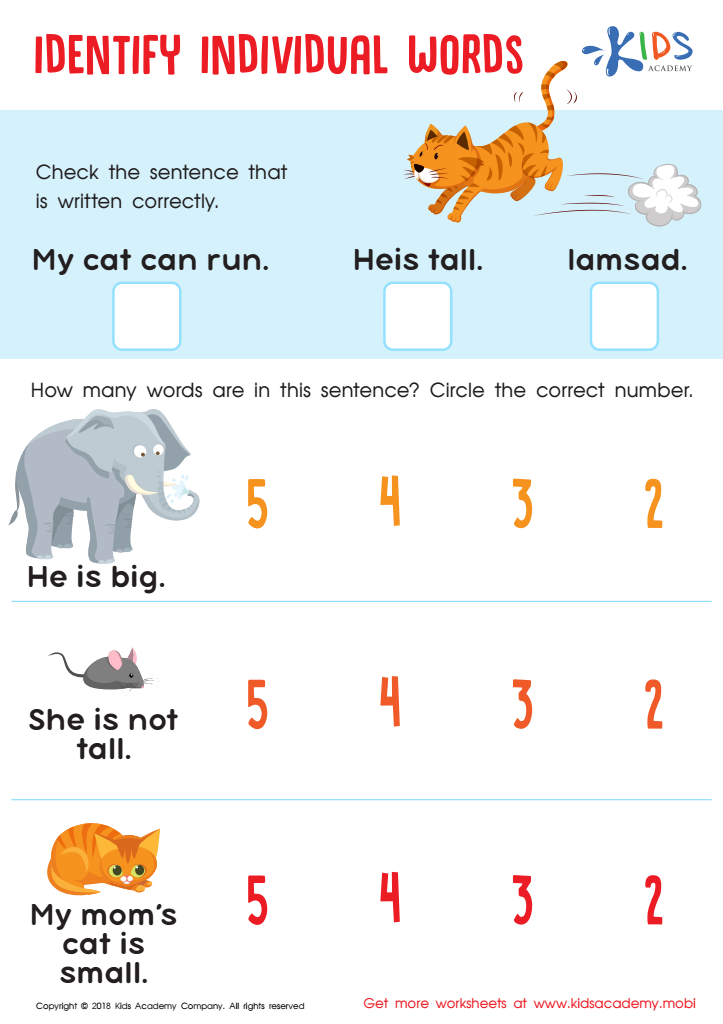
Identify Individual Words Worksheet
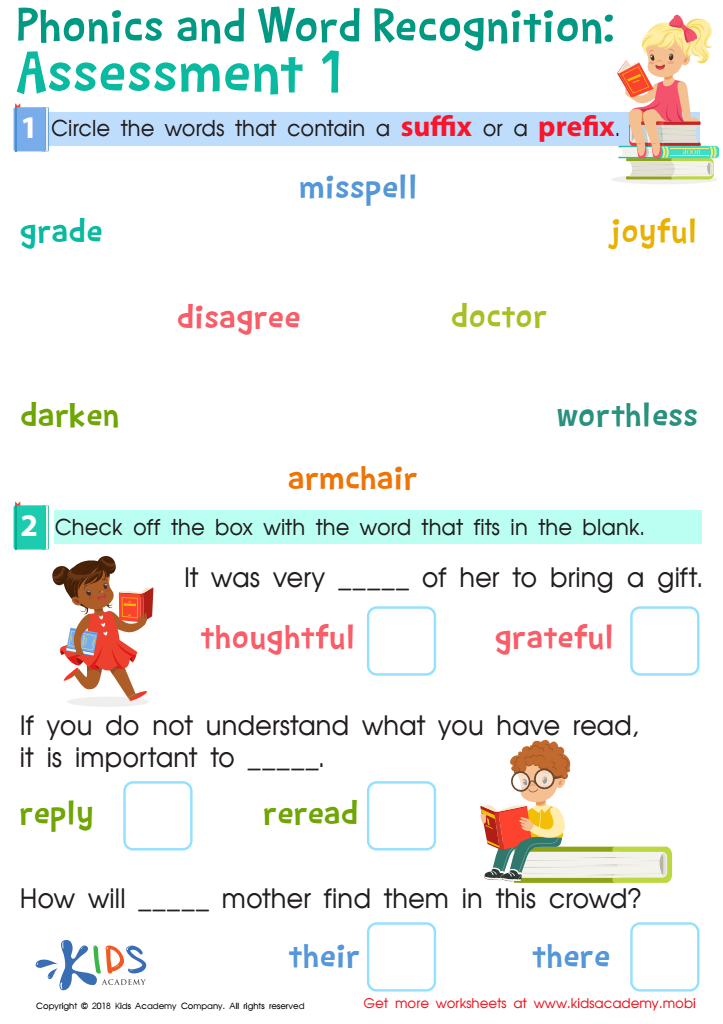
Phonics and Word Recognition: Assessment 1 Worksheet
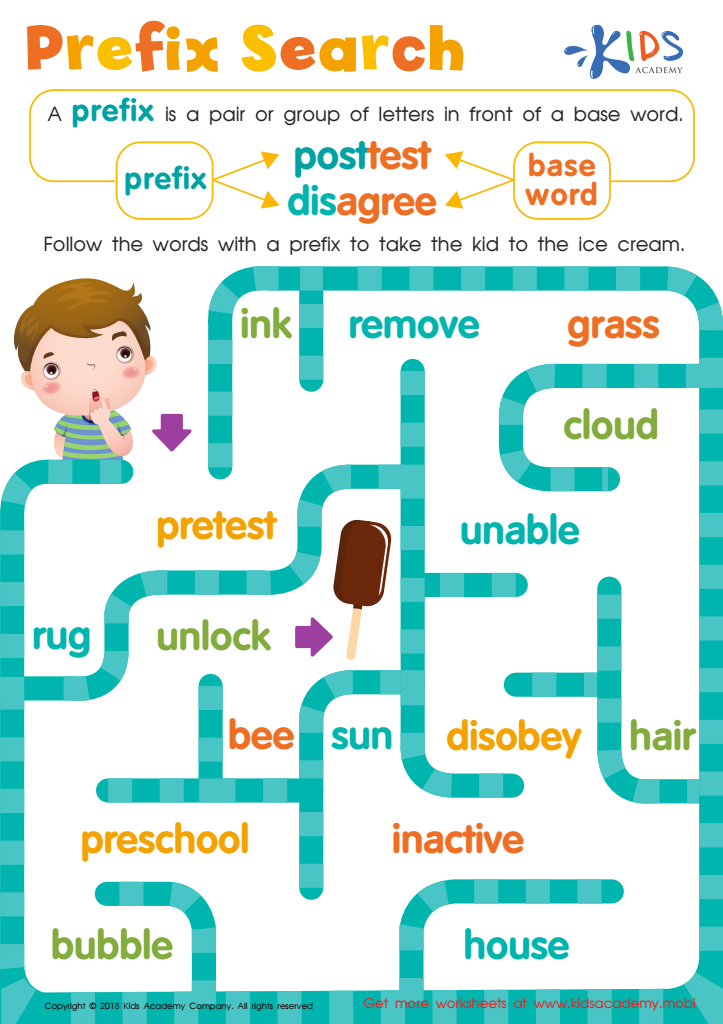
Reading: Prefix Search Worksheet
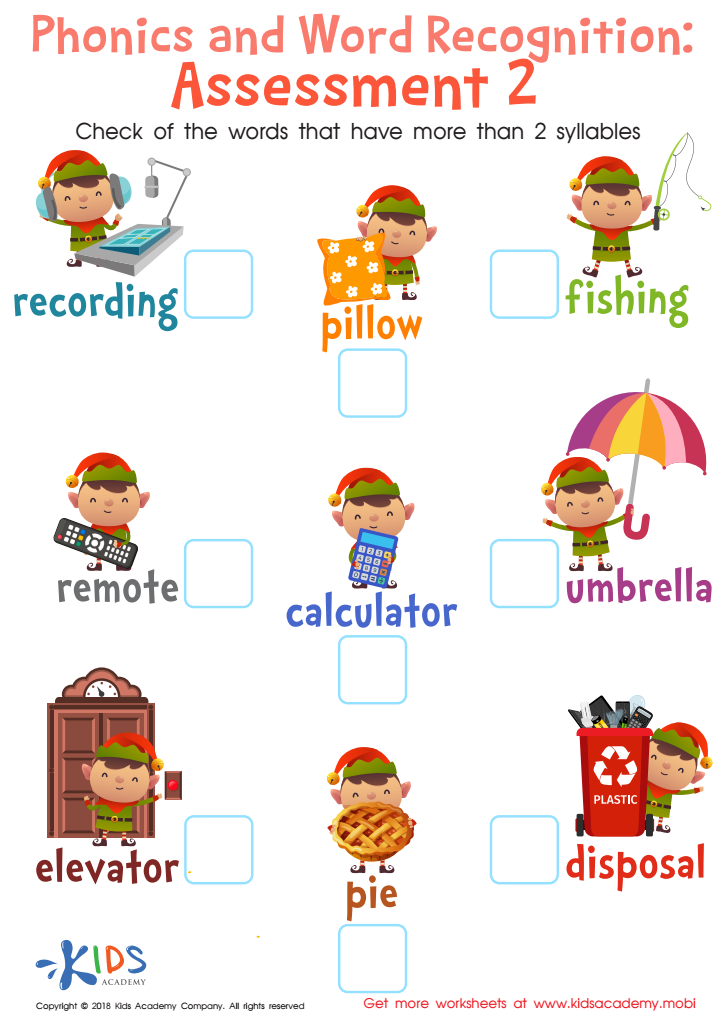
Phonics and Word Recognition: Assessment 2 Worksheet


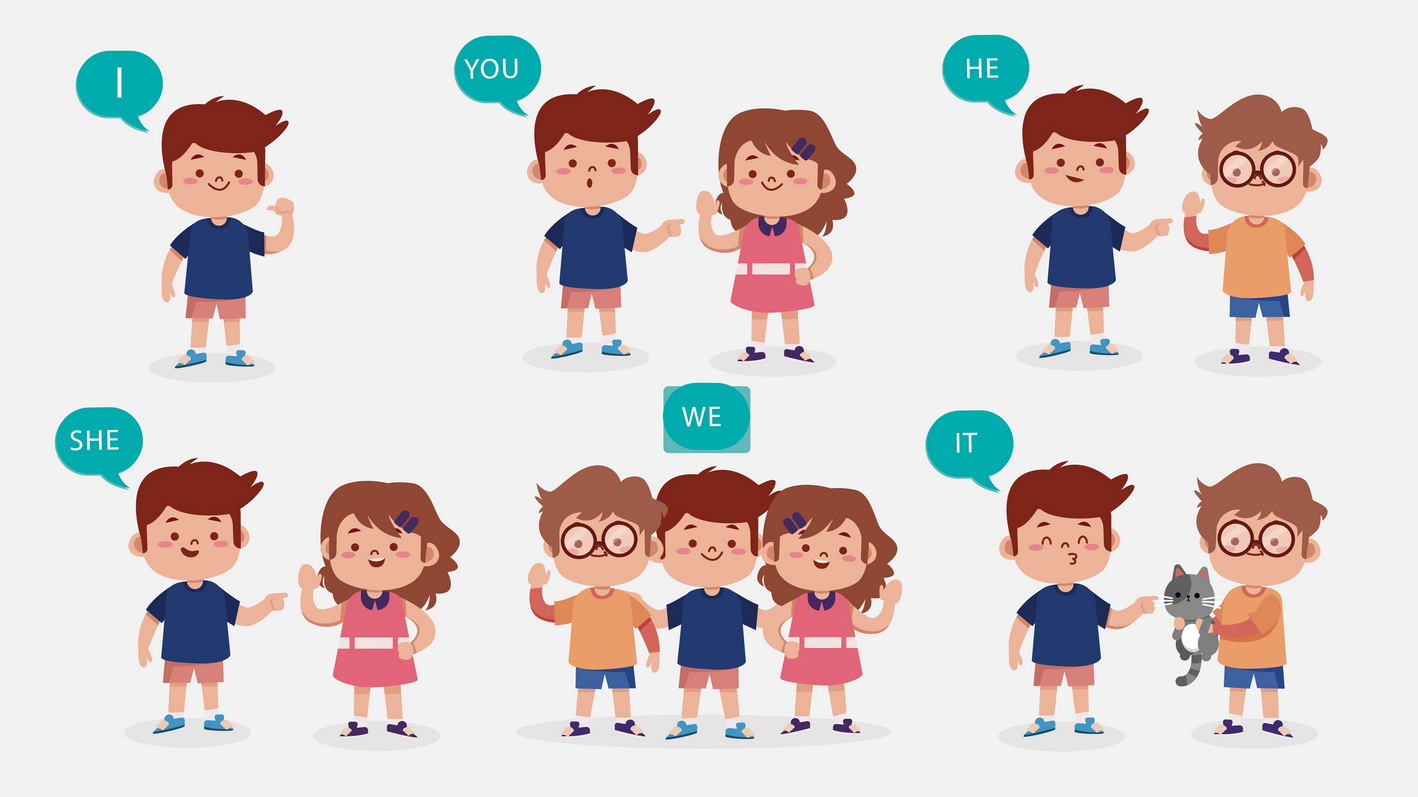
.jpg)


Word identification is a cornerstone of reading development, and its mastery is crucial for young learners. For parents and teachers, understanding and supporting word identification can significantly enhance a child's academic journey. When children can quickly and accurately recognize words, they read more fluently and with better comprehension. This fluency allows them to focus on understanding the text rather than getting bogged down by decoding each word. Fluency and comprehension are vital for academic success across all subjects.
Normal grammar, on the other hand, ensures that children can construct and understand sentences correctly. Grammar skills enable students to communicate ideas clearly and make sense of what they read. Proficient grammar knowledge also aids in writing, allowing students to express their thoughts in an organized manner and adhere to standard language conventions.
Teachers and parents can foster these skills through engaging activities, reading practice, and consistent exposure to language. This doesn't just enhance reading and writing abilities but also builds confidence in communication, critical thinking, and problem-solving. By prioritizing word identification and normal grammar, we give children the linguistic tools they need to succeed academically and later in life, setting a foundation for lifelong learning and effective communication.