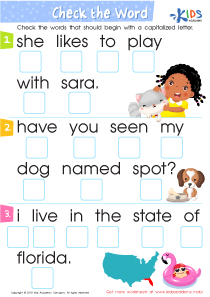
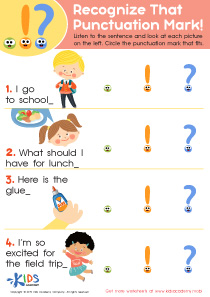
Capitalization rules Normal Writing Worksheets
3 filtered results
-
From - To
Welcome to our "Capitalization Rules Normal Writing Worksheets" page! Here, young learners will find engaging resources designed to teach and reinforce capitalization rules in everyday writing. Our worksheets are tailored to help children understand when to capitalize proper nouns, the beginning of sentences, and important titles. With a variety of fun activities and clear explanations, these worksheets encourage independent practice and enhance writing skills. Ideal for both classroom use and home learning, our Capitalization Rules worksheets pave the way for budding writers to communicate effectively. Start your child's writing journey today and watch their confidence soar!
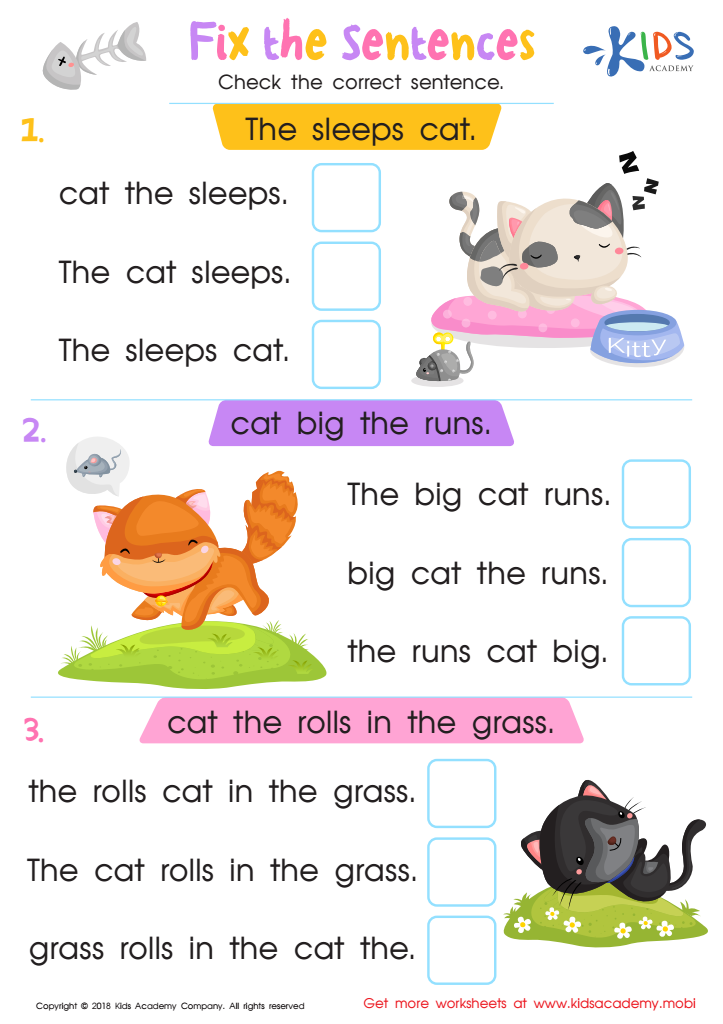
Fix the Sentences Worksheet
 Assign to My Students
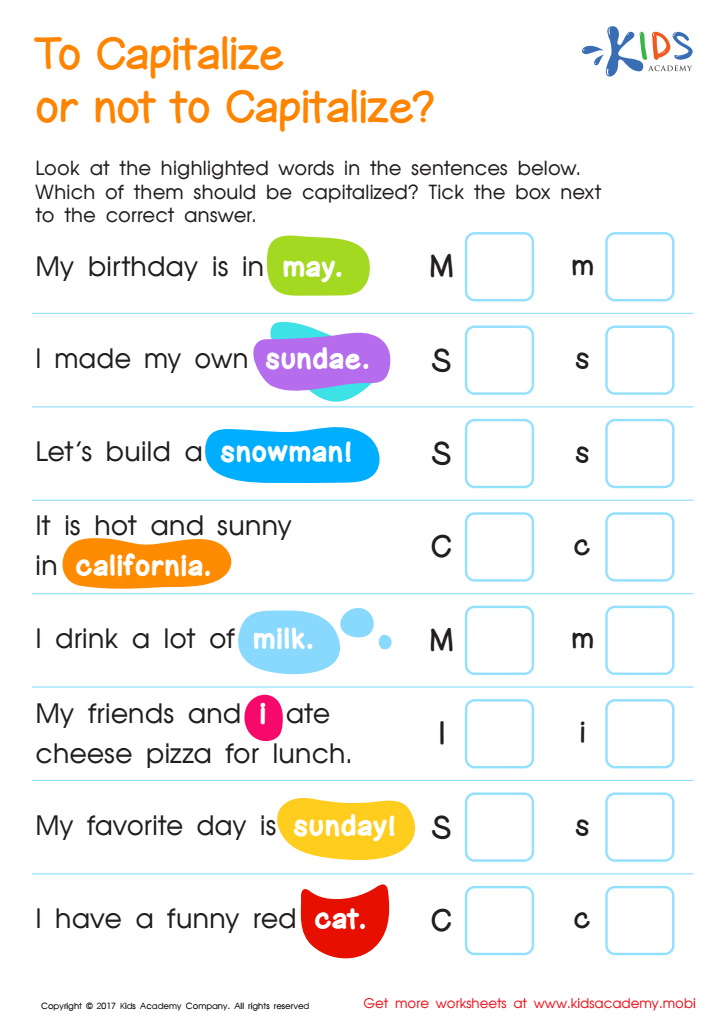
Capitalization: To Capitalize or Not? Printable
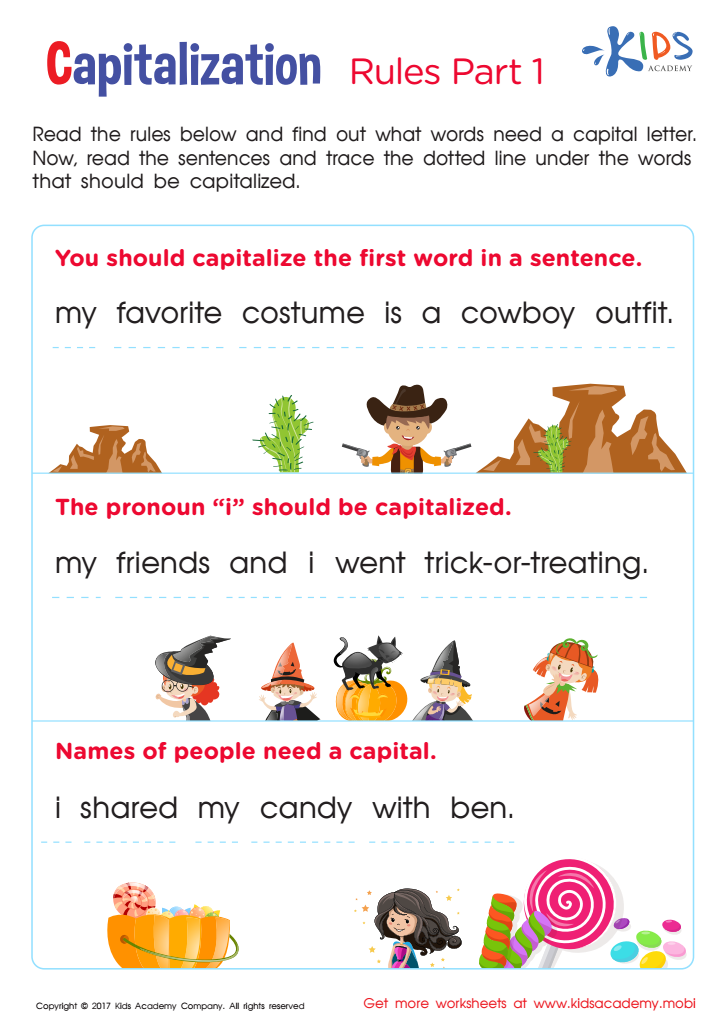
Capitalization Rules: Part 1 Worksheet



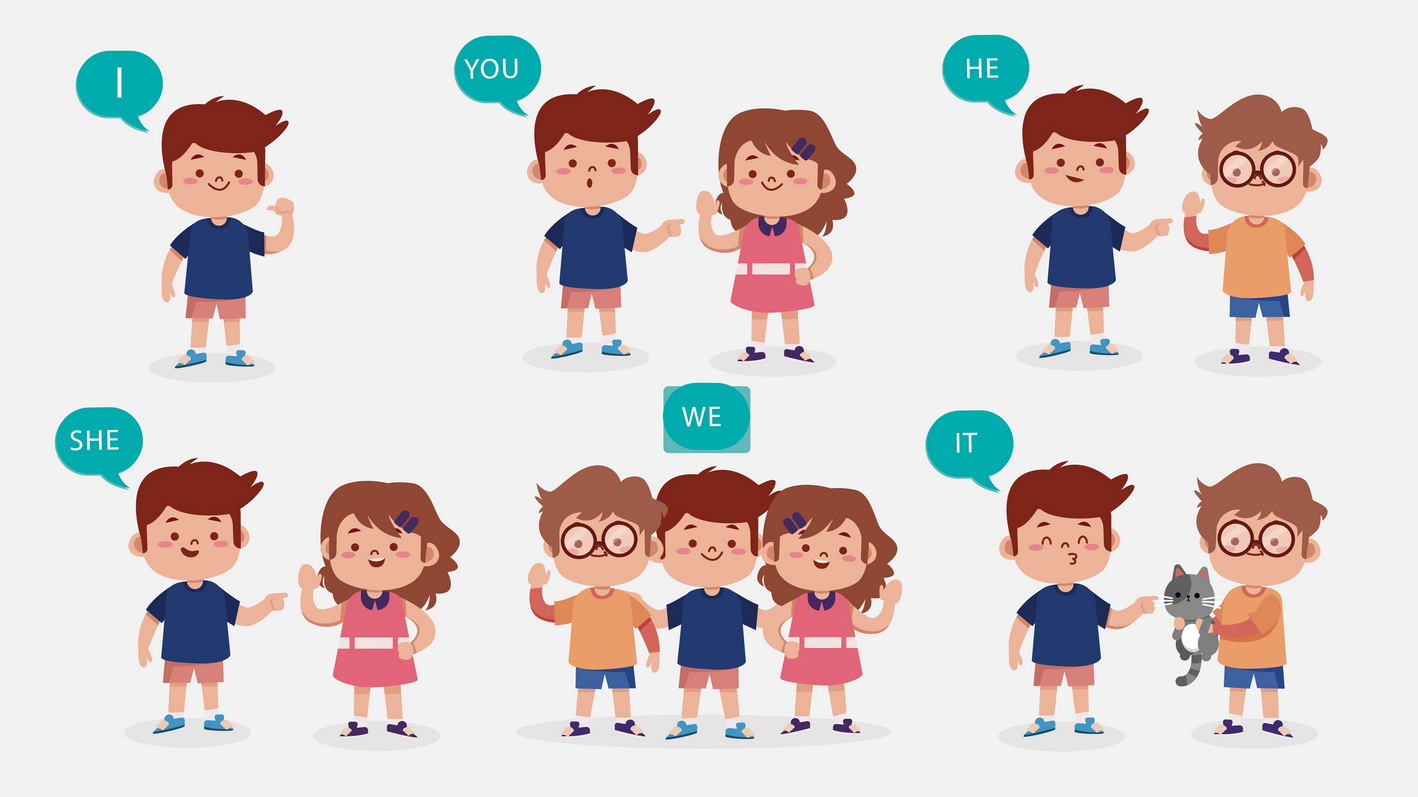



Capitalization rules in normal writing are essential for clear communication, and understanding them is crucial for both parents and teachers as they guide children in developing their reading and writing skills. Firstly, proper capitalization helps convey meaning. For example, the difference between "the president" and "The President" can significantly affect the understanding of a sentence. Clarity in writing is vital, especially as children grow and begin to express more complex thoughts.
Secondly, mastery of capitalization enhances the overall quality of writing. It demonstrates attention to detail and a grasp of language conventions, which is important for academic success and future writing endeavors. When children learn to use capitalization correctly, this builds their confidence in writing and encourages them to take pride in their work.
Furthermore, in an age where digital communication is prevalent, grounding children in fundamental writing rules such as capitalization prepares them for effective communication in various contexts, including emails, reports, and creative writing.
In short, teaching and reinforcing capitalization rules instills essential writing skills, promotes clear communication, and lays a solid foundation for future literacy efforts, making it a critical focus for parents and educators alike.