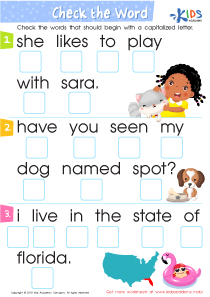
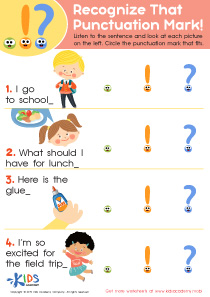
Noun identification Normal Writing Worksheets
3 filtered results
-
From - To
Introducing our "Noun Identification Normal Writing Worksheets," designed to enhance young learners' understanding of nouns through engaging activities. These printable worksheets provide a fun and interactive way for students to practice identifying nouns in various contexts. With clear instructions, colorful illustrations, and age-appropriate exercises, these resources cater to children’s learning needs and help build foundational writing skills. As kids explore different types of nouns—common, proper, singular, and plural—they will develop their language proficiency while boosting their confidence in writing. Perfect for classroom use or at-home practice, our worksheets make learning nouns an exciting adventure! Start nurturing your child’s writing skills today!
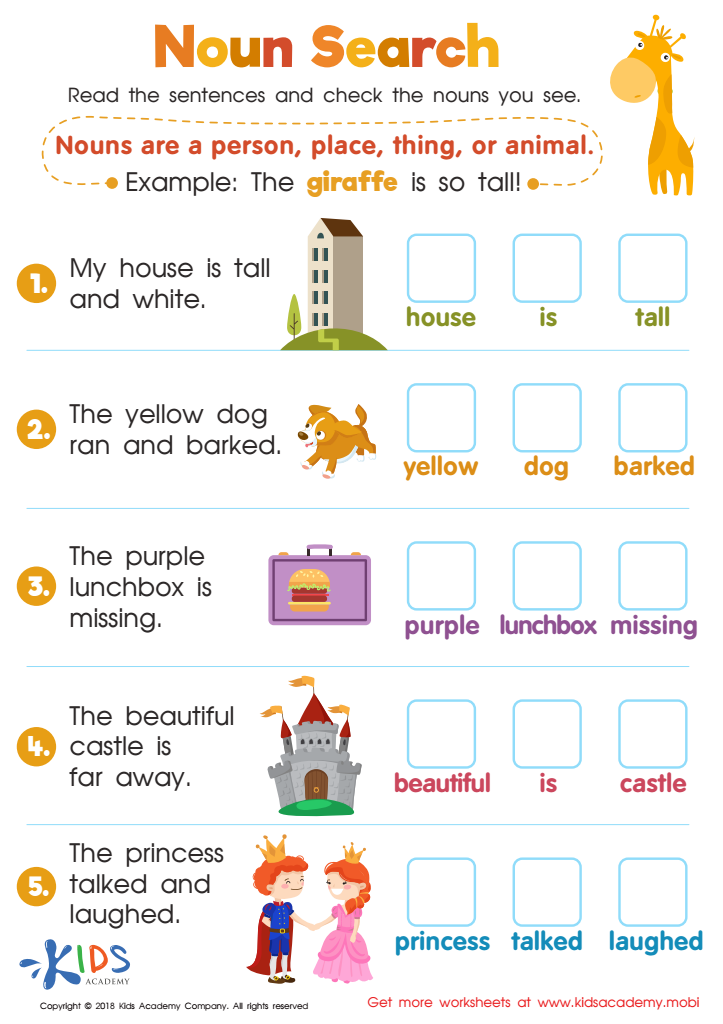
Noun Search Worksheet
 Assign to My Students
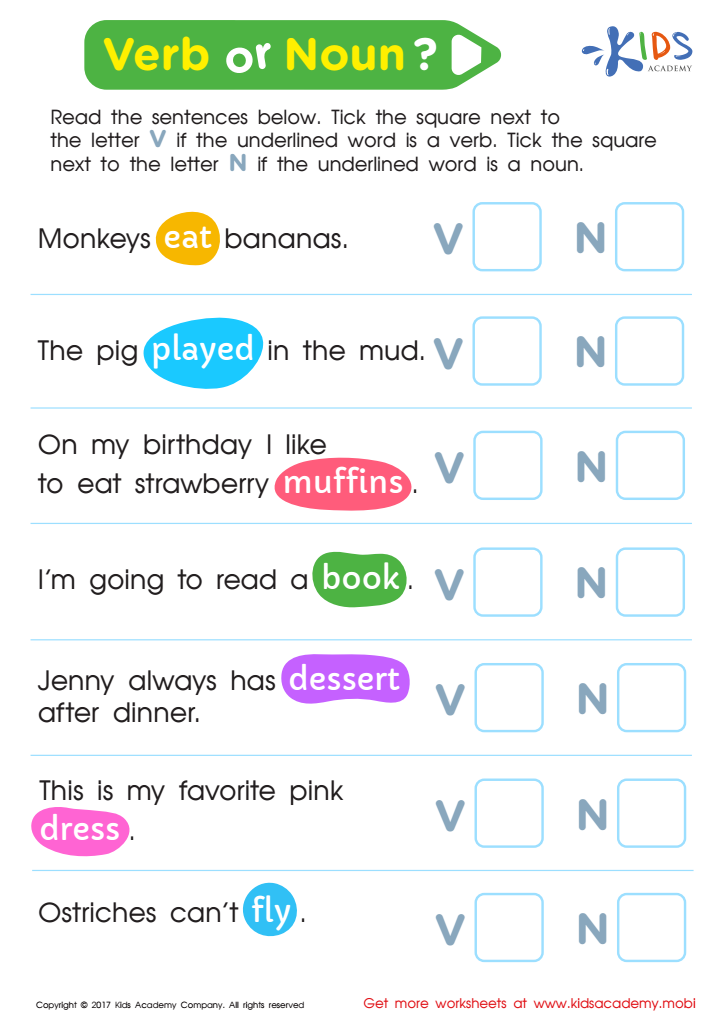
Verb or Noun Worksheet
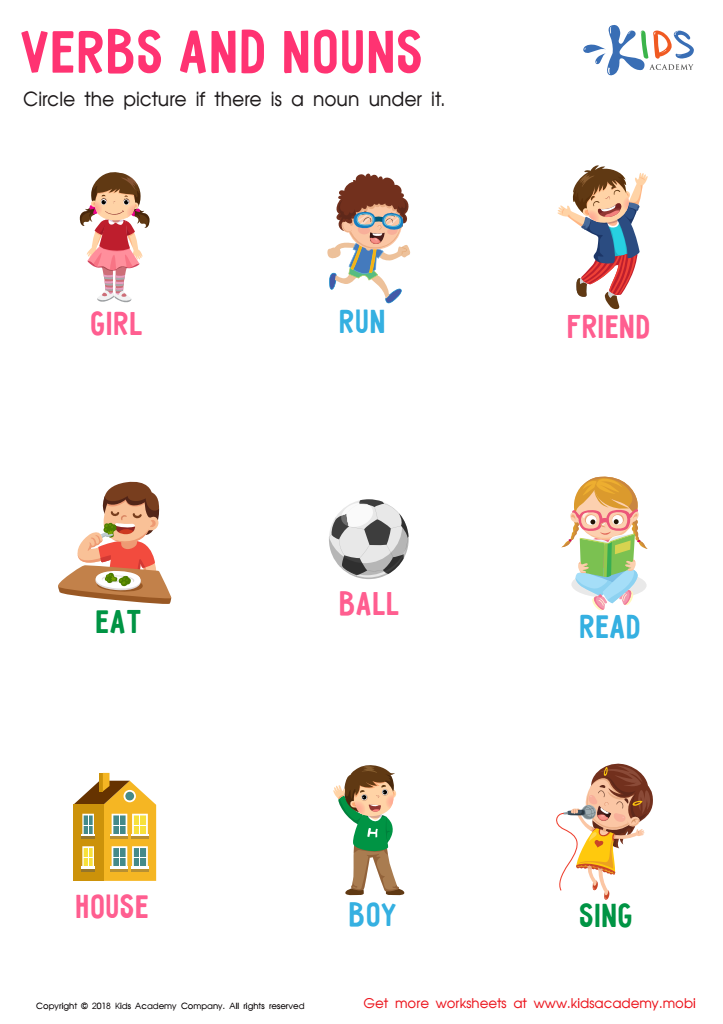
Verbs and Nouns Worksheet






Noun identification is a foundational skill in language development that is crucial for both parents and teachers to prioritize. Nouns serve as the building blocks of sentences, representing people, places, things, and ideas. When children learn to identify nouns, they enhance their vocabulary, improving their ability to express thoughts clearly. This competence lays the groundwork for effective communication and literacy skills.
Moreover, mastering noun identification supports reading comprehension. As children encounter text, recognizing nouns helps them understand the main subjects being discussed and enhances their overall engagement with the material. This not only boosts their reading abilities but also fosters critical thinking as they analyze stories and concepts.
For parents, recognizing the significance of nouns in everyday conversation encourages richer interactions with their children. Simple activities, like naming objects or discussing familiar people, can reinforce this skill in a fun and engaging way.
Teachers, on the other hand, can create targeted lessons and activities that focus on noun identification, ensuring students grasp the concept and can apply it in writing and speaking. By emphasizing noun identification, both parents and teachers contribute to a child’s linguistic development, building the necessary skills for academic success and effective communication in their future.