Science worksheets activities for Ages 3-5
5 filtered results
-
From - To
Discover our engaging Science worksheets and activities designed specifically for children aged 3-5! Our interactive resources spark curiosity and promote a love of learning through hands-on exploration. Each worksheet is crafted to introduce young learners to fundamental concepts in science, encouraging them to investigate the world around them. From fun experiments to vibrant illustrations, these activities help develop critical thinking and problem-solving skills. Ideal for home or classroom use, our Science worksheets foster creativity and knowledge, laying a solid foundation in early childhood education. Explore our collection today to inspire your little scientists and make learning a delightful adventure!
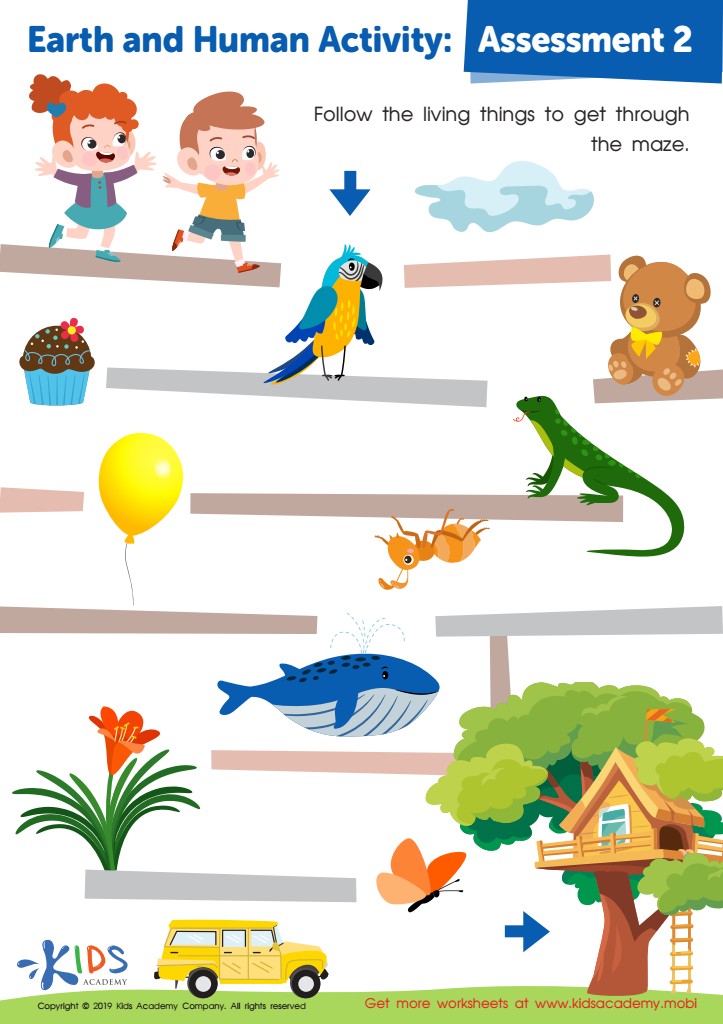
Earth and Human Activity: Assessment 2 Worksheet
 Assign to My Students
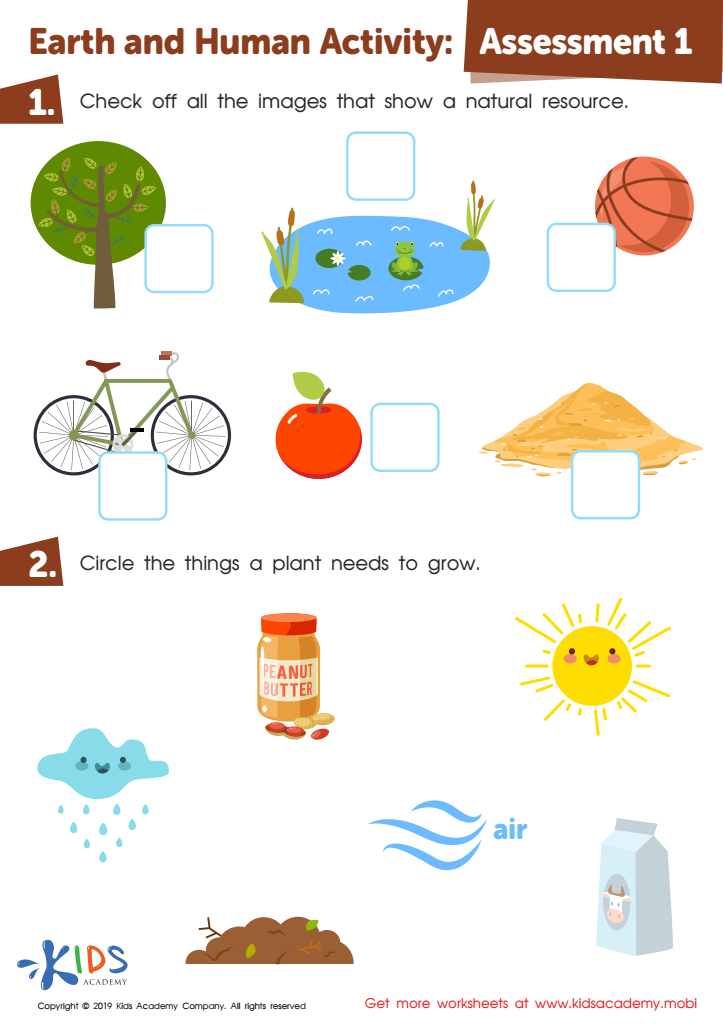
Earth and Human Activity: Assessment 1 Worksheet
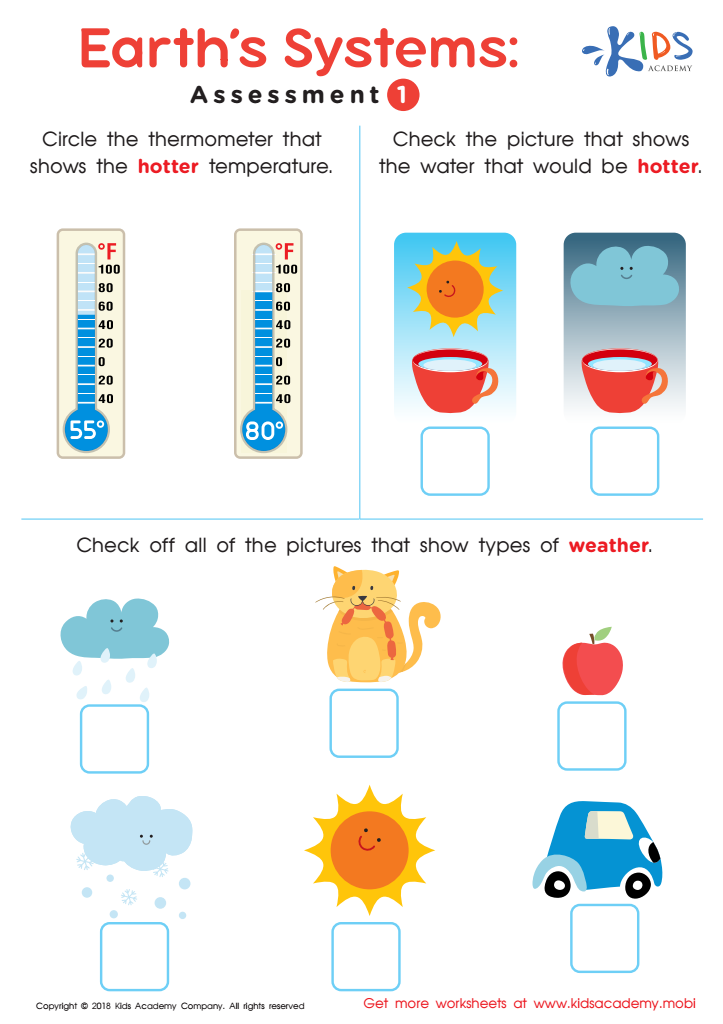
Earth's Systems: Assessment 1
Force and Interactions: Assessment 2 Worksheet
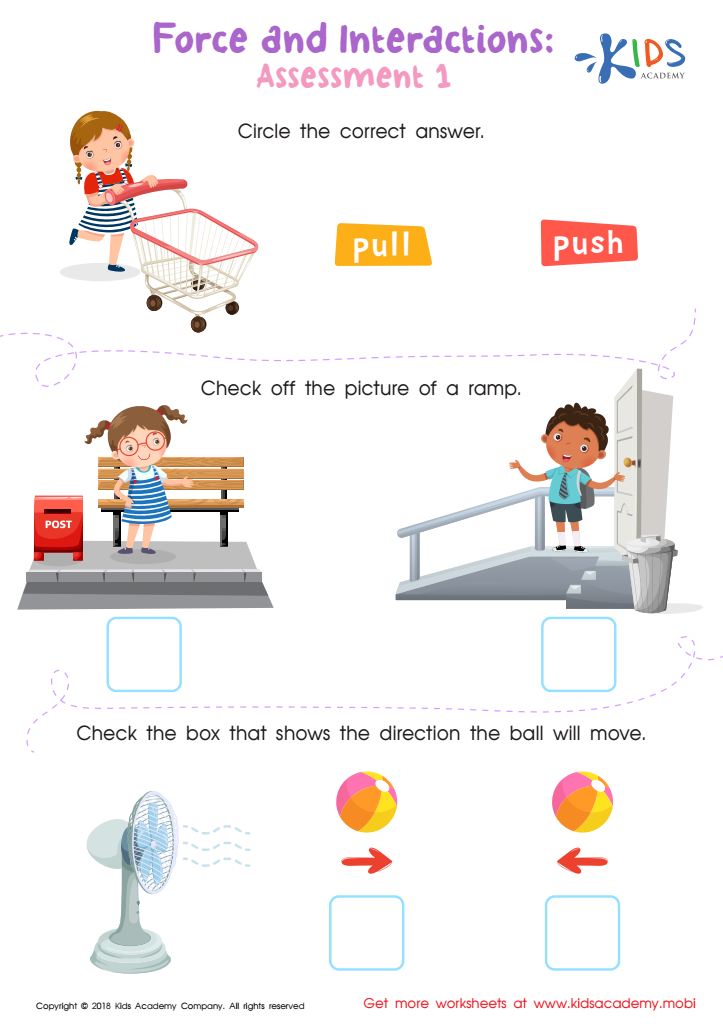
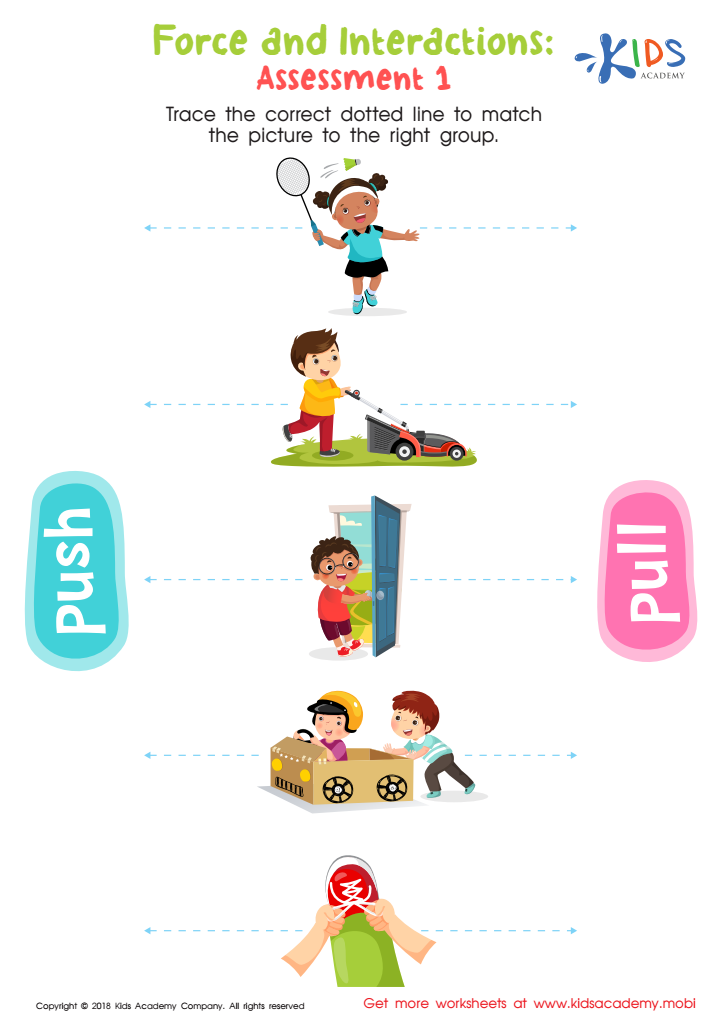
Force and Interactions: Assessment 1 Worksheet






.jpg)
Parents and teachers should prioritize science activities for children aged 3-5 because these formative years are crucial for cognitive development. Engaging in science fosters curiosity, encouraging young learners to ask questions and explore the world around them. Activities like simple experiments, nature walks, or basic observations spark interest in scientific concepts, which lays the groundwork for critical thinking and problem-solving skills.
At this age, children are naturally inquisitive, and hands-on science activities provide them avenues to discover and understand their environment. Through fun, interactive experiences, children learn important skills such as classification, predicting outcomes, and making observations. Moreover, these activities build vocabulary and communication skills as they describe what they see and discuss their findings.
Incorporating science into early childhood education also promotes a sense of wonder and enjoyment in learning, helping to cultivate a lifelong love for exploration and knowledge. By nurturing science skills early on, parents and teachers empower children to become confident inquirers and independent thinkers, enhancing their overall development and preparing them for future academic success. Ultimately, science activities are not just about learning facts; they help shape inquisitive minds ready to navigate an increasingly complex world.








