Physical Science worksheets activities for Ages 4-8
6 filtered results
-
From - To
Discover engaging Physical Science worksheets designed for children aged 4-8 that make learning fun and interactive! Our carefully crafted activities help young learners explore foundational science concepts, including matter, energy, and basic physics. Each worksheet is tailored to nurture curiosity and critical thinking, providing children with vibrant illustrations and easy-to-understand language. These activities encourage hands-on exploration and promote inquiry-based learning, making it perfect for at-home or classroom use. Parents and teachers can easily access and print these resources to support early scientific discovery. Spark your child’s interest in science today with our captivating and educational worksheets!
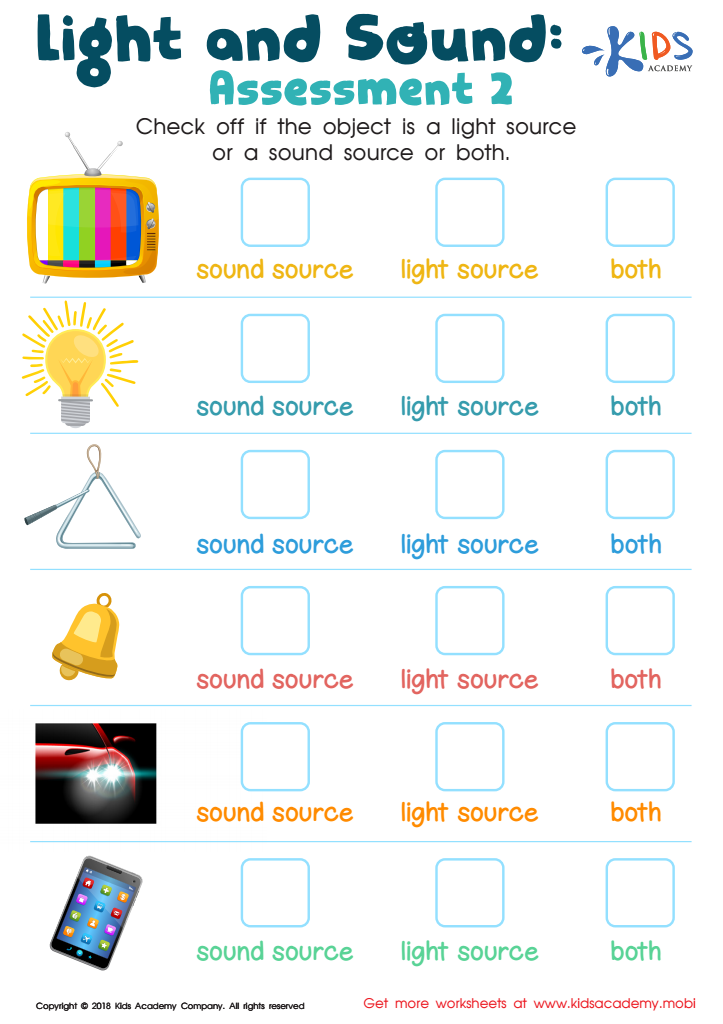
Light and Sound: Assessment 2 Worksheet
 Assign to My Students
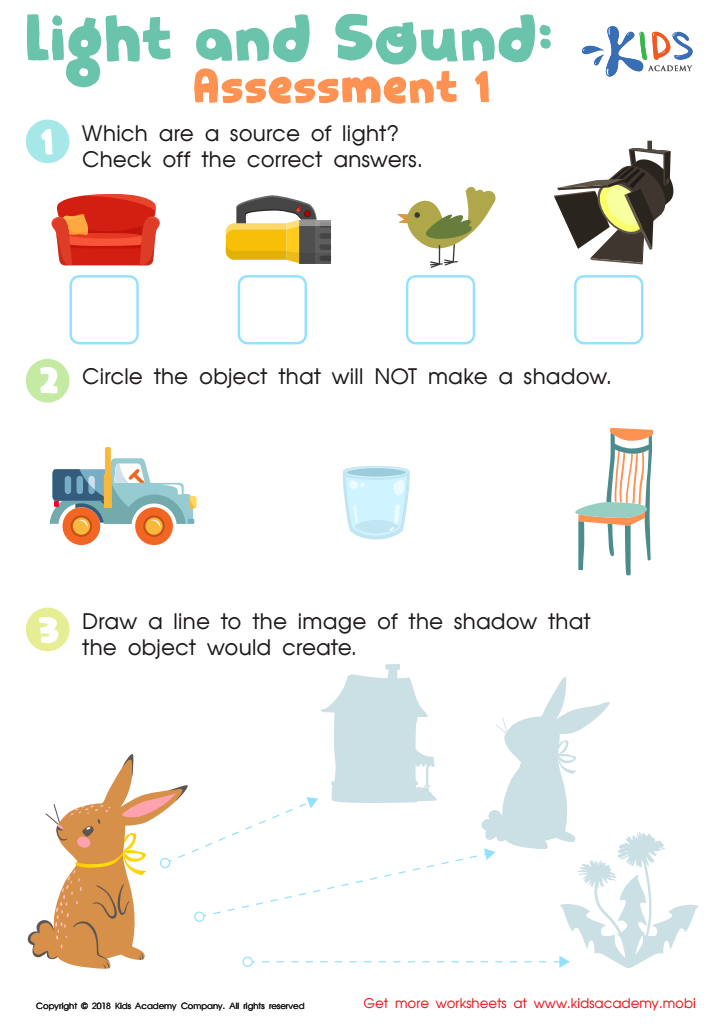
Light and Sound: Assessment 1 Worksheet
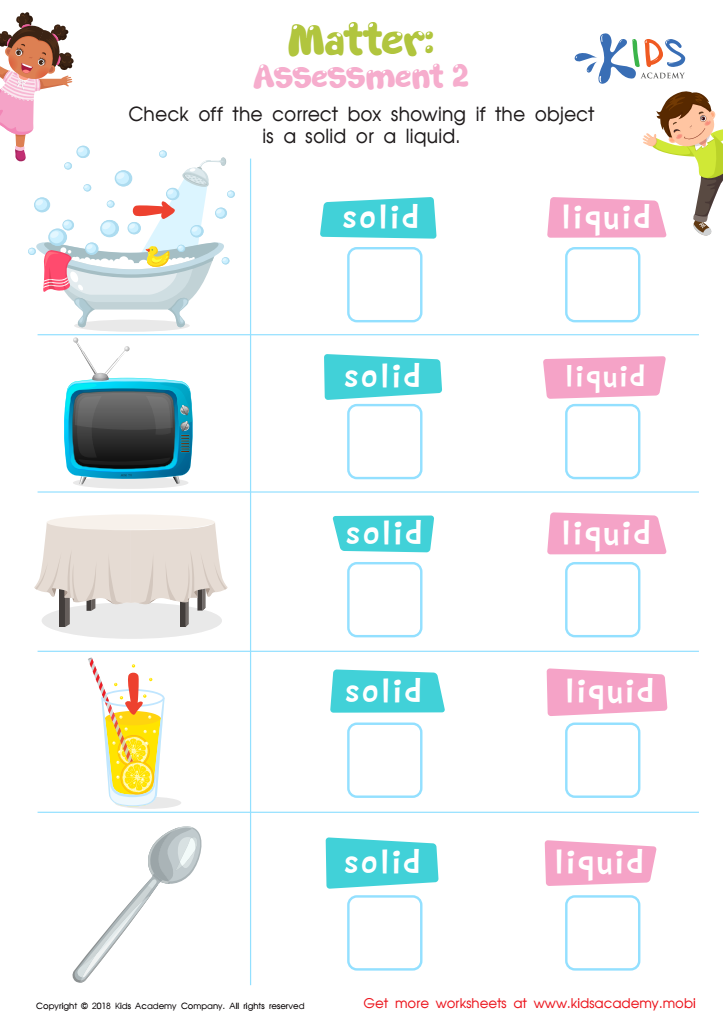
Matter: Assessment 2 Worksheet
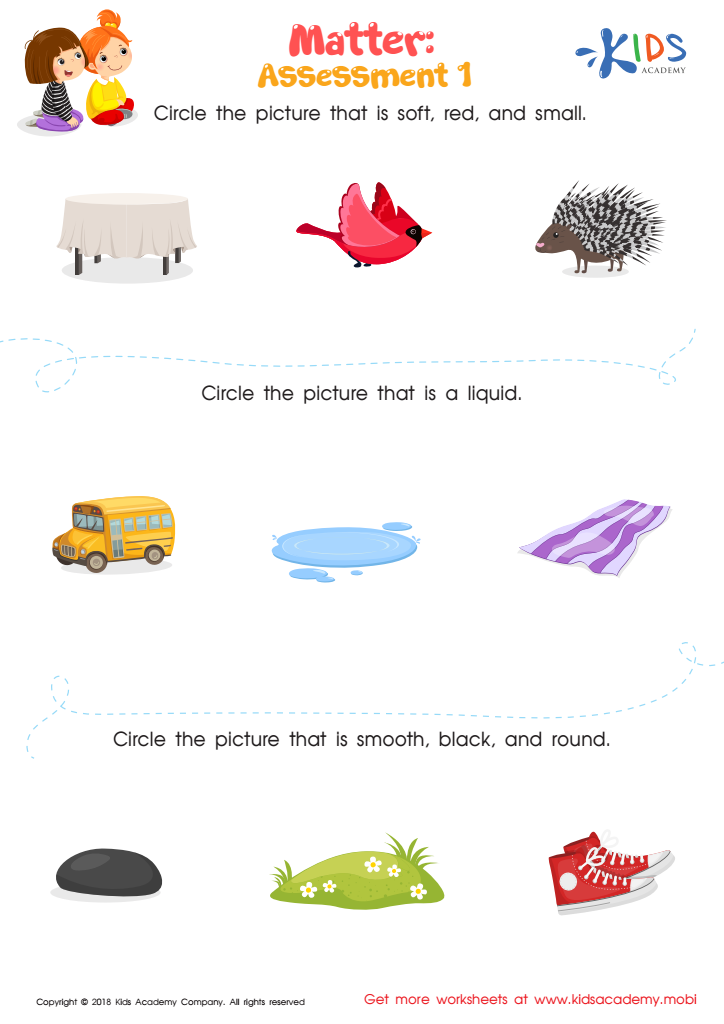
Matter: Assessment 1 Worksheet
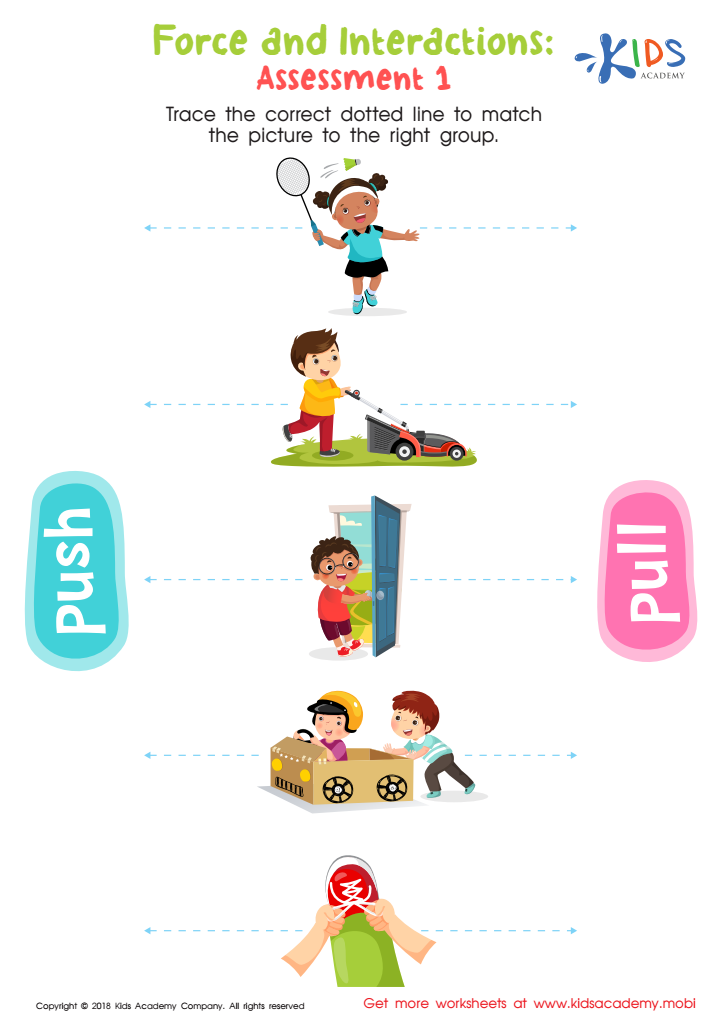
Force and Interactions: Assessment 2 Worksheet
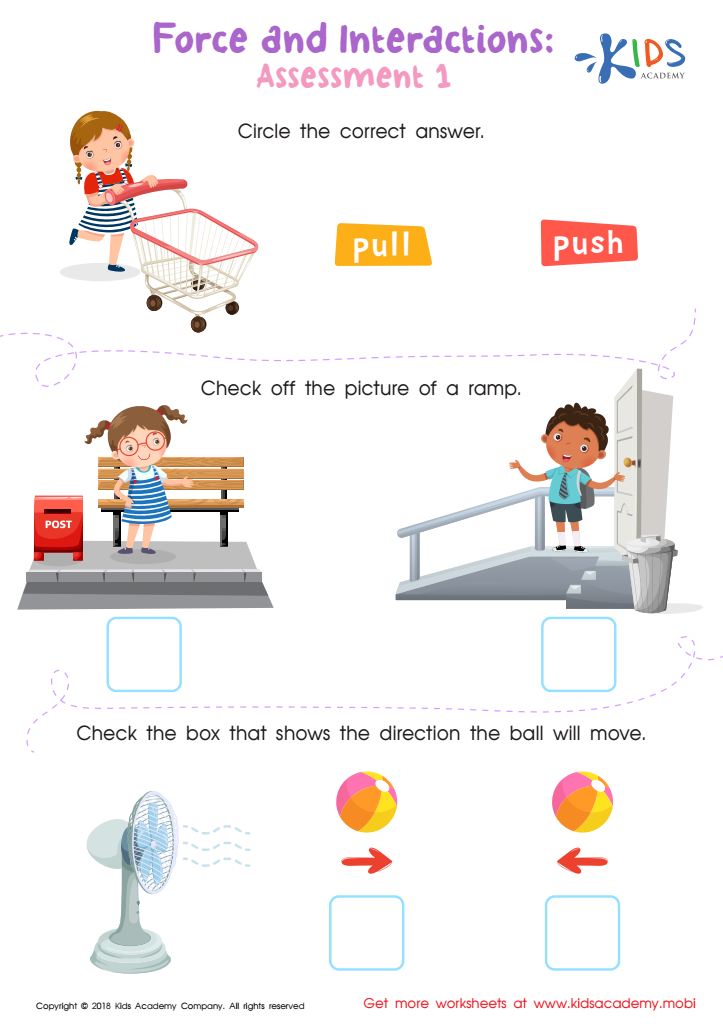
Force and Interactions: Assessment 1 Worksheet







Parents and teachers should prioritize Physical Science activities for children aged 4-8 as these early experiences lay the groundwork for critical thinking and problem-solving skills. At this developmental stage, children are naturally curious about the world around them, and engaging in hands-on science activities fuels that curiosity. Such activities help children grasp fundamental concepts like force, motion, and simple machines through exploration and play.
Furthermore, Physical Science encourages sensory engagement and promotes fine motor skills. Activities such as building, experimenting with weights, or observing trajectories allow children to apply what they learn in dynamic, tangible ways. This hands-on exploration fosters a positive attitude towards learning and helps establish a lifelong interest in science and discovery.
Additionally, collaborative activities promote social skills through teamwork and communication, as children learn to share ideas and solve problems together. By participating in Physical Science, children enhance their creativity and imagination, crucial components of cognitive development.
By recognizing the importance of Physical Science in early education, parents and teachers will inspire the next generation of thinkers, innovators, and responsible global citizens equipped to navigate the complexities of a rapidly evolving world. Therefore, instilling scientific understanding at a young age is integral to holistic development.








