Addition & Subtraction worksheets activities for Ages 4-9 - Page 2
26 filtered results
-
From - To
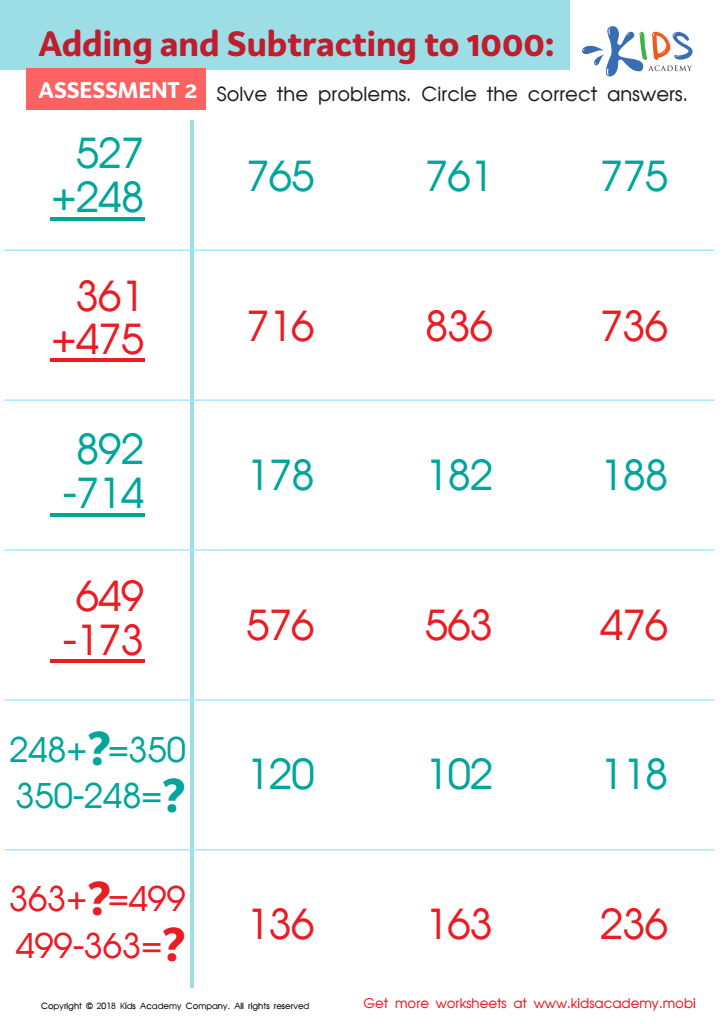
Adding and Subtracting to 1 Worksheet: Assessment 2
 Assign to My Students
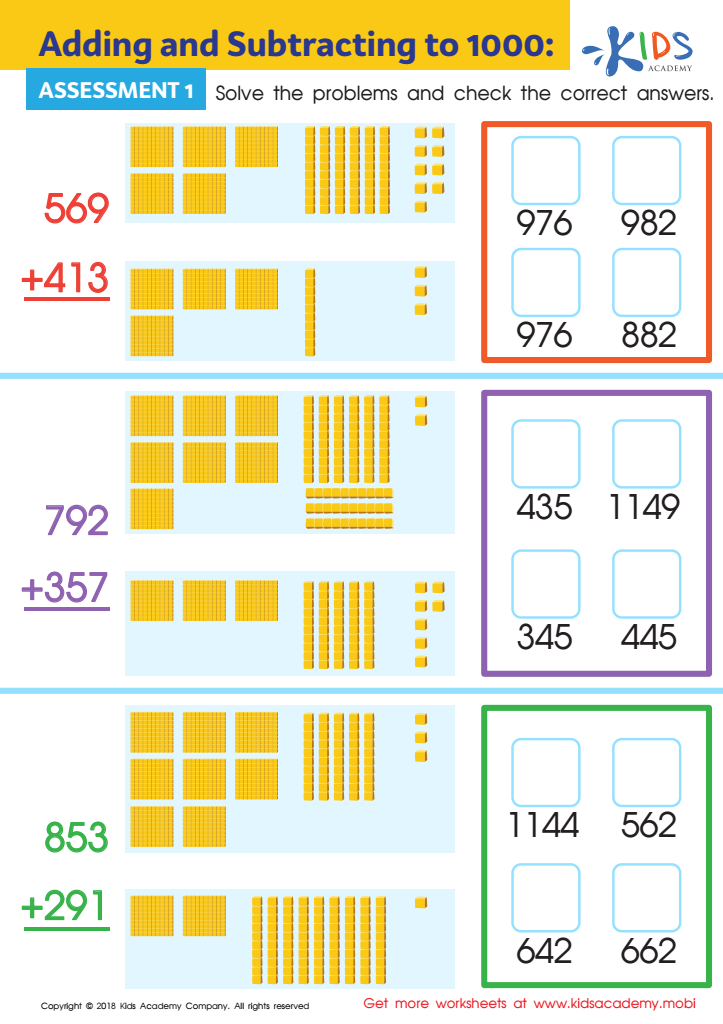
Adding and Subtracting to 1 Worksheet: Assessment 1








Parents and teachers should prioritize addition and subtraction activities for children aged 4-9 because these foundational skills are essential for mathematical literacy and overall cognitive development. During this age, children's brains are highly adaptable, making it an ideal time to cultivate essential problem-solving skills. Engaging in addition and subtraction helps children develop critical thinking, reasoning, and analytical abilities, which are crucial for everyday decision-making.
Moreover, these activities lay the groundwork for future mathematical concepts such as multiplication, division, and even more complex problem-solving in higher grades. Practicing these skills fosters confidence in children, as they learn to approach numbers with ease and curiosity. Early exposure to numeracy not only promotes academic success but also enhances a child’s ability to manage personal finances and understand the world around them.
In addition, interactive and playful activities can make learning fun and engaging, paving the way for a positive attitude towards math as they grow older. These experiences encourage collaboration with peers and parents, strengthening social and emotional skills. By investing in addition and subtraction activities, parents and teachers can significantly impact a child's educational journey, ensuring a strong mathematical foundation for years to come.








