Addition & Subtraction worksheets activities for Ages 5-9 - Page 2
26 filtered results
-
From - To
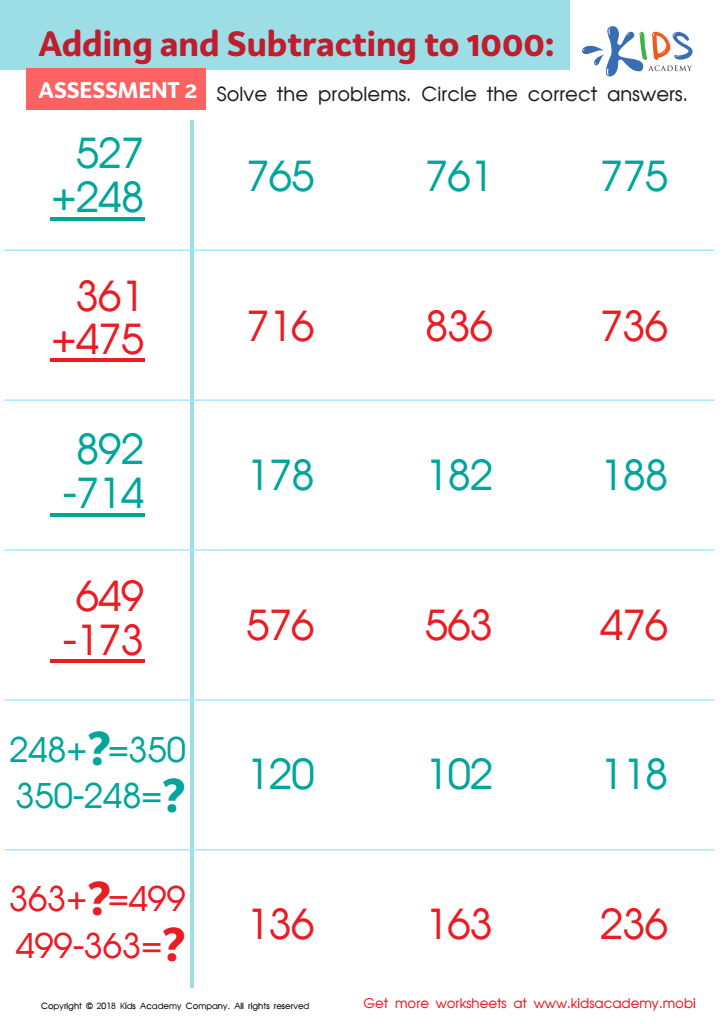
Adding and Subtracting to 1 Worksheet: Assessment 2
 Assign to My Students
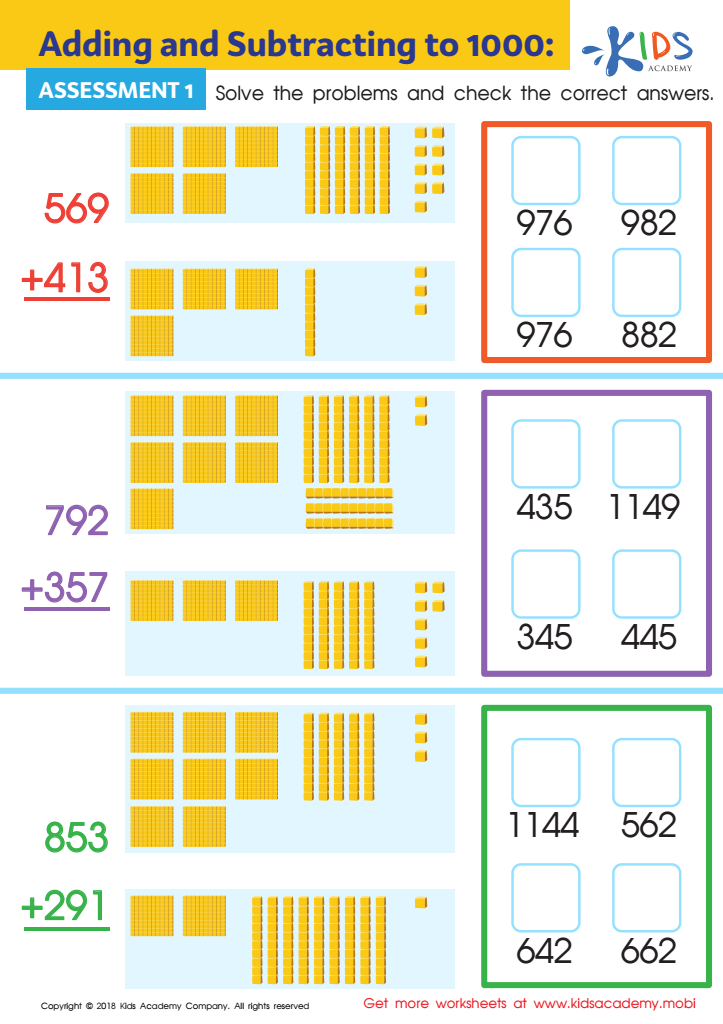
Adding and Subtracting to 1 Worksheet: Assessment 1








Parents and teachers should prioritize addition and subtraction activities for children ages 5-9 because these foundational math skills are crucial for a child’s cognitive and academic development. At this age, children are at a pivotal stage for grasping basic mathematical concepts, which can significantly influence their future learning. Mastery of addition and subtraction not only serves as a building block for more complex math topics like multiplication and division, but it also enhances problem-solving and critical thinking skills, essential for both academic success and everyday life.
Engaging in addition and subtraction activities makes learning interactive and enjoyable, fostering a positive attitude towards math. Activities such as games, puzzles, and real-life applications can transform these skills from simply rote memorization into meaningful experiences. Furthermore, early proficiency in these areas can boost a child's confidence and willingness to tackle new challenges.
Additionally, routine practice helps reinforce memory retention, making math more intuitive. As children work on addition and subtraction, they also develop fine motor skills through hands-on activities, and language skills as they learn to articulate problems and solutions. In summary, emphasizing addition and subtraction lays the groundwork for long-term academic achievement while nurturing a love for learning.








