Our Planet and Environment worksheets activities for Ages 5-9
5 filtered results
-
From - To
Explore our "Our Planet and Environment" worksheets designed for children ages 5-9, where learning meets fun! These engaging activities introduce young learners to vital concepts about the Earth, nature, and sustainability. Our printable worksheets cover a variety of topics, including animals, ecosystems, pollution, and conservation, fostering awareness and appreciation for the environment. Each activity is tailored to develop critical thinking skills and enhance creativity, making it easier for kids to grasp essential ecological concepts. Boost your child’s knowledge of their planet while having a wonderful time with our vibrant and interactive worksheets that inspire curiosity and a love for nature!
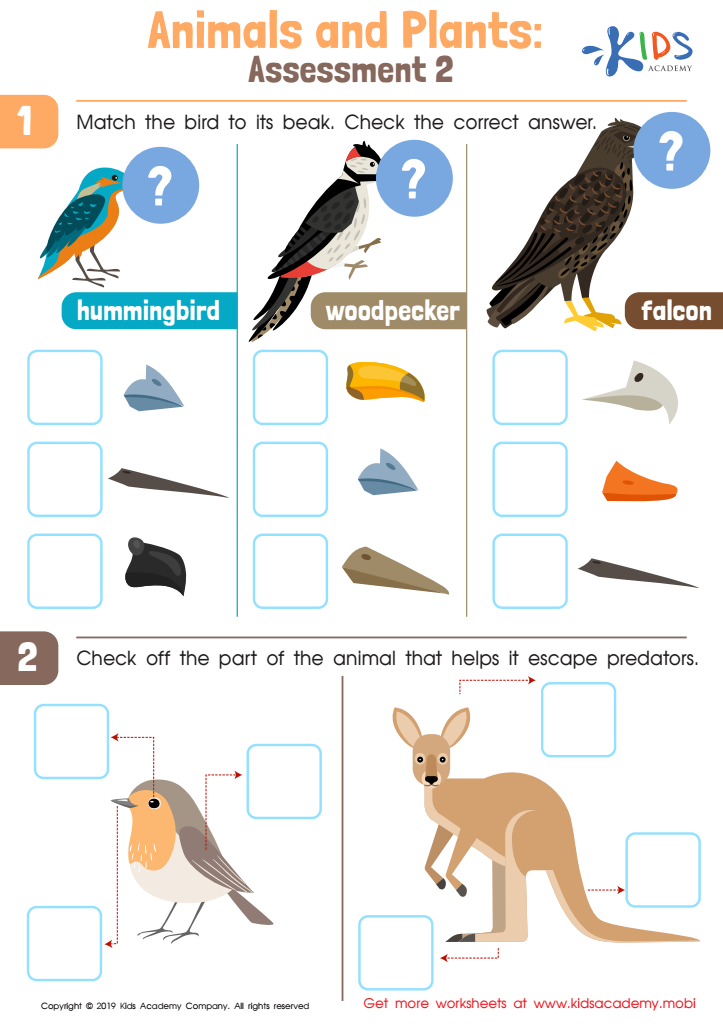
Animals and Plants: Assessment 2 Worksheet
 Assign to My Students
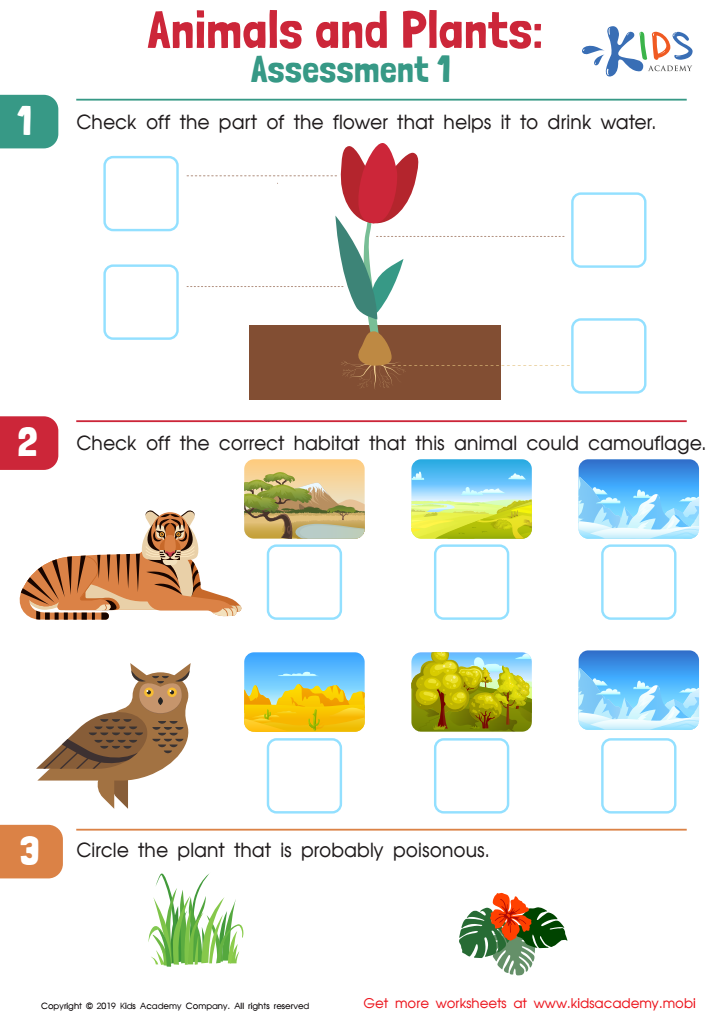
Animals and Plants: Assessment 1 Worksheet
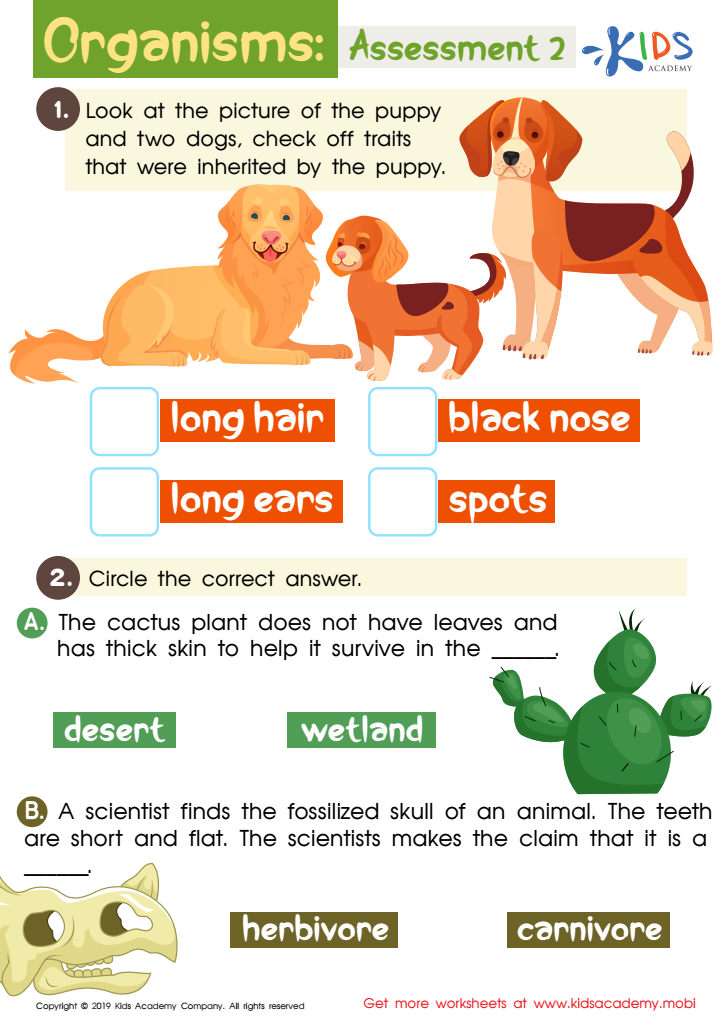
Organisms: Assessment 2 Worksheet
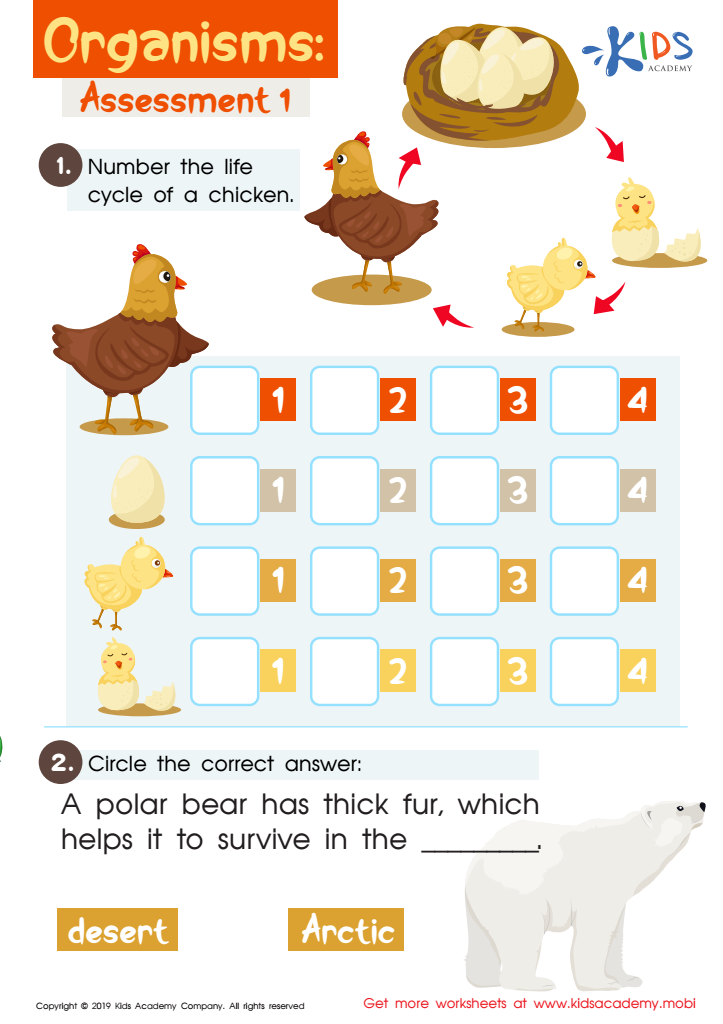
Organisms: Assessment 1 Worksheet
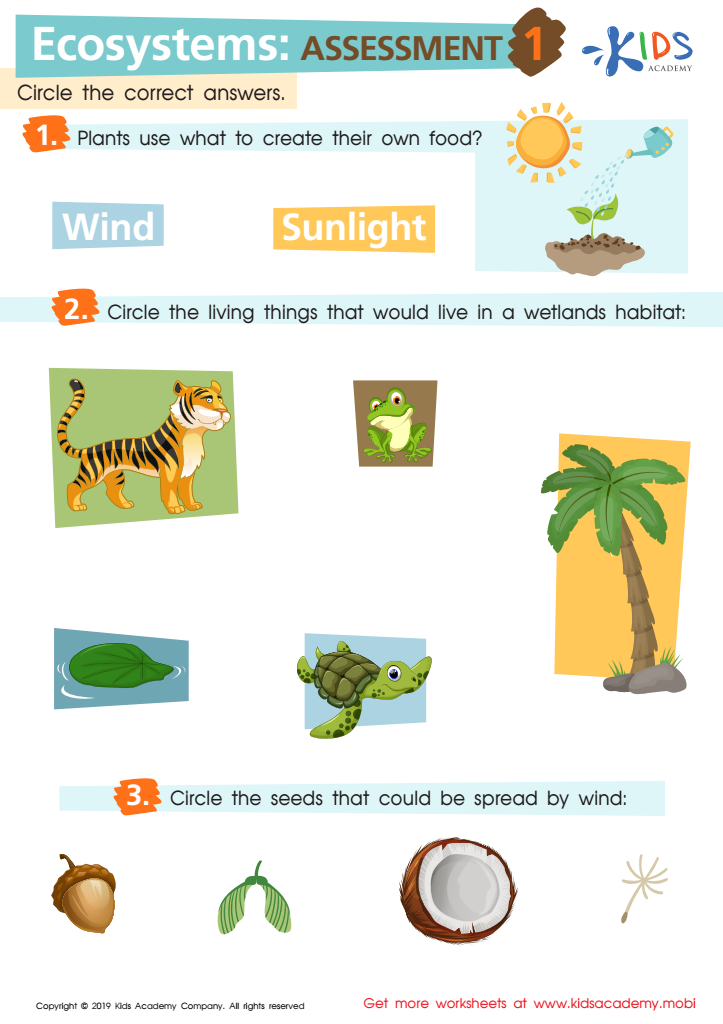
Ecosystems: Assessment 1 Worksheet







Parents and teachers play a vital role in shaping children's understanding of the world around them, particularly when it comes to their planet and environment. Introducing environmental activities for ages 5-9 helps cultivate a sense of responsibility and stewardship in young minds, fostering an intrinsic appreciation for nature.
At this impressionable age, children are naturally curious and eager to learn. Engaging them in hands-on activities related to the environment, such as planting trees, recycling, or observing wildlife, sparks their interest and imagination. These experiences not only enhance their cognitive skills but also promote teamwork, problem-solving, and critical thinking abilities important for their overall development.
Moreover, early exposure to environmental education can instill lifelong values of sustainability and conservation. As future leaders, these young individuals will carry these lessons into adulthood, making informed decisions that can positively impact the planet.
Finally, caring for our environment underscores the interconnectedness of all living things. Through these activities, children learn the importance of biodiversity, resource management, and the consequences of their actions, creating a foundation for responsible citizenship. Overall, integrating Our Planet and Environment activities into the lives of young learners is essential for nurturing a generation that will actively contribute to the health and well-being of our Earth.








