Explore Fun and Engaging Printable Physical Science Worksheets and Activities for Ages 7-8 on Kids Academy
4 filtered results
-
From - To
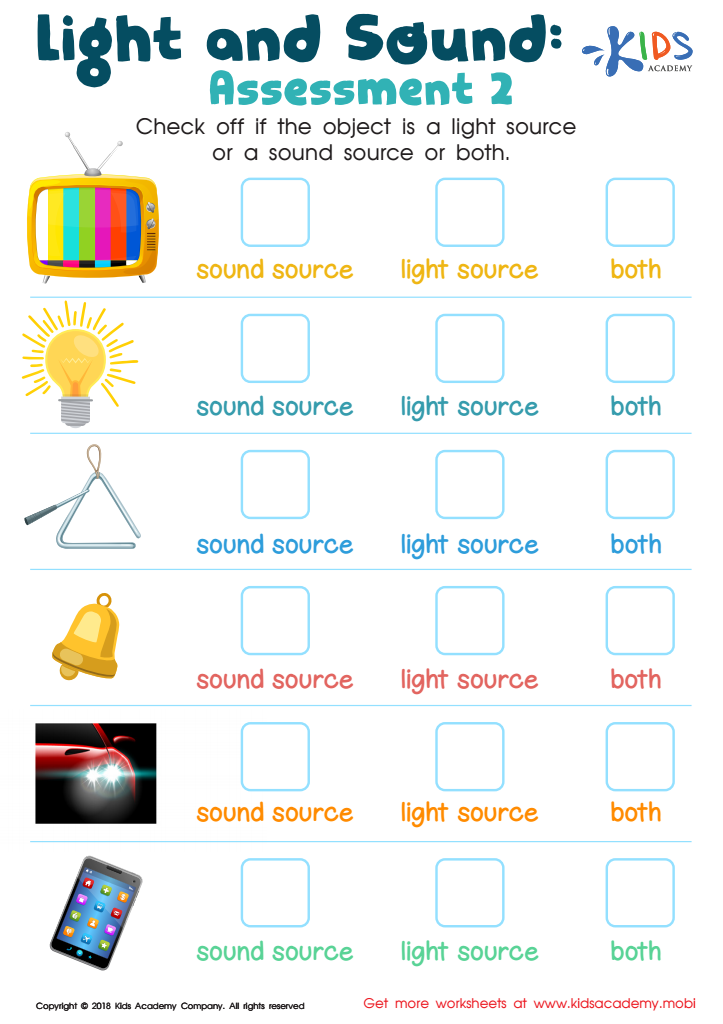
Light and Sound: Assessment 2 Worksheet
 Assign to My Students
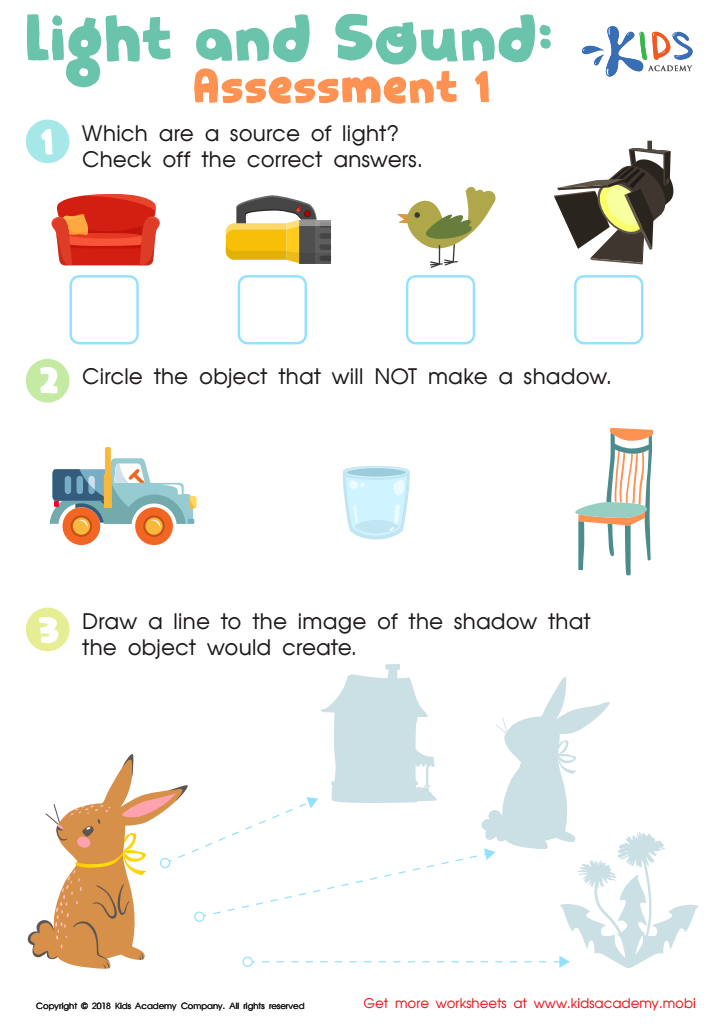
Light and Sound: Assessment 1 Worksheet
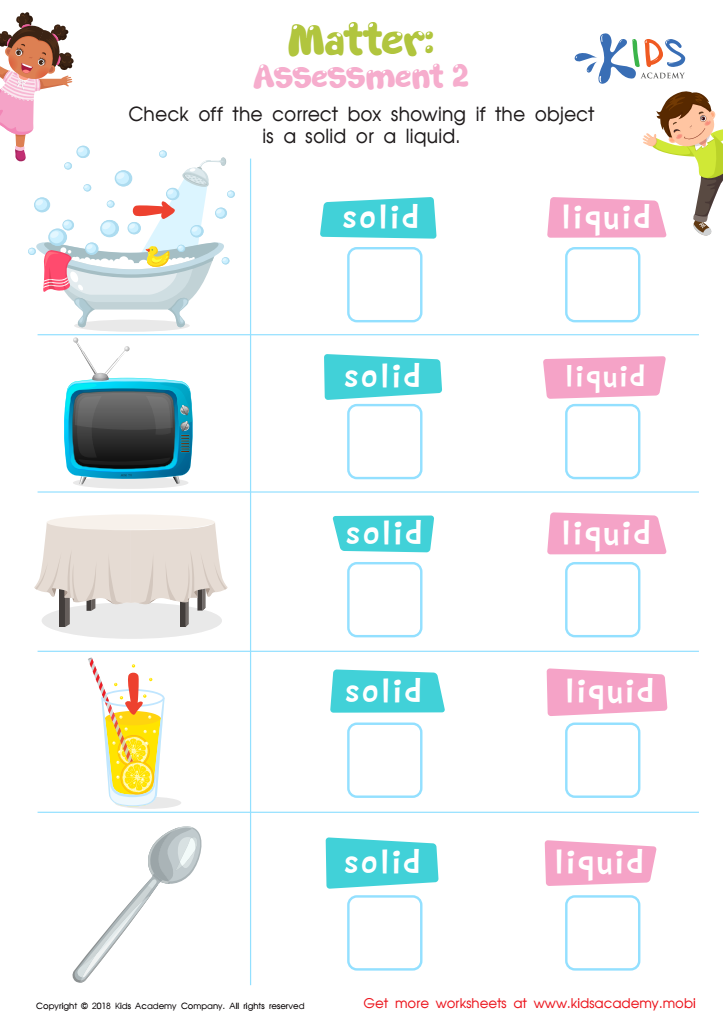
Matter: Assessment 2 Worksheet
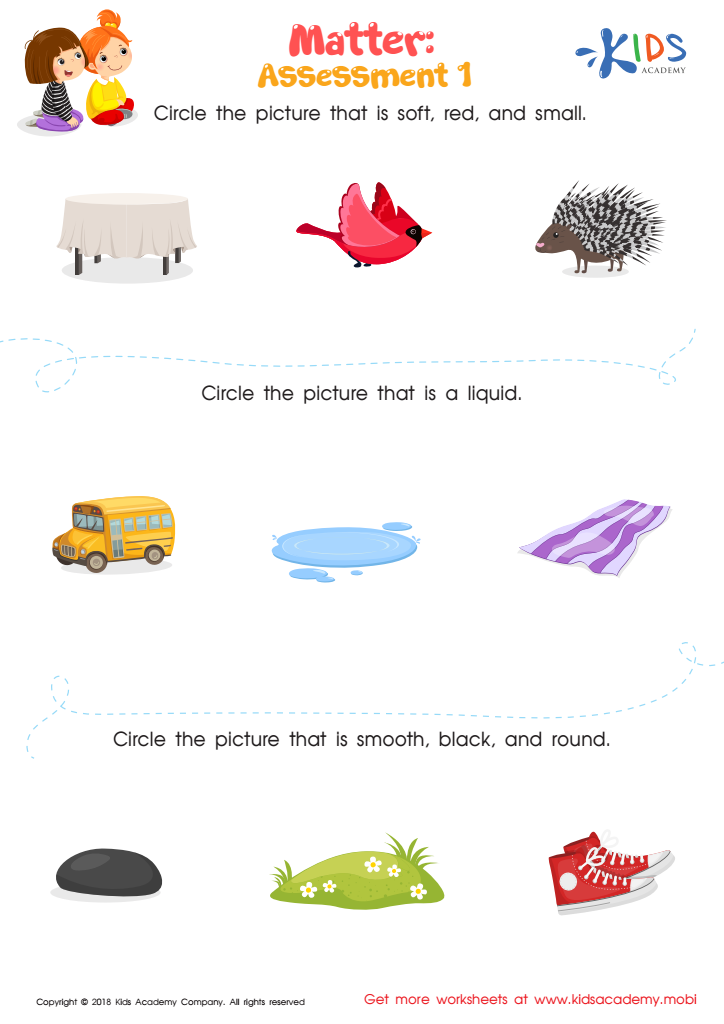
Matter: Assessment 1 Worksheet







Physical Science worksheets activities serve as a pivotal tool in the educational journey of students, offering a myriad of benefits that extend beyond the conventional classroom teaching methods. These worksheets are tailored to facilitate a deeper understanding of concepts related to physics and chemistry, making them indispensable for learners at various levels.
One of the primary reasons Physical Science worksheets activities are so useful is that they provide a hands-on learning experience. Through engaging with these activities, students can see theories and principles come to life, allowing for a more tangible grasp of abstract concepts. This practical approach to learning not only enhances students’ comprehension but also retains their interest and curiosity in the subject.
Moreover, Physical Science worksheets activities cater to different learning styles. Whether a student is a visual, auditory, or kinesthetic learner, worksheets can be designed to accommodate diverse needs, ensuring that every student has the opportunity to excel. This inclusivity fosters a positive learning environment where students feel supported and motivated to explore the wonders of physical science.
Another significant advantage is the reinforcement of knowledge. Physical Science worksheets activities often involve problem-solving and critical thinking exercises that require students to apply what they have learned. This repetition and application help solidify their understanding and retention of key concepts, making it easier for them to recall information during exams or in practical applications.
Additionally, these worksheets encourage independent learning. Students can work through problems at their own pace, developing self-reliance and confidence in their abilities. This autonomy is crucial in preparing them for higher education and future careers in science and technology.
In conclusion, Physical Science worksheets activities are a valuable resource in the educational toolkit. They enhance engagement, accommodate diverse learning styles, reinforce knowledge, and promote independent learning. By incorporating these activities into the curriculum, educators can provide a more comprehensive and effective science education that prepares students for success in their academic and professional futures.








