Vowels worksheets activities for 7-Year-Olds
3 filtered results
-
From - To
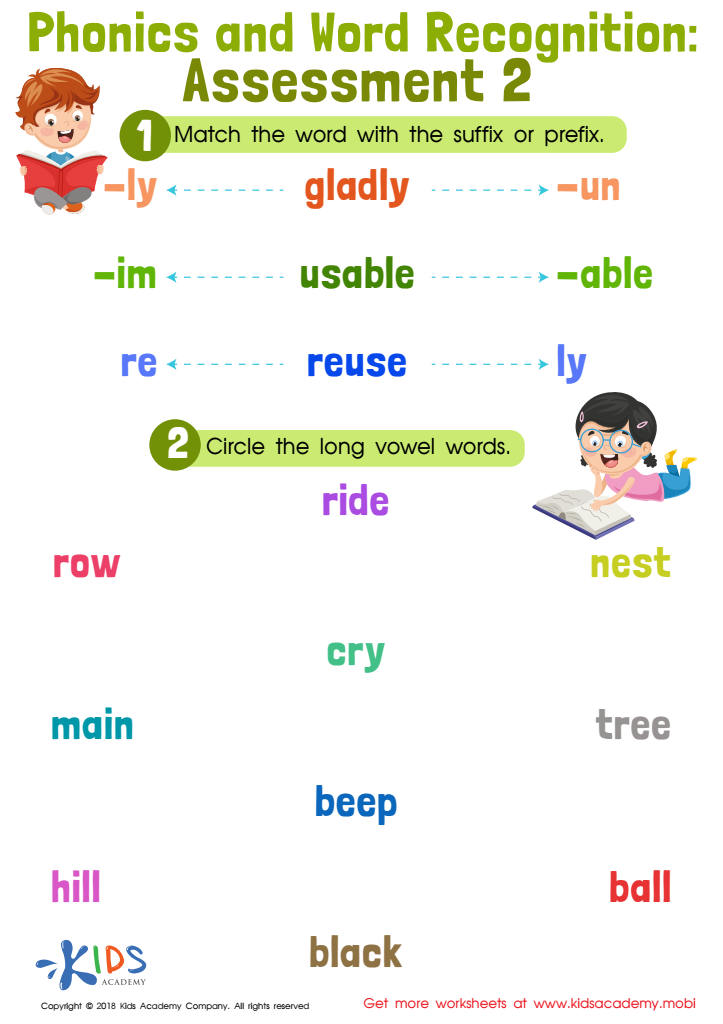
Phonics and Word Recognition: Assessment 2
 Assign to My Students
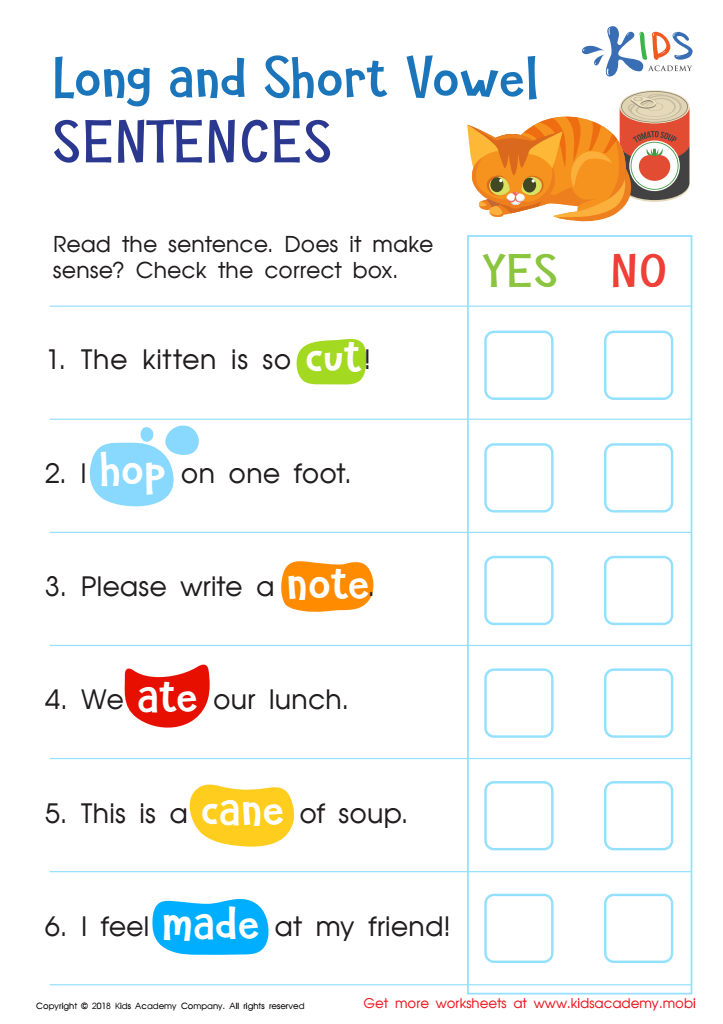
Long and Short Vowel Sentences: Assessment Worksheet
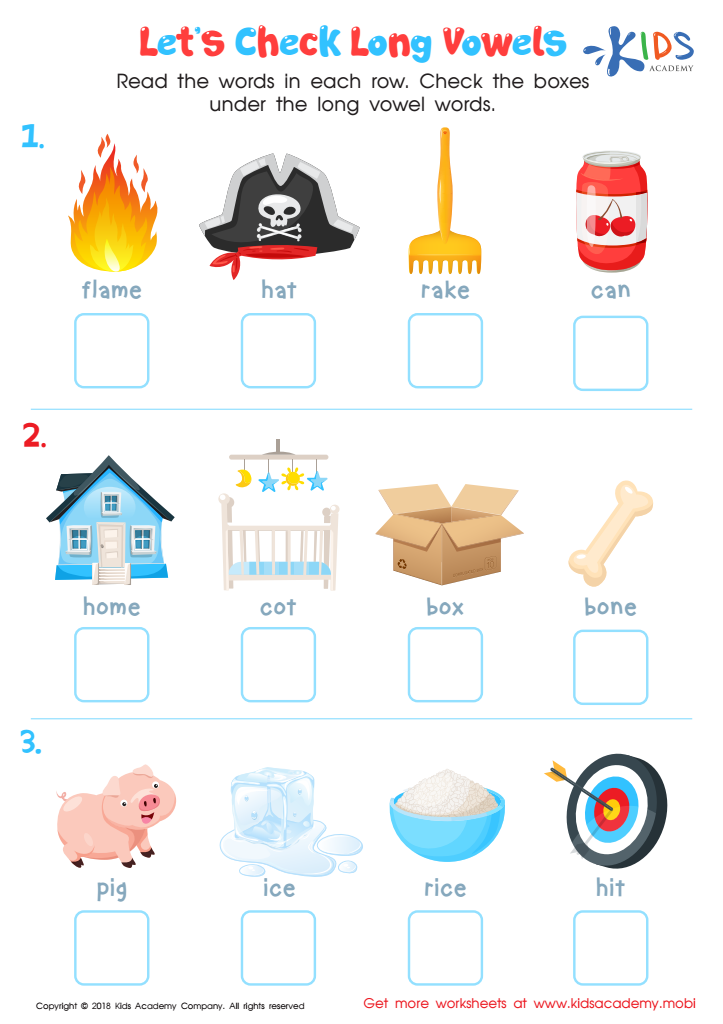
Let's Check Long Vowels: Assessment Worksheet







Vowels worksheets activities are an essential component of early literacy education, serving as a valuable tool for young learners to master the sounds and uses of vowels in the English language. Understanding vowels is crucial because they are the building blocks of words, enabling children to decode and construct words effectively. Here’s why vowels worksheets activities are particularly useful:
1. Foundation for Reading and Pronunciation: Vowels are at the heart of every syllable, making their understanding fundamental for reading and pronunciation. Vowels worksheets activities help children identify vowel sounds in different words, improving their ability to read fluently and pronounce words correctly.
2. Enhances Phonemic Awareness: Phonemic awareness is the ability to hear, identify, and manipulate the individual sounds in words. Through engaging with vowels worksheets activities, children become more adept at distinguishing the subtle differences between vowel sounds, a critical skill for spelling and reading.
3. Builds Spelling Skills: A strong grasp of vowel sounds is essential for accurate spelling. Vowels can represent multiple sounds, and their usage can be complex. Worksheets dedicated to vowels help demystify these complexities, allowing children to practice and reinforce their spelling skills in a focused manner.
4. Supports Reading Comprehension: As children become more comfortable with vowels and their sounds, their reading speed and fluency improve, which in turn enhances their comprehension. When learners are not struggling to decode each word, they can focus more on understanding the text as a whole.
5. Fun and Engaging Learning: Vowels worksheets activities can be designed in a variety of fun and engaging ways, such as matching exercises, fill-in-the-blanks, and word hunts. These activities not only keep children interested but also reinforce their learning through repetition and practice.
In conclusion, vowels worksheets activities are a vital tool in the literacy toolbox, offering young learners a strong foundation in the basics of reading and writing. By focusing on the sounds and roles of vowels, these activities prepare children for a lifetime of literacy and communication skills.








