
Reading Non-Fiction worksheets activities for Ages 8-9
2 filtered results
Difficulty Level
Grade
Age
-
From - To
Subject
Activity
Standards
Elevate your students' comprehension skills with our curated collection of Reading Non-Fiction worksheets activities. Designed to engage and enrich learners of all levels, these activities provide a comprehensive approach to understanding non-fiction texts. Students will explore diverse themes and genres, enhancing their critical thinking, fact-checking, and analytical skills. Our worksheets are meticulously crafted to encourage a deeper dive into the factual content, promoting a better grasp of real-world issues and information. Perfect for classroom use or homeschooling, these activities are your go-to resource for fostering a love for non-fiction reading and learning. Dive into our Reading Non-Fiction worksheets activities today and unlock the power of informed reading!
Favorites
With answer key
Interactive
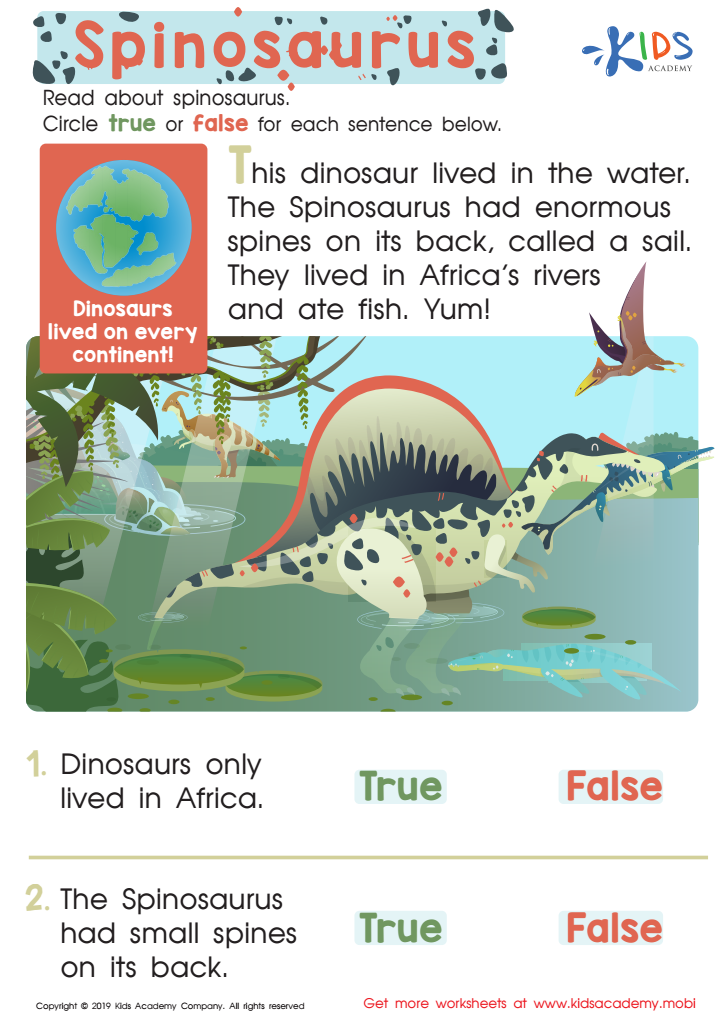
Spinosaurus Assessment Worksheet
Take your child on a journey to discover the Spinosaurus! This worksheet combines an engaging nonfiction passage about this incredible dinosaur with comprehension questions. Invite kids to read the text before deciding if the statements are true or false. Then, have them circle the right answers to complete the activity.
 Assign to My Students
Spinosaurus Assessment Worksheet
Worksheet
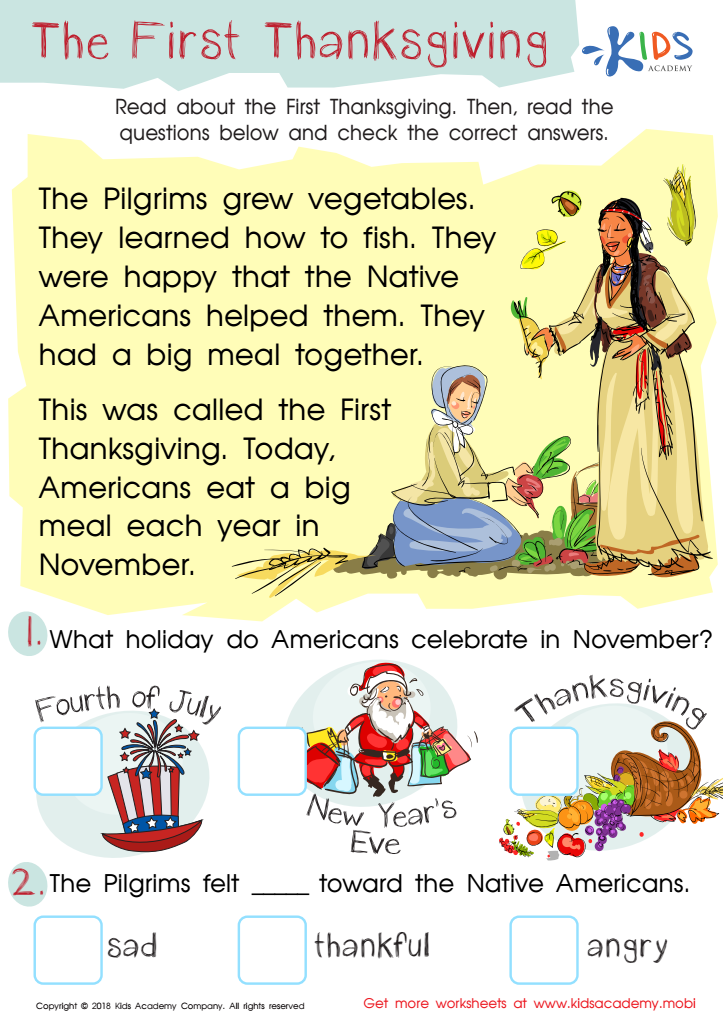
Assessment: First Thanksgiving Worksheet
When the Pilgrims arrived in America in 1620, they met the Native Americans and formed a pact to live in harmony. The Native Americans taught the Pilgrims how to survive in the new land, which helped them celebrate the First Thanksgiving. Read this text to your children and help them answer the questions below.
Assessment: First Thanksgiving Worksheet
Worksheet
Join Kids Academy for Free
Who is primarily going to use this learning content?







Reading Non-Fiction worksheets activities stand out as an invaluable tool in the educational landscape for a multitude of reasons. These carefully crafted exercises are designed not only to enhance comprehension skills but also to cultivate a deep appreciation for the wealth of knowledge that non-fiction texts offer. Engaging in Reading Non-Fiction worksheets activities equips students with the ability to dissect complex information, understand varied perspectives, and critically analyze the content they encounter in their daily lives.
Firstly, Reading Non-Fiction worksheets activities foster critical thinking. In an era where information is abundant yet varied in accuracy, it's crucial for students to develop the skill to distinguish between fact and opinion, understand cause and effect relationships, and evaluate the credibility of sources. These worksheets provide a structured way for students to practice these skills, thereby preparing them for informed decision-making in their personal and professional lives.
Furthermore, these activities enhance reading comprehension. Non-fiction texts come in diverse formats — from scientific journals and historical documents to biographies and news articles. By working through Reading Non-Fiction worksheets, students become proficient in navigating these different formats, understanding their structures, and extracting key information efficiently. This versatility is invaluable in both academic settings and the real world, where reading and understanding complex texts is a daily necessity.
Additionally, Reading Non-Fiction worksheets activities are instrumental in expanding vocabulary and general knowledge. As students delve into topics ranging from science and technology to culture and society, they encounter new words and concepts, building a robust vocabulary and a well-rounded knowledge base. This exposure not only aids in comprehension but also sparks curiosity, encouraging lifelong learning.
In conclusion, Reading Non-Fiction worksheets activities are an essential component of education. They equip students with critical thinking skills, enhance reading comprehension, and enrich vocabulary and knowledge. In doing so, they lay a solid foundation for academic success and prepare students to navigate the complexities of the modern world with confidence and curiosity.








