Easy Sorting worksheets activities for Ages 3-4
2 filtered results
-
From - To
Introducing our "Easy Sorting for Ages 3-4" worksheets, designed specifically to spark the joy of learning in young minds. These engaging worksheets are expertly crafted to introduce toddlers to the fundamental concept of sorting in the most enjoyable and interactive way. Tailored for little learners, this collection helps develop critical thinking and categorization skills, laying a strong foundation for more complex concepts ahead. With vibrant, age-appropriate illustrations and simple instructions, each worksheet promises a delightful learning experience, ensuring that your child masters sorting with ease and confidence. Unlock your child's potential with our "Easy Sorting for Ages 3-4" worksheets today!
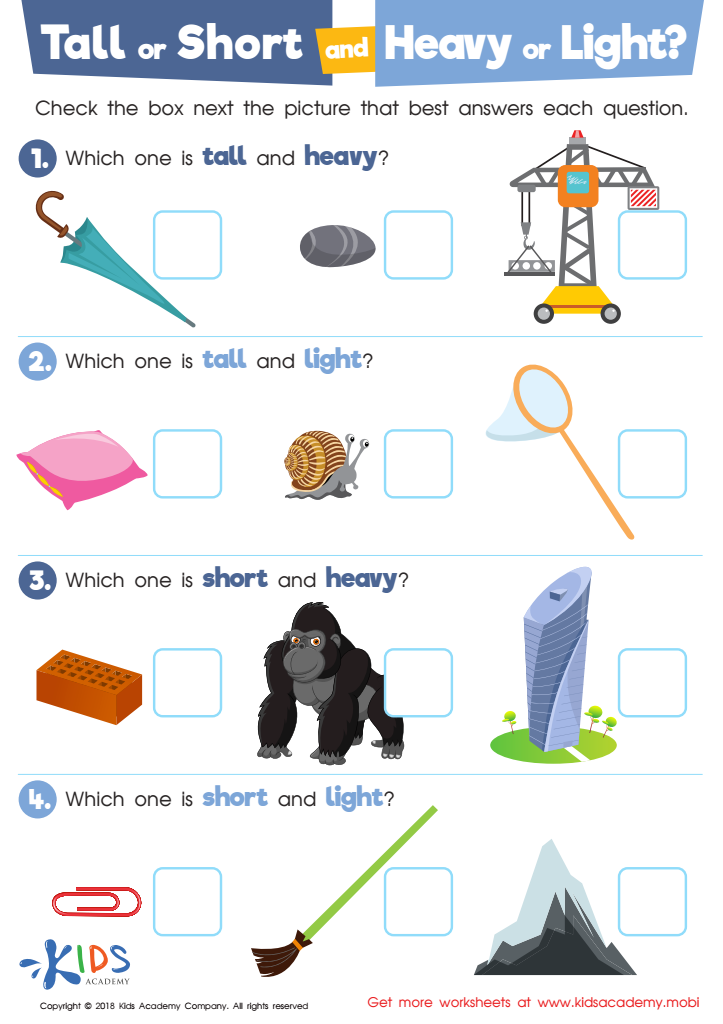
Tall or Short and Heavy or Light? Worksheet
 Assign to My Students
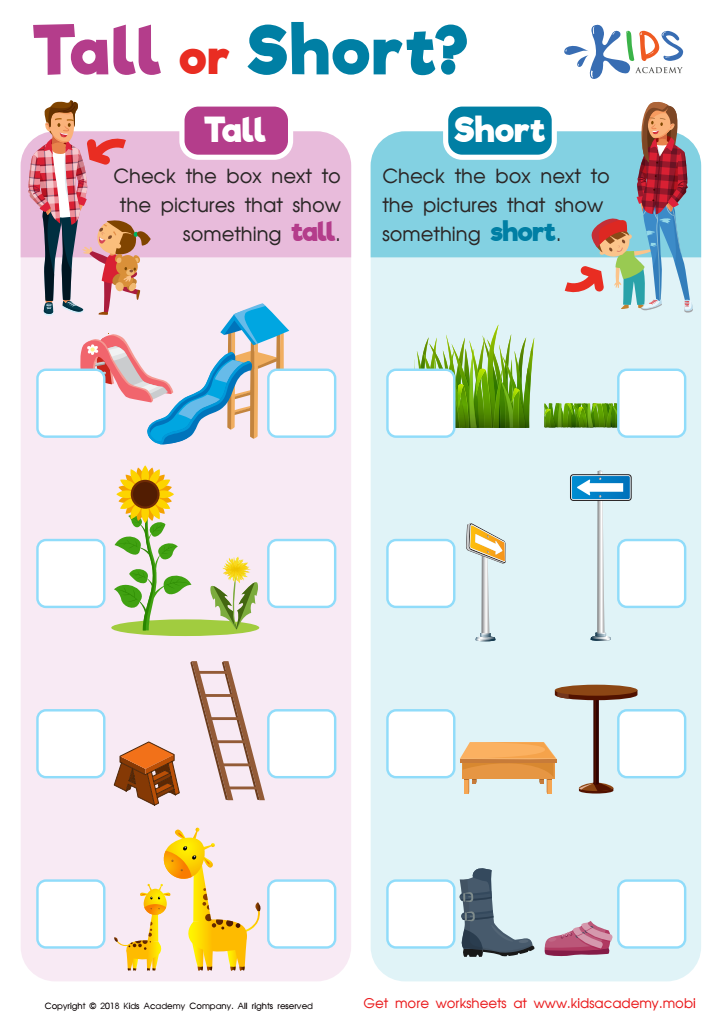
Tall or Short? Worksheet







Easy Sorting for Ages 3-4 worksheets are an essential tool in early childhood education, providing numerous benefits that support young children's developmental milestones. These worksheets are specifically designed to be engaging and accessible for young learners, ensuring that children in this age group can easily understand and enjoy the sorting activities.
One of the primary reasons why these worksheets are so valuable is that they help children develop critical thinking and problem-solving skills. By sorting objects or images based on different criteria such as color, shape, or size, children learn to identify patterns and make connections, laying the groundwork for mathematical reasoning and logical thinking.
Moreover, Easy Sorting for Ages 3-4 worksheets are excellent for enhancing fine motor skills. As children manipulate small items or use writing instruments to categorize objects, they refine their hand-eye coordination and dexterity, which are crucial for writing and other academic tasks.
Additionally, these worksheets can significantly boost children's language development. As they sort and classify, they learn new vocabulary and concepts related to attributes and relationships, enriching their communication skills.
In summary, Easy Sorting for Ages 3-4 worksheets are a fun, interactive way to foster early developmental skills. They not only prepare children for more complex concepts in mathematics and logic but also support their overall cognitive, motor, and linguistic growth.








