
Normal Reading worksheets activities for Ages 3-4
10 filtered results
Difficulty Level
Grade
Age
-
From - To
Subject
Activity
Standards
Discover the joy of reading with our meticulously designed Normal Reading worksheets activities! Created to enhance your child's reading skills, our collection is perfect for young learners eager to dive into the world of words. These worksheets are crafted to improve comprehension, vocabulary, and fluency through engaging and interactive tasks. Tailored to fit a wide range of reading levels, our Normal Reading worksheets activities ensure a rewarding experience that boosts confidence and fosters a lifelong love for reading. Dive into our fun-filled worksheets today and watch your child's reading abilities soar to new heights!
Favorites
With answer key
Interactive
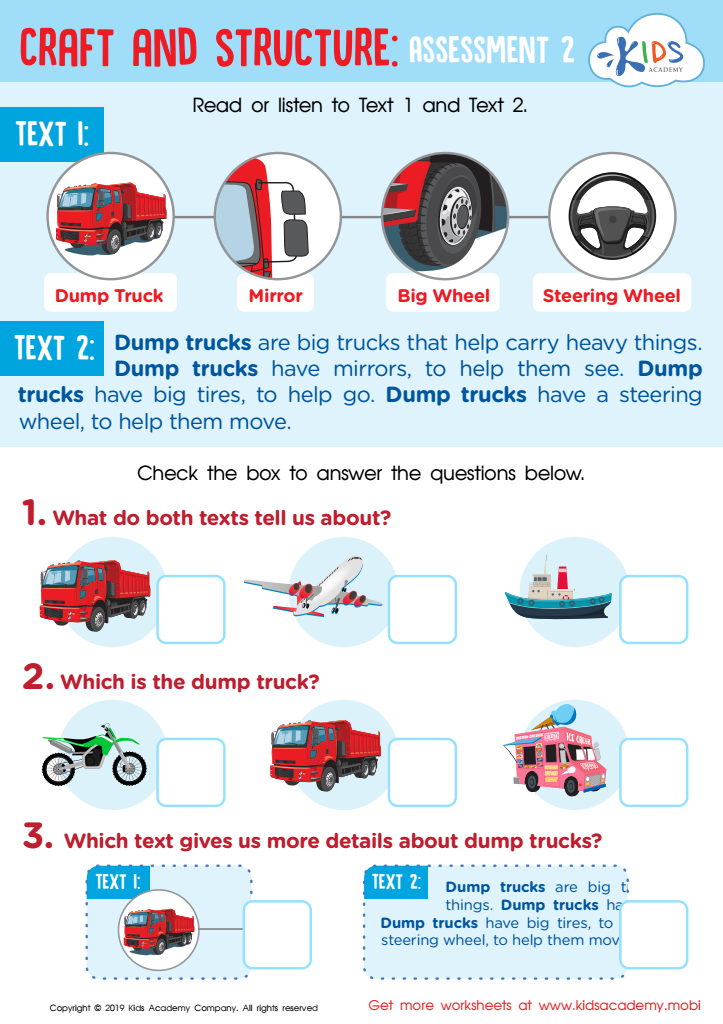
Craft and Structure: Assessment 2 Worksheet
Good readers need to analyze text features and use picture clues to understand. This assessment worksheet gives your child info in different formats and they can show understanding using answer options to check the correct answers. (80 words)
 Assign to My Students
Craft and Structure: Assessment 2 Worksheet
Worksheet
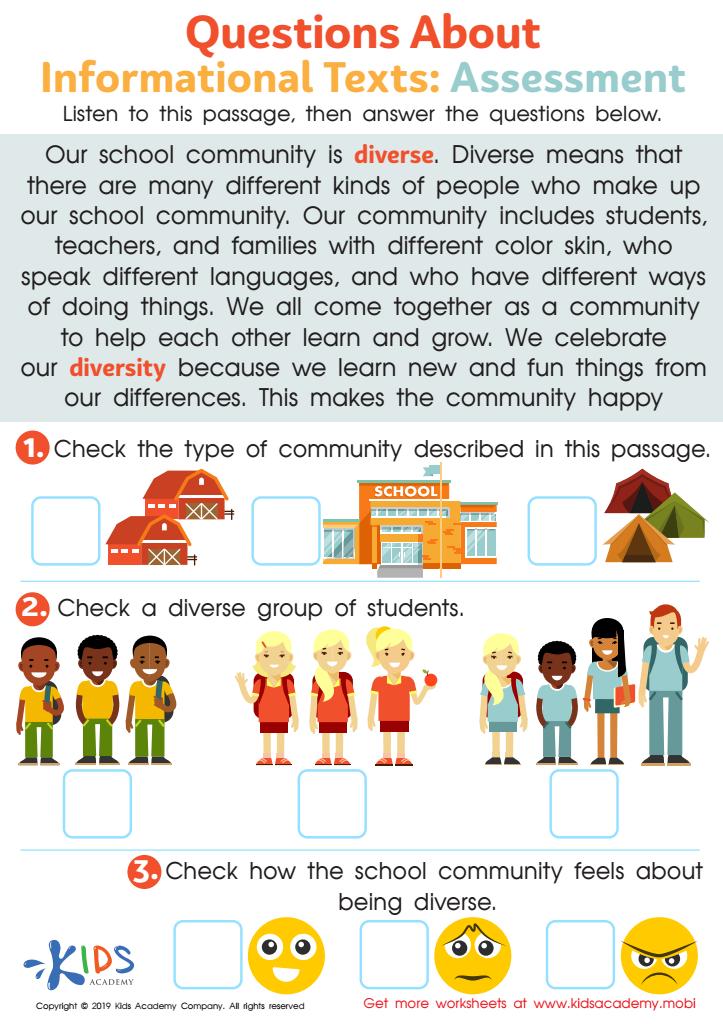
Questions About Informational Texts: Assessment 1 Worksheet
Ask your students: What comes to mind when we talk about a community? What different habits do people practice? What do fellow students do that seems strange? Read this passage aloud to your kindergartners and make sure they understand it. Then, answer the questions at the bottom of the page. (80 words)
Questions About Informational Texts: Assessment 1 Worksheet
Worksheet
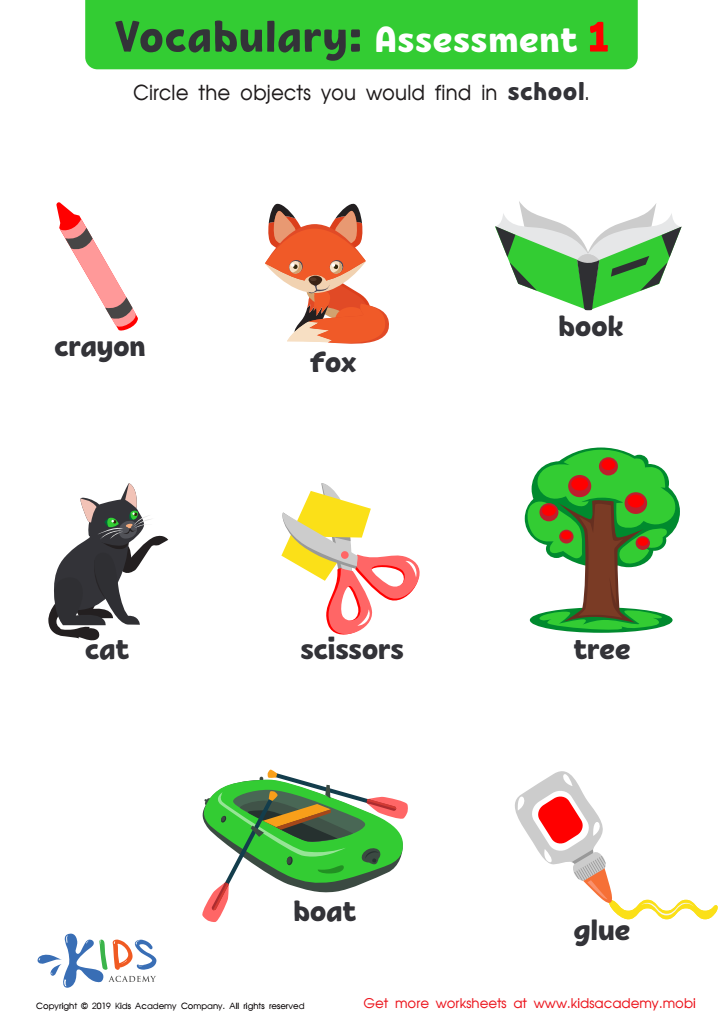
Vocabulary: Assessment 1 Worksheet
Want to check your child's vocabulary? This worksheet has kids identify objects from school through picture clues. It reinforces reading and fine motor skills, while providing an assessment of their reading growth and needs.
Vocabulary: Assessment 1 Worksheet
Worksheet
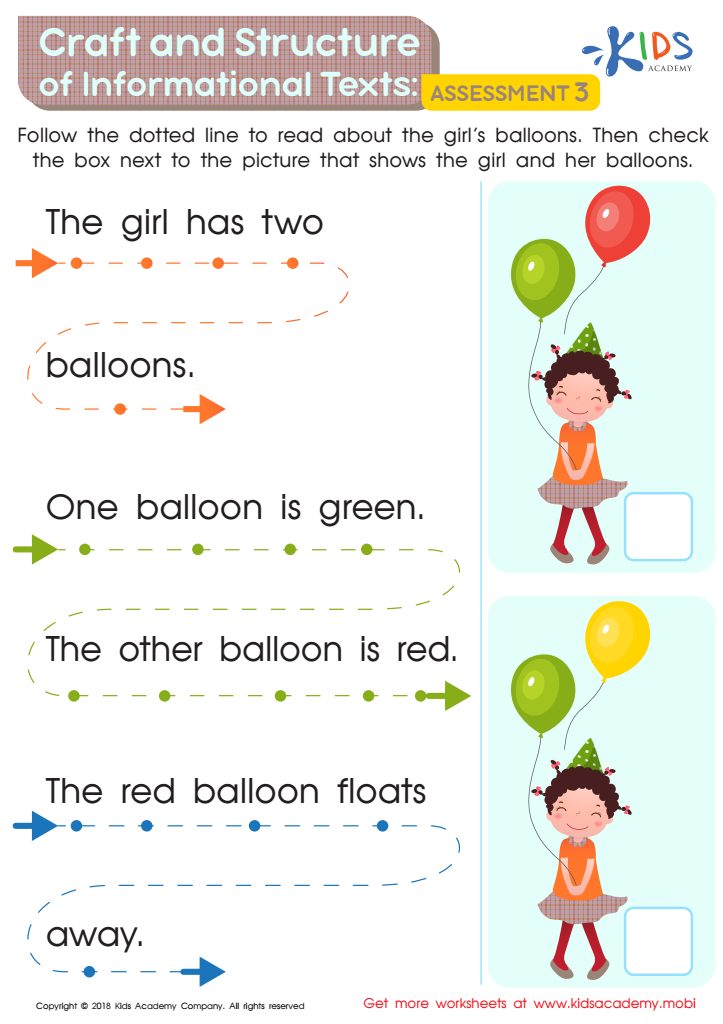
Craft and Structure of Informational Texts: Assessment 3 Worksheet
Test your beginning reader's understanding of left-to-right directionality and use of details from informational texts with this fun worksheet. Follow the traceable paths to find the right picture for each sentence. This will help your child gain confidence and be successful as a reader.
Craft and Structure of Informational Texts: Assessment 3 Worksheet
Worksheet
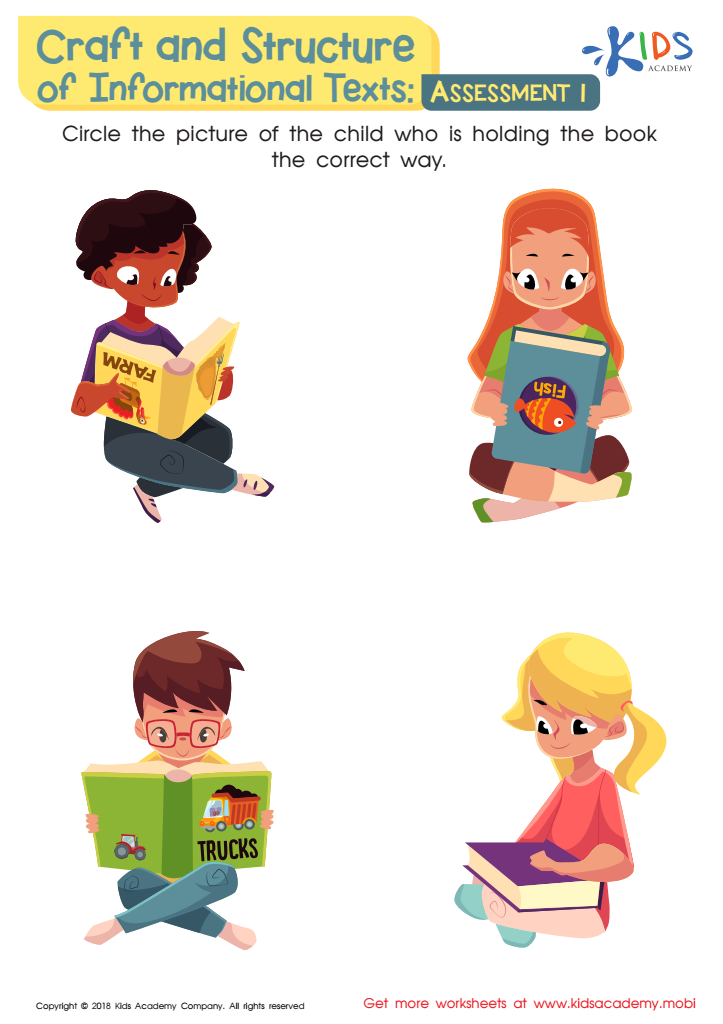
Craft and Structure of Informational Texts: Assessment 1 Worksheet
Young children need to know how to hold books correctly when they start reading. This assessment worksheet helps them show they know what to do. They'll look at the pictures and circle the child who is holding the book correctly. It's a great way to tell they are well on their way to becoming lifetime readers!
Craft and Structure of Informational Texts: Assessment 1 Worksheet
Worksheet
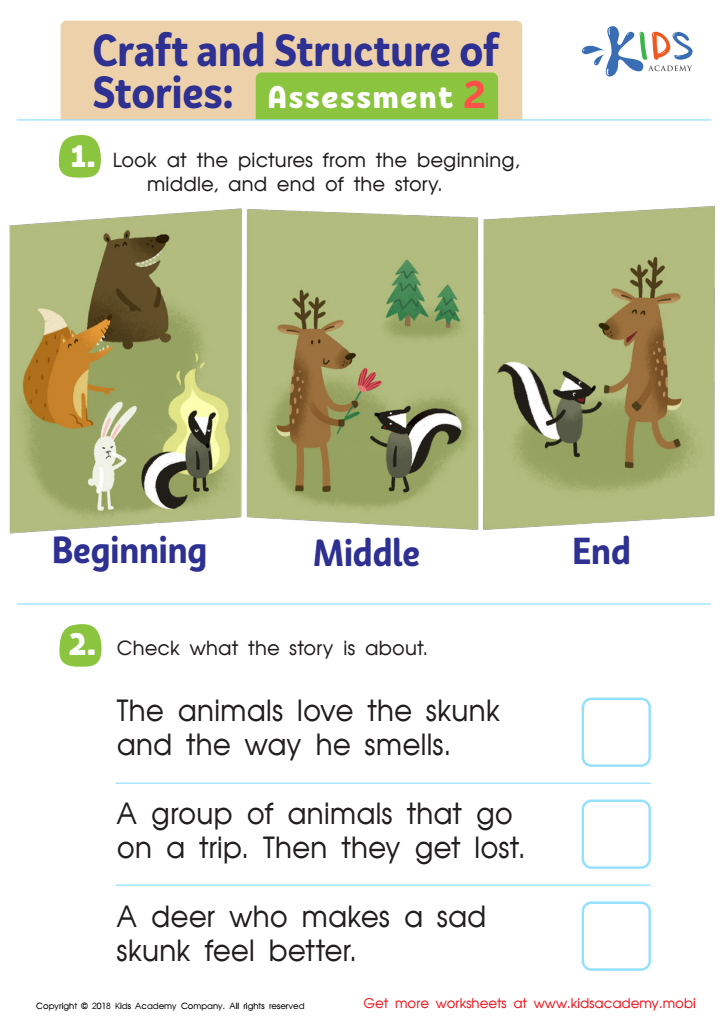
Craft and Structure of Stories: Assessment 2 Worksheet
Help your child assess their story sequencing and reading comprehension skills using this cute worksheet! It encourages them to look at the three pictures on the page, each representing a scene from the beginning, middle and end. Ask them what the story is about, then let them check the box next to the correct answer. This is a great way to ensure they understand the main events of a story.
Craft and Structure of Stories: Assessment 2 Worksheet
Worksheet
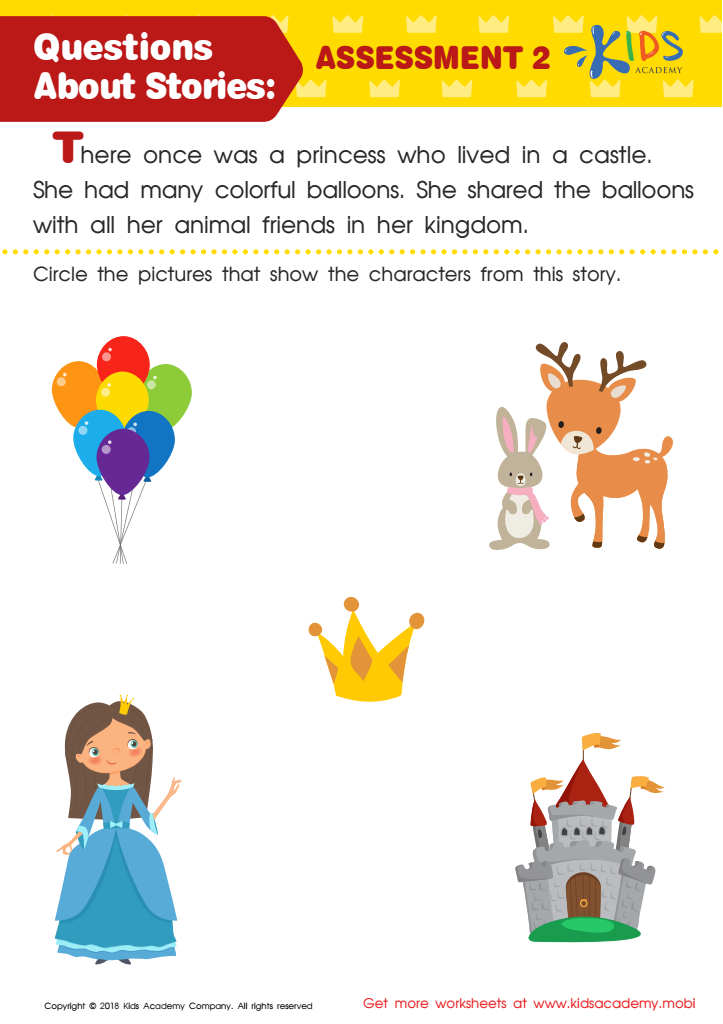
Questions About Stories: Assessment 2 Worksheet
Talk to your child about what a princess is and what activities they associate with that word. Then, read the story to them and help them identify characters in the pictures. Look out for details and ask them questions to ensure they understand.
Questions About Stories: Assessment 2 Worksheet
Worksheet
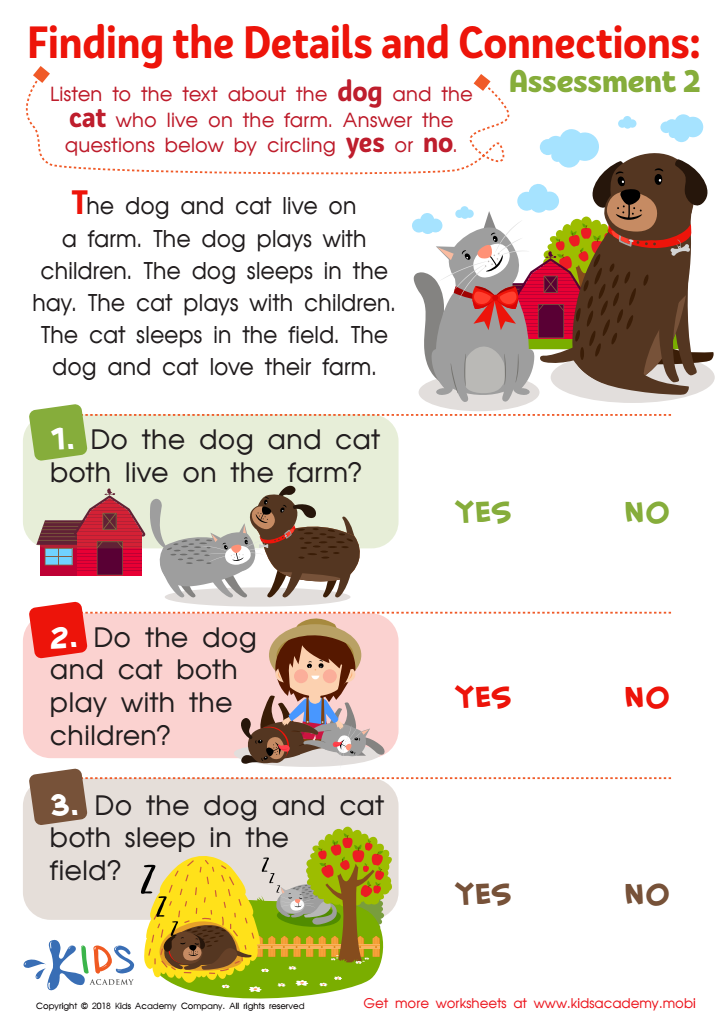
Finding the Details and Connections: Assessment 2 Worksheet
Does your child love animals? If you have pets, they'll relate to the text in this worksheet. Read it aloud to them and help them answer the simple questions by circling yes or no. The story is about a dog and cat living on a farm. Let your child read it aloud to you if they can.
Finding the Details and Connections: Assessment 2 Worksheet
Worksheet
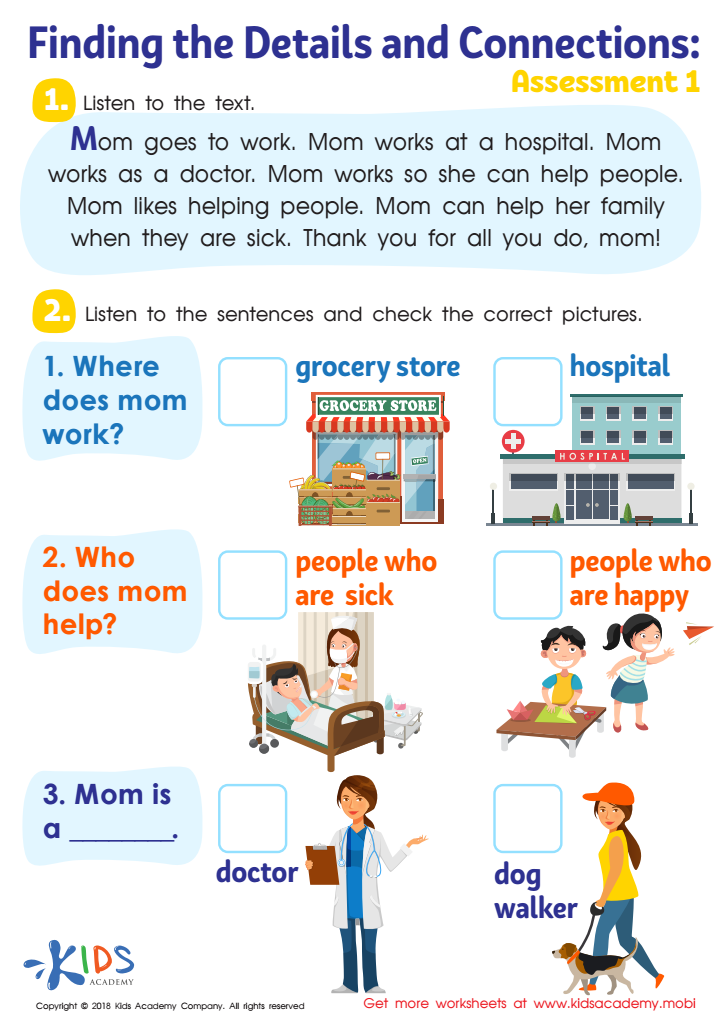
Finding the Details and Connections: Assessment 1 Worksheet
Ask your students what their parents do for a job. Do they know what profession their mom is in and where she works? Professionals have places they go to do their job. In this task, Mom goes to a hospital and is a doctor. Read the text and help them check the right pictures.
Finding the Details and Connections: Assessment 1 Worksheet
Worksheet
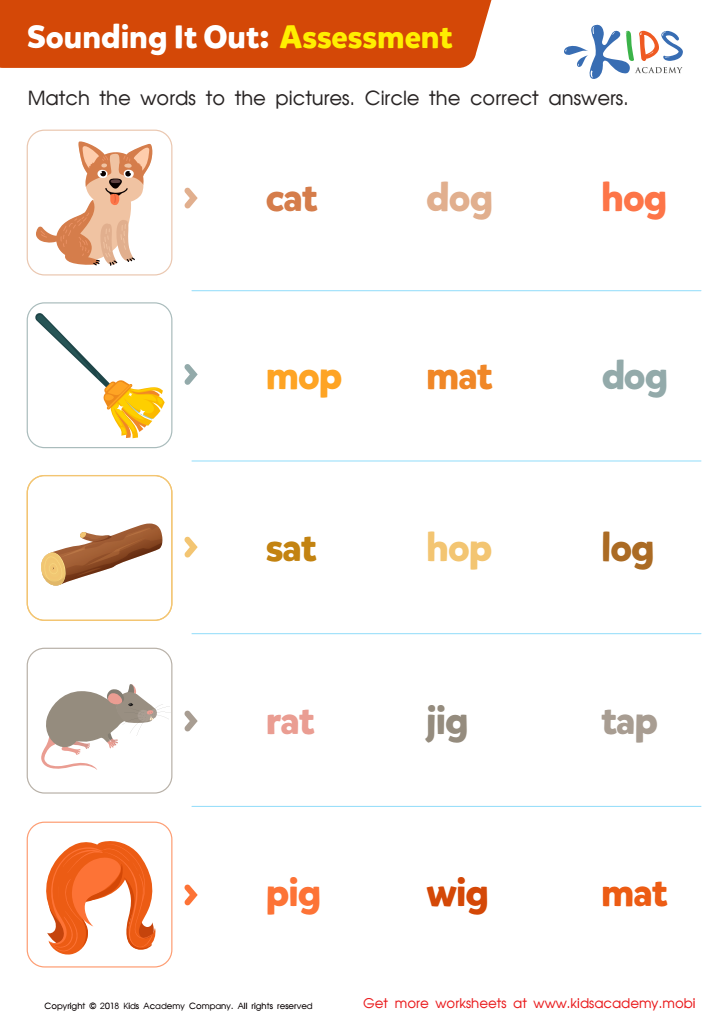
Sounding it Out: Assessment Worksheet
Give your little learner a fun challenge with this downloadable worksheet! With pictures to guide them, have them name the images and then sound out the words in the same row. Be careful though, as they all contain the same amount of similarly sounding letters. Once the correct word has been found, have them circle it!
Sounding it Out: Assessment Worksheet
Worksheet
Join Kids Academy for Free
Who is primarily going to use this learning content?







Normal Reading worksheets activities are an invaluable tool in the journey of learning and mastering reading skills. These activities, designed with the goal of enhancing comprehension, fluency, and vocabulary, serve as a foundational element in both educational settings and at-home learning environments. The structured nature of Normal Reading worksheets activities allows for a step-by-step approach to reading, making the learning process more manageable and less intimidating for learners.
One of the primary benefits of these activities is that they cater to a wide range of reading levels and interests. This versatility ensures that every learner, regardless of their current reading ability, can engage with material that is appropriately challenging and engaging. By gradually increasing the complexity of the texts and the activities, learners can continuously build upon their skills, fostering a sense of achievement and motivation.
Furthermore, Normal Reading worksheets activities are an excellent way for educators and parents to monitor progress. Through consistent use, it becomes easier to identify areas where a learner may be excelling or struggling, allowing for targeted support and intervention. This diagnostic aspect is crucial for addressing difficulties early on and adapting teaching strategies to meet the unique needs of each learner.
Another significant advantage is the inclusion of diverse types of questions and tasks within these worksheets. From multiple-choice questions to open-ended responses and vocabulary exercises, these activities encompass a wide variety of skills. This not only ensures a comprehensive approach to reading but also helps in developing critical thinking and analytical skills.
In conclusion, Normal Reading worksheets activities play a pivotal role in the development of reading skills. Their structured, versatile, and comprehensive nature makes them an essential tool in the educational toolkit, providing learners with the support and challenges they need to become confident and proficient readers.








