Normal Connect the Dots worksheets activities for Ages 3-6
4 filtered results
-
From - To
Discover our engaging Normal Connect the Dots worksheets designed for children ages 3-6! These interactive activities promote fine motor skills, hand-eye coordination, and number recognition while sparking creativity and storytelling. Kids will delight in connecting the dots to create fun and colorful images. Each worksheet varies in complexity, making them perfect for toddlers and preschoolers alike. Encourage early math skills as children practice counting from 1 to 10 or beyond while having fun! Explore our collection and watch your little ones develop their creativity and critical thinking abilities through enjoyable dot-to-dot challenges. Start their learning adventure today!
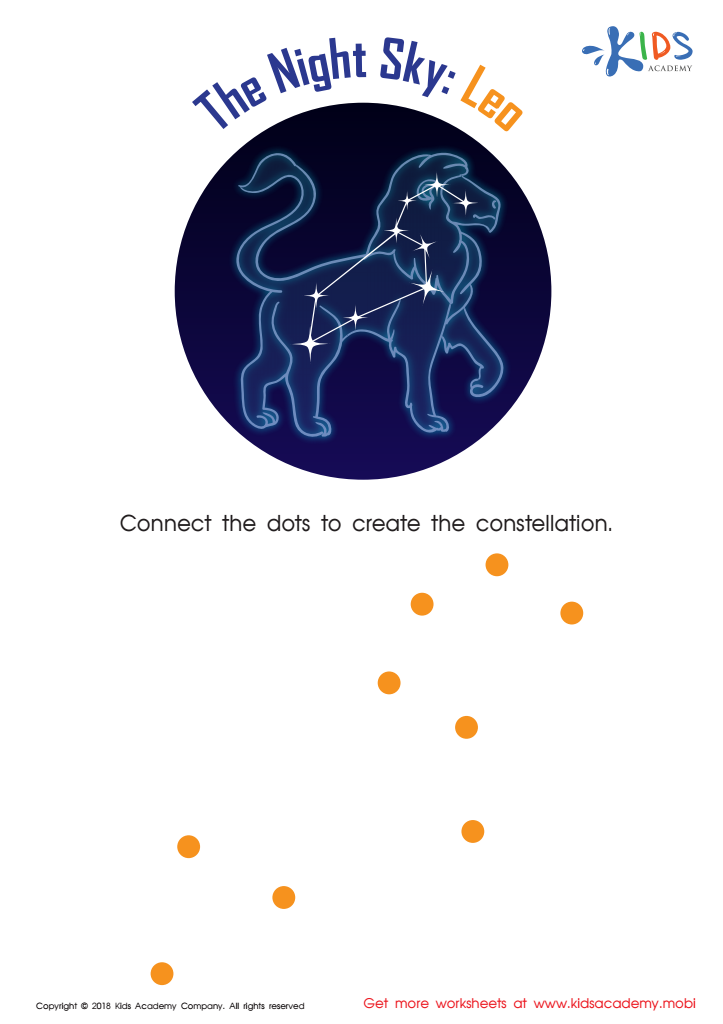
The Night Sky: Leo Worksheet
 Assign to My Students
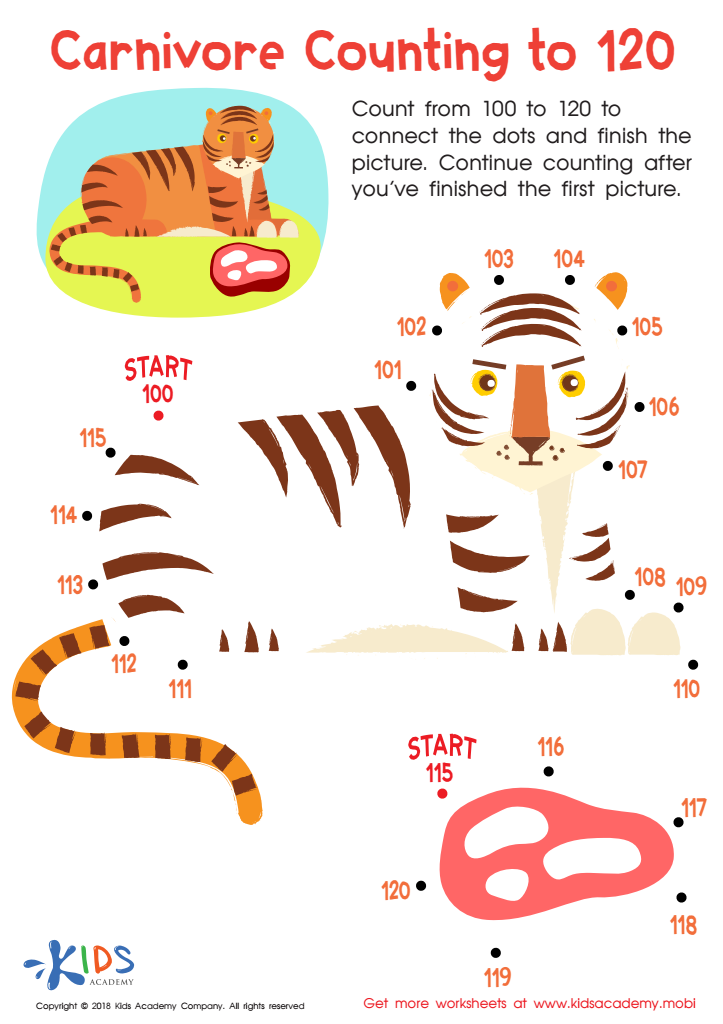
Carnivore Counting to 120 Worksheet
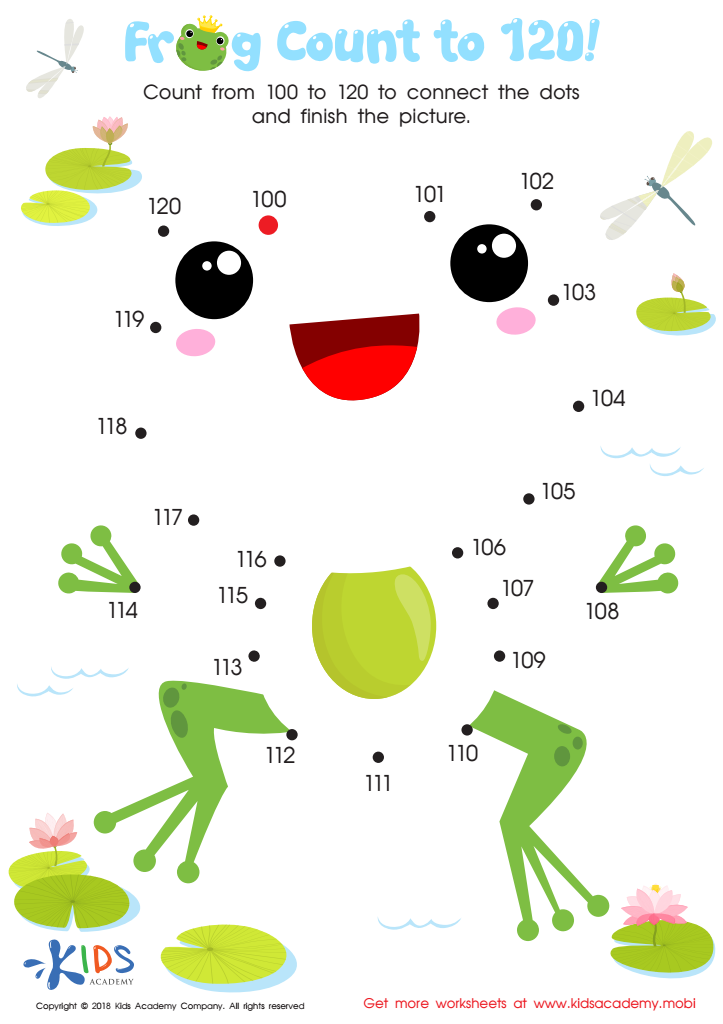
Frog Count to 120 Worksheet
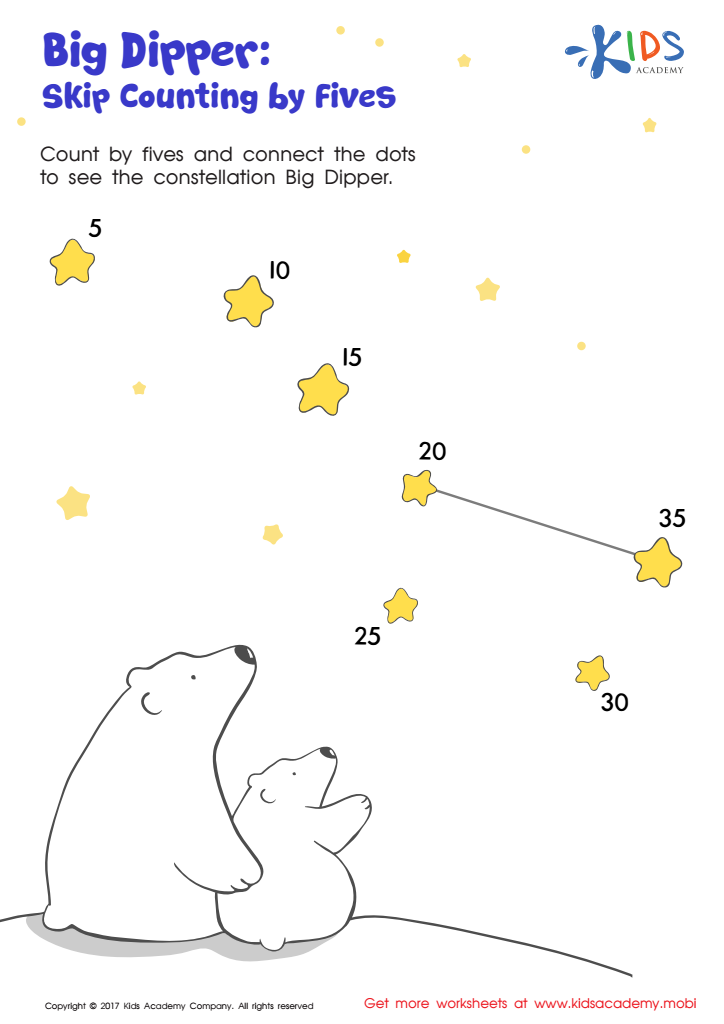







Normal Connect the Dots activities are invaluable for children aged 3-6, serving as a fun and educational tool that promotes critical developmental skills. Firstly, these activities enhance fine motor skills, which are essential for tasks such as writing and grasping objects. Children practice hand-eye coordination as they connect dots, improving their dexterity through engaging play.
Additionally, Connect the Dots activities foster cognitive development. As children figure out the sequence of dots, they develop problem-solving skills and learn to recognize patterns. This sequential thinking lays a foundation for more complex mathematical concepts later on.
These activities also encourage creativity, as children complete pictures that may inspire storytelling or imaginative play. This boosts their ability to express themselves and think outside the box.
Moreover, incorporating Connect the Dots activities into learning ensures that screen time is substituted with hands-on tasks, which is crucial for active engagement. For parents and teachers, these activities are a constructive way to spend quality time with children, support their learning journey, and create positive, memorable experiences.
In summary, normal Connect the Dots activities are a multifaceted tool that enriches fine motor skills, cognitive abilities, creativity, and social interaction among young learners.








