
Normal Alphabet worksheets activities for 3-Year-Olds
2 filtered results
Difficulty Level
Grade
Age
-
From - To
Subject
Activity
Standards
Discover the Joy of Learning with Our Normal Alphabet Worksheets Activities!
Dive into the exciting world of letters with our Normal Alphabet Worksheets Activities! Carefully crafted for young learners, these activities are designed to introduce the basics of the alphabet in a fun and engaging way. From tracing letters to identifying them in playful scenarios, our worksheets encourage early literacy skills while keeping the learning process enjoyable. Perfect for preschoolers and kindergarteners, each worksheet is a stepping stone towards mastering the alphabet. Embrace the journey of reading and writing with our Normal Alphabet Worksheets Activities, where every letter brings a new adventure!
Favorites
With answer key
Interactive
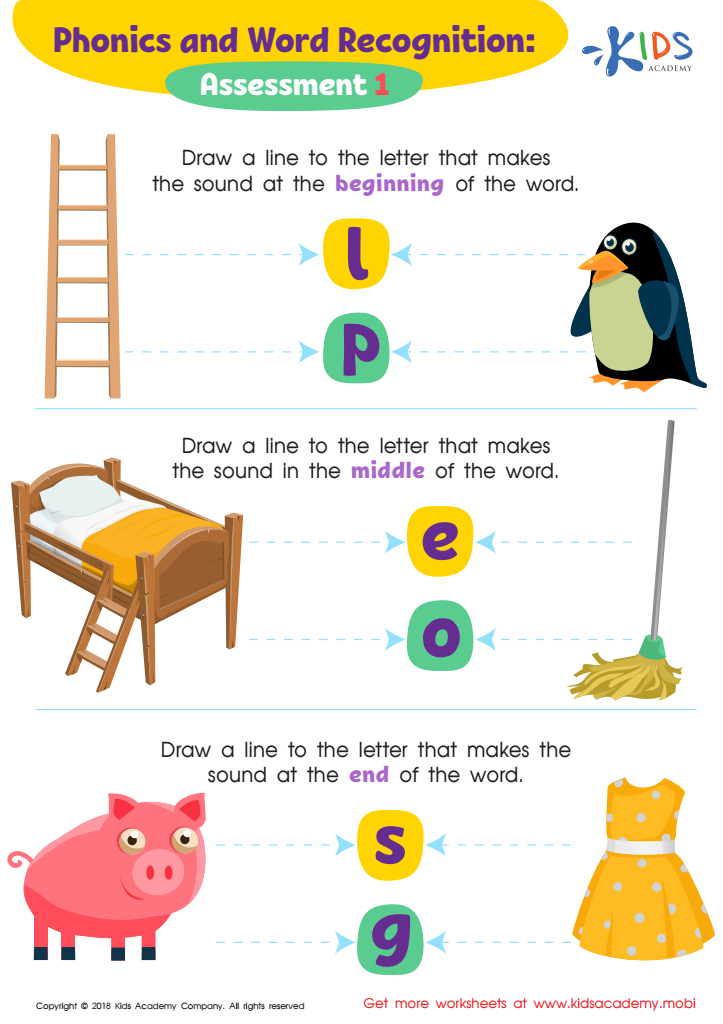
Phonics and Word Recognition: Assessment 1 ELA Worksheet
This fun worksheet tests your child's sound recognition skills for each part of a word. Ask your child to name each image and trace the line to match it with the corresponding letter. Listen for beginning sounds on 1st, middle sounds on 2nd, and ending sounds on 3rd. Encourage learning with this colorful and interactive activity!
 Assign to My Students
Phonics and Word Recognition: Assessment 1 ELA Worksheet
Worksheet
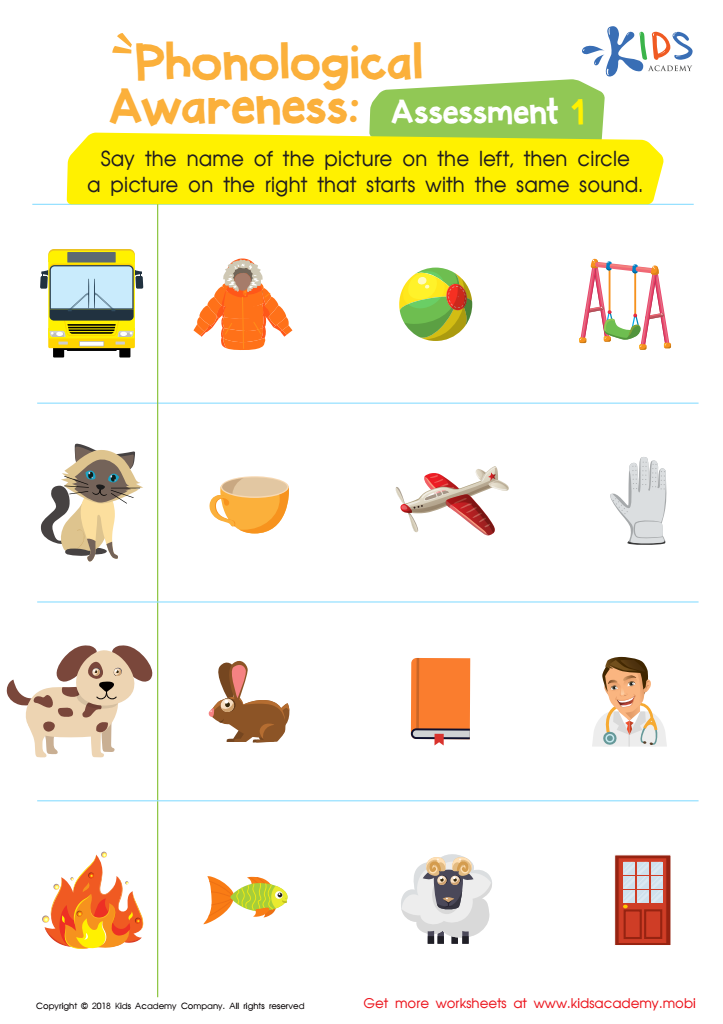
Phonological Awareness: Assessment 1 Worksheet
This worksheet helps kids build key phonics skills for pre-reading. They say each picture name aloud, focusing on the starting sound. Then, they match the sound with an image in the same row. Use as a checkpoint for kindergarten or grade 1 phonics readiness.
Phonological Awareness: Assessment 1 Worksheet
Worksheet
Join Kids Academy for Free
Who is primarily going to use this learning content?







Normal Alphabet worksheets activities stand as a cornerstone in the foundational stages of language learning for children. These structured exercises are meticulously designed to introduce young learners to the intricacies of the alphabet, paving the way for a lifelong journey of reading, writing, and effective communication. The utility of such activities extends beyond mere letter recognition, embedding deeper educational and developmental benefits.
Firstly, Normal Alphabet worksheets activities foster letter recognition, an essential skill that forms the bedrock of literacy. Through repetitive exposure and practice, children learn to distinguish between different letters, an ability that is crucial for decoding words and sentences as they progress in their reading journey. This visual discrimination aids in the development of reading fluency and comprehension, setting the stage for academic success.
Moreover, these activities enhance fine motor skills and handwriting. As children trace, write, and color letters on worksheets, they refine their pencil grip and control, which are vital for legible handwriting. The deliberate practice of forming letters correctly also instills a sense of discipline and attention to detail, qualities that are beneficial across various aspects of life.
Normal Alphabet worksheets activities also encourage phonemic awareness, the understanding that words are composed of individual sounds. By associating letters with their corresponding sounds, children develop the ability to segment and blend sounds, a foundational skill for reading and spelling. This phonemic awareness is a critical precursor to fluent reading and effective writing.
Additionally, these activities offer a structured yet flexible approach to learning, accommodating different learning styles and paces. Children can engage with the material at their own rhythm, allowing for a personalized learning experience that fosters confidence and enthusiasm for learning.
In conclusion, Normal Alphabet worksheets activities are more than just simple exercises; they are a comprehensive tool that nurtures early literacy skills, fine motor development, and cognitive abilities. By laying a strong foundation in the alphabet, these activities open doors to a world of reading and learning opportunities, making them an indispensable part of early childhood education.








