
Normal Logical Thinking worksheets activities for Ages 8-9
6 filtered results
Difficulty Level
Grade
Age
-
From - To
Subject
Activity
Standards
Elevate your students' critical thinking skills with our comprehensive collection of Normal Logical Thinking worksheets activities. Designed to challenge and engage young minds, these activities are meticulously crafted to foster analytical and systematic thinking. Through a variety of puzzles, problems, and brain teasers, learners are encouraged to apply Normal Logical Thinking in diverse scenarios, enhancing their problem-solving abilities and logical reasoning skills. Ideal for classroom use or individual practice, our worksheets cater to a range of age groups and levels, making logical thinking accessible and enjoyable. Embark on a journey of intellectual growth and discovery with our Normal Logical Thinking worksheets activities today.
Favorites
With answer key
Interactive
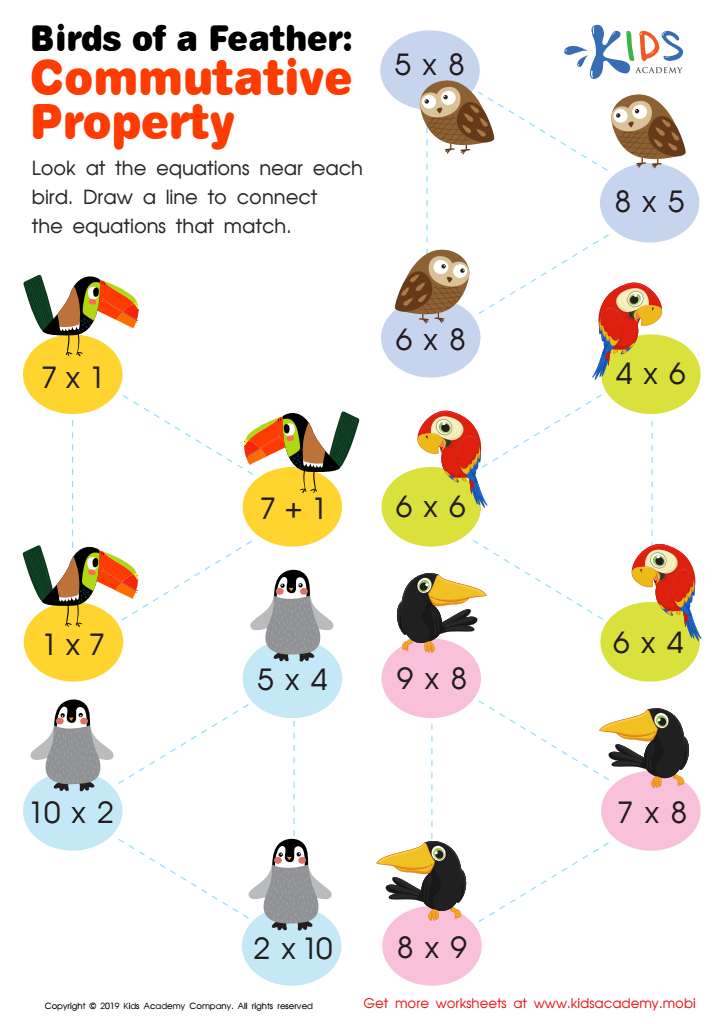
Birds of a Feather: Commutative Property Worksheet
The commutative property states that order of factors doesn't affect the product. Use it to help your kids solve simple problems. If they love birds, they'll love the colorful worksheet to identify exotic ones. Practicing is the best way to understand difficult topics. Look at the equations in this tracing sheet; help them draw a line to connect equations that match.
 Assign to My Students
Birds of a Feather: Commutative Property Worksheet
Worksheet
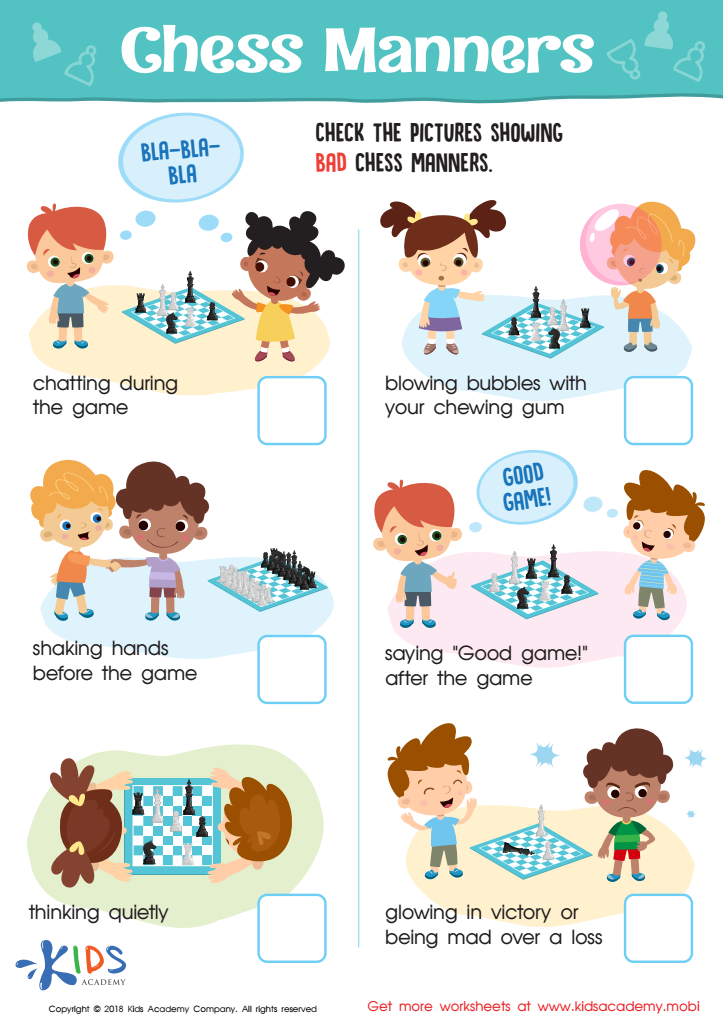
Chess Manners Worksheet
Teach your child chess manners in addition to table and social ones. Chess has clear rules and etiquette which must be followed for a proper game. Review this worksheet with your kid and discuss the pictures that show inappropriate behaviours. This will help them understand how to play the game correctly and with good manners.
Chess Manners Worksheet
Worksheet
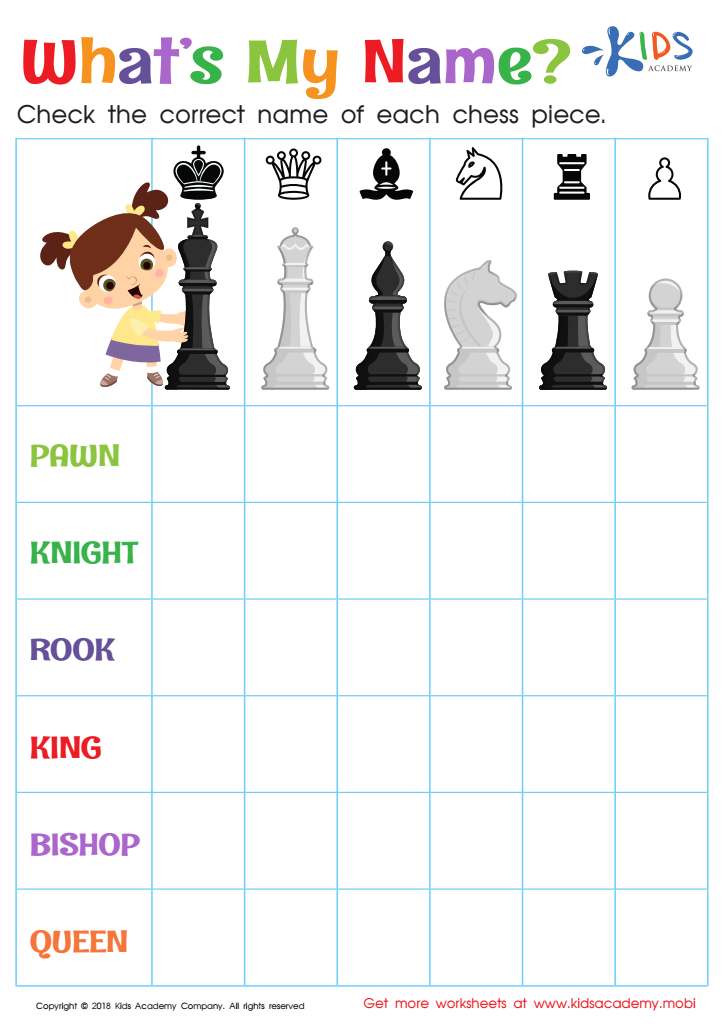
What's My Name? Worksheet
Test your child's chess knowledge with this colorful worksheet! There are six pieces lined up with names underneath. Ask your child to name each piece, then check if it's correct. Help them succeed by brushing up on the different pieces and their names.
What's My Name? Worksheet
Worksheet
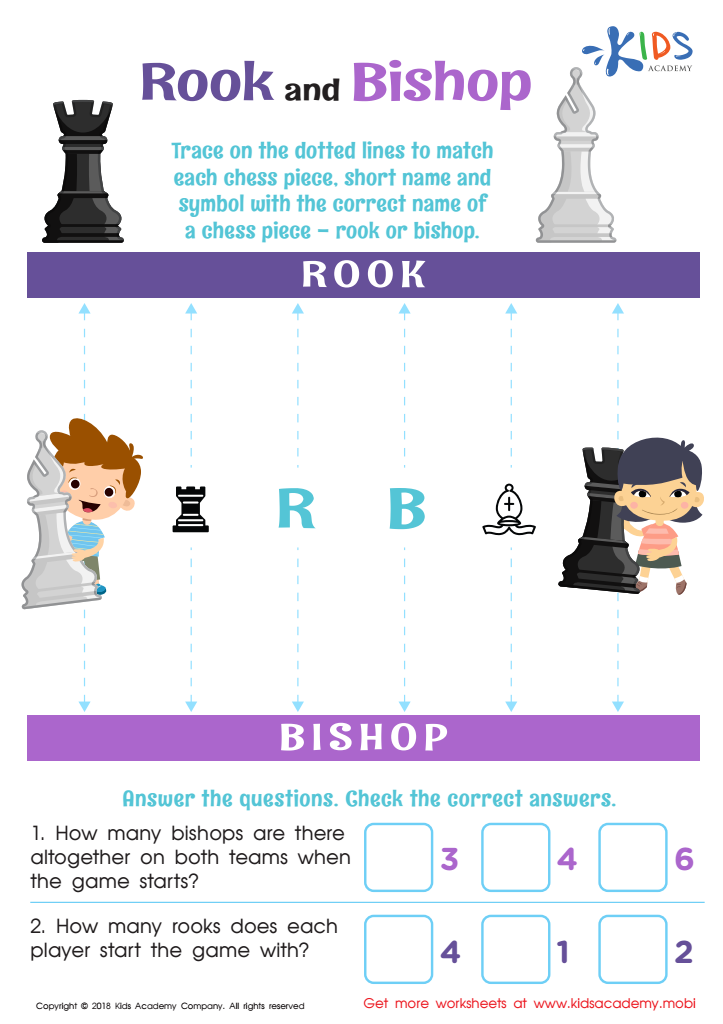
Rook and Bishop Worksheet
This tracing sheet helps your child learn chess pieces by matching each piece, short name and symbol to the correct name. After tracing, have them answer the questions and check their answers. It's a great way for them to become familiarized with chess.
Rook and Bishop Worksheet
Worksheet
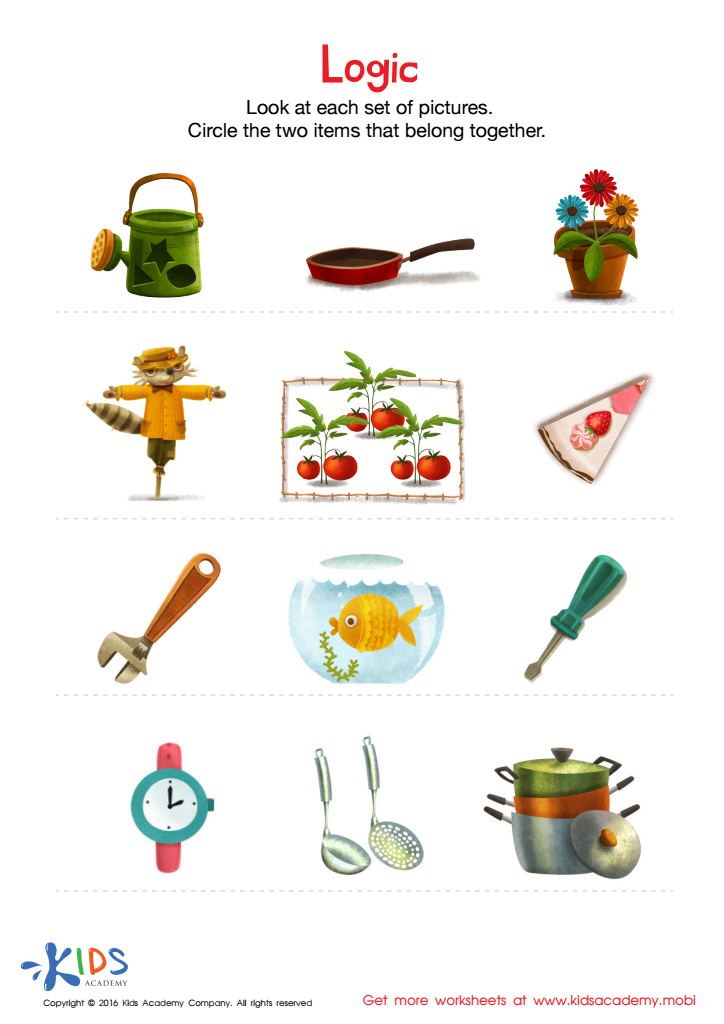
Logic Game Sorting Worksheet
Start your child's logic and reasoning development early with this fun matching worksheet! Through cute images and simple conversations, your little one can learn problem-solving, categorization, and matching skills. Plus, it's a great way for children to explore how items are used in real life. Try it and watch them boost skills with ease and fun!
Logic Game Sorting Worksheet
Worksheet
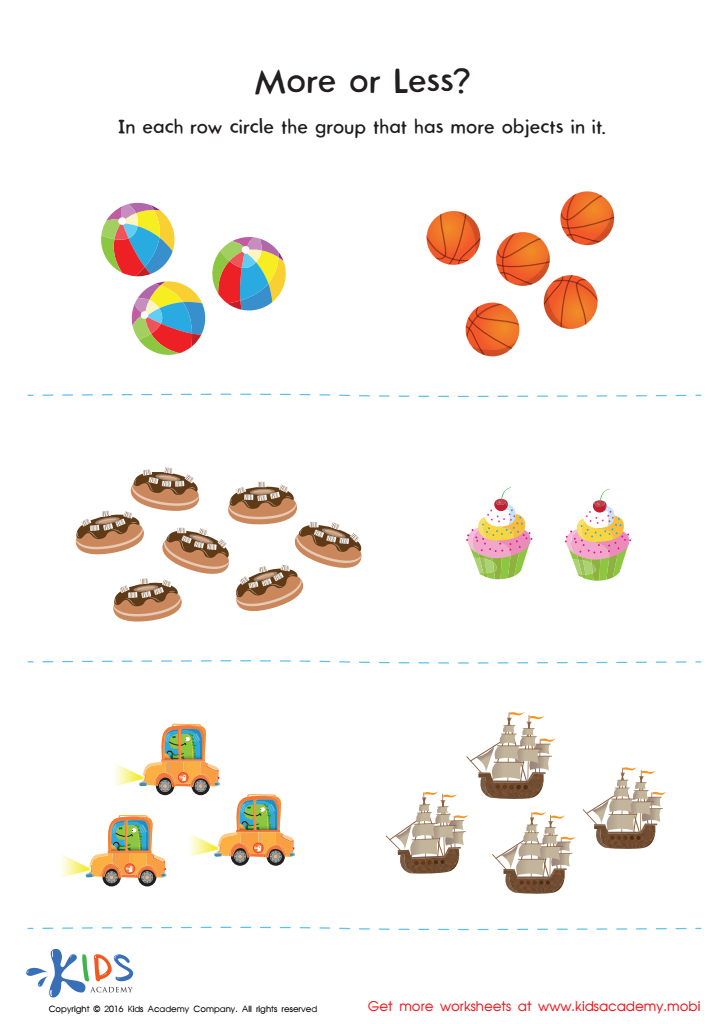
More or Less Size Worksheet
Worksheet
Join Kids Academy for Free
Who is primarily going to use this learning content?








Normal Logical Thinking worksheets activities represent an essential tool in the educational toolkit for nurturing cognitive development among learners of all ages. These activities are meticulously designed to challenge the mind, promote analytical thinking, and enhance problem-solving abilities. Engaging in Normal Logical Thinking worksheets activities regularly can have a profound impact on a student's academic journey and beyond, proving to be immensely useful in several key areas.
Firstly, these activities foster critical thinking skills. In a world where information is abundant, the ability to analyze, evaluate, and create informed decisions has become invaluable. Through the structured challenges presented in Normal Logical Thinking worksheets, students learn to approach problems systematically, considering various angles and potential solutions, thus developing a critical mindset that is beneficial in both academic and real-world scenarios.
Moreover, Normal Logical Thinking worksheets activities enhance reasoning capabilities. Each exercise is crafted to push students to use deductive and inductive reasoning skills, encouraging them to make logical connections and draw conclusions based on the evidence presented. This not only strengthens their reasoning skills but also prepares them for complex subjects that require high levels of logical thought, such as mathematics, science, and computer programming.
Additionally, engaging with these worksheets promotes perseverance and resilience. As students encounter and work through challenging problems, they learn the value of persistence and the satisfaction of solving a difficult problem through their own effort and intellect. This resilience can translate to other areas of their lives, fostering a growth mindset that views challenges as opportunities for learning and development.
Furthermore, Normal Logical Thinking worksheets offer a structured way to practice and improve cognitive abilities in a focused manner. Regular engagement with these activities can lead to significant improvements in logical thinking, attention to detail, and the ability to work systematically—skills that are beneficial in academic pursuits and professional careers alike.
In conclusion, Normal Logical Thinking worksheets activities are a crucial component of cognitive development, offering a wide range of benefits that extend beyond the classroom. By fostering critical thinking, enhancing reasoning skills, promoting resilience, and providing targeted practice, these activities prepare students for success in various aspects of their lives, underscoring their utility and importance in educational contexts.








