Missing Letters Worksheets for Ages 3-5
3 filtered results
-
From - To
Discover the joy of learning with our "Missing Letters Worksheets" designed specifically for young learners aged 3-5. Engage your little ones in a fun-filled educational journey that aids in developing their alphabetic knowledge and recognition skills. These carefully crafted worksheets are perfect for preschoolers, offering an exciting way to explore the alphabet through missing letter puzzles that challenge and entertain. Ideal for both home and classroom use, our Missing Letters Worksheets for Ages 3-5 are your go-to resource for fostering early literacy skills in a playful and interactive manner. Get ready to witness delightful moments of discovery and learning with every page.
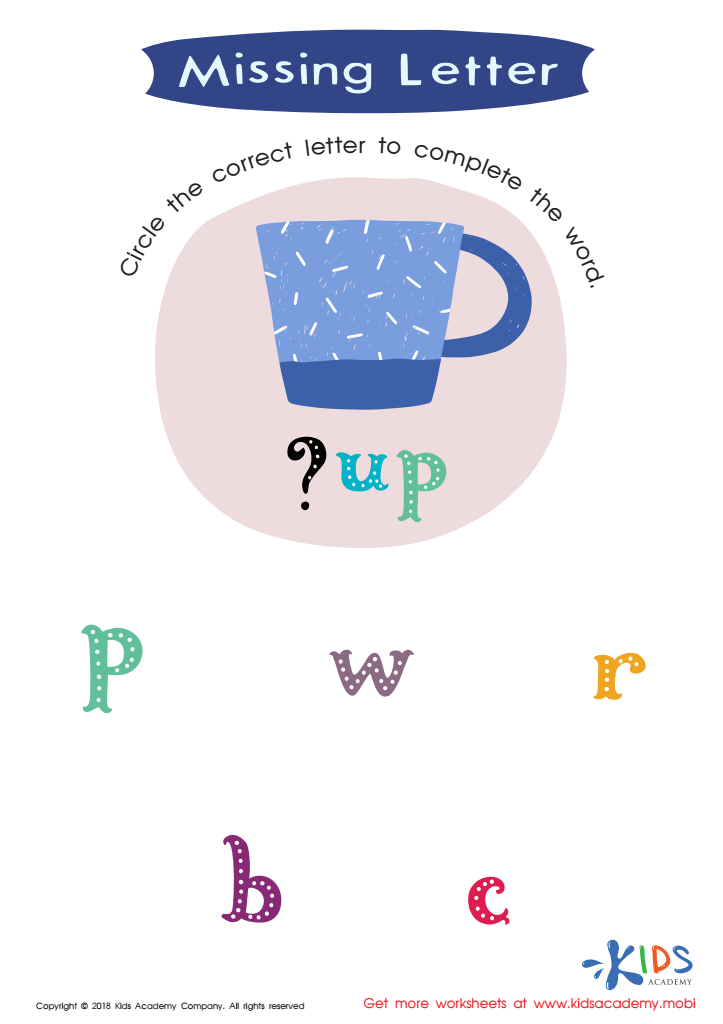
Missing Letter Worksheet
 Assign to My Students
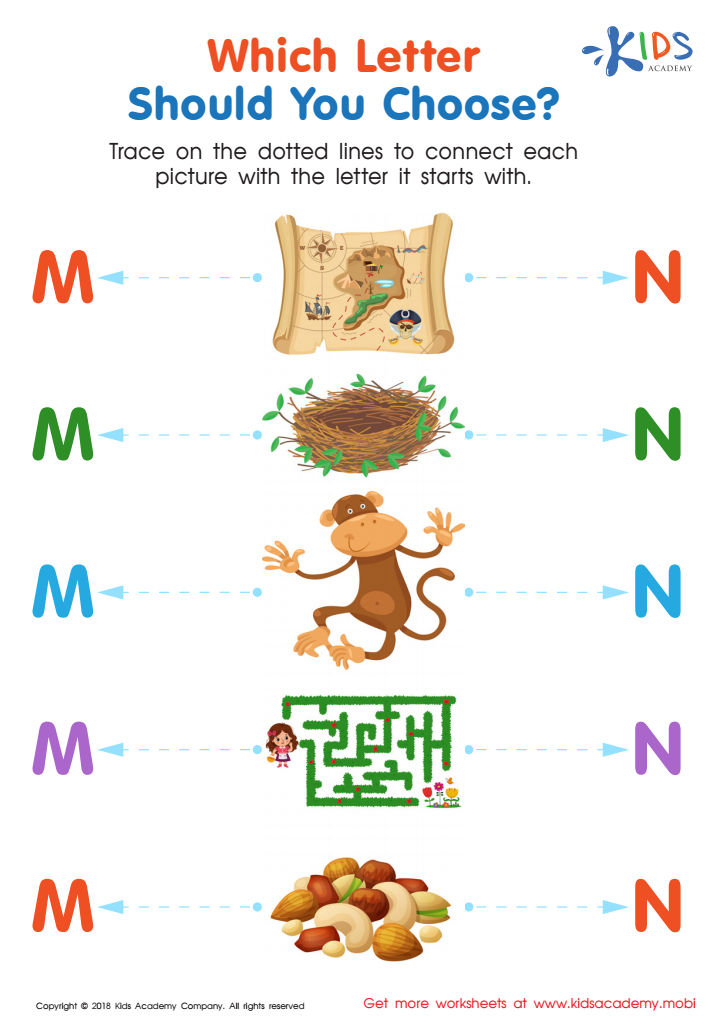
Which Letter Should you Choose? Worksheet
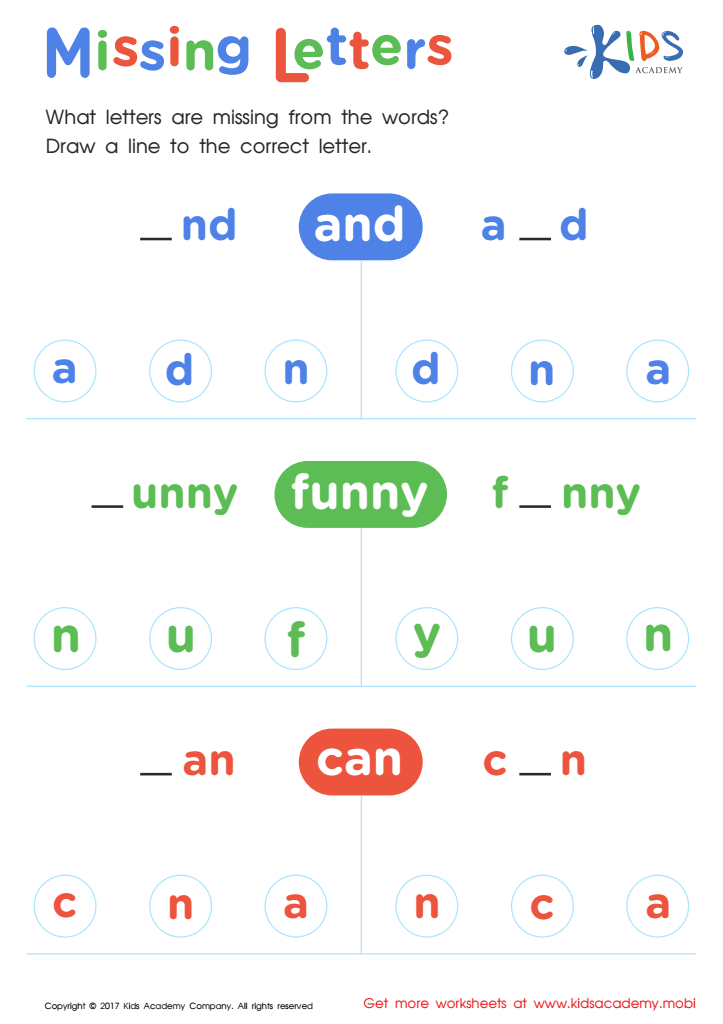
Missing Letters Worksheet



Worksheets on Missing Letters designed specifically for Ages 3-5 are an invaluable educational tool for early childhood development. These engaging worksheets are meticulously crafted to target the foundational aspect of literacy, making them not merely activities but stepping stones towards mastering the alphabet. The concept of Missing Letters for Ages 3-5 serves multiple developmental purposes.
Firstly, these worksheets stimulate cognitive skills in young learners. Children are naturally curious, and figuring out which letters are missing encourages critical thinking and problem-solving skills. It turns learning into a fun puzzle, keeping children engaged and motivated.
Secondly, Missing Letters for Ages 3-5 are pivotal for enhancing language skills. As children identify and fill in the missing letters, they inadvertently reinforce their understanding of the alphabet's sequence, familiarize themselves with letter shapes, and begin associating letters with their sounds, laying the groundwork for reading and writing skills.
Furthermore, these activities are designed to improve hand-eye coordination and fine motor skills. Writing in the missing letters requires precision, thus promoting better handwriting and coordination.
In a nutshell, Missing Letters worksheets for Ages 3-5 are not just about learning the alphabet. They are about fostering a love for learning, enhancing cognitive and language development, and preparing children for a successful educational journey.







