Itsy Bitsy Spider Worksheets for Ages 3-5
1 filtered results
-
From - To
Dive into the whimsical world of one of the most beloved nursery rhymes with our Itsy Bitsy Spider worksheets, specially crafted for little learners aged 3-5! This delightful collection is designed to engage and inspire young minds through a series of fun, educational activities. From tracing the spider’s adventurous journey up the water spout to coloring scenes that bring the story to life, these worksheets blend learning with play, enhancing fine motor skills, comprehension, and creativity. Perfect for preschoolers, our Itsy Bitsy Spider worksheets promise hours of engaging fun, fostering a love for storytelling and learning. Ideal for both classroom and home use!
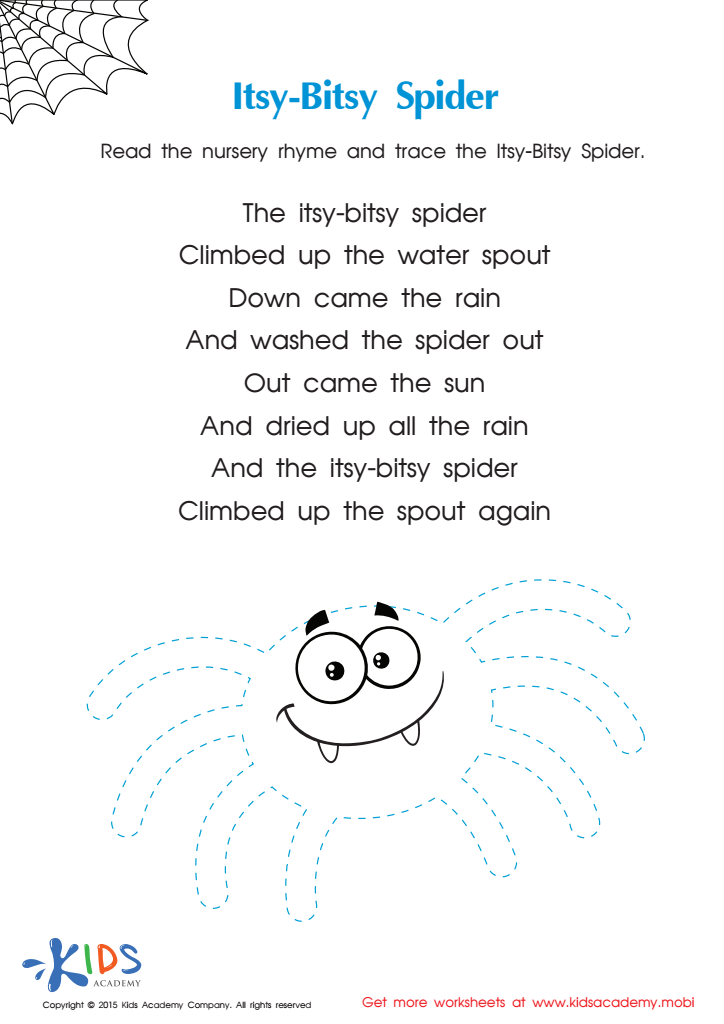
Itsy Bitsy Spider Nursery Rhyme PDF Worksheet
 Assign to My Students





Itsy Bitsy Spider worksheets for Ages 3-5 are an exceptional tool that effectively combines fun with learning. At such a pivotal stage of development, children are rapidly expanding their skills in language, fine motor control, and cognitive understanding. Through engaging with the Itsy Bitsy Spider theme, they are introduced to a familiar and beloved nursery rhyme, which aids in reinforcing language development and auditory processing skills.
These worksheets are meticulously designed to cater to the learning needs and interests of 3 to 5-year-olds, ensuring that each activity is age-appropriate and beneficial. For instance, they may include coloring pages that not only bring joy but also enhance fine motor skills as children practice holding pencils or crayons correctly. Puzzle activities related to the Itsy Bitsy Spider theme can stimulate problem-solving skills and attention to detail, encouraging young learners to identify patterns and sequences.
Moreover, Itsy Bitsy Spider worksheets for Ages 3-5 can serve as an excellent platform for introducing early literacy and numeracy concepts. Through simple, relatable tasks, children can start recognizing letters and numbers, setting a strong foundation for their academic journey ahead.
In essence, Itsy Bitsy Spider worksheets for Ages 3-5 are more than just a collection of activities. They are a bridge to learning, growth, and development, making them an invaluable resource for early childhood education.