Filters

7 filtered results

Clear all filters
Favorites
With answer key
Interactive

7 filtered results

Difficulty Level

Grade


Subject

    Discover an engaging way to help your child master early reading skills with our Two Letter Phonics Worksheets for Ages 3-6. Our worksheets focus on foundational phonics, combining interactive activities with colorful illustrations to captivate young learners. Ideal for preschool and kindergarten students, these resources support letter recognition, sound association, and early word formation. Designed by educational experts, our worksheets make learning to read a fun and rewarding experience. Download now to give your child a head start on their reading journey!

    Check out this FREE Trial Lesson on Two Letter Phonics for age 3-6!

    Digraphs

    Favorites
    With answer key
    Interactive
    • 3-6
    • Interactive
    • Two Letter Phonics
    Missing Digraph: Part 2 Worksheet
    Missing Digraph: Part 2 Worksheet

    Missing Digraph: Part 2 Worksheet

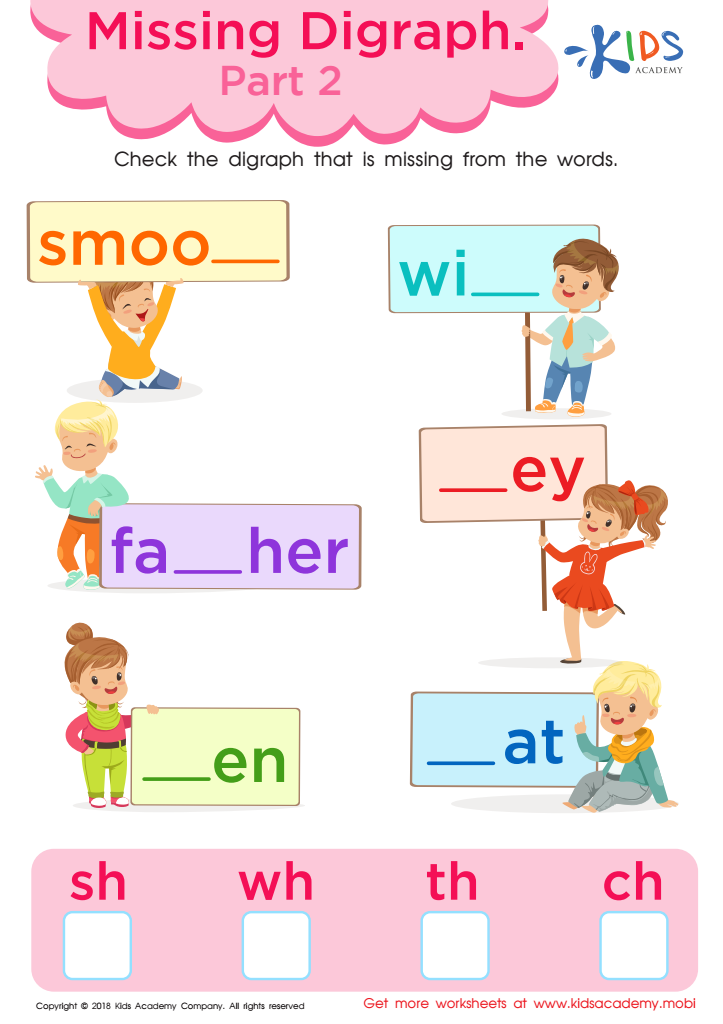
    Practice the "th" digraph with this fun worksheet from Kids Academy! See how it appears at the beginning, middle, or end of words and help learners fill in the blanks. Check if they got it right by finding the th digraph at the bottom!
    Missing Digraph: Part 2 Worksheet
    Worksheet
    Review the Blends Worksheet
    Review the Blends Worksheet

    Review the Blends Worksheet

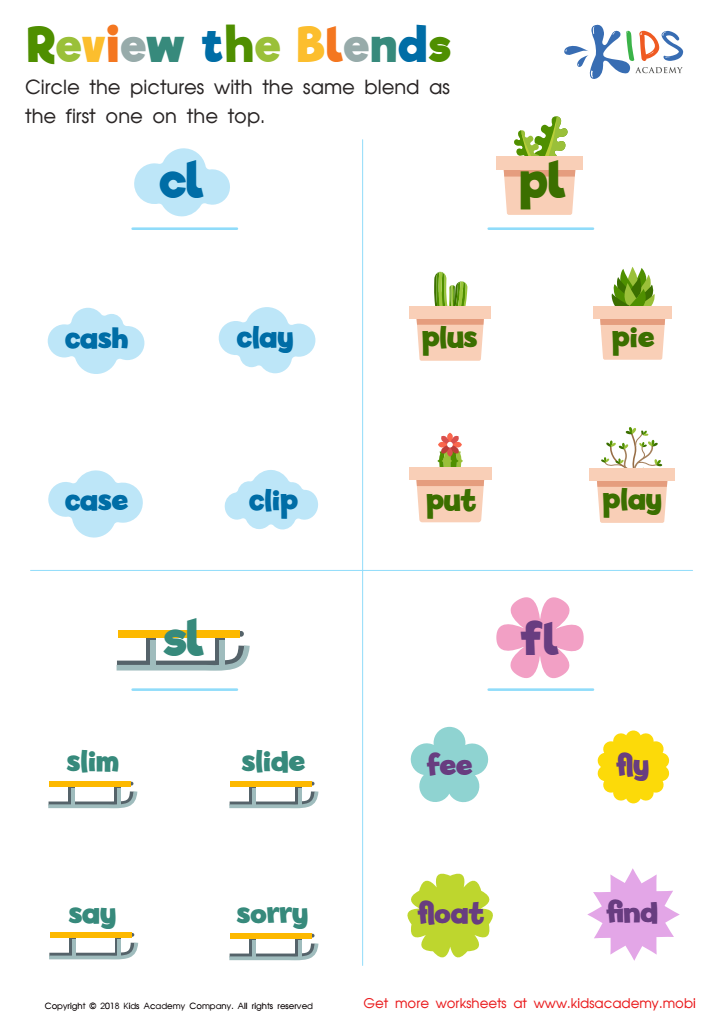
    Consonant blends are two or three consonants that make a sound when pronounced together. L-blends like cl, bl, sl, fl and 3-letter blends like str, slp are common. This phonics worksheet helps early readers identify words containing two letter L-blends. Students must circle the words then read them aloud.
    Review the Blends Worksheet
    Worksheet
    Feed the Whale Worksheet
    Feed the Whale Worksheet

    Feed the Whale Worksheet

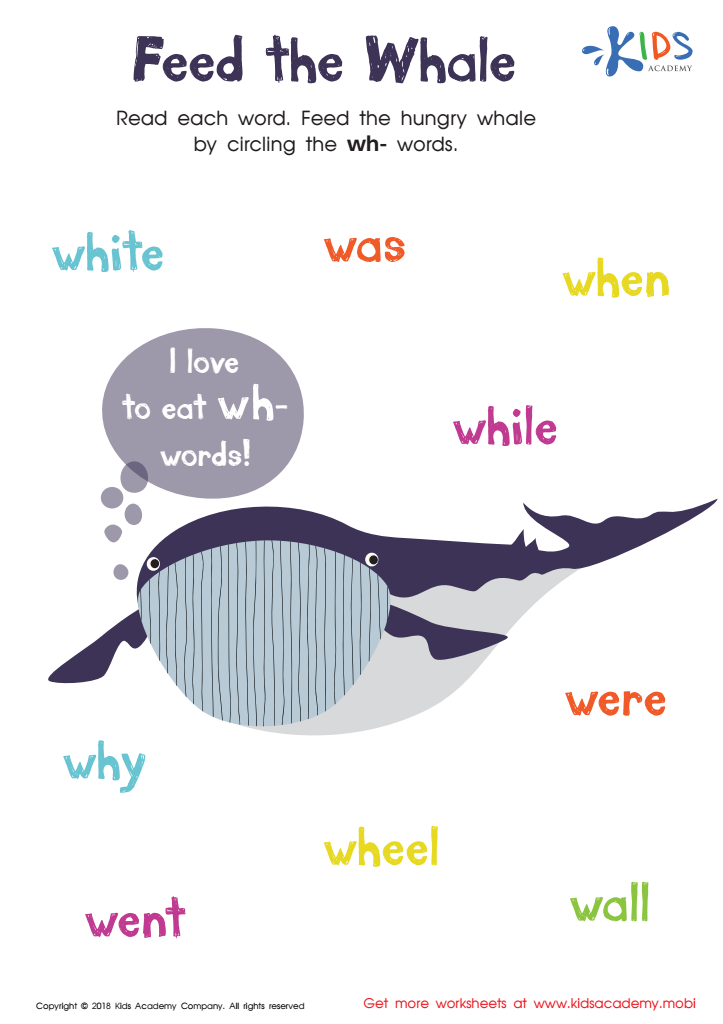
    Help your early reader build beginning consonant and blend recognition with this fun whale worksheet! They'll feed the whale wh- words, circle sight words, and build fine motor skills—all while discriminating between differently colored words.
    Feed the Whale Worksheet
    Worksheet
    Digraph Th Printable Worksheet
    Digraph Th Printable Worksheet

    Digraphs: Think About "th" Worksheet
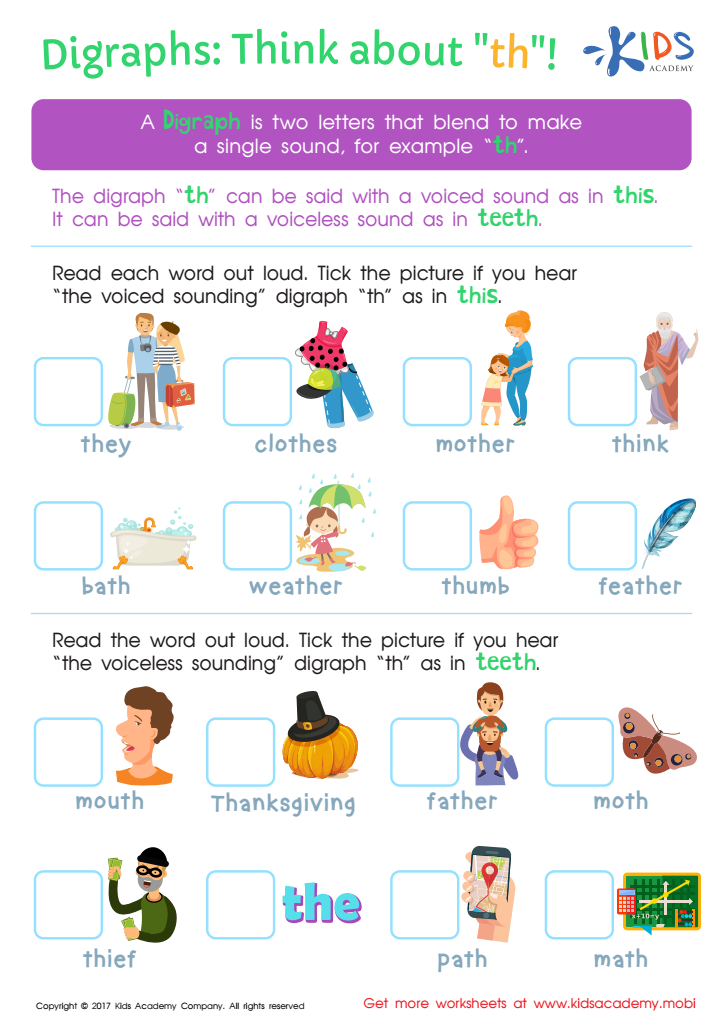
    Help your child master phonics with this illustrated digraph Th printable worksheet. It will help recognize "Th" words, differentiate voiced and voiceless sounds and understand key concepts. Use similar words while they work to reap its full benefits!
    Digraphs: Think About "th" Worksheet
    Worksheet
    Consonant Blend Dr and Tr Printable Worksheet
    Consonant Blend Dr and Tr Printable Worksheet

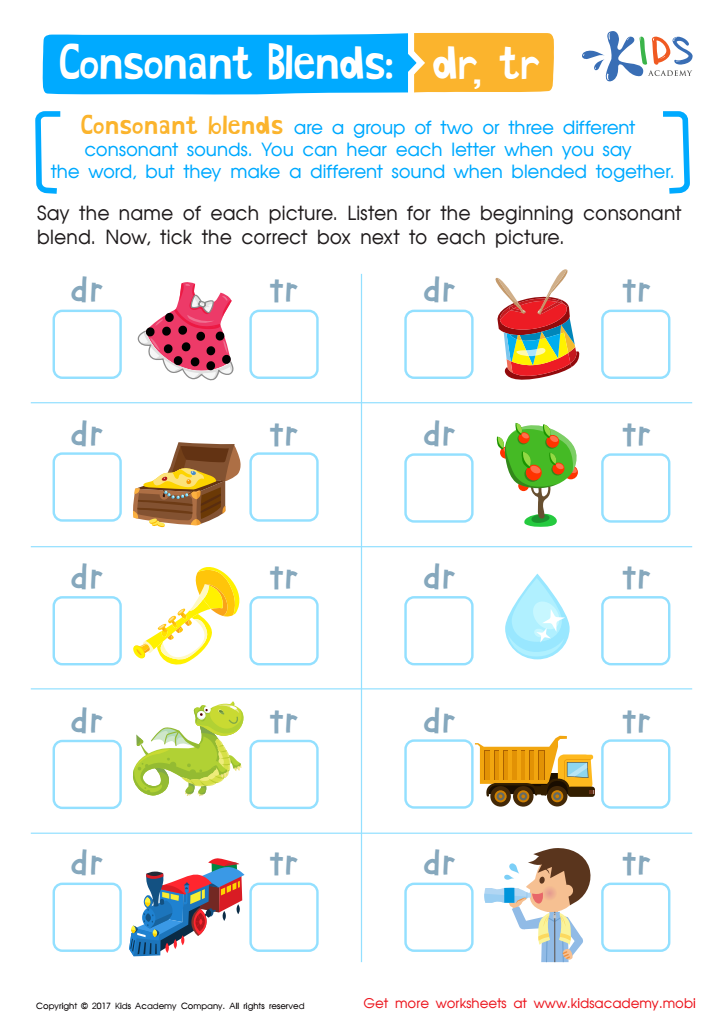
    Consonant Blends: "Dr" and "Tr" Printable
    Pictures of the words provide a visual cue, and sound-outs help with auditory cues.
    Consonant Blends: "Dr" and "Tr" Printable
    Worksheet
    Consonant Blends Pl, Cl, and Sl Printable Worksheet
    Consonant Blends Pl, Cl, and Sl Printable Worksheet

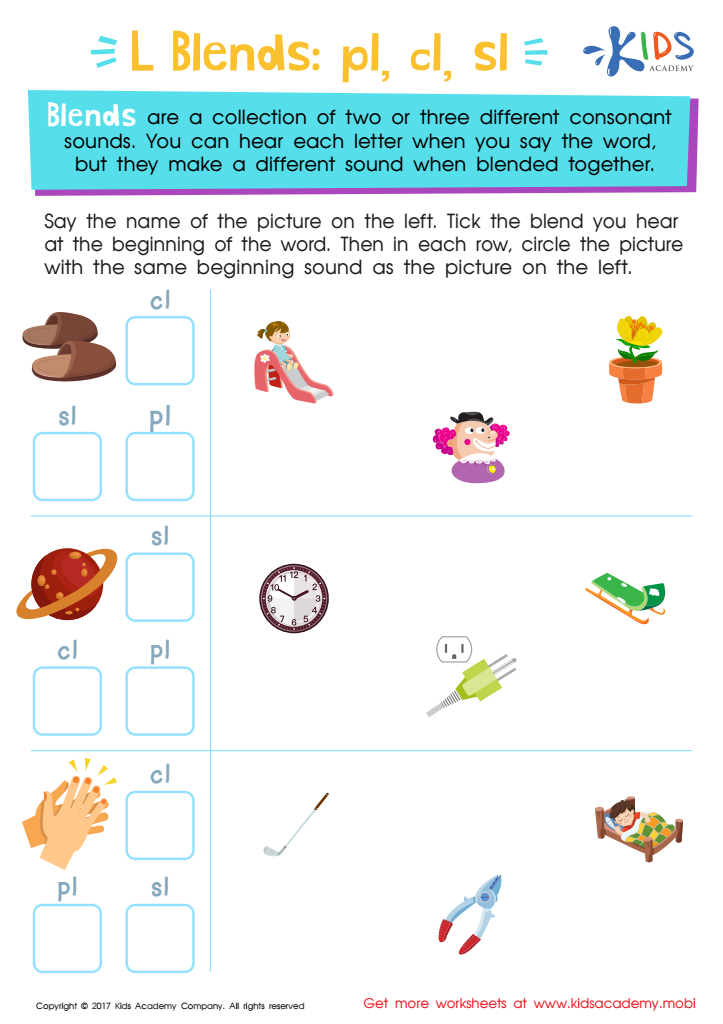
    L Blends: "Pl", "Cl" and "Sl" Printable
    This printable worksheet will help your child recognize and identify the Pl, Cl, and Sl consonant blends, sound them out, and identify them in print. Improve your child's reading and writing skills with fun and colorful phonics practice!
    L Blends: "Pl", "Cl" and "Sl" Printable
    Worksheet
    Consonant Blend Fl, Bl, and Gl Printable Worksheet
    Consonant Blend Fl, Bl, and Gl Printable Worksheet

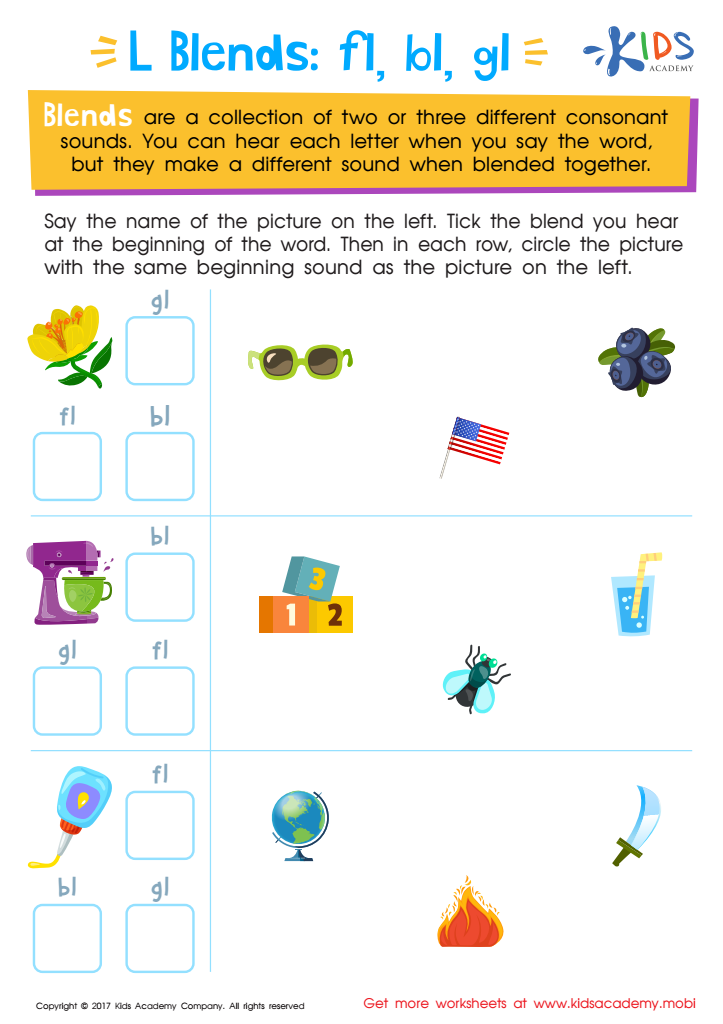
    Blending Consonants: "Fl", "Bl" and "Gl" Printable

    Help your child master consonant blends Fl, Bl, and Gl with this printable worksheet. Find words associated with the pictures and learn to better understand the difference between consonant blends. Vibrant images motivate and aid in learning. Download now for improved phonics success!
    Blending Consonants: "Fl", "Bl" and "Gl" Printable

    Worksheet


    Two-letter phonics instruction for children ages 3 to 6 is a fundamental building block in early literacy development, laying the foundation for fluent reading and effective communication. Parents and teachers should care about two-letter phonics because it provides young learners with the tools to decode words, turning written language into meaningful speech. At this age, children are in a critical period of cognitive and language development, so engaging them in phonics helps them recognize and produce sounds more accurately.

    Early learning of two-letter combinations, like "at," "sh," and "in," aids in the understanding of how sounds collaborate to form words. This skill is crucial for later decoding longer and more complex words, which is essential for reading proficiency. A strong grasp of phonics also supports spelling, writing, and even speaking skills, thereby improving overall communication capabilities.

    Furthermore, teaching two-letter phonics in a fun, interactive, and sensory-rich manner can significantly boost children's enthusiasm for learning. It encourages a positive attitude towards reading, making children more likely to engage with books regularly. For educators and parents, investing time in nurturing these early literacy skills can lead to long-term academic success and instill a lifelong love for reading and learning in young children. Overall, two-letter phonics is a cornerstone for literacy that offers numerous educational advantages.