Missing Vowels Worksheets for Ages 3-7
6 filtered results
-
From - To
Enhance your child's reading and writing skills with our engaging Missing Vowels Worksheets for ages 3-7. Perfect for early learners, these interactive activities help kids identify and fill in missing vowels to complete words, boosting their phonemic awareness and letter recognition. Tailored to stimulate curiosity and learning, these worksheets combine colorful visuals with fun exercises that reinforce essential literacy concepts. Ideal for both classroom and at-home practice, our specially designed worksheets offer an enjoyable way for young learners to master the ABCs of reading, setting a strong foundation for future language success. Start exploring today with Kids Academy!
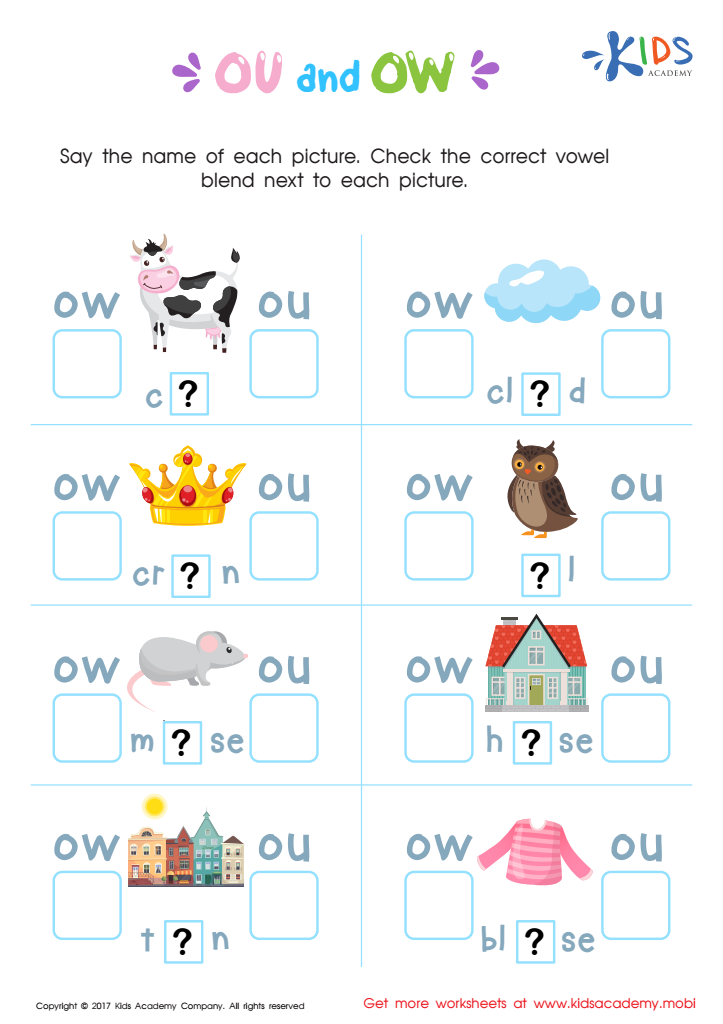
OU and OW Words Worksheet
 Assign to My Students
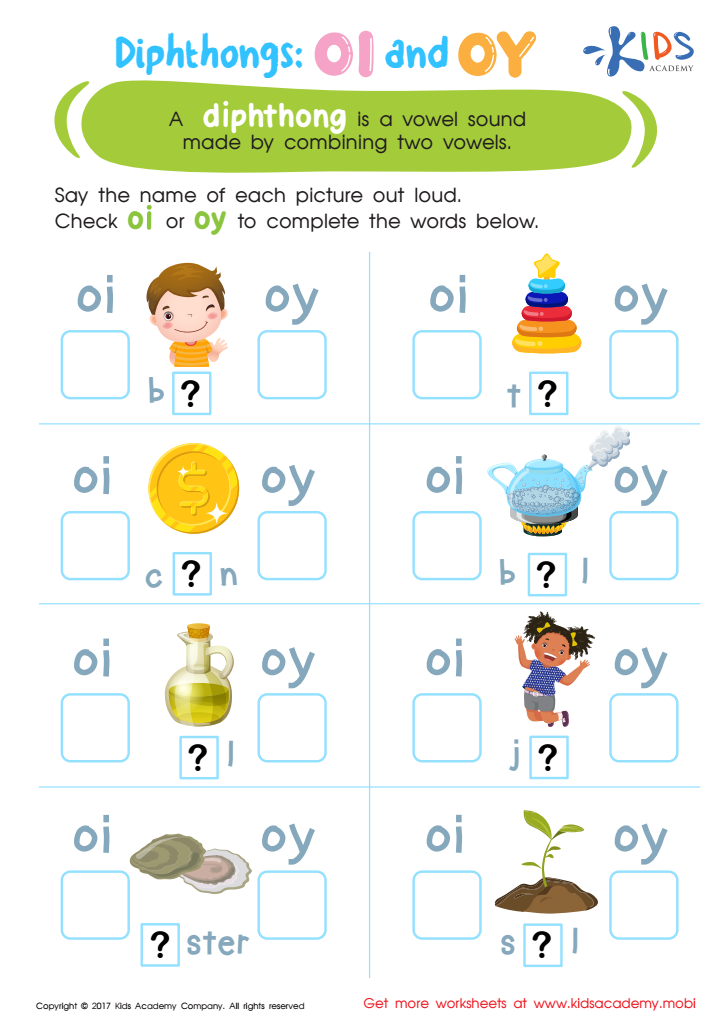
Vowel Diphthongs OI OY Worksheet
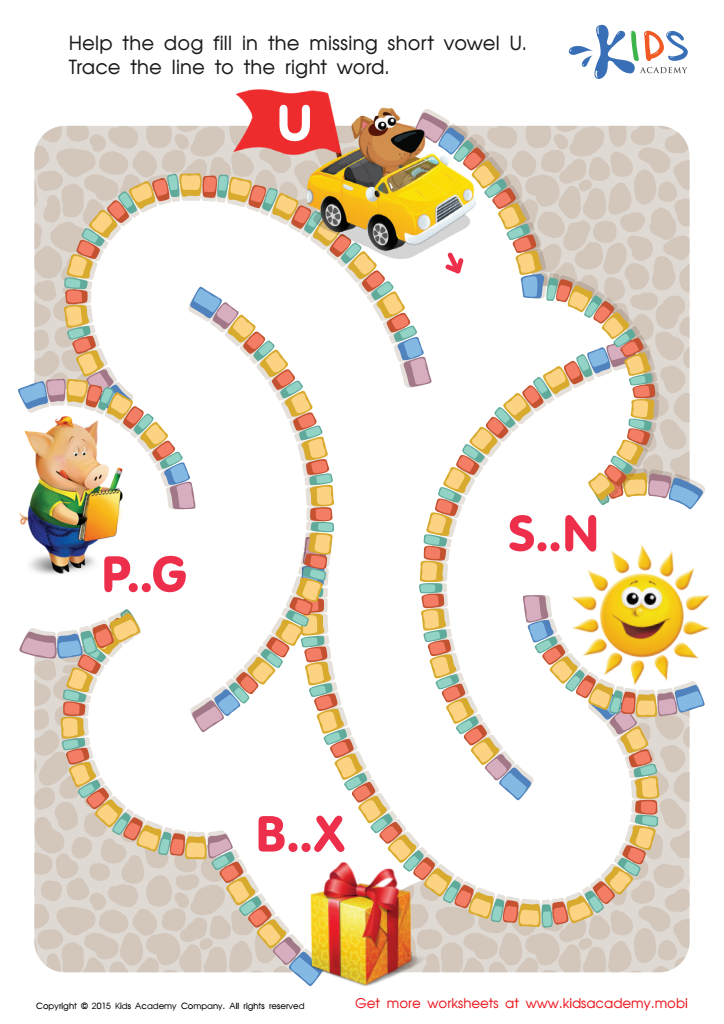
Short Vowel Sound U Worksheet
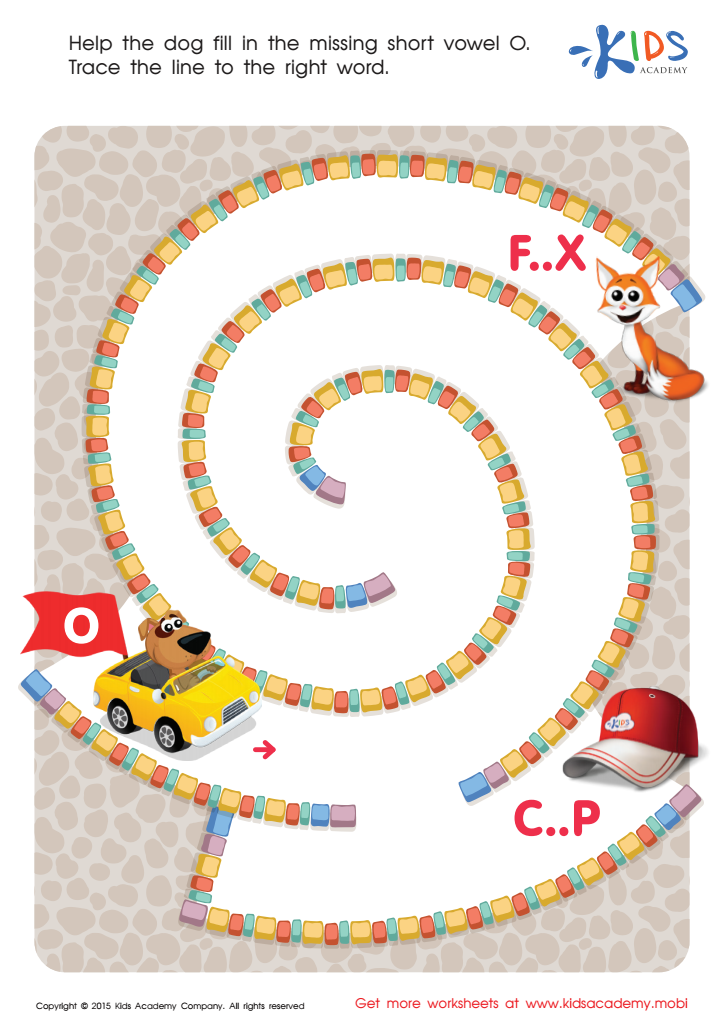
Short Vowel Sound O Worksheet
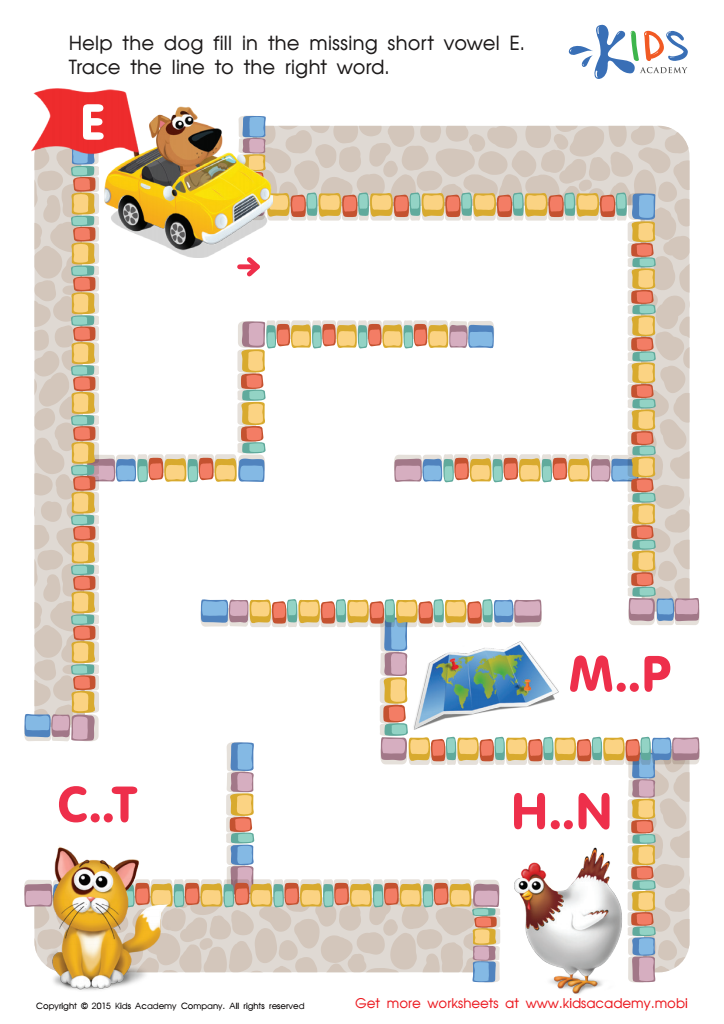
Short Vowel Sound E Worksheet
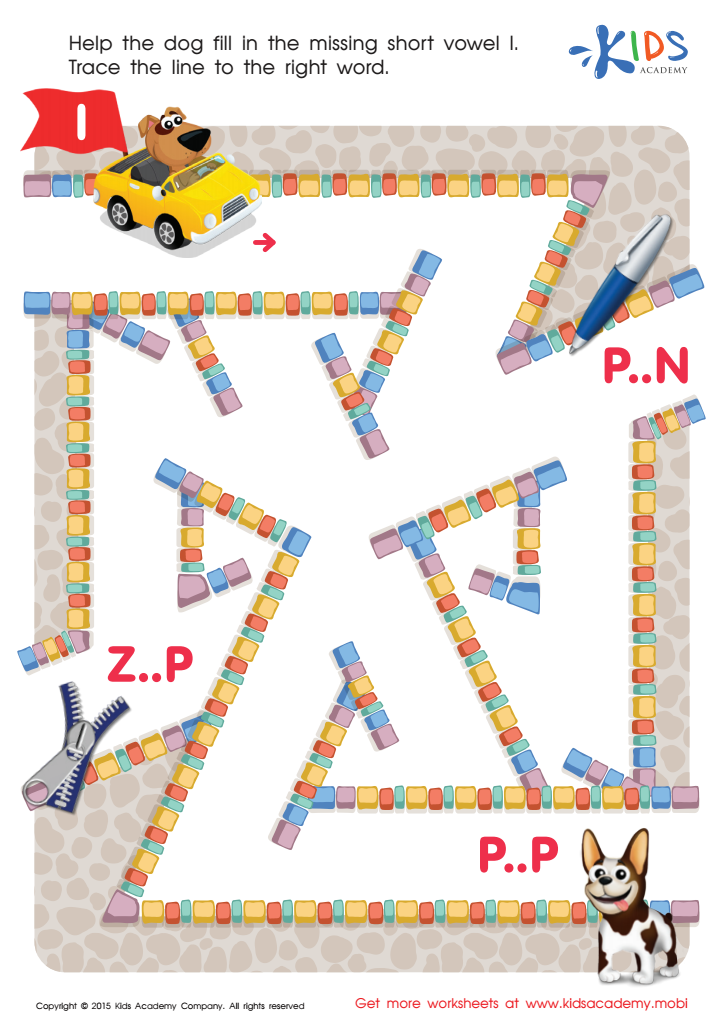
Short Vowel Sound I Worksheet


Missing vowels activities are an excellent tool for early literacy development for children ages 3-7. At this critical stage, children are just beginning to understand the fundamentals of reading and writing, including phonemic awareness, which is the ability to hear and manipulate the sounds in words. Engaging in missing vowels exercises challenges young learners to fill in the blanks with the appropriate vowels, enhancing their understanding of phonemes and how they form words.
For teachers, using missing vowels activities can help identify a child's readiness for reading and highlight areas requiring further attention. These exercises encourage kids to think critically about the sounds each vowel makes within different contexts and increase their familiarity with the relationship between letters and sounds, a key step in decoding words while reading.
For parents, incorporating missing vowels games can be an enjoyable and educational activity to do at home. This not only supports what children are learning in school but also makes literacy practice fun and interactive. Engaging in these activities with their children gives parents valuable insights into their child's literacy level and progress, making it easier to support their learning journey.
Therefore, parents and teachers should care about missing vowels activities because they build essential reading skills, foster a love for language, and provide a diagnostic tool for learning assessment.